Acrylic Roof Coatings in Santa Rosa, CA
Roof Systems
Acrylic is the coating owners apologize for, and on the right roof it is the smartest one on the list. It costs less than most alternatives, goes down fast, and can be recoated again and again without drama. Its reputation suffers because it gets installed on roofs that hold water, then blamed when it peels.
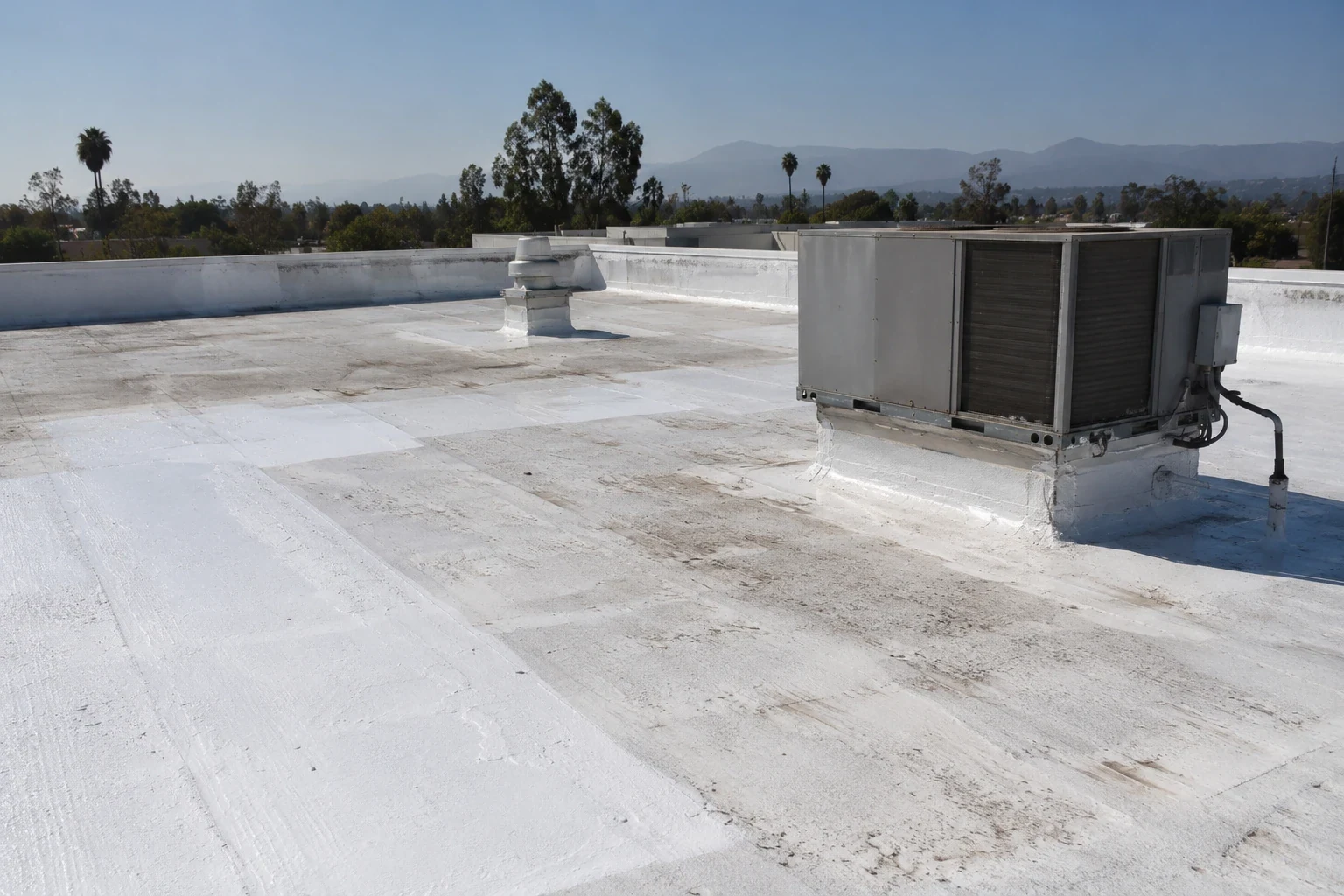
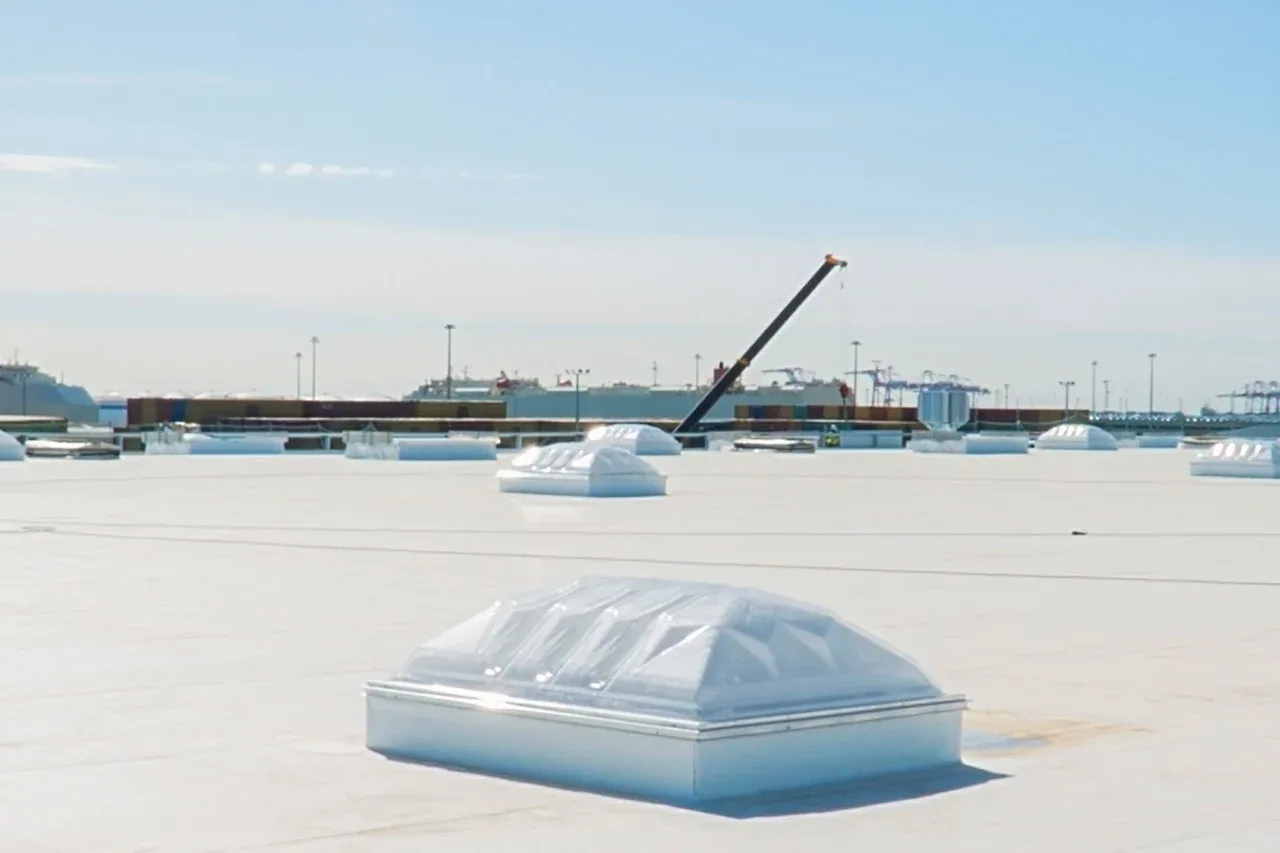
An acrylic roof coating is a water-based liquid that dries into a white, reflective, elastic film. It cures by evaporation, so it needs a dry roof and a dry stretch of weather, and once cured it handles sun well. In Santa Rosa, CA, where the wet season is concentrated in winter and summer brings the sun that coatings are meant to push back, the tradeoff is clear. Drain the roof, pick your weather, and acrylic does its job. Ignore either and it fails early.
Serving Santa Rosa • Rohnert Park • Petaluma • Windsor • Healdsburg • Sebastopol • Napa
Dry, simple roofs fit acrylic
Acrylic suits low-slope roofs that shed water and carry a sound membrane, and it works on more surfaces than owners realize: metal panels, built-up roofs, aging modified bitumen, and the weathered skin of a foam roof. Picture a commercial strip along Sebastopol Road in Roseland, a campus building near Mendocino Avenue Corridor, or a production building out on Highway 12 whose roof is plain and tired but not leaking. Those are acrylic candidates if the drains work.
It also suits owners who plan to maintain. Because acrylic recoats easily, it rewards a schedule: a fresh topcoat when the surface chalks, instead of a replacement bid. A property manager running several buildings can treat it as a recurring line item instead of a surprise.
The verdict: acrylic is the practical coating for a sound, draining roof and a patient owner. It is the wrong coating for a roof with a ponding problem.
Standing water is the killer
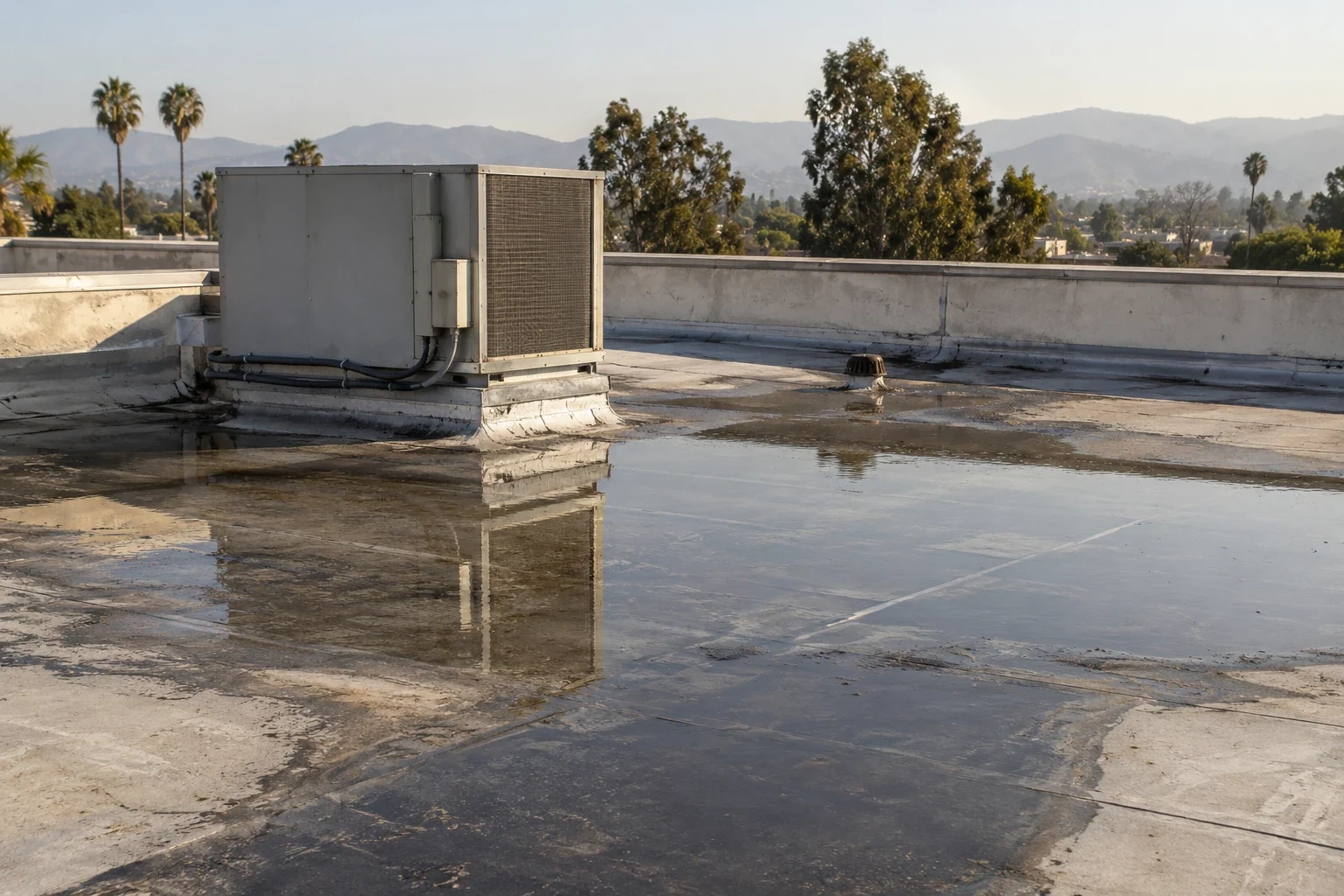
Ponding is where acrylic dies. A cured acrylic film that stays under water for days softens and lifts, and it can re-emulsify, leaving a milky layer that peels in sheets. If a roof holds a puddle after every storm, the coating over that puddle will be the first thing to fail.
The other failures are quieter. Rain or heavy dew on a coating that has not finished curing washes it off. Application over a damp roof traps moisture and raises blisters. Thin coats leave pinholes and flash through at fasteners and seams. And skipping reinforcement over laps and cracks lets those movements telegraph straight through the finished surface within a season or two.
Every one of these is avoidable. The common thread is that someone coated the roof in a hurry, without checking where water goes. Before any acrylic job we look at ponding water as a design question, not an afterthought.
Rain windows decide the schedule
Thickness and reinforcement
One thin coat is not a roof system. A proper acrylic job builds up in layers: a base coat, reinforcement fabric or mesh over seams, penetrations and cracks, then one or more finish coats applied at a measured rate. The rate matters, because a roof is only as good as its thinnest area.
We check coverage by the bucket count against the square footage, and we check the finished film in place instead of trusting a number in a proposal. Details are where this goes wrong, so curbs, pipe boots, drains and edge metal get extra material and extra attention.
The verdict: ask any contractor how many coats, what reinforcement, and how they confirm coverage. If the answers are vague, the roof will show it.
Recoat on schedule
The real value of acrylic is the second and third coat, not the first. Every pass resets the surface, restores reflectivity and covers wear before it reaches the layers below. A twice-a-year walk under a preventive maintenance program catches chalking, loose seams and clogged drains early enough that a topcoat is all the roof needs.
Acrylic is also a good partner for other systems. It is a common finish over aging spray foam roofs, and it can go onto a metal roof as part of a metal roof retrofit plan once rust and loose fasteners are handled. Where the roof ponds, silicone coating is the better fit. And where sun and heat have already cracked the surface, repair that first through heat and UV damage repair.
Skip it when water stays
Do not coat a roof with soaked insulation, a soft deck or open seams. Do not coat a roof that is near the end of its life, because the coating will not outlast the problem underneath. And do not choose acrylic for a roof where water sits for more than a day without a plan to fix.
Wasted money here usually means a coating applied over a leak. Repair the leak, then coat. If the roof is beyond that, a recover or replacement is the straight answer.
Commercial Roofing Questions
The white coating on my roof is peeling in the low spots after the last storm. What happened?
That is the classic acrylic failure. Water sat on the film long enough to soften it, and it lifted or went milky. The cure is two-part: fix the reason water stayed, whether a blocked drain, a sag or a low area, then recoat the damaged zones. Patching the film without correcting drainage just resets the clock to the next storm.
Can acrylic go over a metal roof that already has rust?
Rust has to be dealt with first. We wire-brush or grind loose scale, treat the steel, prime the bare spots and re-fasten any loose screws, because a coating over active rust bubbles within a season. Once the panels are sound, acrylic bonds well and gives an aging metal roof several more reflective, watertight years.
How thick does an acrylic coating need to be?
Thickness is measured, not guessed. The manufacturer publishes a coverage rate for each product and each use, and we apply to that rate in multiple passes with reinforcement over seams. Spot checks of the cured film confirm the roof received what the proposal promised. A single thin coat that looks white from the ground is not the same thing.
We get smoke and ash most falls. Which coating handles that better?
Acrylic usually has the edge on cleaning. Its surface is less tacky than silicone, so ash and dust rinse off with water and a soft brush. Neither coating makes a roof fireproof, and ash can clog drains, so cleaning the roof and drains after smoky weeks matters more than which coating is on top.
How often will an acrylic roof need recoating?
Think in cycles, not a fixed date. A roof in full sun, with traffic and dirt, wears faster than a shaded one. Inspections twice a year tell us when chalking, thin spots or open laps show up, and a topcoat at that point is a small job. Waiting until the base coat is gone turns it into a repair job.

Find out if acrylic fits your roof
Call Commercial Roofing Santa Rosa. We will check how the roof drains and what is under the surface, then tell you plainly whether acrylic makes sense now, later, or not at all.