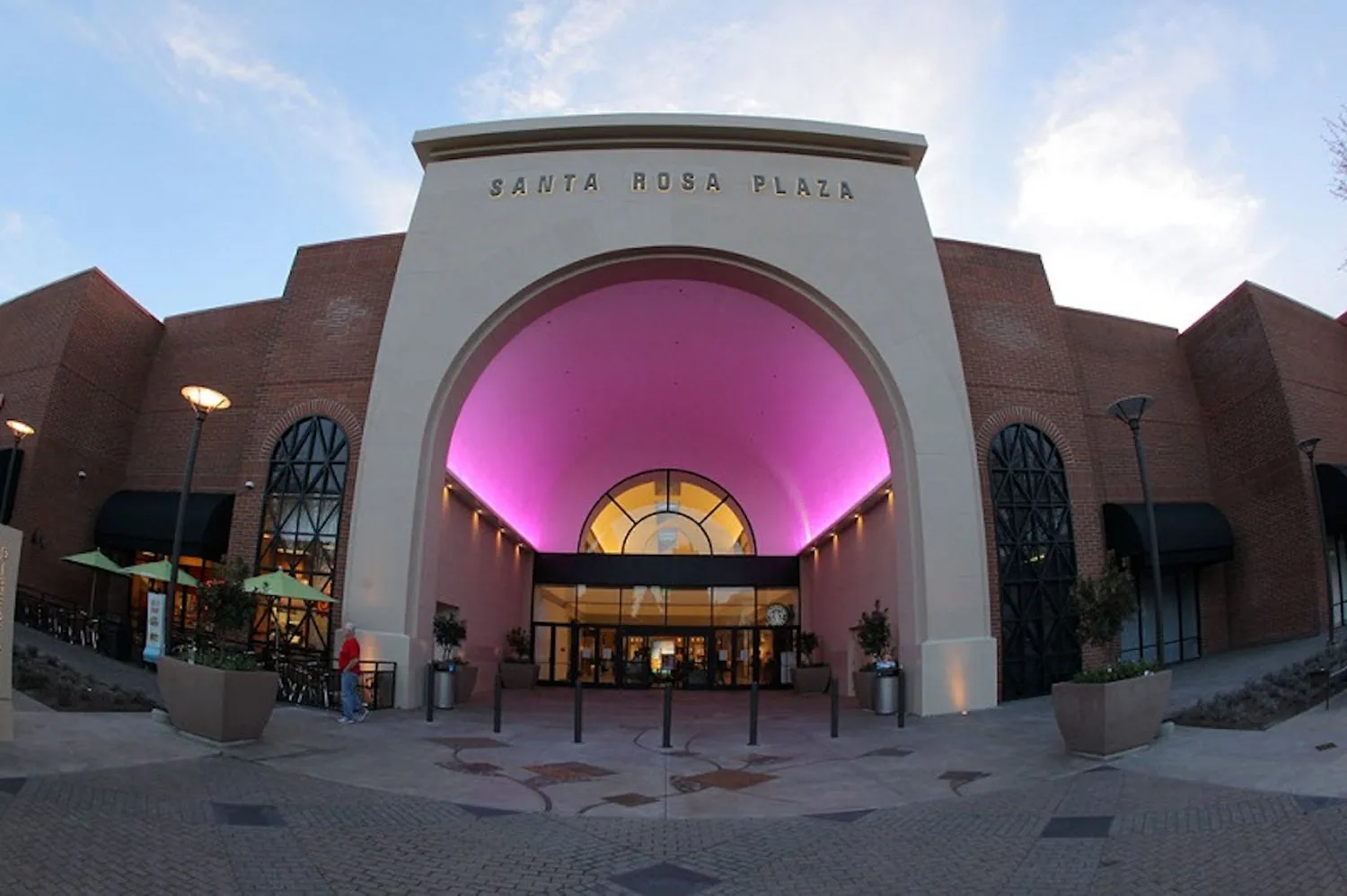
Manufacturing Plant Roofing in Santa Rosa, CA
Property Types We Roof
A manufacturing roof is not a warehouse roof with machines under it. It sits above a process, and the process puts things on the roof that weather never would: steam, oil mist, hot exhaust, fine dust and the weight of equipment that was added in three different decades. Specify it like a storage box and it will fail like one that was specified wrong.
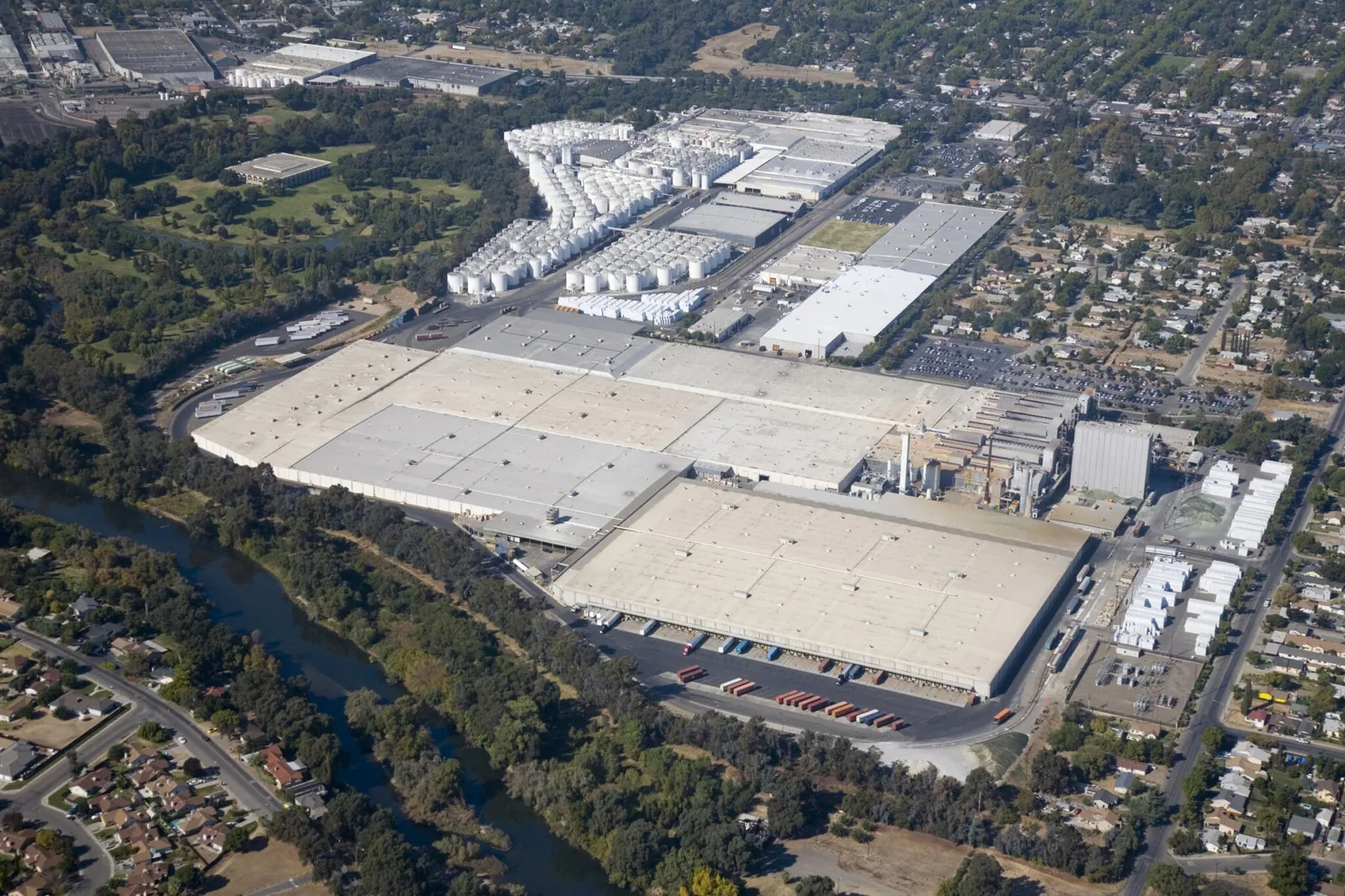
Santa Rosa, CA has Keysight Technologies headquartered in Fountaingrove, Amy's Kitchen running a production facility in the city and more than 350 wineries across the county. Whatever the product, the roof rule is the same. The membrane has to be chosen for what the plant breathes out, then installed and detailed so the plant never has to stop for a leak. We start by asking what comes out of the stacks.
Serving Santa Rosa • Rohnert Park • Petaluma • Windsor • Healdsburg • Sebastopol • Napa
Ask what the plant breathes out
Membranes are not interchangeable. Some single-ply sheets swell, soften or craze when they sit in a plume of animal fat, cooking oil, solvent vapor or ammonia. Others shrug it off. Food processing, brewing and winery production all send something onto the roof, and the roof that meets it has to be rated for it.
That is why we look at the exhaust first. A KEE roof is formulated to tolerate oils and fats, and a PVC roof also resists many chemicals and a good deal of grease. Sonoma County has more than 350 wineries, which means a large stock of winery production and barrel storage buildings, and any production building with exhaust needs a check on what lands on its roof. Choosing the wrong sheet can cost a plant the roof inside of a few seasons.
Recommendation: send us the process list before anyone prices a membrane.
Equipment turns a roof into a work floor
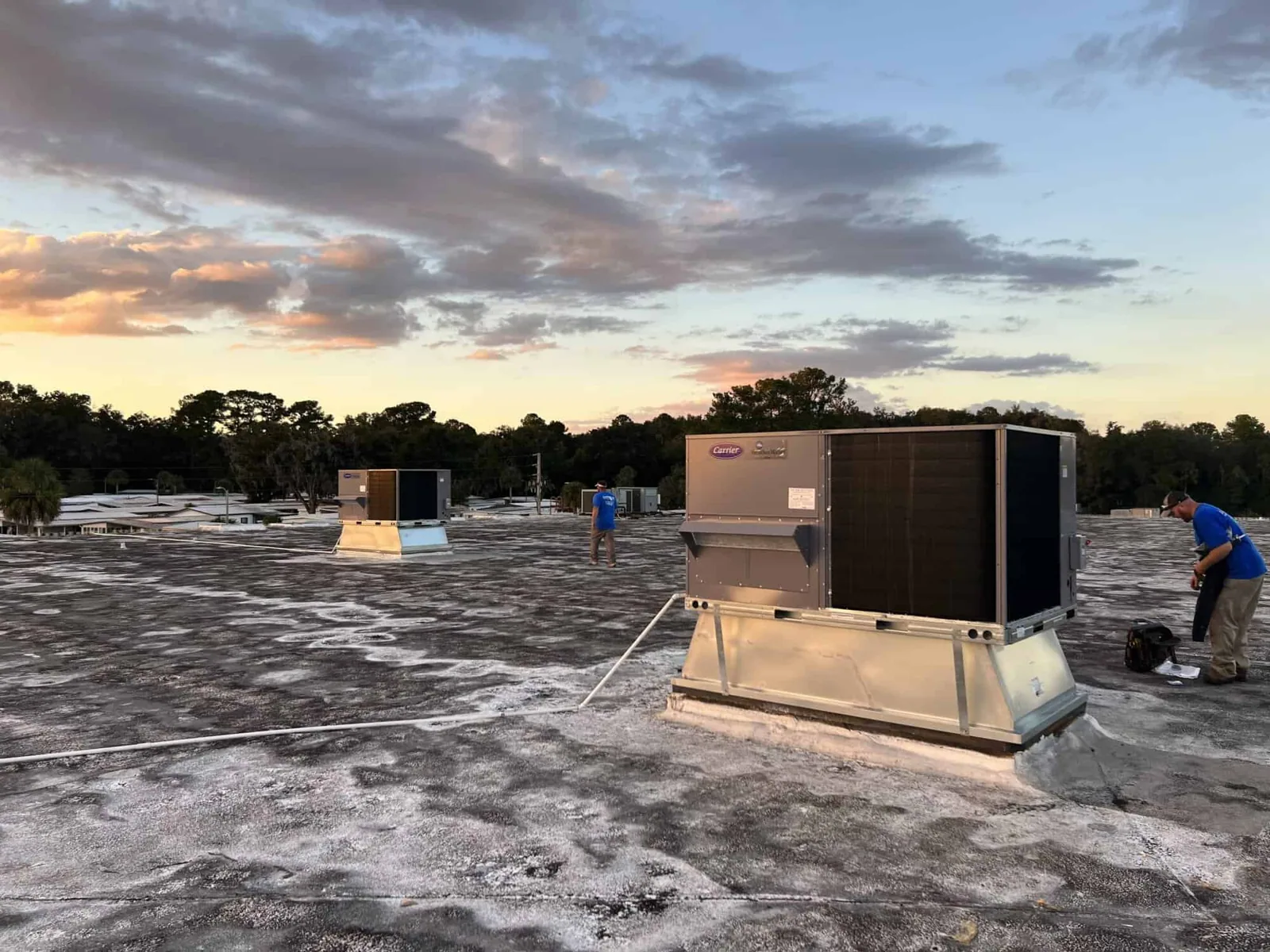
Plants add roof equipment over time: another exhaust fan, a dust collector, a chiller, a conduit run, a new access ladder. Every addition arrives with a technician carrying tools and walking the shortest path across the membrane. Foot traffic wears a track, dropped wrenches cut the sheet and nobody records any of it.
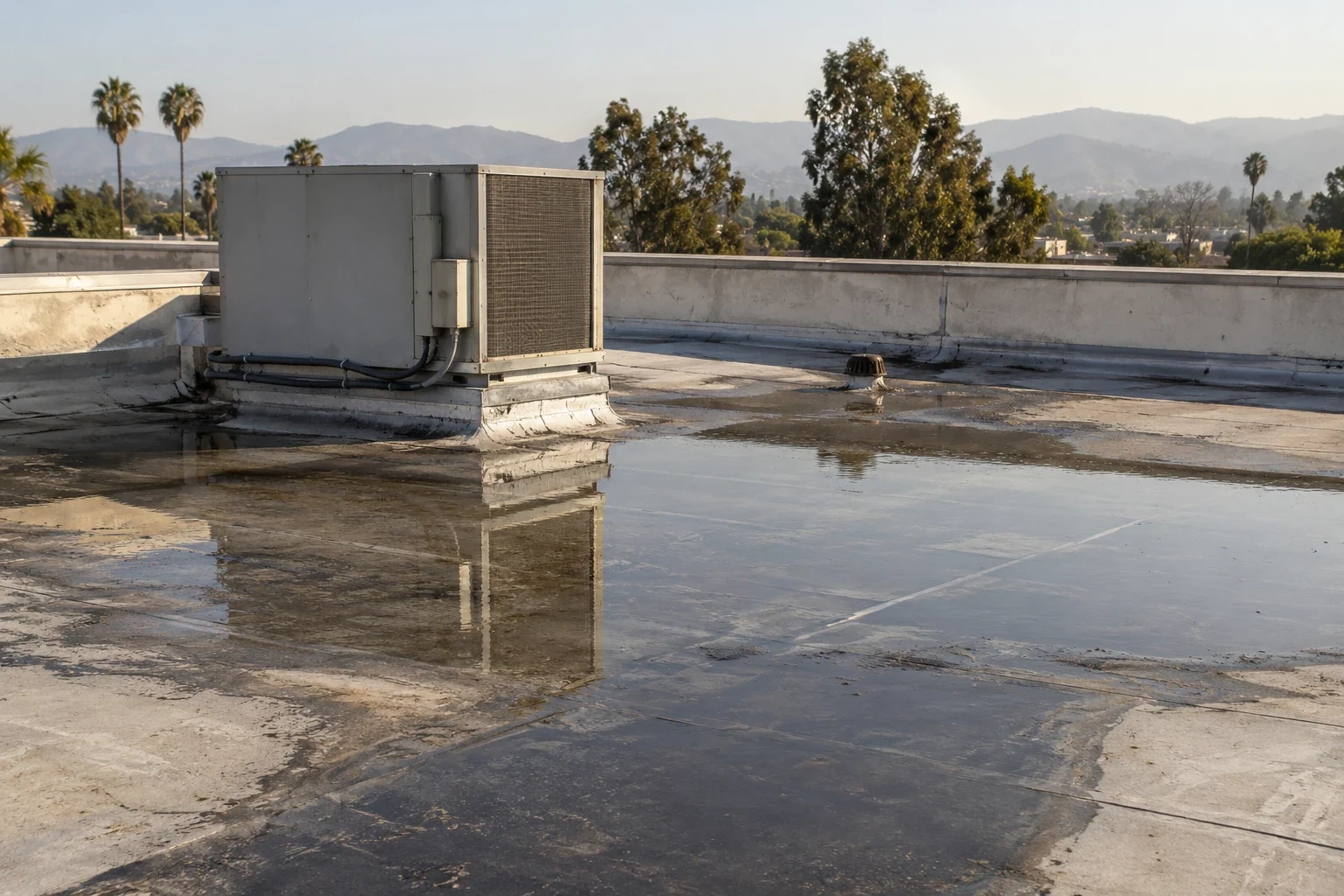
Vibration is the quieter problem. A fan that shakes loose its curb opens a hairline gap in the flashing, and water follows the vibration pattern into the building. We map where the traffic goes and add walkway protection along it, then check curbs and fasteners at every unit. Setting a unit properly matters as much as the sheet, which is why our crews build rooftop equipment curbs and supports with the flashing in mind.
Verdict: protect the paths and fix the curbs. A new membrane laid over the same bad habits fails on the same schedule.
Process heat stacks on top of weather heat
Plan around shutdowns, not around us
The best day to open a plant roof is a planned shutdown. Ask when yours is, because it may be the only stretch when a section can come off cleanly. We sequence the job to it, tearing off and drying in the sections above sensitive equipment first, so production can restart under a finished roof.
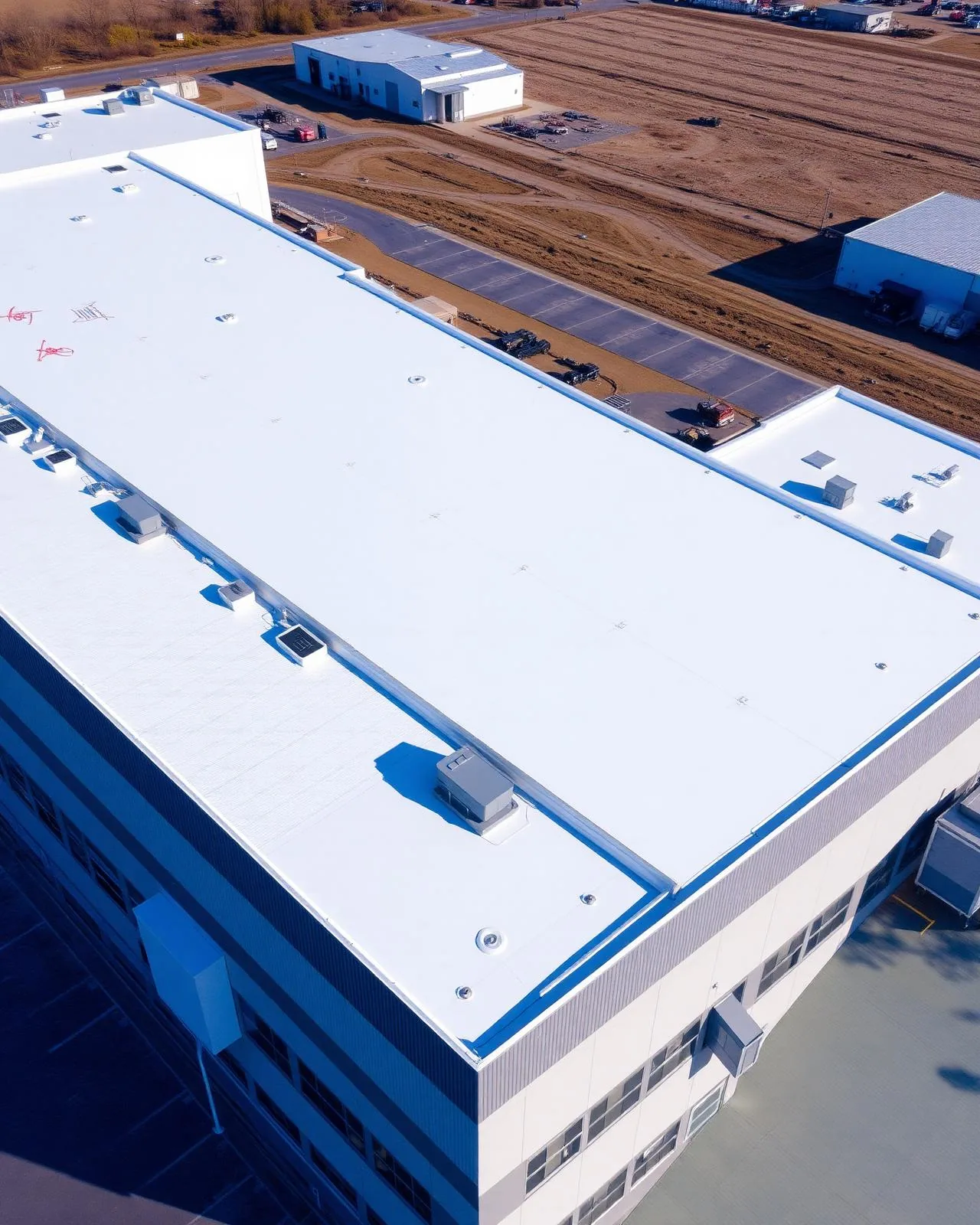
Where shutdown windows are short, the work gets phased by bay. Hot work is limited around flammable materials, so cold-applied adhesives and mechanically fastened systems often come ahead of torch-applied ones. The same discipline we use on any occupied building reroofing project applies, with extra attention to what the process needs from the building. For a technology tenant in Fountaingrove, where Keysight is headquartered, the concern may be dust and vibration. For a food producer in Petaluma, it is usually moisture and sanitation.
Skip the coating over a chemical plume
Do not coat a roof that sits under a corrosive or oily exhaust and expect it to last. Do not choose the cheapest sheet for the bay with the heaviest process. And do not replace the whole plant roof because one wing leaks, since process wings and storage wings age at different rates.
A smarter spend is a written condition report that separates roof areas by exposure. Owners who run several buildings, such as flex industrial shells next to a production hall, can budget each by what the roof actually faces. Chilled production areas follow their own rules, because cold storage roofing has to deal with vapor drive and insulation in ways a dry plant does not. Owners planning across a portfolio, as manufacturers often do, can use that same exposure map to set priorities.
Commercial Roofing Questions
Which membrane holds up best under grease and oil exhaust?
KEE and PVC are the usual answers, because their formulations tolerate fats, oils and many chemicals better than standard TPO or EPDM. We still ask for the process list, since solvents, steam and ammonia each behave differently. If the exhaust plume is narrow, we sometimes put a heavier membrane or a protective pad directly under it and use a lighter system on the rest of the roof.
Can you replace our roof without halting production?
Usually, yes, if the sequence is planned with your operations team. We open one section at a time, seal each before the crew leaves and keep clear of intake louvers, exhaust stacks and equipment that has to stay running. The noisy and dusty steps land in agreed windows. If a short shutdown is available, we use it for the sections over the most sensitive equipment.
We have a leak over a machine. What should happen in the first hour?
Protect the machine, then find the entry point. Cover it, move anything that can be moved and call us. We dry in the roof opening right away, whatever the hour, and then trace the source, which is often a curb or a conduit penetration upstream of the drip. A permanent repair comes after we know whether the insulation under that area is wet.
Does adding new rooftop equipment risk voiding our roof warranty?
It can, if the work is done without the manufacturer's flashing details or by someone who cuts the roof without a plan. Warranty terms vary by manufacturer and by contract, so read yours before anything is set. We can coordinate with the equipment contractor so the curb, the flashing and the roof repair are done in one order, and we document the work with photos.
How do we tell whether the whole roof or just one wing needs replacement?
Test it. A moisture survey maps wet insulation and core cuts confirm it. Wings under heavy exhaust often age faster than storage bays, so the answer can be a partial replacement with repairs elsewhere. We give you the findings in a report with photos, which you can use to plan the budget across more than one year.
Tell us what your plant puts on the roof
Call Commercial Roofing Santa Rosa. We will look at the process, the equipment and the membrane, then tell you plainly what needs work now, what can wait and what needs nothing.