Commercial Roof Leak Repair in Santa Rosa, CA
Commercial Roofing Services
The stain on the ceiling tile is almost never under the leak. Water enters a commercial roof in one place, runs along the deck or through the insulation, and drops somewhere else, sometimes thirty feet away. Patch the wet spot you can see and you have patched nothing.
That is the whole problem with leak repair in Santa Rosa, CA. Anyone can slap sealant on a roof. Finding the opening takes patience, a method and a willingness to say the first guess was wrong. We trace the water back to its source, fix that, and tell you what else we saw while we were up there.
Serving Santa Rosa • Rohnert Park • Petaluma • Windsor • Healdsburg • Sebastopol • Napa
Water does not stay where it enters
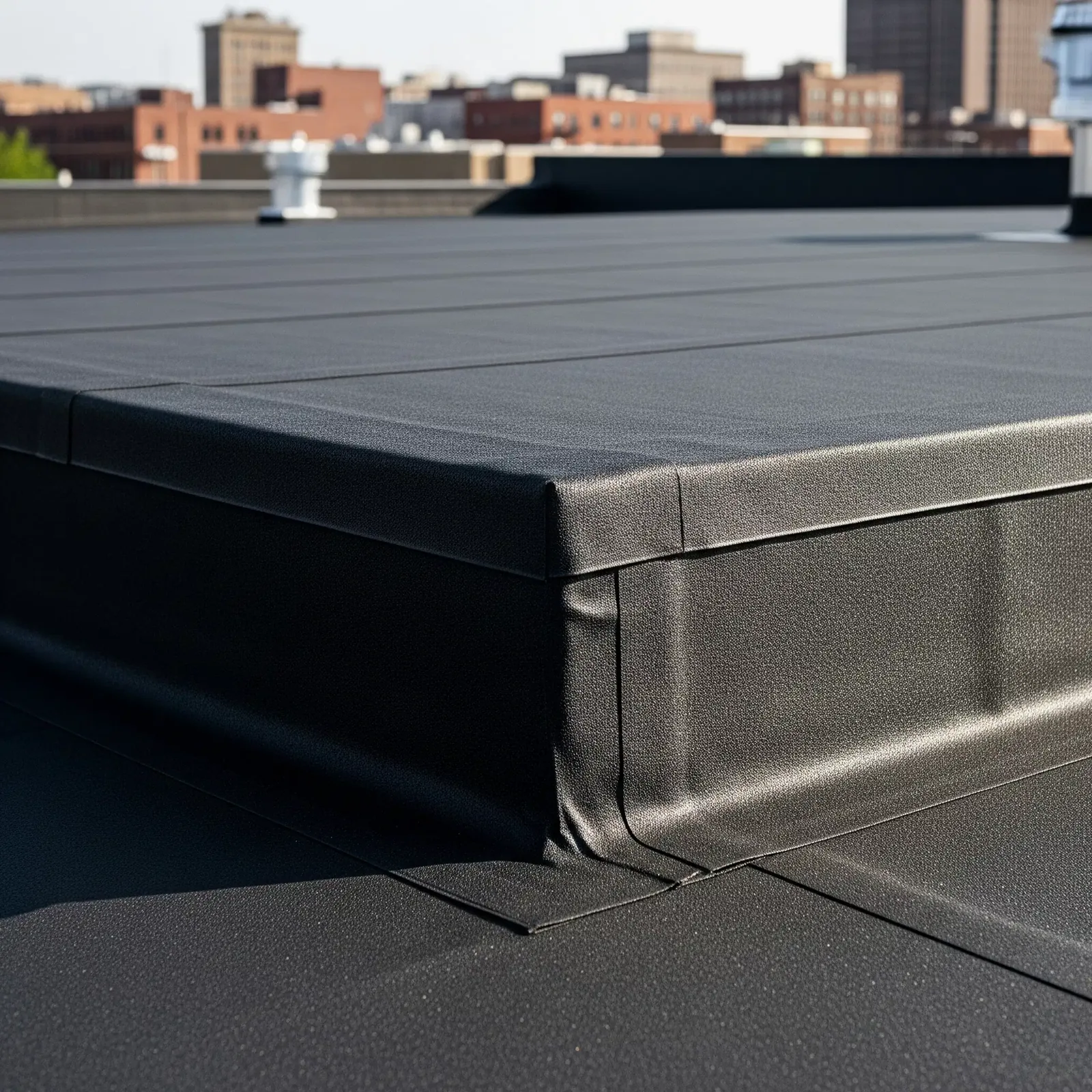
On a low-slope commercial roof, a leak has a lot of room to wander. Water gets through the membrane, then moves along the top of the deck or travels sideways through wet insulation until it finds a joint, a fastener hole or a penetration in the ceiling below. By the time you see it inside, it may have traveled the length of a bay.
Metal decks make this worse. Water runs along the flutes and drips at the end laps. Concrete tilt-up buildings can channel water down a wall cavity and show a stain at floor level. Roofs with a lot of rooftop equipment add more places to hide an opening.
This is why the location of the interior damage is only a clue, not an answer. We use it to narrow the search, then work upslope and toward the nearest penetration, seam or termination. Verdict: be suspicious of any contractor who quotes a fix without walking the roof.
How we trace a leak
We work in a set order so we do not waste time or money chasing guesses.
- Interview the people who saw the leak: when it showed up, whether it follows rain, wind or sprinklers, and how fast it drips.
- Map the interior damage so we know the likely zone of entry.
- Walk the roof and check every seam, flashing, drain, penetration and edge in that zone and around it.
- When the cause is not obvious, test with water in controlled steps, starting low and moving upslope, one area at a time.
- Use infrared or core samples when the insulation may be wet, so we know how far the damage has spread.
The last step matters. A moisture survey can show whether the leak is a single failed detail or a roof with water spread through it. Those are very different repair jobs.
Details cause most leaks
Overflow is the real problem
Plenty of leaks are really drainage failures. Annual rainfall here runs near 32 inches, and when an atmospheric river parked over the city on November 21 to 23, 2024 and dumped close to 15 inches in roughly three days, the question is not whether the membrane is waterproof. It is whether the water has somewhere fast to go.
If the drains are plugged with leaves, ash or debris, or the overflow scuppers are missing or blocked, water backs up and rises to find the weakest seam. That roof was not leaking in October. It leaks in a storm because it is holding water it should be shedding.
We check roof drains and scuppers on every leak call. Standing water is its own failure mode, and ponding water roof repair is the longer-term fix. Clear the drains first. Then decide what else the roof needs.
A temporary stop is not a repair
Sometimes the right first move is temporary water control. If water is coming in during a storm, protect people and contents below it and coordinate a roof assessment when access is safe. The appropriate temporary measure depends on the assembly, weather and site conditions; emergency roof repair addresses that immediate scope before permanent work.
But we are honest about what is temporary. Roof cement over a failing seam is a bandage. A tarp is a pause. They buy you time, and they should be followed by a real repair on a date you agree to, not forgotten until the next storm.
Do not spend on a full replacement just because you have a leak. One leak does not condemn a roof. Fix the leak, document the condition, and decide on bigger spending when the findings support it. If the findings say the roof has run its course, our planned roof repair and replacement options are on the table.
Keep the repair boundary tied to evidence. Mark the interior stain, trace the likely path above it, and record the seam, penetration, drain, or wall transition that was actually tested. If water has traveled through the assembly, a surface patch may stop the entry without drying wet insulation or repairing deck damage. State whether those concealed conditions were checked and what would trigger a second visit. That gives the owner a useful answer if the stain returns or appears in another room.
Commercial Roofing Questions
Why does my roof only leak when it rains hard or the wind blows?
Heavy rain tests drainage, and wind-driven rain pushes water sideways into flashings, laps and edges that stay dry in a light shower. If the leak shows up only in big storms, we start with the drains, overflow scuppers and wall terminations. Tell us what the weather was doing, because it narrows the search quickly.
Can you find a leak when it is not raining?
Often, yes. A close inspection finds the likely openings, and controlled water testing can reproduce the leak on a dry day. Infrared and moisture probes also show where wet insulation sits. Rain makes it easier, but it is not required.
How quickly can a leak be stopped?
Active leaks get priority, and we can often put a temporary stop in place on the first visit. A permanent repair depends on the cause, the roof type and the weather. We tell you which part is temporary and what the follow-up is, so it does not drift.
Should I worry about wet insulation after a leak?
Yes. Insulation that stays wet loses its value, adds weight and keeps feeding moisture back into the roof system. If the leak ran for a while, we recommend checking the extent of the damage before you decide how much to repair. Drying it out and replacing only the wet sections is often the right call.
Does a leak mean I need a new roof?
Not by itself. A leak at a single failed flashing on an otherwise sound roof is a repair. Repeated leaks, widespread wet insulation or a deteriorated membrane point toward bigger work. We give you the evidence and let you decide with the facts in front of you.


Stop guessing where it comes in
Call Commercial Roofing Santa Rosa. We will find the actual entry point, fix it, and tell you what else on the roof needs attention now or later.