Skylight, Curb and Penetration Flashing in Santa Rosa, CA
Commercial Roofing Services
Every penetration on a roof is a promise made with sealant, and sealant is the weakest part of the promise. A skylight, a plumbing vent, a conduit run and an exhaust fan all interrupt the one continuous skin that keeps the building dry.
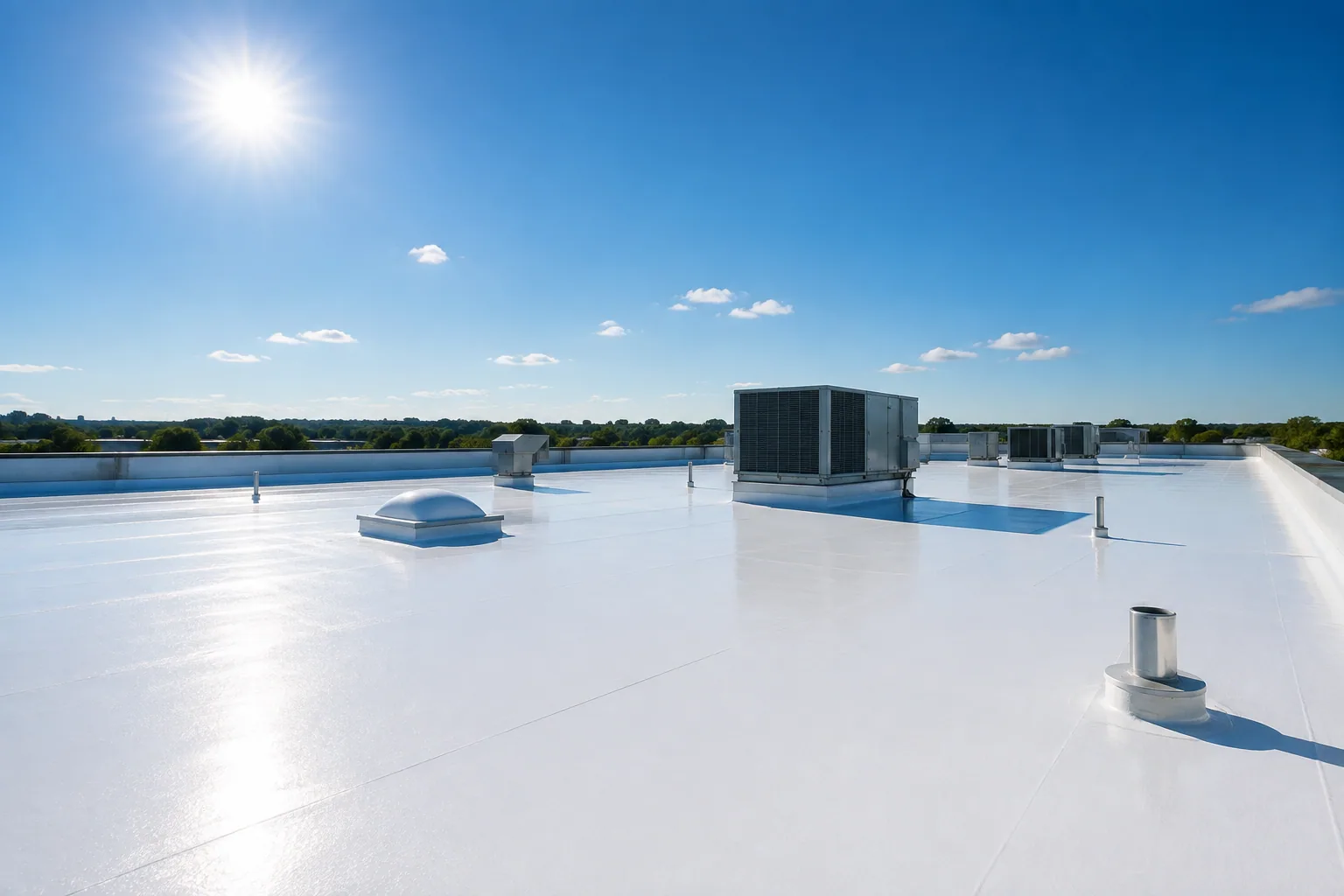
Penetrations are small compared with the roof around them and they fail far out of proportion to their size. Heat bakes the sealant, wind works the curb loose and one new cable run punched through the membrane by a tenant's contractor can undo the whole detail. On commercial roofs in Santa Rosa, CA we rebuild skylight curbs and flash penetrations so the detail matches the membrane, instead of piling another layer of mastic on top of the last one.
Serving Santa Rosa • Rohnert Park • Petaluma • Windsor • Healdsburg • Sebastopol • Napa
Count the holes before the roof gets blamed
Every building type has its own list of holes. An office building has plumbing vents, fresh-air intakes and conduit. A restaurant has kitchen exhaust and grease fans. A winery or food production building has process exhaust and stacks. A lab or technology building adds specialty exhaust and equipment curbs, which is why a roof in Fountaingrove, where the Keysight headquarters sits, starts with the same count.
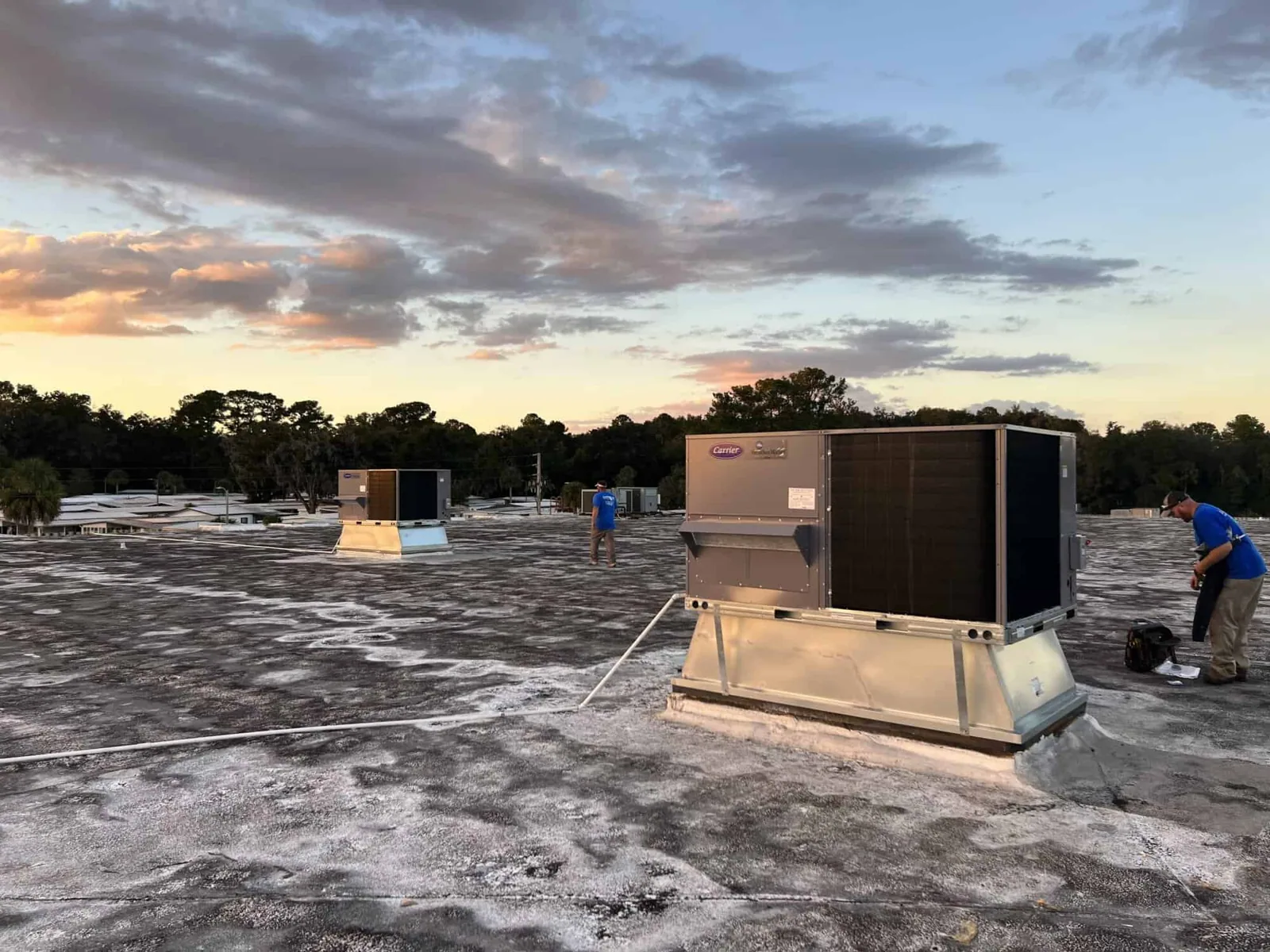
Older roofs collect abandoned penetrations: pipes cut off at the deck, capped with a bucket of tar and forgotten. We walk the roof with the plans, if you have them, and tag every opening: live, dead or unknown. Dead penetrations should be removed and the deck repaired. Live ones need proper flashing, and heavy ones need proper rooftop equipment curbs and supports. Count every one before the membrane takes the blame.
Why flashings let go
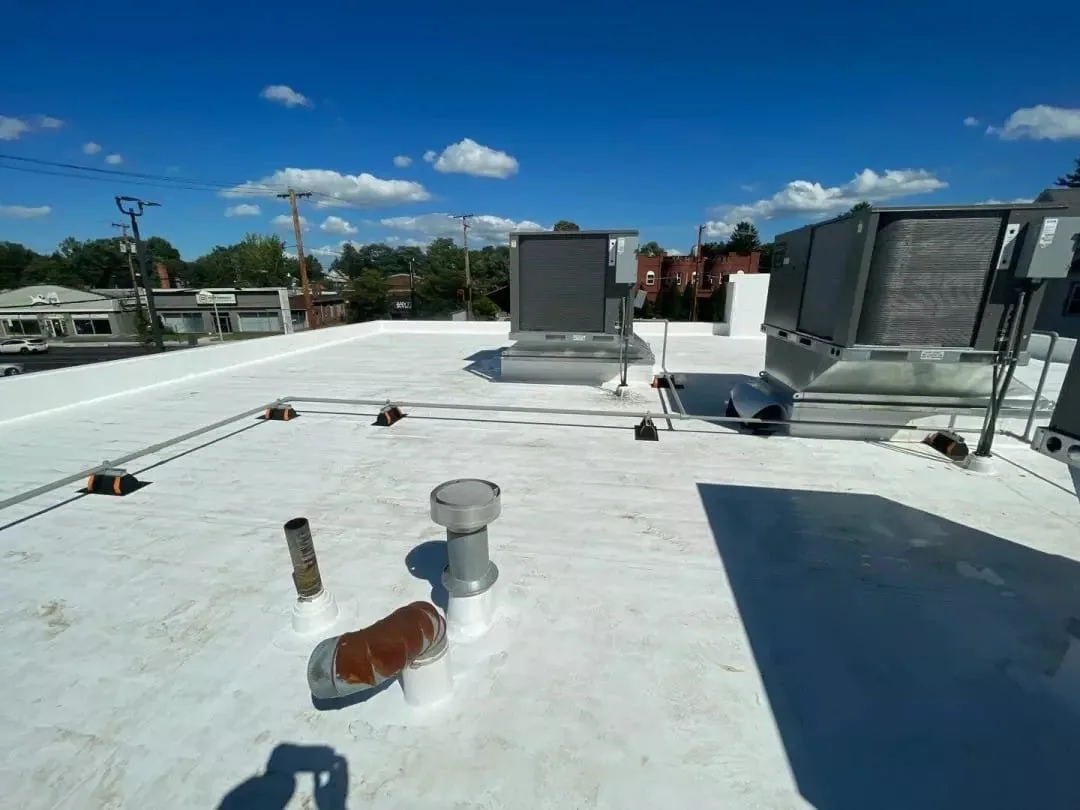
Skylight leaks come from four places: the curb flashing, the seal between the dome or glass and its frame, the condensation that looks like a leak, and a curb that was never tall enough. Plastic domes craze and yellow in the sun until they crack. Glazing gaskets shrink. Flashing that stops short of the required height lets wind-driven rain run behind it.
Pipe boots split from sun and heat. Pitch pockets, the little pans of sealant around odd-shaped penetrations, shrink and open until water finds the gap. Counterflashing pulls away from walls where the sealant dried. The pattern is the same everywhere: the detail moves, the sealant cannot, and the opening shows up after the next hard rain. A flashing failure repair handles the isolated cases, and a full rebuild handles the roof where every detail has aged together.
Rebuild the detail, not the caulk line
Sun, ash and an atmospheric river
Heat is the quiet culprit. Santa Rosa reached a record 115 degrees on September 6, 2022, and sealants, plastic domes and rubber boots are the details that soften and crack in heat like that. Healdsburg touched 117 degrees the same day. Embers add a second hazard. Fire driven by near-hurricane-force wind, like the Tubbs Fire that crossed Highway 101 in October 2017, throws sparks across roofs, and a plastic dome or vent cap is among the first parts to melt.
Water makes the weak details obvious. Close to 15 inches fell on Santa Rosa in the late-November 2024 atmospheric river, over about three days, the kind of week that finds every cracked boot and short curb. The practical lesson is to repair penetrations in the dry months, before the wet season rather than during it. A summer repair done on a dry deck holds better than a patch made in a downpour. For a leak already running, leak repair starts by tracing it to its source.
Mastic is not a repair
Do not buy another tub of roof cement for a skylight that leaks every year. Do not wrap a failed curb in a patch of membrane that is only stuck to dirt. These repairs look quick and cost little, and they fail in months because they never address why the detail opened.
Spend instead on correct materials, correct height and clean substrates, and on removing penetrations that no longer serve anything. An owner with an office building roof full of old tenant add-ons often saves more by removing dead penetrations than by replacing healthy ones. We also check the surrounding TPO or other membrane for hidden moisture before closing any detail, since a perfect flashing over wet insulation still leaves the roof failing.
Record the condition of the curb, frame, glazing, fasteners, and membrane tie-in separately. Condensation at a skylight can resemble a roof leak, while a failed curb flashing can send water along the deck before it appears indoors. Check both the exterior detail and the room below, and note whether the opening is still needed for daylight or can be removed during a larger project. A durable repair addresses the identified path and leaves a clear boundary for any glazing work by another trade.
Commercial Roofing Questions
Why does my skylight drip only when it rains hard from one direction?
Wind-driven rain exposes a detail that is short, split or unsealed on one face of the curb. Note which side leaks and which way the storm came from, and share that with us. The pattern points to the specific flashing or glazing seam, and often it is a short counterflashing or a failed top seal rather than the whole unit.
Is it better to replace a skylight or remove it?
Remove it if nobody needs the daylight. A properly framed and insulated infill removes a leak risk and a heat-gain source for good. Replace it when the light matters to the space. In either case, rebuild the curb and flashing at the same time, since a new dome on a tired curb leaks just as the old one did.
How do I find out which pipes and vents are dead?
Bring the mechanical and plumbing drawings if you have them, and we will compare them to what is on the roof. Where drawings are missing, we trace pipes from the inside during a walk-through with your maintenance staff. Each opening gets tagged live, dead or unknown, and the unknown ones get flagged for confirmation before anyone cuts anything.
Can tenants add rooftop penetrations without hurting the roof?
They can, if the work is planned. Require a roofer to review each new penetration, flash it to the membrane and record it in the roof file. Unmanaged cuts by a cable or HVAC contractor are one of the most avoidable causes of leaks. A short written rule in the lease helps, and so does a roof access log.
Will repairing flashing around penetrations affect my manufacturer warranty?
Handled correctly, it should support the warranty, since manufacturers publish the details they accept. Wrong materials or unapproved sealants can create problems. Show us the warranty paperwork before work begins, and we will use the details it calls for and keep a dated record of what was done and where.

Have every opening on the roof checked
Call Commercial Roofing Santa Rosa. We will tag each penetration, test the flashing and tell you plainly which ones need work now, later, or not at all.