Office Building Roofing in Santa Rosa, CA
Property Types We Roof
Nobody on the lease owns the roof. That is the quiet reason office roofs get neglected. The tenant calls about a ceiling tile, the property manager forwards the email, the owner approves a patch, and the building never gets a plan. Then the patches add up to the price of a replacement, with none of the benefits.
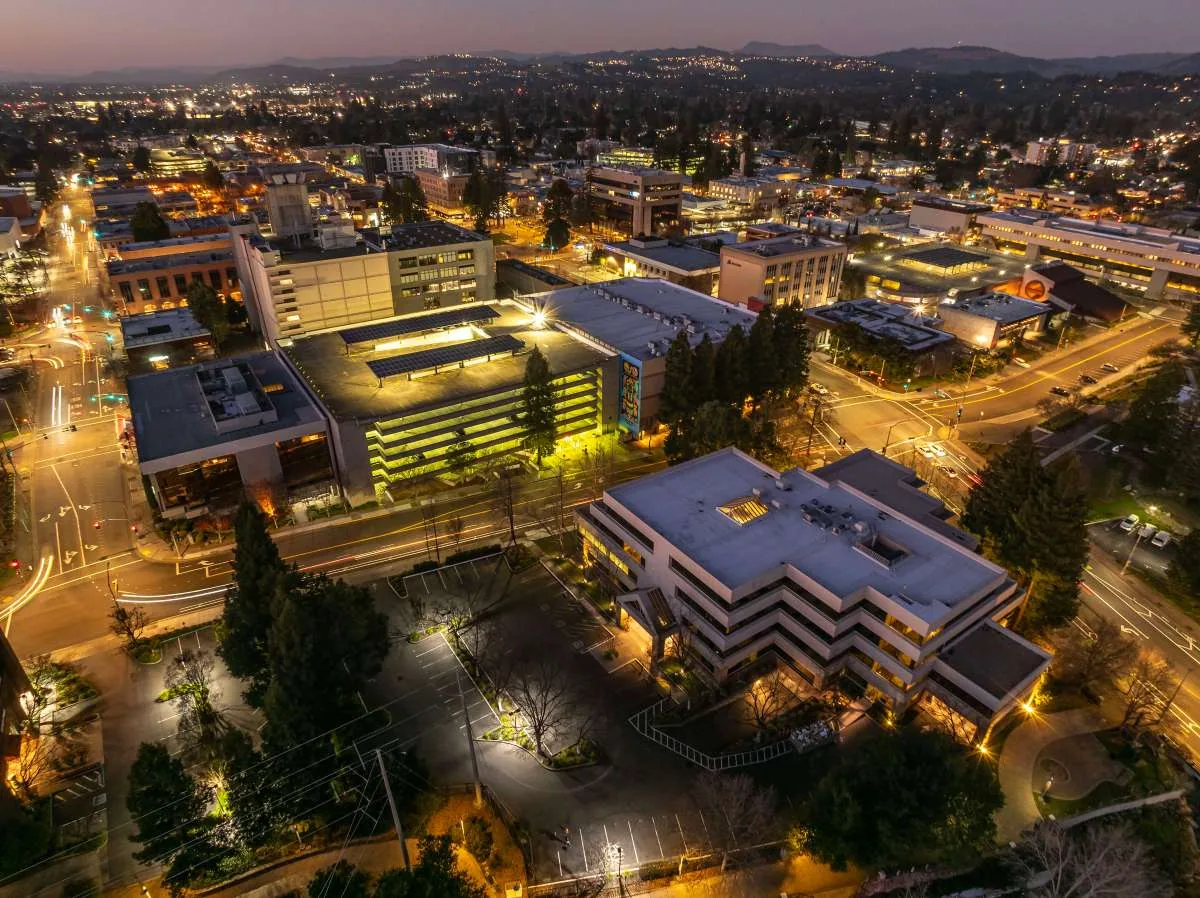
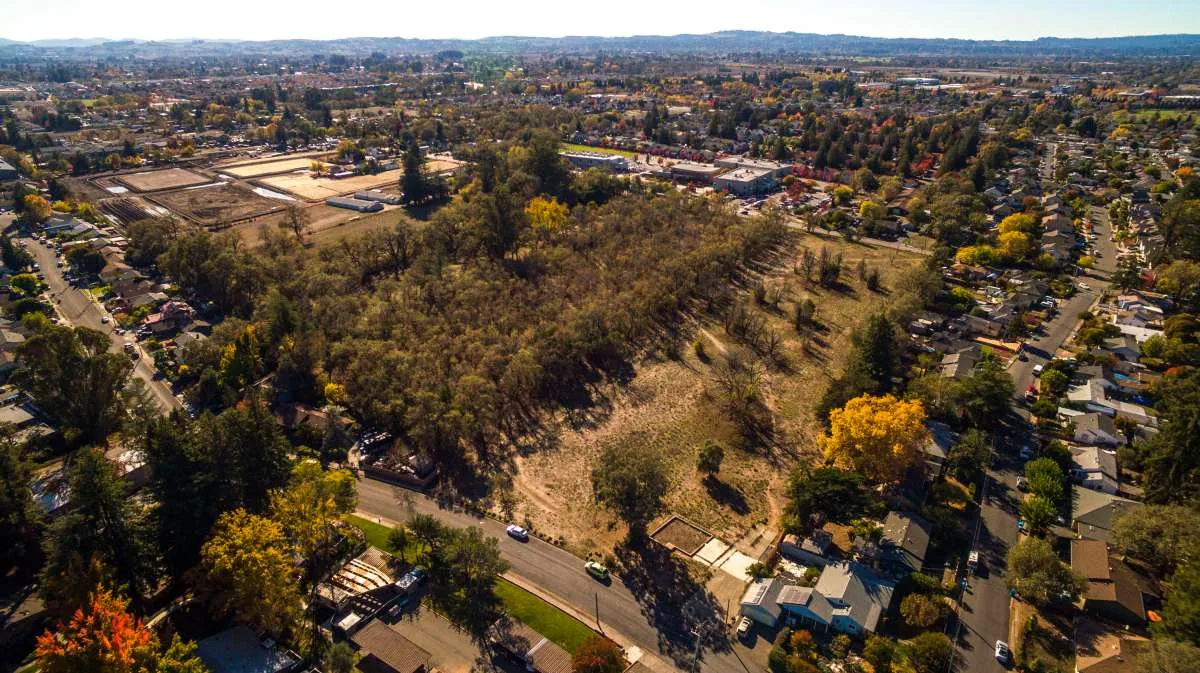
Office roofs in Santa Rosa, CA are not exotic. They are low-slope, crowded with HVAC, and shared by people who never go up there. What changes the picture is the market around them: a county that takes weeks of rain in a few days, summers that have reached 115 degrees, and a business park stock that mixes office, flex and light industrial buildings. We start by working out who the roof serves and what it is being asked to carry.
Serving Santa Rosa • Rohnert Park • Petaluma • Windsor • Healdsburg • Sebastopol • Napa
Tenants call, owners pay
A multi-tenant office building collects roof penetrations the way a desk collects paper. One tenant adds a split system, another a kitchen exhaust, a third an antenna. Each one comes with a technician, a ladder and a hole. The roof ends up looking like a record of every tenant improvement, with no drawing to show who put what where.
The Airport Business Center near the Schulz-Sonoma County Airport is the North Bay's largest business park, and it mixes office, flex and light industrial buildings in one place. In southwest Santa Rosa, the Roseland plan projects roughly 802,000 square feet of office space. Whoever manages that kind of stock, from a single owner to a firm in property management, needs one record of the roof and one voice responsible for it.
Rooftop units wear the roof out
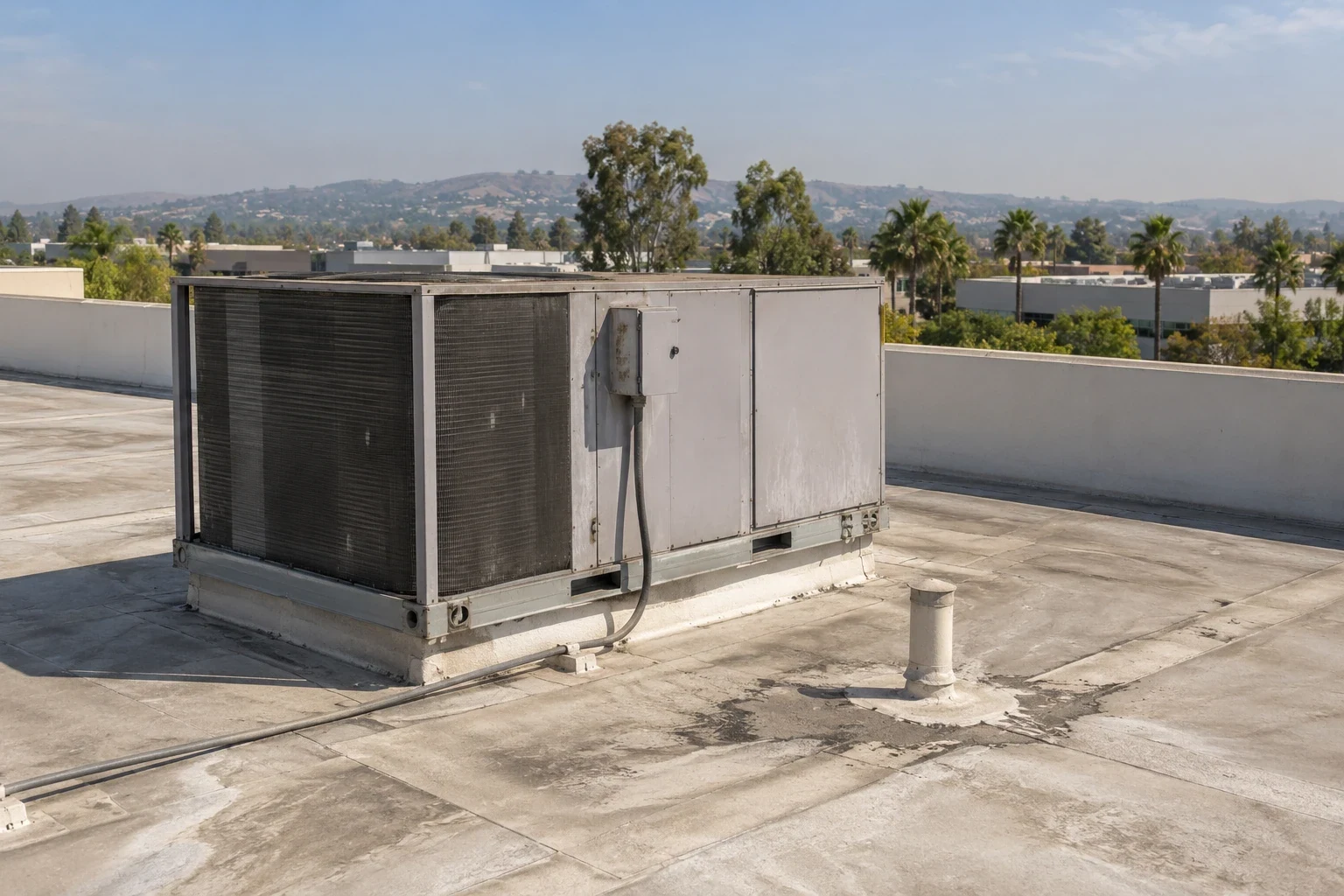
Most office roof leaks start at something that was bolted down or cut through, not at the membrane. Condensate lines drain onto the sheet and eat at it. Refrigerant lines rub through flashing. Service techs wear a path across the field because the shortest route to the unit is straight across it. The membrane under that path wears out years ahead of the rest.
We trace each leak to a source before suggesting anything. Often the answer is rebuilding penetration flashing, redirecting a condensate line and adding a walkway pad. Parapets and edges also matter on an office roof, since wind-driven rain gets behind loose coping, so edge metal and coping get checked on every visit. Verdict: fix the details the units create, and the membrane lasts as long as it was built to.
Storm water and fire maps both matter
Fix it in the order tenants feel it
Start with whatever is dripping, then work back to the cause. A fast leak repair gives tenants relief and buys time to plan. After that, a written condition report with photos tells the owner what the roof has left. If it has years left, plan a maintenance route. If it does not, get the replacement into next year's capital budget before the leak forces it.
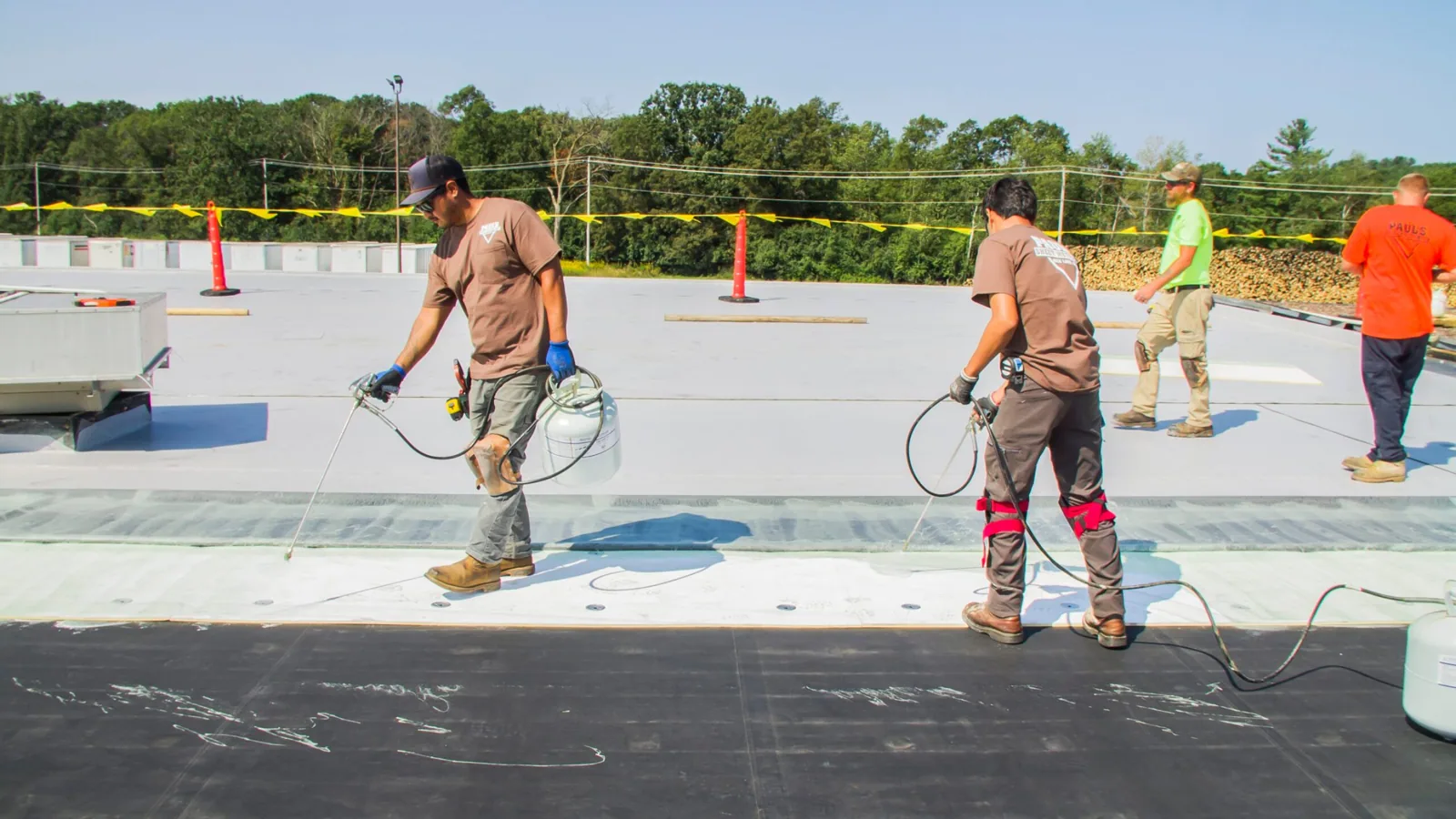
The work itself is scheduled around tenants. Noisy steps happen early or on weekends, hoisting is staged away from entrances, and fumes are controlled near air intakes. A large occupied building does not need to close for the roof to be replaced, and a calm tenant is cheaper than a loud one.
Skip the cosmetic roof work
Do not pay for a replacement because the roof looks bad from the next building. Appearance and performance are different questions, and a dull roof can be perfectly dry. Do not replace a roof the year before a sale unless the buyer's due diligence is going to demand it. And do not keep re-patching a roof that has crossed the line, since the patch bill eventually passes the replacement bill.
A smarter spend is a plan. Roof capital planning spreads the work across years and ties each building's roof to its lease cycle. The same logic applies to neighboring building types such as medical office space and server rooms inside an office suite, where a leak costs more than the roof does.
Use work zones to limit disruption below. Mark tenant areas, conference rooms, sensitive equipment, and entrances that may be affected by noise, odors, or debris movement. Schedule inspections around access rules and give property management a dated notice of the roof sections being reviewed. If a leak appears after a mechanical contractor visits, compare the work order with the curb or penetration condition instead of assigning cause from timing alone. A clear closeout tells tenants what was repaired and what still needs observation.
Commercial Roofing Questions
Who is responsible for the roof on a multi-tenant office building, the landlord or the tenants?
The lease answers that, and we are not lawyers. Most leases put the structure and roof on the landlord and the equipment on the tenant. A fair report separates the two, showing which damage is from age and weather and which came from a tenant's added equipment. That separation tends to cut disputes short.
A tenant is adding an HVAC unit. What do we need to do to the roof first?
Look at the roof under it before the unit is set. A new unit on a worn section means a leak by spring. The curb should be flashed into the membrane, the weight checked against the structure, and a walkway added to the access path. Having the roofer on site the day the curb goes in keeps the flashing right.
How can we repair a roof without disrupting a building full of offices?
Sequence and noise control. Heavy steps happen in the early hours or on weekends, and each area is dried in before the crew leaves. We keep staging away from entrances and put protection over air intakes. Tenants get notice on the days that will be loud, and you get a single point of contact.
Is it smart to replace an office roof before a sale or refinance?
Sometimes. A buyer or lender will often discount a roof that has an unknown condition, so a clean report can be worth more than a quick patch. If the roof is dry and sound, a report that proves it may be all you need. If it is near the end of its life, plan the replacement with the buyer's timeline in mind.
What does the roof add to a building's energy bill during a Santa Rosa heat wave?
A dark, aged roof soaks up heat and passes it to the rooftop units, which work harder on 100-degree afternoons. A reflective membrane takes some of that load off, and California's 2025 Energy Code, in force for permits filed from January 1, 2026, affects what a replacement has to include. We review the energy requirements before the scope is written.
Give the roof an owner
Call Commercial Roofing Santa Rosa. We will walk the roof, sort what the tenants caused from what the weather did, and tell you plainly what needs work now, later or not at all.