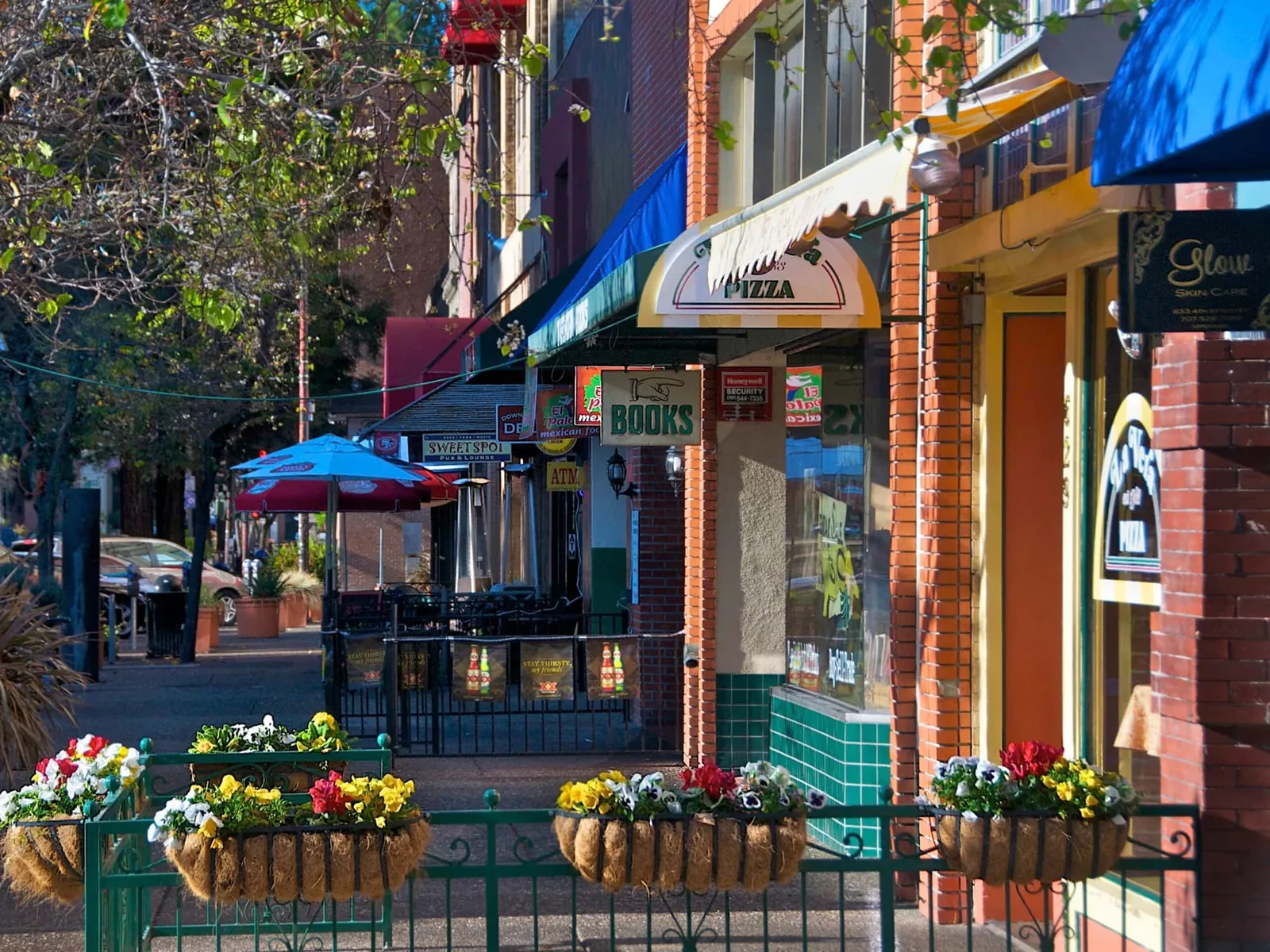
Commercial Roofing in Downtown Santa Rosa, CA
Service Areas
The roofs downtown look like one problem and behave like many. Santa Rosa Plaza, the 692,026 square foot enclosed mall with Macy's and Dave & Buster's, is the building everyone points to, and the assumption that follows is that a building that big needs one big roofing decision. It rarely does. Square footage counts floor space, not roof, and a mall roof tends to be a patchwork of sections, curbs and drain paths that wears out in small places long before it wears out as a whole.
We repair, recover, coat and replace commercial roofs across the core of Santa Rosa, CA. On a mall-scale building the first job is sorting the sections that are fine from the ones that are not. The second job is making sure water has somewhere to go. Everything else is price and timing.
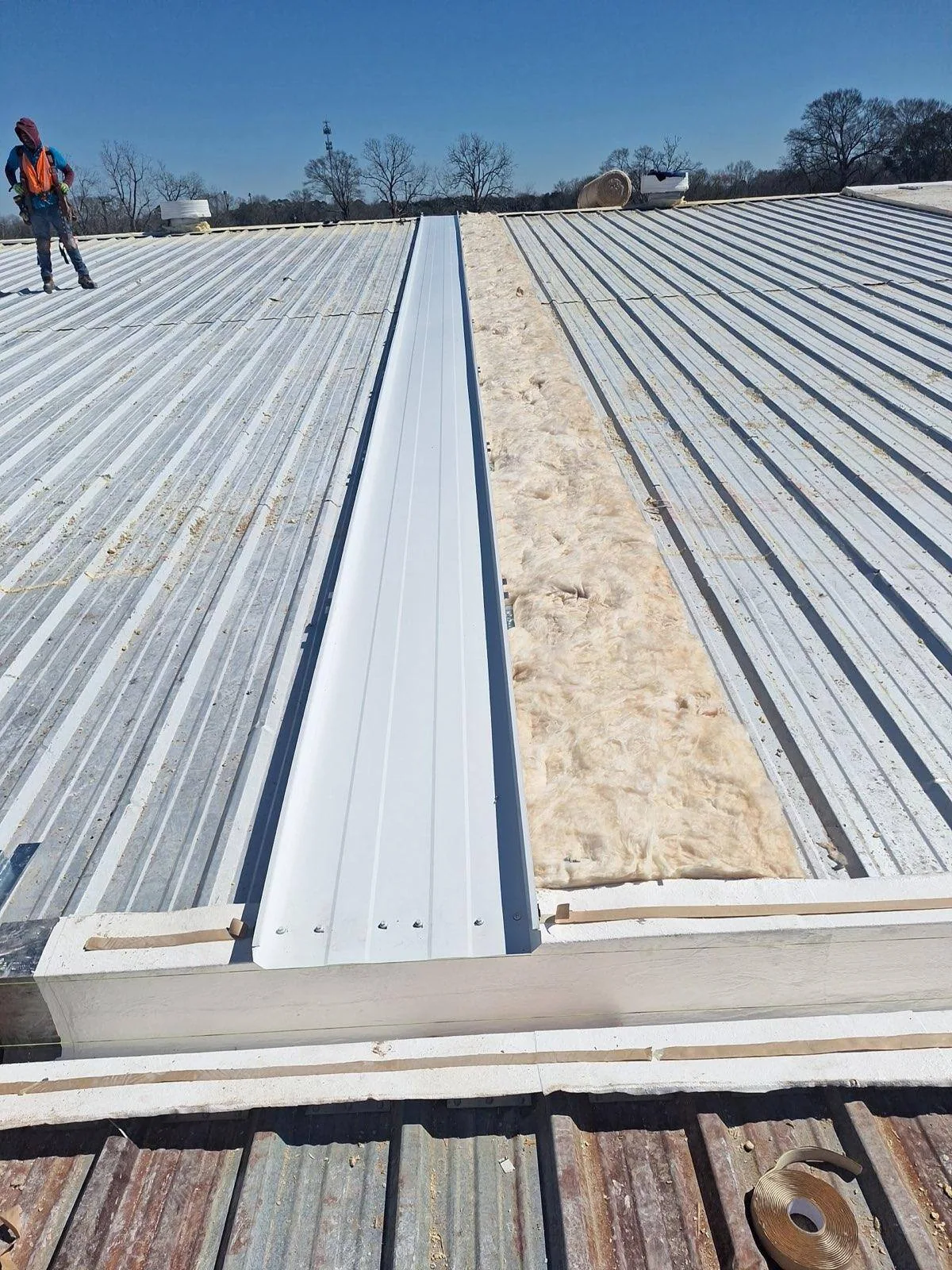
Serving Santa Rosa • Rohnert Park • Petaluma • Windsor • Healdsburg • Sebastopol • Napa
A mall is a stack of small roofs
Santa Rosa Plaza opened in 1983 on land cleared by urban renewal, and that date tells you almost nothing about the membrane overhead. Roofs get replaced a section at a time as budgets allow, so a building from 1983 can carry a roof from last decade over one wing and something far older over a back corridor. We ask first for the roof record: what was installed where, and when. If nobody has it, we build one on the first walk.
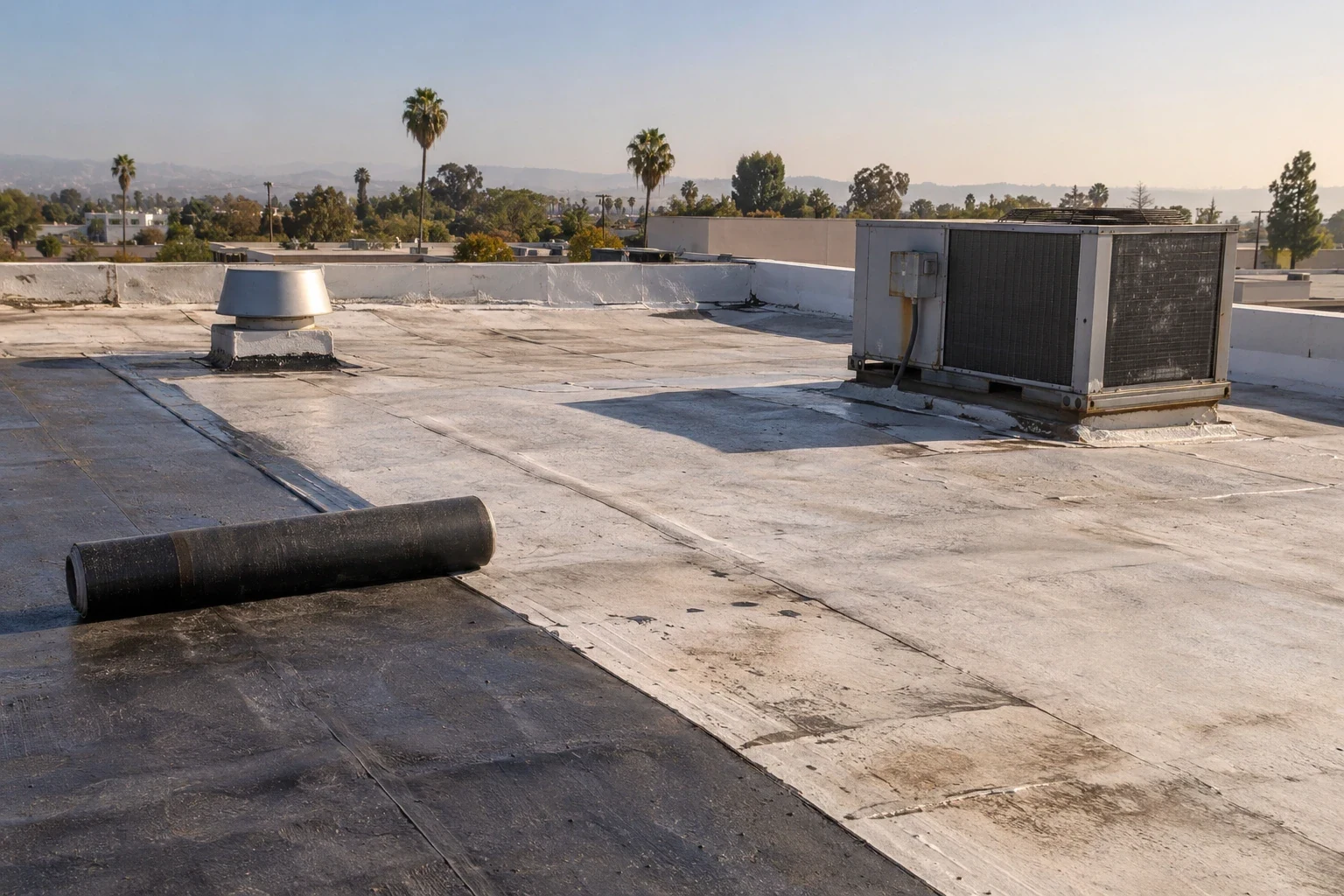
Up top, we start at the places where one section meets another, because tie-ins and additions are where a patchwork gives out. We check every curb under a rooftop unit, any skylight or glazed curb over a common area, the parapet caps, the wall flashings and the drains. Years of tenant mechanical work can also leave abandoned penetrations that were capped once and never revisited.
Treat the roof as a map, not a single number. Mark each section green, yellow or red in a written condition report with photos, and put money only into the red ones.
Follow the water
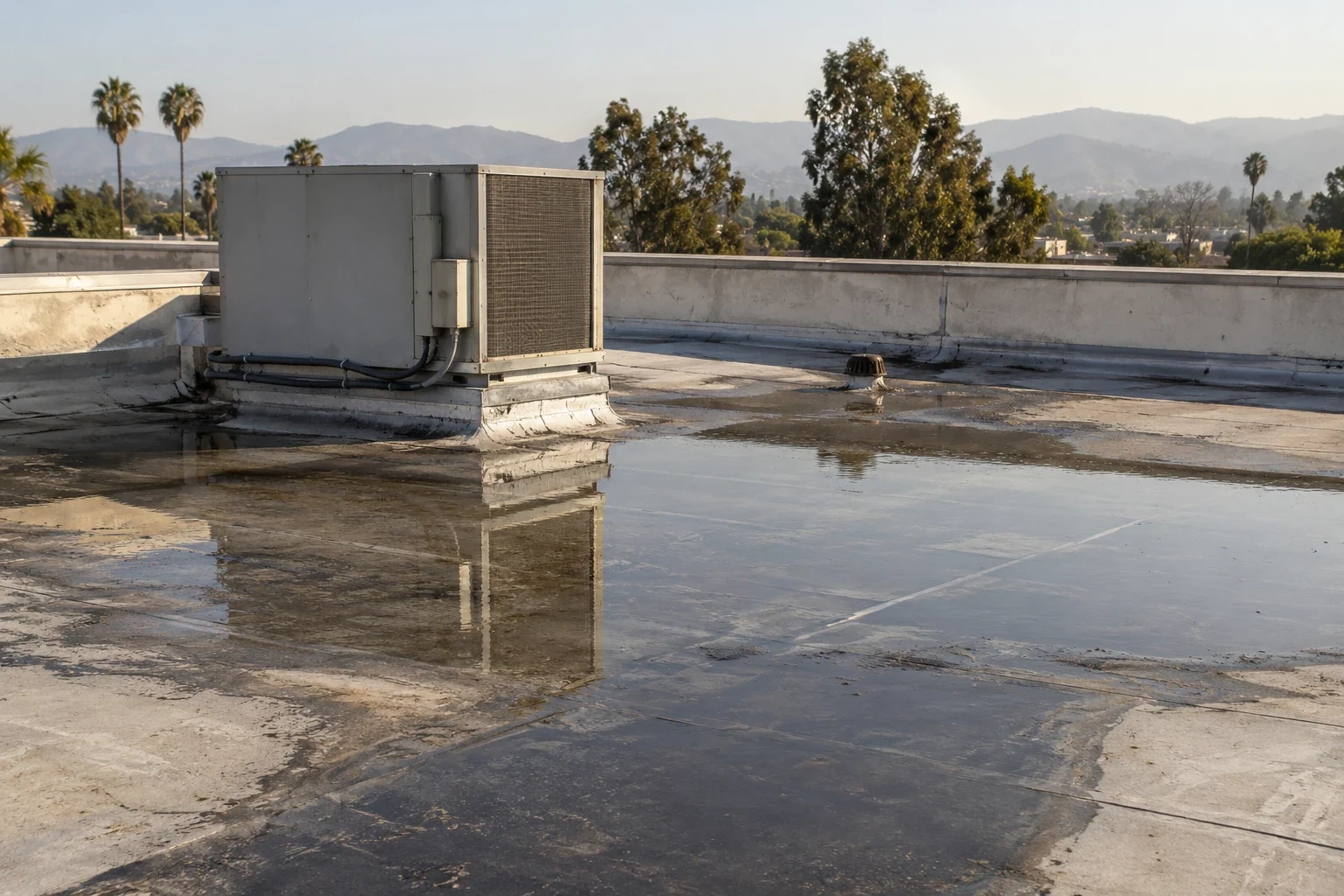
Santa Rosa Creek runs through downtown in a flood-control channel and goes underground in a culvert beneath City Hall, between Santa Rosa Avenue and E Street. That is a fair hint of how seriously this part of town has to treat big rain, and roofs deserve the same attitude. Over three days in late November 2024, an atmospheric river left close to 15 inches of rain on the city, and the streets flooded. A flat roof is a small catchment that has to empty through a handful of openings, and when rain arrives that fast those openings are the whole story.
The real problem is almost never the membrane. It is a drain basket packed with debris, a scupper smaller than the one beside it, an overflow outlet set so high that it does nothing until water is already climbing the flashing, or a leader that clogs further down the line. We clear every drain, look for tide marks on the walls and curbs that show how high water has stood, and check whether the overflow openings sit where the structure can tolerate a few inches of water. Where it stacks up, we add or enlarge drains and scuppers before anyone talks about repairing ponded areas of membrane.
Heat, embers and ash
Work around foot traffic
Retail does not close for a roof. With the SMART Santa Rosa Downtown station serving the core, we plan truck access, hoisting and material staging around when people arrive, not around when it is easiest for the crew. Loud or heavy work happens before opening or after close, entrances get covered walkways and spotters, and every lift is planned with the property manager before the truck shows up.
Anyone with food or merchandise under a work area hears from us first. Reroofing an occupied building means isolating small sections, drying them in every day and never leaving an open cut overnight.
What not to spend on
Plenty of downtown roof money gets wasted on the wrong fix. Here is where we tell owners to stop:
- A full tear-off because one wing leaks. Find the section, repair it, and see how the rest holds.
- A coating over insulation that has not been surveyed. If it is wet underneath, the coating seals the water in. An infrared moisture survey costs far less than coating a roof twice.
- New membrane where the drains are the actual failure.
- Capital on a space whose future is undecided.
That last one is real here. Plans to turn the former Sears space into a convention center of about 40,000 square feet, plus a 250-room hotel, stalled when costs climbed. Whatever the building ends up as, the roof over it has to keep rain out for however long the decision takes, and that is a job for good repairs and a maintenance routine, not a new system. The same reasoning holds for shopping center roofs in general, and for Coddingtown, the other big enclosed center on Mendocino Avenue.
A few blocks away, Railroad Square adds older roof-to-wall details to the same wet-season inspection list.
Commercial Roofing Questions
Does a mall that opened in 1983 need a new roof?
Not on the strength of its age. The opening date of the building says little about when each roof section was last replaced, and it says nothing about drainage or the condition of the insulation. We would walk it, map the sections by condition and price replacement only where a section has reached the end of repair.
How should we handle the roof over a space with no confirmed future?
Keep it dry and spend as little as possible doing so. With the former Sears space at Santa Rosa Plaza, a convention center and hotel were proposed and then put on hold, which is the kind of limbo where a new roof gets bought for a building plan that changes. Fix leaks, clear the drains twice a year and document the condition.
Is an infrared survey worth it on a large downtown retail roof?
Usually, yes, but only before you commit to a coating, a recover or a section replacement. The scan finds wet insulation you cannot see from the surface, which decides how much of the roof is actually worth saving. It is not worth running on a roof you already know is coming off. Aim it at the sections where you are about to spend real money.
What time of day do tear-off and hoisting happen next to a busy entrance?
Early, before the doors open, and we stop when foot traffic builds. Material lifts, dumpster swaps and anything loud get scheduled with the property manager in advance, and entrances near the work get covered walkways and a spotter. Quieter work can continue during open hours farther from the doors.
What should we check after a heat wave like September 2022?
Look at the roof edges, the curb bases and every place a membrane turns up a wall, because heat cycling opens those details first. Walk it for blistering, shrunken flashing and cracked sealant, then check the ceiling tiles below after the first rain. Get anything you find repaired before the wet season, since a small opening in October becomes a claim by January.
Tell us which building
Call and tell us the building and what it has been doing. After we walk it, you will hear plainly whether the roof needs work now, later, or nothing at all.