Roofing for Healthcare Systems in Santa Rosa, CA
Industries We Serve
Hospitals get the roof attention. Clinics get the leaks. A health system tends to guard its main tower with a facilities team and a capital plan, while the outpatient buildings and medical offices around it run on a lease, a service contract and a hope. Here is the truth: a wet ceiling in an exam wing closes rooms just as surely as one on a ward.
For systems running campuses and clinics around Santa Rosa, CA and the North Bay, we rank every roof by what sits beneath it and what that space cannot afford to lose. Imaging suites, sterile processing, pharmacy and server closets are priority one. Waiting rooms and storage get a calendar. The result is a plan that facilities, infection control and finance can all sign.
Serving Santa Rosa • Rohnert Park • Petaluma • Windsor • Healdsburg • Sebastopol • Napa
Clinics break the plan
The VA's South Clinic in Santa Rosa welcomed patients in August 2022, a roughly 58,000-square-foot outpatient building whose construction began in 2020. The VA's existing North Clinic on Brickway Boulevard keeps providing audiology, optometry, dental and other specialty care alongside it. Two clinics ask for two different roof questions. A building put up from 2020 on is mostly a matter of whether the details were installed well and the drains stay clear. An established clinic adds membrane wear and insulation moisture to the list.
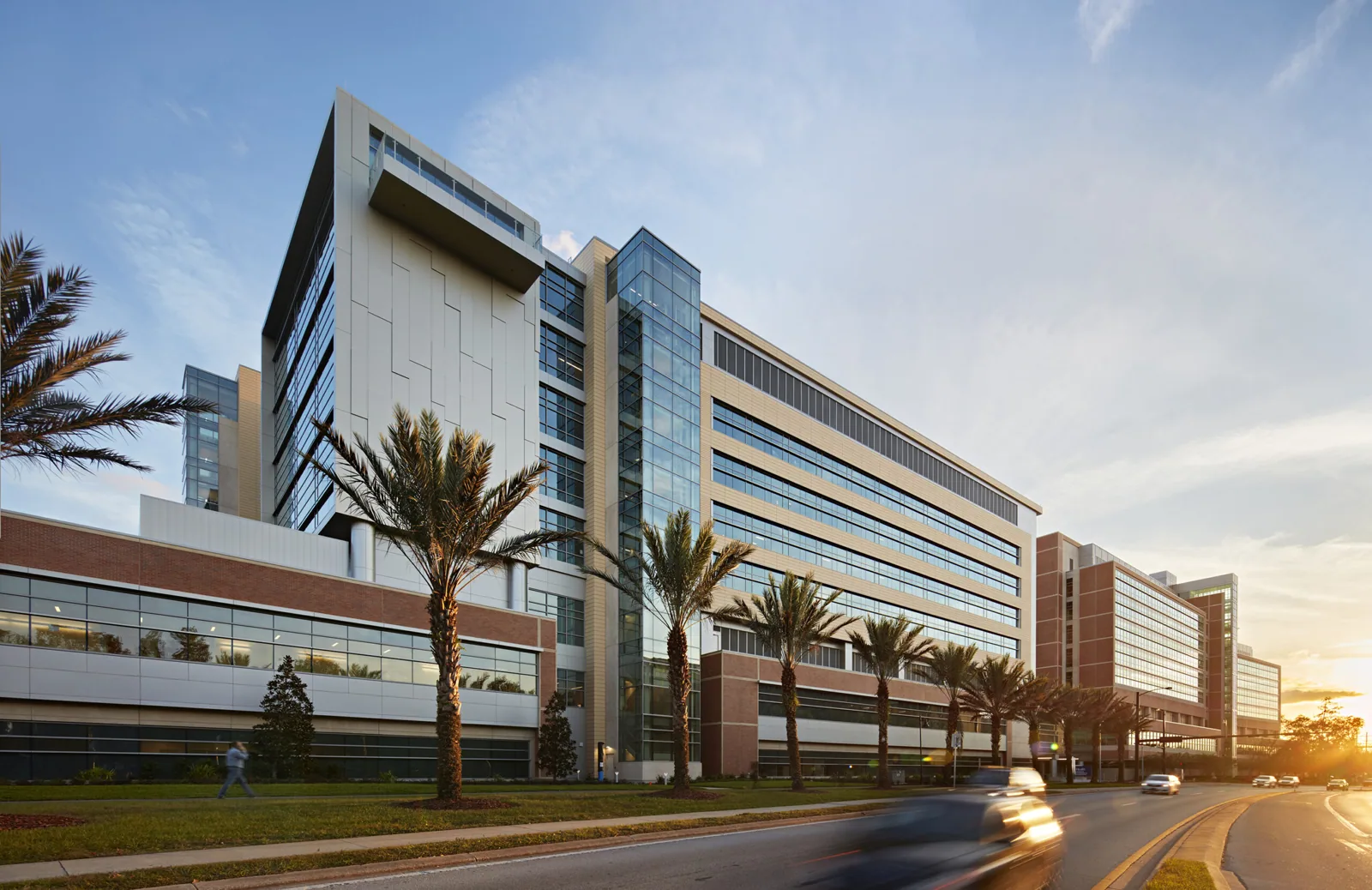
Regional hospitals widen the picture. Petaluma Valley Hospital ranks among the top employers in Petaluma, and the towers and outpatient wings of any system grow in stages over many years, so one address can hold several roof systems. The tower is a hospital roofing job with its own rules, while the clinics and offices around it, the medical office roofs, are where the surprises collect.
Water closes rooms, not just ceilings
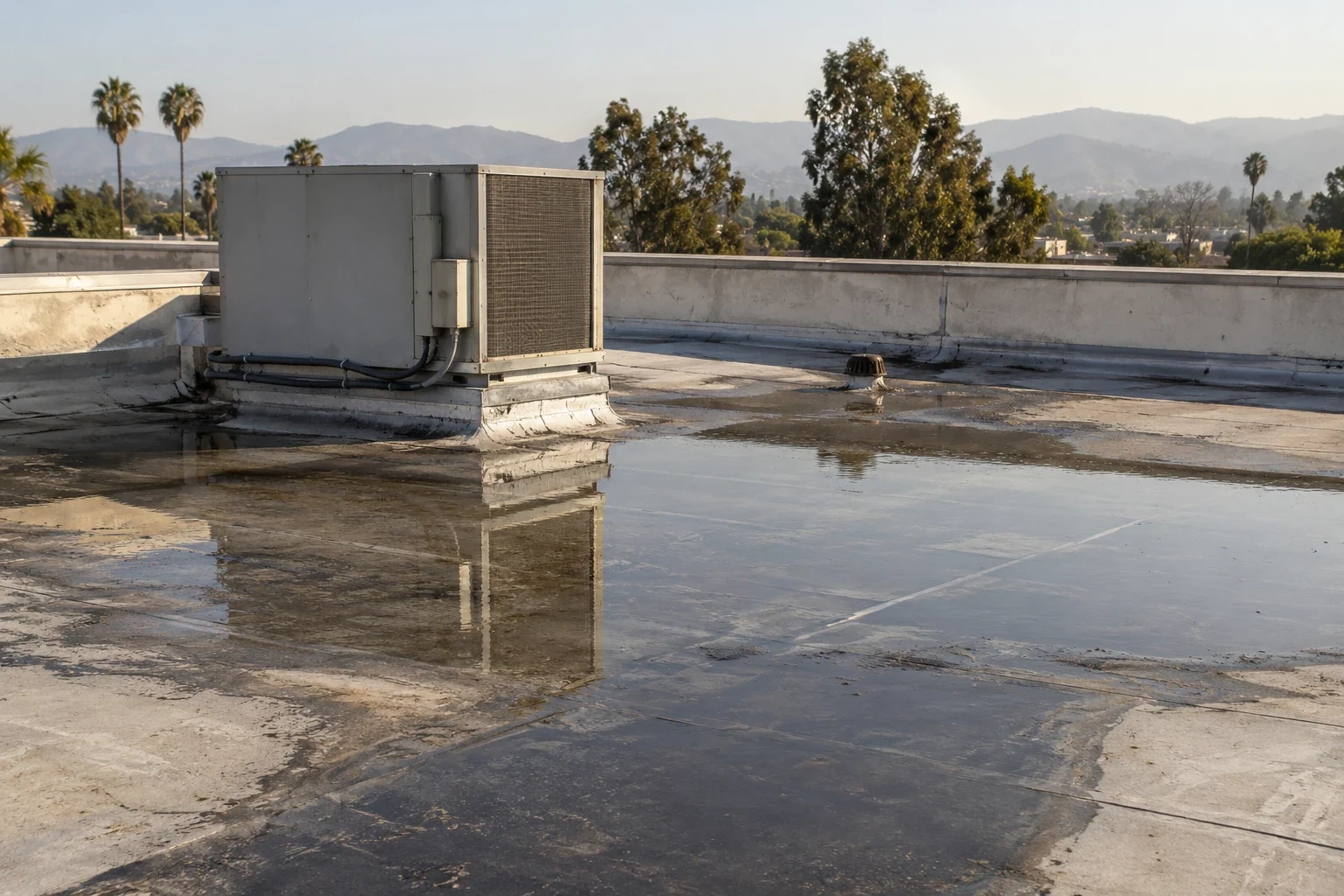
In a healthcare building a leak is a clinical event. Wet ceiling tile can grow mold, a drip over a supply cart spoils sterile goods, and saturated insulation above an imaging suite can hold moisture against ductwork for weeks. The roof list has to start with equipment, because air handlers, exhaust fans and chillers punch the most holes in a roof. Their curbs and supports fail first, and the membrane takes the blame for what the penetrations did.
Before any phased project, an infrared moisture survey shows which areas above clinical space are already wet. We pair it with a hands-on look at every curb, pipe and drain, then hand you a list ranked by clinical risk, not by square footage.
Dust, odor and the infection-control plan
Shutoffs, smoke and storm water
The Kincade Fire in October 2019 sent nearly 190,000 people out of their homes, the largest evacuation in Sonoma County history, and PG&E power shutoffs reached about 940,000 customers. Health sites that stay open through an outage lean on generators, and generator exhaust, fuel lines and antenna mounts all pass through the roof. Each penetration has to stay watertight when a storm arrives during a blackout.
Heat pushes the other way. On September 6, 2022 the thermometer hit 117 in Healdsburg and 115 in Santa Rosa, and a rooftop air handler running flat out on a day like that is the last unit a clinic can afford to lose. A spring check of drains and sealants costs little next to a unit outage. After a smoke season, clear the ash out of scuppers before the first rain. For an active leak, the facility team can prioritize patient and equipment protection below the affected roof area, then coordinate safe access and temporary water control.
Phase by what sits below
Do not replace by calendar. Rank by consequence. Roofs over operating rooms, imaging, pharmacy and sterile processing come first, patient rooms next, then administrative space and storage. Where the membrane is sound and the insulation is dry, repair and restore. Where wet insulation is confirmed, replace that section only, not the whole building.
Phasing keeps the clinic open: one section at a time, a temporary tie-in at the end of every day, and a moisture check after each phase. For systems with many sites, a multi-site roof program turns the ranking into annual work packages, so one large campus does not pull the whole budget while clinics across town wait. A landlord such as a medical-office investor can use the same ranking to decide which tenant spaces get attention first.
Skip the campus-wide bid
A single campus-wide reroof bid looks tidy and wastes money. It pushes sound roofs into replacement because they share a drawing, and it piles disruption into one loud season. Skip it. Also skip premium systems on buildings headed for demolition or renovation, and skip cosmetic coatings over wet insulation, which will blister within a season or two.
Federal and public facilities add their own rules. Travis Air Force Base in Fairfield runs its own hospital, the 265-bed David Grant USAF Medical Center, and roofing there means base access, escorts and work to the Unified Facilities Criteria. A publicly owned clinic follows bid rules like those a public agency faces. Know which set applies before the scope goes out.
Commercial Roofing Questions
Can the roof over an active surgical suite be worked on at all?
Usually yes, with limits. The work can be sequenced in short windows around the surgical calendar, one small section at a time, with dust and vibration controls approved by your infection-control team. If a closure is impossible, stabilize the roof with a targeted repair now and schedule full replacement for a planned shutdown.
How does a roof leak show up in an infection-control audit?
Treat every water intrusion as a documented event: where it happened, how long materials stayed wet, what was removed and when. We supply dated photographs and roof-side moisture readings so your team can finish the building-side record. Porous materials that stay damp for more than a couple of days are usually removed rather than dried in place.
Rooftop generators and air handlers cannot go down. How do crews work around them?
Equipment stays in service and the roof work is sequenced to suit it. Curbs and supports are flashed one at a time, with any shutdown window agreed in advance with your engineers. We stage the new flashing and materials beforehand so a unit is offline for the shortest possible time.
Do the 2026 code changes affect a clinic reroof?
Probably. A clinic reroof permitted in 2026 follows the 2025 California code cycle and its Energy Code. Santa Rosa carried that cycle into city law with Ordinance 2026-001, and Healdsburg adopted the same set at the start of the year. Insulation values and reflectivity rules can change the thickness and system, so settle the scope with your design team before the bid goes out.
Our clinics are leased. Who should own the roof plan?
Whoever owns the consequence. Even when the landlord controls the roof, the health system carries the cost of a closure, so ask for roof access rights, a copy of the latest condition report and written notice before any work above your space. If the landlord has no report, offer to share one. A single survey costs far less than one lost clinic week.

Rank your roofs by what they protect
Call Commercial Roofing Santa Rosa. We will survey your campuses and clinics and tell you plainly which roofs need work now, which can wait, and which need nothing.