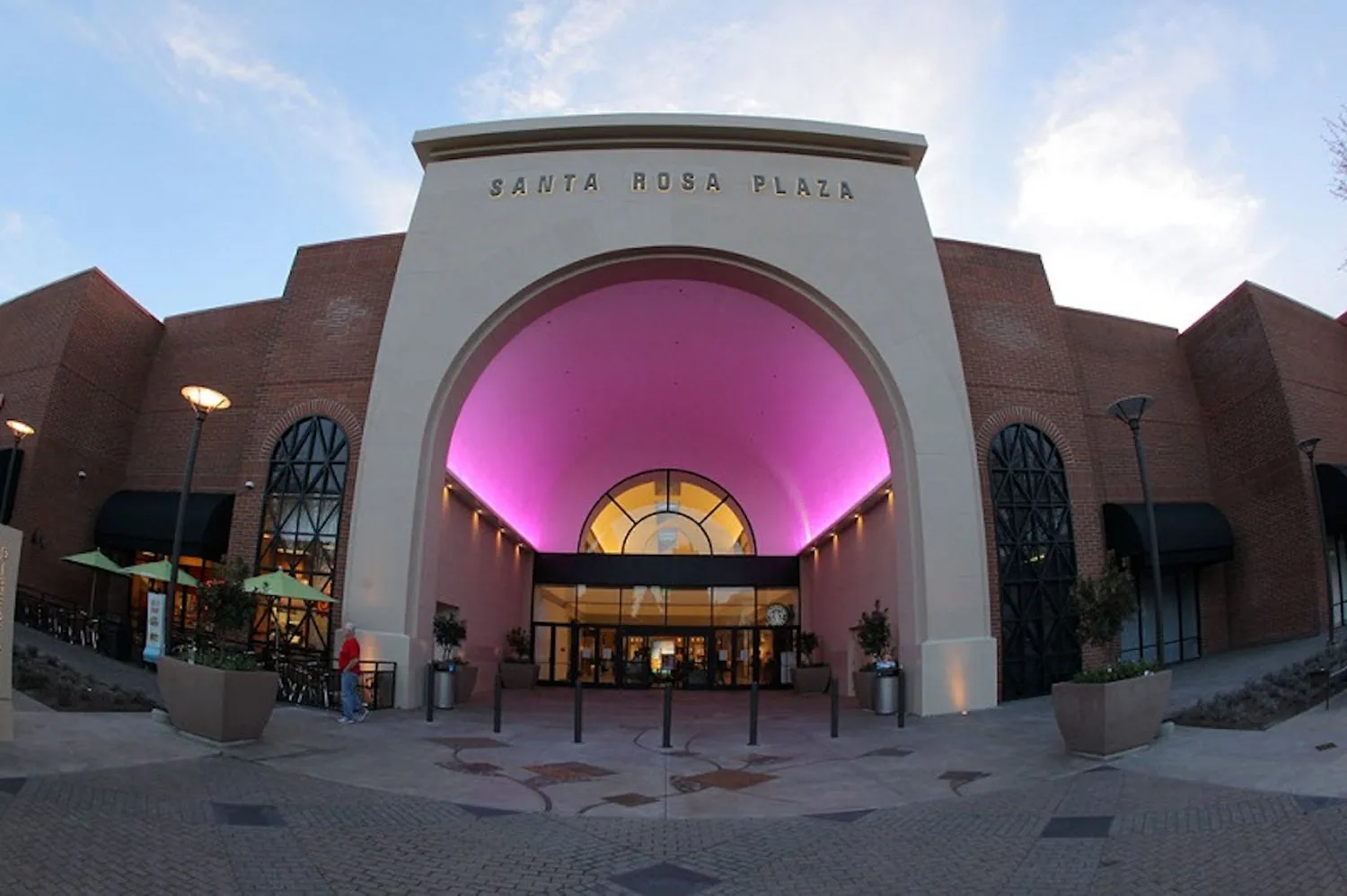
Multi-Site Roof Programs in Santa Rosa, CA
Roofing Capabilities
A portfolio roof program is not a bulk discount. It is a schedule, and the schedule is the whole value. Owners with a dozen buildings often carry a dozen unrelated relationships with roofers, each with its own paperwork, its own response time and its own idea of what a repair is. The result is that nobody can answer a simple question: which roofs are in trouble this winter?
A multi-site roof program in Santa Rosa, CA puts every building on one calendar, one rating scale and one set of records. We walk the roofs on a route, fix the small things on the spot, flag the larger ones in writing and answer the phone when a storm opens a seam on any of them. The point is not to roof everything at once. The point is that when something fails, there is a file, a photograph and a person who already knows the building.
Serving Santa Rosa • Rohnert Park • Petaluma • Windsor • Healdsburg • Sebastopol • Napa
Each type of portfolio needs its own plan
Start with the type of portfolio, because the type sets the rhythm. A property manager holding office and retail buildings for several owners needs reports sorted by owner, with separate budgets and no mixing. Property management companies live with that requirement every day.
Retail chains and multi-center owners care about uniformity. Take the shopping centers of Windsor, where Lakewood, Shiloh and Windsor Creek Plaza share one town. An owner of several centers like those needs one inspection checklist, so a finding in one center means the same thing in another. That is the case for a standard rating, and it is the same case a multi-location owner in retail and restaurant chains faces across every pad.
Institutional owners sit between the two. Santa Rosa Junior College operates its main campus, a Public Safety Training Center in Windsor and a campus in Petaluma, and a program like that has to treat each location as its own roof set with its own access rules. A program that fits one building type and ignores the rest will not hold.
How the program is laid out
Every program has the same bones, scaled to the portfolio.
- A baseline walk of every roof, with photos and a roof plan.
- A shared roof asset record so all the buildings are rated the same way.
- Scheduled maintenance visits grouped by route and season.
- A named contact and a priority order for storm response across the whole list.
- A yearly summary that ranks roofs by risk and feeds capital planning.
Priority one is always the roof over a sensitive tenant or a revenue operation. Priority two is any roof that leaked twice. The rest is scheduled around the calendar. Keep each roof record current so whoever assesses a leak can see the assembly, access points and known trouble spots before recommending temporary water control or permanent work.
Healdsburg is not Santa Rosa
Where portfolios leak money
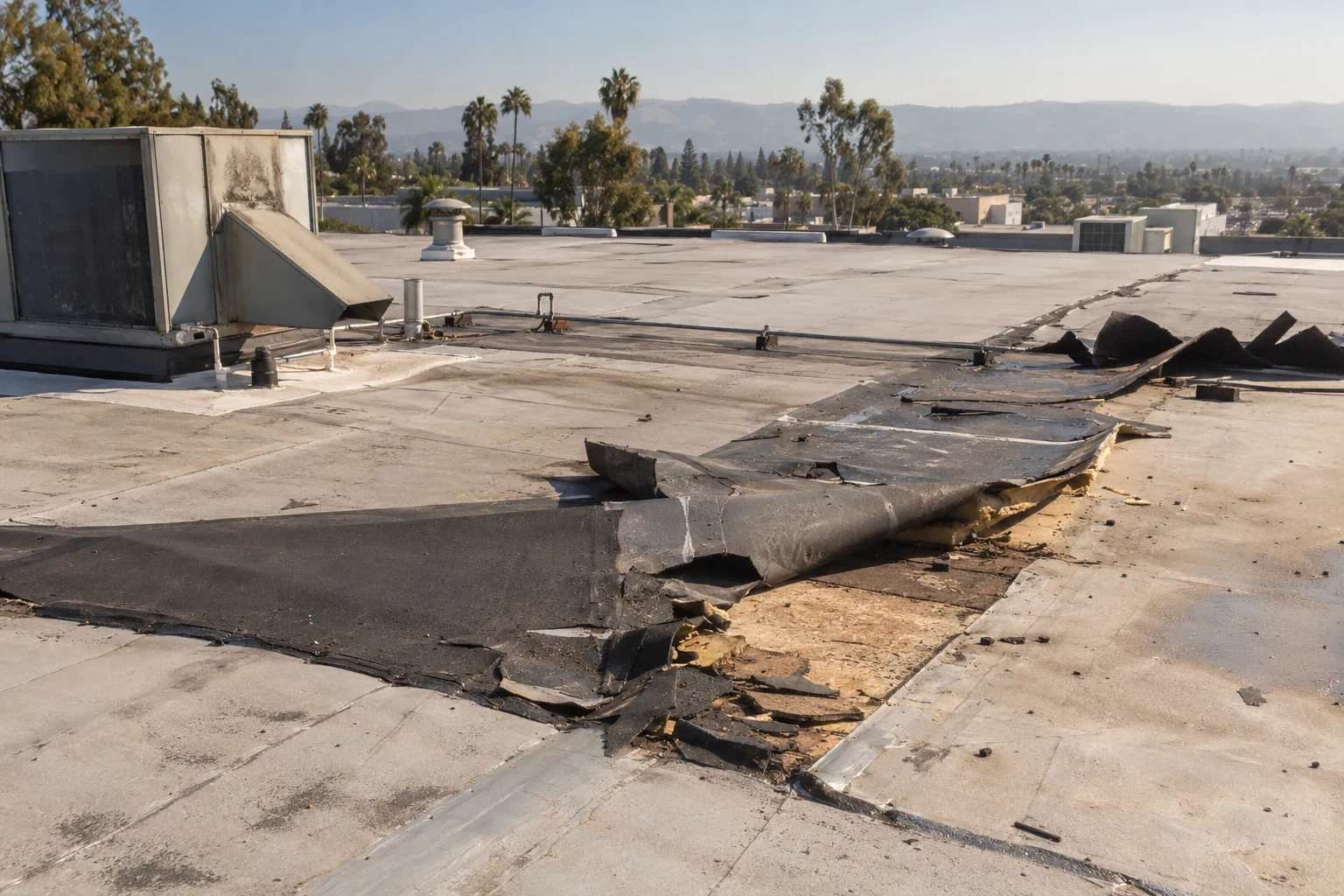
Three patterns repeat. First, repairs are bought one building at a time, so a flashing detail that fails at one site is not corrected at the others. Second, nobody can see across the whole list, so a roof that leaked three times in two years never rises to the top. Third, emergency calls go to whoever answers, and each call starts from zero.
The real problem is information, not roofing. When every building has the same file, the same rating and the same photographs, patterns show up quickly: a certain curb detail that fails, a drain style that clogs, a tenant who keeps walking on the membrane. You fix the cause once and it stops costing you at every site.
Skip the master contract that treats every roof alike
A flat, citywide contract with identical visits for every roof is not worth it. A young, clean roof does not need the same attention as an old one with ponding. Pay for visits where the risk is, and let the low-risk roofs ride on a lighter schedule that the ratings justify.
It is also not worth chasing one price for every roof when the systems differ. A tilt-up warehouse and a small downtown flat roof are different jobs. We scope each building from its own findings, then give you the program as a single schedule you can track. Nothing in the program stops you from using other roofers for new construction or major replacements; the records simply go wherever the work does.
Commercial Roofing Questions
How many buildings do I need before a program makes sense?
Three or four is enough to benefit from a shared schedule and a shared record, especially when the buildings are different types. Below that, a single inspection and a repair plan usually does the job. The value of a program grows with the number of roofs you cannot keep in your head.
I manage buildings for several owners. Can the records stay separate?
They have to. Each owner gets their own roof files, reports and budget lines, and nothing from one owner is mixed into another's. The route and the schedule are shared behind the scenes, so you gain the efficiency while each owner sees only their own buildings.
What happens when two of my roofs leak during the same storm?
We work from the priority order set in advance: sensitive tenants and revenue operations first, then everything else. The file for each building shows what the roof is and where to look, so the first visit is spent repairing, not discovering. You also get a status update on each location rather than silence.
Does a program lock me into using you for replacements?
No. The records belong to you and travel with the buildings. If a roof reaches the point of replacement, we will quote it, and you can take the same file to any other bidder. Nobody should have to keep a contractor to keep their own history.
How do you handle buildings as far apart as Napa and Novato?
By grouping them into routes and planning visits around the season, not around a single morning. A far site gets a visit when the work justifies the trip, and the records and photographs let us tell whether a distant building needs an extra look. Storm response is planned for the whole map before the first rain.
Put every building on one schedule
Call Commercial Roofing Santa Rosa. We will walk your roofs, rank them and tell you plainly which need work now, which can wait and which need nothing at all.