Commercial Roofing in Petaluma, CA
Service Areas
A food plant, a hospital and a Coast Guard training center do not want the same roof, and Petaluma has all three kinds of owner. Petaluma Poultry Processors, Petaluma Valley Hospital, Lagunitas Brewing and Clover Sonoma dairy are among the city's top employers, and Amy's Kitchen, Calix and Clover Sonoma are headquartered here. The U.S. Coast Guard Training Center Petaluma sits west of town on more than 800 acres in Two Rock Valley. A single roofing spec for that list would be wrong for most of it.
We inspect, repair, recover, coat and replace low-slope and metal roofs in Petaluma, CA, and we begin each job by asking what is going on under the roof, because that decides what the roof should be.
Serving Santa Rosa • Rohnert Park • Petaluma • Windsor • Healdsburg • Sebastopol • Napa
Food buildings fight the roof from inside
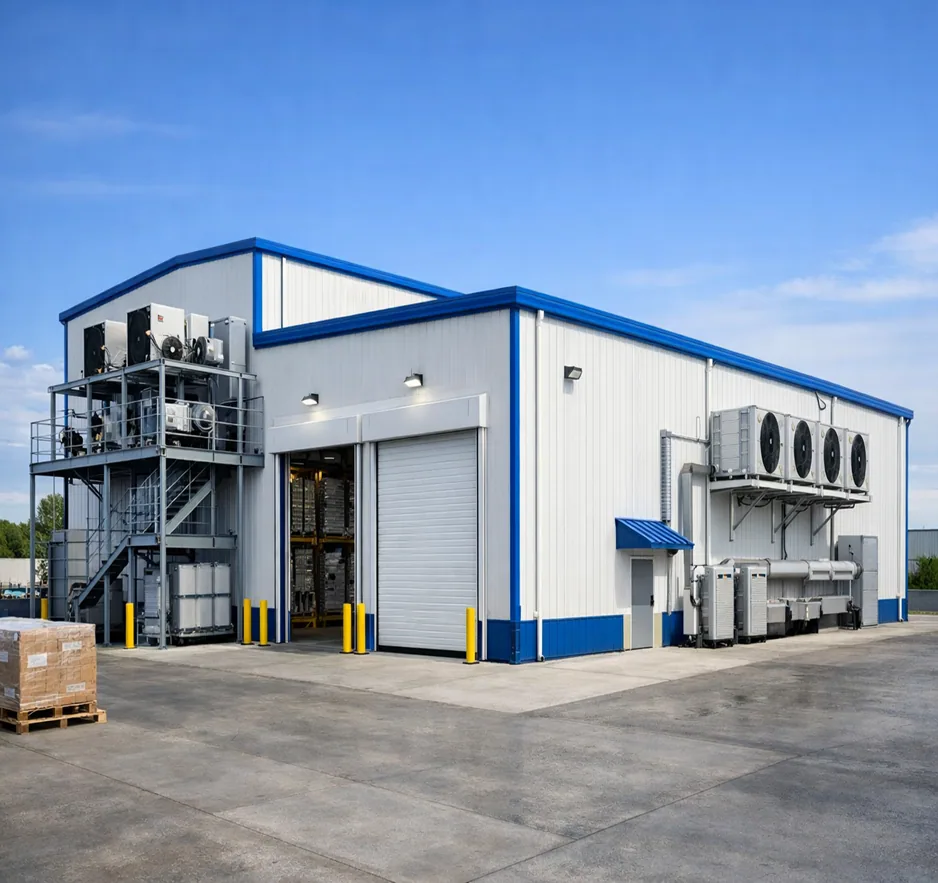
Buildings that make food and dairy products generally run refrigeration, washdown and exhaust, and that puts moisture and heat on both sides of the roof. Condensers sit on curbs that need to stay tight. Exhaust fans spread grease and fat across nearby membrane. Warm humid air from inside can condense in the insulation, so a roof can end up wet from below without any hole in the top.
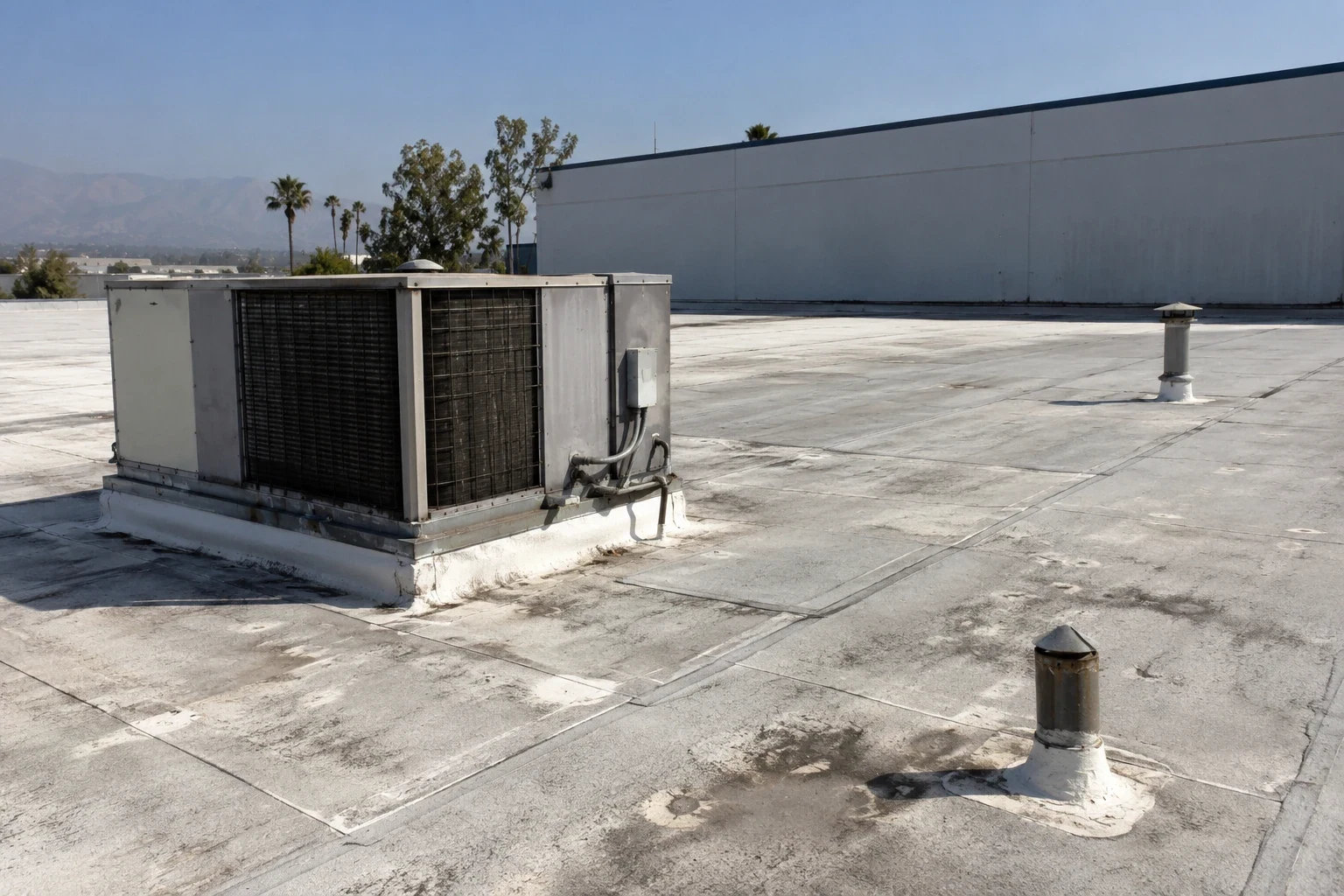
On a first walk at a manufacturing plant or a cold storage building, we check the equipment curbs, look at the membrane around every fan for softening, and compare what the roof surface shows against what a moisture scan shows. Where a membrane sits beside grease, PVC and KEE are the systems we reach for first, since they stand up to fats and oils better than most single-ply options. Verdict: scan the insulation before choosing anything.
A hospital cannot go without a roof
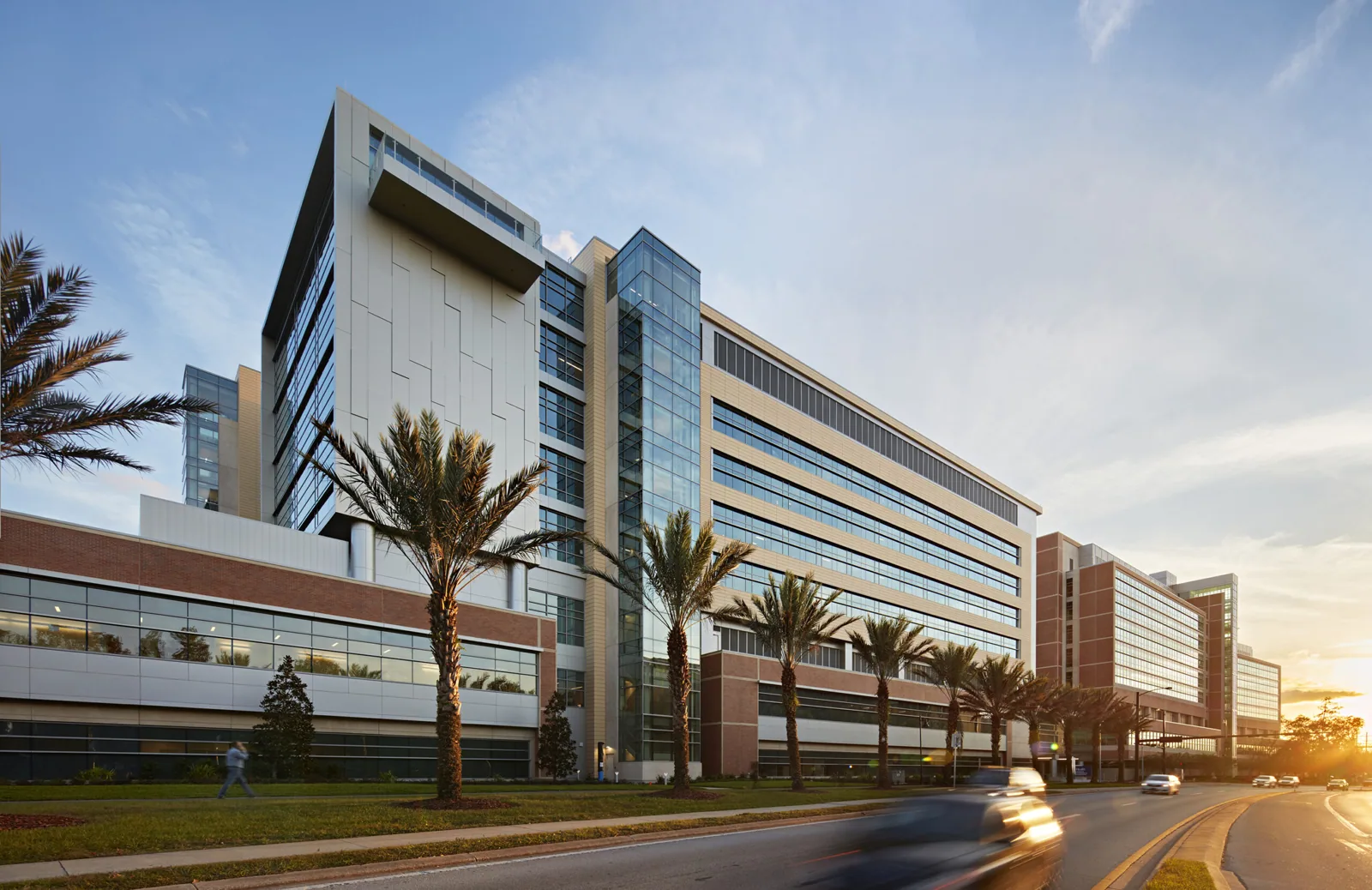
Petaluma Valley Hospital shares a city with the food producers, but it needs the opposite kind of care. Hospital roofs carry air intakes, exhaust and mechanical systems that keep rooms safe, and a leak can reach patient areas. Roof work near fresh-air intakes brings dust, fumes and noise that cannot be allowed into the building.
That changes how we plan. We sequence the work in small sections, keep intakes protected, schedule the loudest tasks away from sensitive hours and agree on a communication plan with the facility team ahead of time. Choice of system follows the building, but the first goal is always a roof that stays dry. Owners planning hospital roofing or a larger program for a healthcare system should treat sequencing as a design decision and put it in the scope.
A base takes paperwork before roofing
Plan for Santa Rosa's wet season
Santa Rosa, CA takes about 32 inches of rain in a typical year, concentrated from November to March, and the three-day atmospheric river of November 21 to 23, 2024 added nearly 15 inches. A tear-off in Petaluma belongs ahead of the winter rains: open drains, check flashings and finish before the first storm, not during it.
The same rule applies to heat. Santa Rosa reached 115 degrees F on September 6, 2022. A dark membrane in that kind of sun stretches seams and flashings every afternoon, so early fall is the right time to look at them. When the roof is wet beneath, it needs replacing in sections. When it is dry and sound, a recover or restoration coating is the cheaper path. For logistics, US 101 serves the city, so truck deliveries can be timed around the highway, and preventive maintenance puts the inspections on a calendar.
Where a Petaluma budget leaks
Some spending goes to the wrong place:
- A coating over wet insulation on a food building.
- A rushed tear-off timed for the first rain.
- A membrane chosen before anyone checks what the exhaust fans put on it.
- Low-bid work on a hospital without a written sequence.
Money that helps goes into knowing the roof: a survey, a written report and a ranked plan. That works just as well for flex and light industrial buildings, such as those at the Airport Business Center, and for owners in Rohnert Park, which shares the SMART line with Petaluma.
For a Petaluma property, write down production, patient-care, or tenant restrictions before choosing the work window. Inspect the roof-to-wall transitions, drains, equipment curbs, and areas above spaces where water would interrupt operations. If a process hood or mechanical unit is part of the leak path, coordinate its service separately and document who restores the roof flashing. The resulting scope can distinguish roof work from another trade’s task and state what will be checked before the area returns to use.
Commercial Roofing Questions
Why would a food plant roof be wet underneath when it looks dry on top?
Warm, humid air from the production floor rises into the roof assembly, meets cooler layers and condenses in the insulation. Over time the insulation holds water even though the membrane has no hole. An infrared moisture scan finds those areas. Once found, the fix may be a vapor control layer, better ventilation or section replacement, and the scan keeps you from coating over the problem.
What membrane makes sense around exhaust fans that throw grease?
PVC and KEE are the usual answer, because they resist fats and oils better than TPO or EPDM. Whichever system you choose, add a grease containment kit under each fan and plan regular cleaning of the roof around them. Check for softened, discolored membrane near the curb as part of every inspection.
How do we keep roof work from affecting a hospital's air intakes?
Map every intake before the work begins, then keep adhesives, torches and solvents away from them, protect them with temporary covers and schedule the noisiest or smelliest steps for times the facility team approves. Cold-applied or mechanically attached systems often make sense in these settings, since they limit fumes. The plan should be in writing and agreed in advance.
What does roofing a Coast Guard training center involve that a city job does not?
Access control, mostly. Expect a request for the crew list, background screening, escorts and set hours when crews can be on the grounds. Specifications for roofing on military property often reference the Unified Facilities Criteria. Plan more lead time than a commercial job, because getting people and material through the gate can take longer than the roofing itself.
When is the best time of year for a Petaluma tear-off?
Late spring through early fall gives the longest dry window, but very hot days make some membranes harder to install and uncomfortable for crews. Aim for the cooler dry weeks of September and early October, and have the dry-in complete before the first strong storm. Reserve temporary repairs for the November to March wet months.
Name the building
Call and tell us what is made, treated or taught under the roof in Petaluma. After we have walked it, you will hear plainly whether it needs work now, later, or not at all.