Commercial Roof Inspections in Santa Rosa, CA
Commercial Roofing Services
A roof inspection that stays on the ground is not an inspection. Looking up from the parking lot tells you almost nothing about seams, flashing, drains or the condition of the membrane. The real answers are on the roof, and some of them only show up when someone is kneeling next to them.
For building owners in Santa Rosa, CA, we do hands-on inspections that end in a written condition report with photos. The goal is simple. You should finish reading it knowing whether the roof needs work now, later, or not at all, and roughly what that work involves.
Serving Santa Rosa • Rohnert Park • Petaluma • Windsor • Healdsburg • Sebastopol • Napa
We walk every square foot
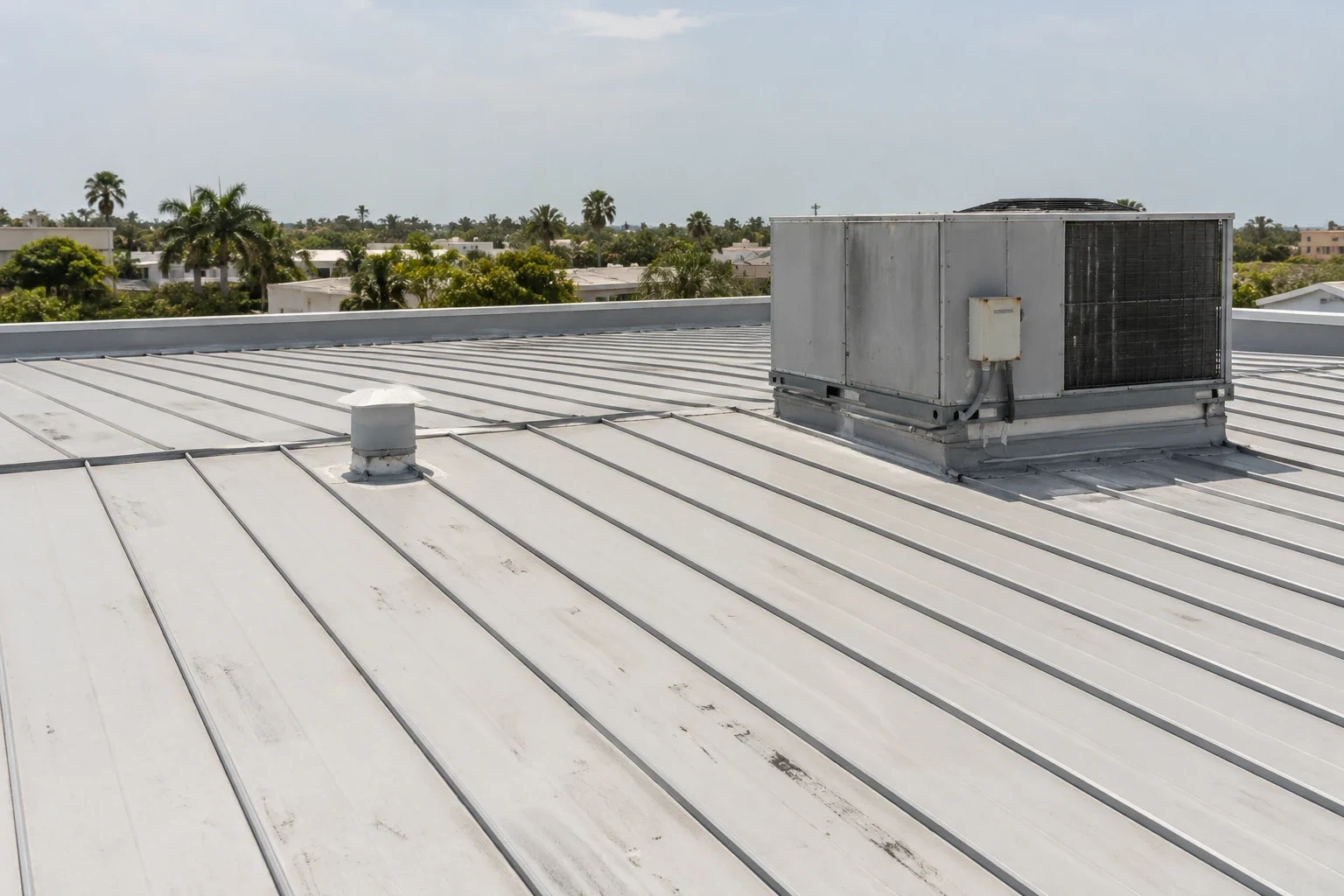
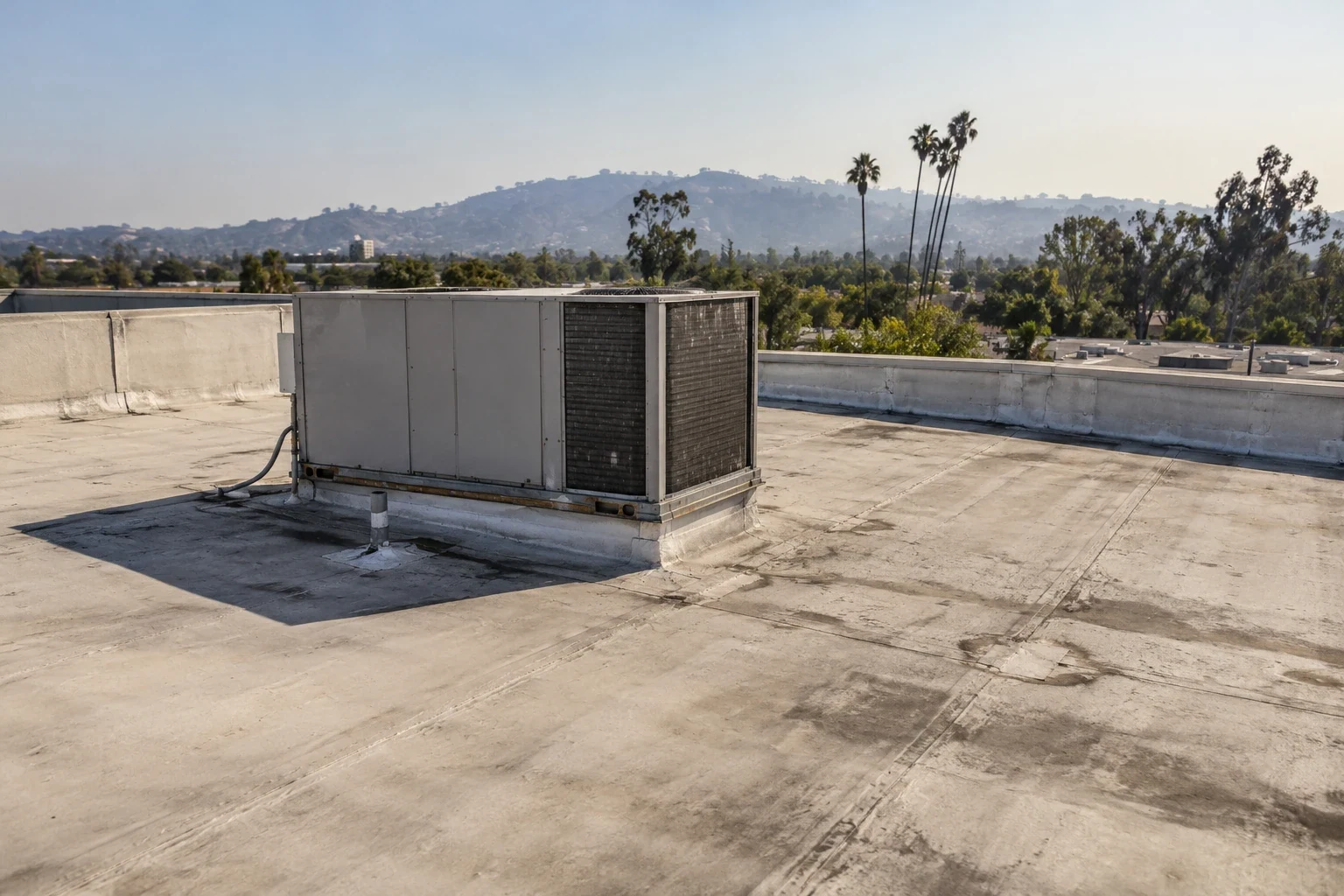
The inspection starts at the roof hatch or ladder and does not skip areas just because they look fine from the access point. We walk the field, the perimeter and every rooftop obstruction. We look at the membrane surface, the seams, the flashings, the drains, the edge metal and the penetrations. We note rooftop equipment, old repairs and signs of foot traffic.
On top of that, we ask questions. Where have you had leaks? What got repaired and when? Has the roof had a new unit installed, or a tenant change? Owners often know things the roof does not show, and the combination is what makes the findings useful.
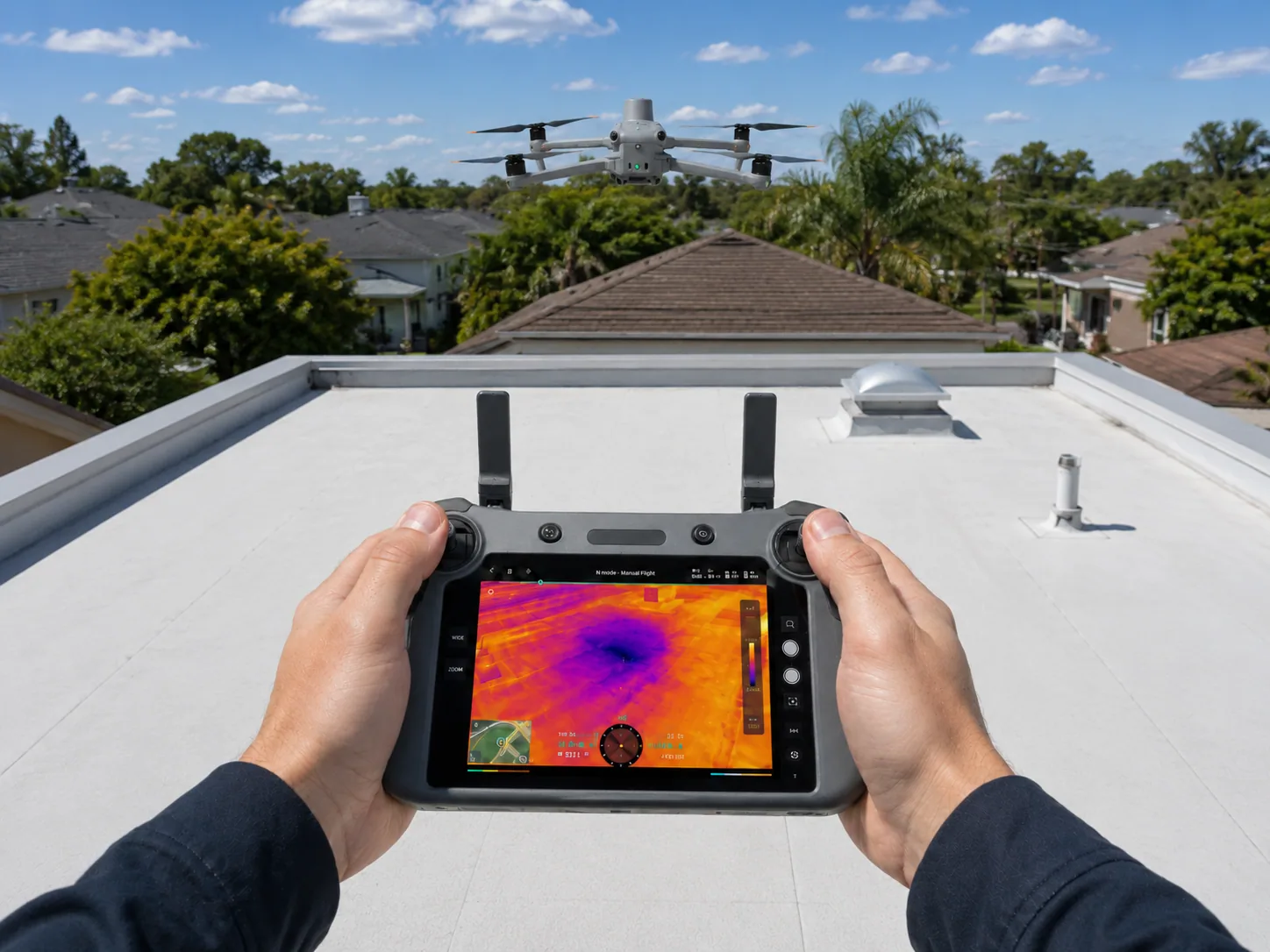
A hands-on walk is the baseline. When the roof is huge, steep or hard to reach, we can add drone roof inspection imaging to the same visit. Verdict: the walk is not optional, and the drone is a supplement.
What we look for
Different roof systems wear out in different ways, and a good inspection knows the difference. We check for:
- Seam separation, lifted edges and open laps.
- Cracking, crazing, blistering or surface wear in the membrane.
- Flashing that has pulled away, split or lost its sealant.
- Ponding water, which points to drainage or structural issues.
- Clogged drains, missing strainers and blocked overflow scuppers.
- Punctures and damage from foot traffic or dropped tools.
- Loose edge metal, damaged coping and open joints.
- Soft spots underfoot that suggest wet insulation or a damaged deck.
- Signs of past repairs that were done with incompatible materials.
When something looks suspect but cannot be confirmed by eye, we recommend a follow-up infrared and core-cut moisture survey before anyone commits to a big number.
The report is the product
Inspect before the wet season
The best time for a routine inspection in Santa Rosa is late summer or early fall, before the rain arrives. Rain falls mostly in the November to March wet season, and one atmospheric river in November 2024 delivered close to 15 inches in three days. You want to know where the weak points are before that water finds them.
Heat leaves its own record. The city hit 115 degrees on September 6, 2022, and long hot summers dry out sealants and stress seams. An inspection after a hot season catches the damage while it is still a small repair.
Also inspect after any major event: a windstorm, a fire in the area or heavy ash fall. Ash can clog drains within days. A quick look after the event, followed by the full inspection later, keeps small problems from turning into winter leaks.
Some buildings need it more
We look at the building type first, because it tells us where to look hardest. Large retail and flex roofs, from Coddingtown to the Airport Business Center, carry a steady load of rooftop equipment and service traffic, and every new unit is another place for a penetration to fail. A tilt-up warehouse has long parapet and wall flashings that can open up. Winery production buildings, in a county with more than 350 wineries, deal with moisture, process exhaust and heavy equipment. The older masonry buildings of Railroad Square need their parapets and flashings read as closely as their membranes.
For owners of flex and industrial buildings or a portfolio managed by property management companies, we suggest a routine schedule instead of one-off visits. An inspection once or twice a year, paired with preventive roof maintenance, is usually the cheapest way to keep a roof out of the emergency column.
A useful report lets an owner act without translating a stack of photos. Give each image a roof-zone label, describe the observed defect, and state whether it is active, deteriorating, or simply worth monitoring. Separate repairs from testing and note access areas that were not reached. A Santa Rosa inspection may cover a North Station Area retail roof or an Airport Business Center flex building, but each report should tie findings to the specific structure and assembly. Close with a short priority list and the evidence behind each call.
For a roof in Coffey Park, keep the report tied to the inspected structure rather than the surrounding area. Compare the observed assembly, drain layout, and prior repair record with the next site in the owner’s portfolio; a nearby building is a reference point, not a substitute. This turns the inspection into a decision record that can support a repair order, a capital request, or a later condition comparison.
Commercial Roofing Questions
When in the year should we book the walk on a flat roof over a retail center?
Late summer or early fall, before the November to March wet season, and ideally again after the heat. Add a visit after any major wind, fire or storm event. Roofs with known problems, older membranes or heavy rooftop equipment benefit from a tighter schedule, which we can set up based on what we find the first time.
What do I get at the end of the inspection?
You receive a written condition report with photos, marked locations, a description of each finding and a recommended action sorted by urgency. It is written so a facility manager, an owner or a lender can read it and understand what to do next.
Do I need an inspection if the roof does not leak?
Often yes. Many roof problems are quiet until they are expensive: wet insulation, open seams and clogged drains can exist for months without a visible leak. An inspection finds them while the fix is still small. If the roof is in good shape, the report says so, and that is worth knowing.
Will the inspection lead to a sales pitch for a new roof?
It should not. If the roof can be repaired or maintained, that is what we will recommend. Replacement comes up only when the evidence supports it, and we show you the evidence. Sometimes the right answer is to do nothing yet.
Can you inspect a roof I am thinking about buying?
Yes. Buyers and lenders often want a condition read before closing. We can walk the roof, document what we find and give you a realistic picture of near-term repair or replacement needs, which can help in negotiating price or planning a capital budget.
Get the straight answer on your roof
Call Commercial Roofing Santa Rosa to schedule a hands-on inspection. You will get photos, a written report and a plain recommendation.