Roof Condition Reports in Santa Rosa, CA
Roofing Capabilities
A roof report made of photographs and nothing else is a photo album. Owners receive them all the time: dozens of shots of a gray surface, no roof plan, no ratings, no recommendation. Nobody can tell which picture is the problem or what to do about it, so the file goes into a folder and stays there until the next leak.
A written roof condition report in Santa Rosa, CA is a working document. It says what the roof is, where each finding sits, how serious it is and what we recommend, with each photograph pinned to the exact spot on a plan. You should be able to hand it to a lender, a tenant's facilities manager or a board and watch them reach the same conclusion you did without calling us. If they cannot, the report failed.
Serving Santa Rosa • Rohnert Park • Petaluma • Windsor • Healdsburg • Sebastopol • Napa
Old masonry and a new clinic need different reports
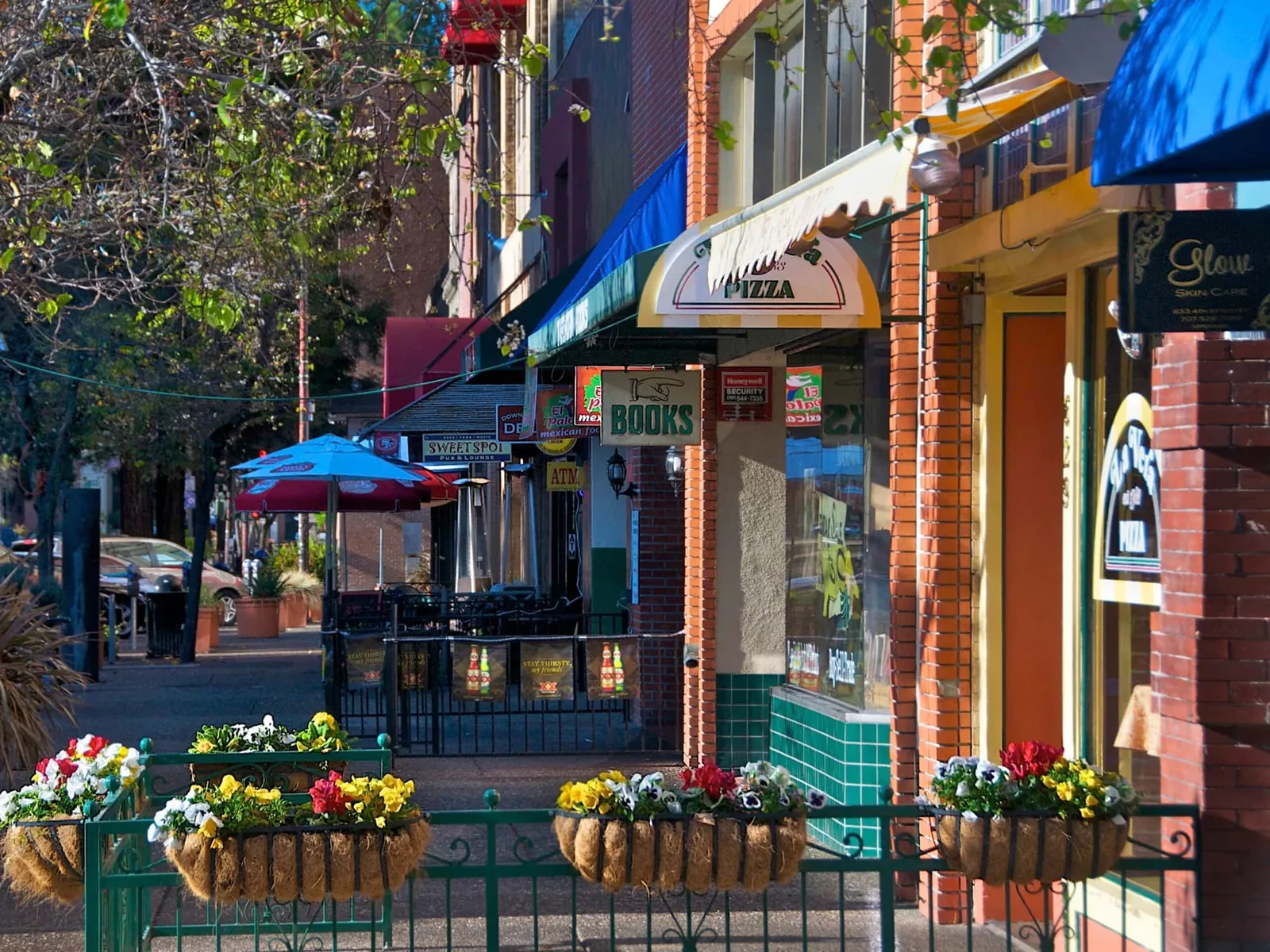
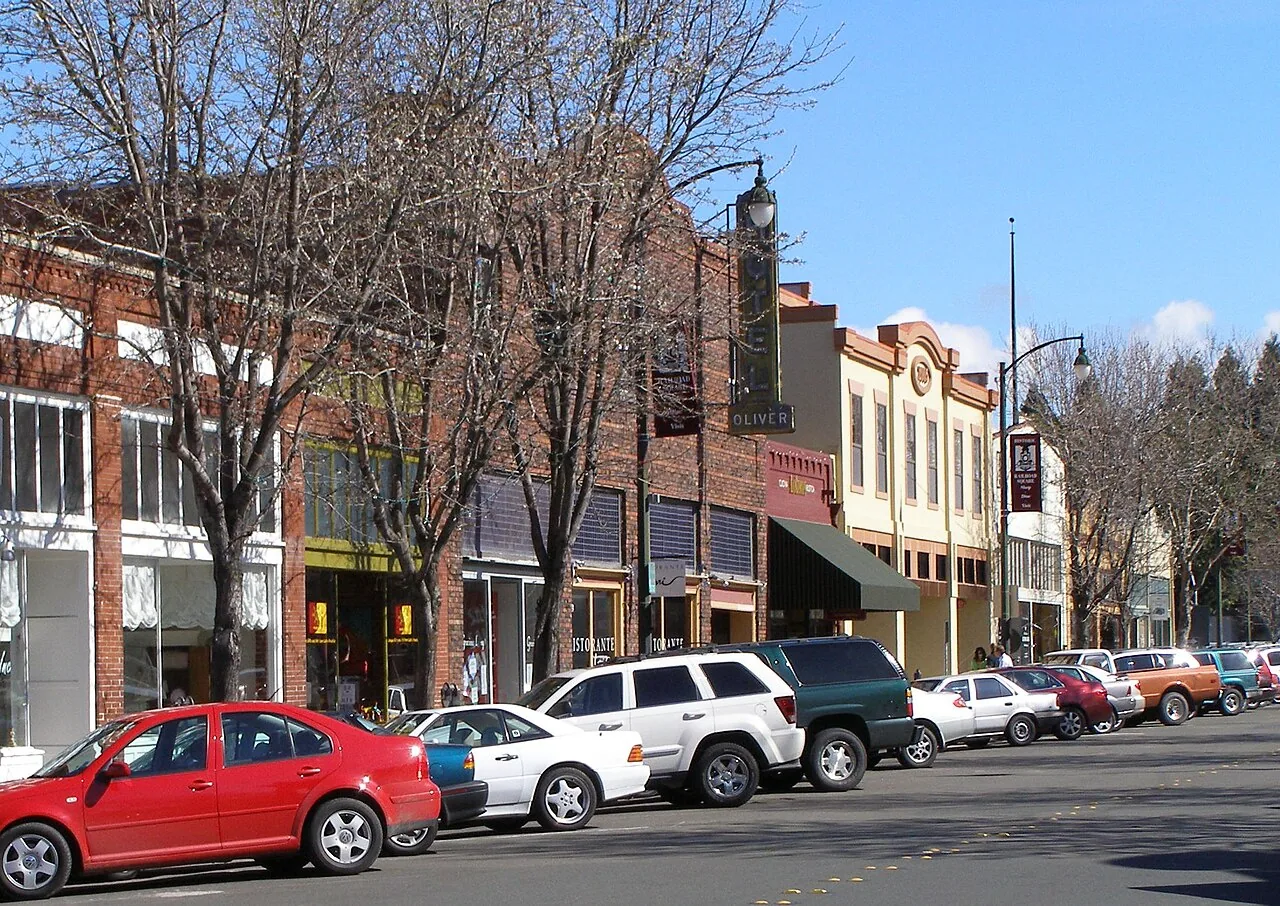
The building decides what the report spends its pages on. Railroad Square was listed as a National Register historic district in 1979, and its stock includes Hotel La Rose, a three-story andesite stone building from 1907 with 20 to 24 inch walls, and Rosenberg's Department Store in Railroad Square. For masonry commercial buildings of that kind, the careful work is at the parapet, the coping, the wall-to-roof flashing and the drainage at those thick walls. An owner in Railroad Square should expect the report to say which of those details was opened up and which was only looked at.
Newer buildings still deserve a report. The Santa Rosa VA South Clinic on Challenger Way opened in August 2022, after construction that began in 2020. On a roof that new, the first set of photographs is the only one that shows it before service techs and equipment changes touch it. A baseline report is a small expense, and it settles every later argument about what was damaged and when.
What a usable report holds
We put the same parts in every report, so you can compare one roof to the next.
For each roof, the report should also capture the date, weather conditions, access limits and any area that could not be inspected safely. If a unit, screen or locked hatch blocks a detail, we state that limitation clearly and identify what access would resolve it. A report is useful only when the next reader can tell what was observed and what remains unknown.
- A roof plan with every finding numbered and located.
- Photographs tied to those numbers, one wide shot and one close shot each.
- A description of the system and what could be confirmed about the layers beneath it.
- A condition rating for each roof area, not one grade for the whole building.
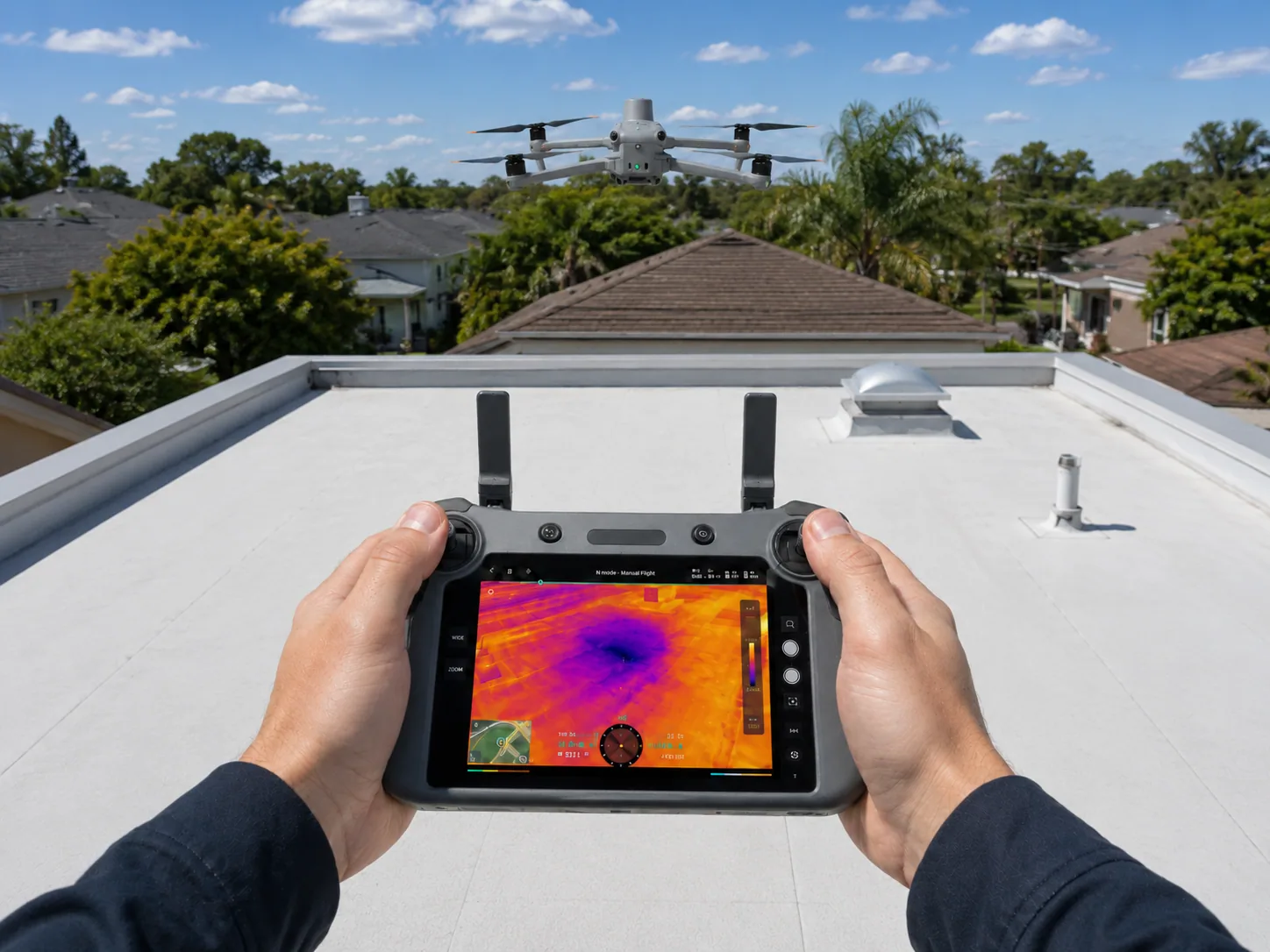
- Moisture mapping from an infrared survey where the walk raised a question.
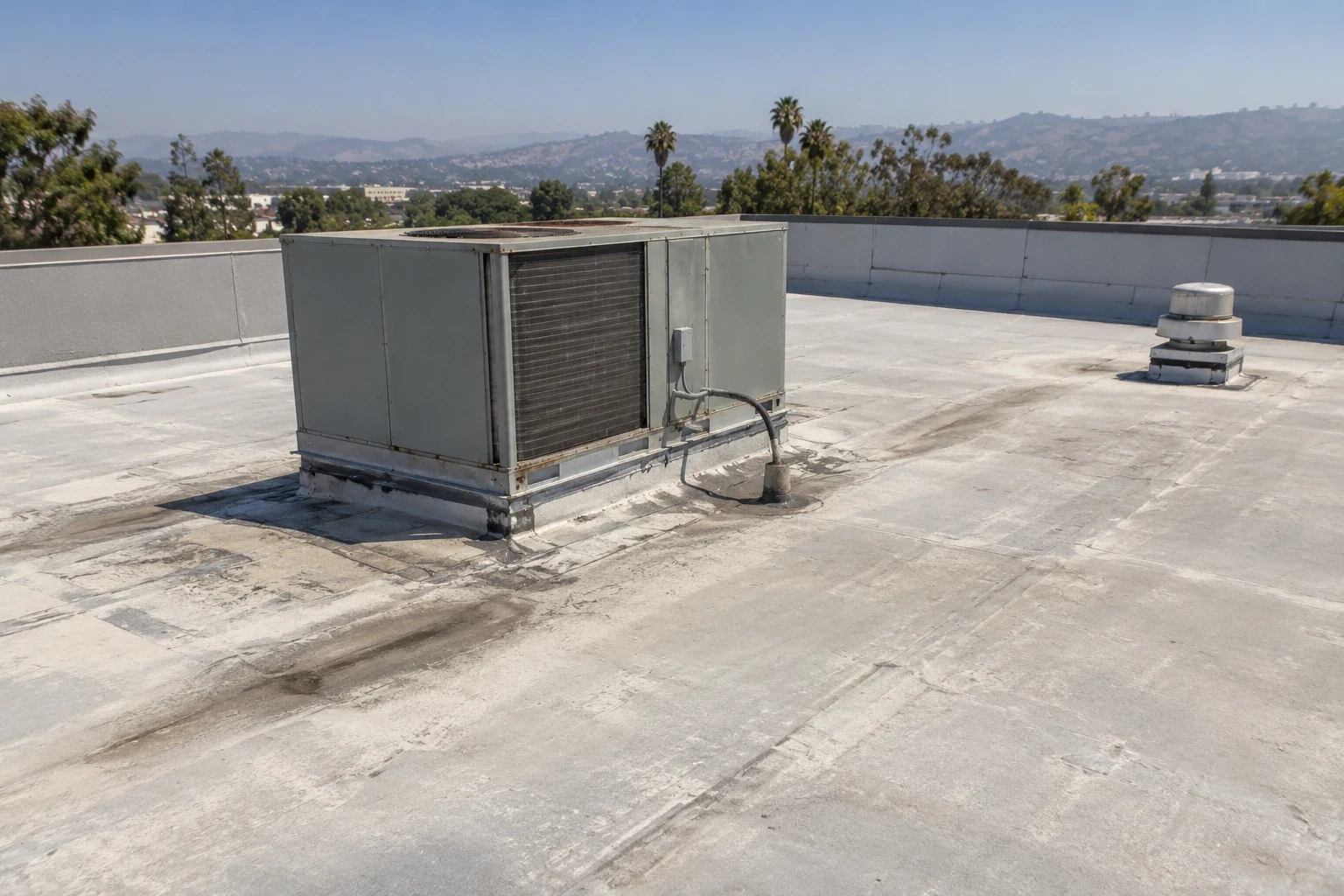
- Notes on drains, scuppers, edge metal, equipment curbs and penetrations.
- A short list of what we could not reach.
Findings come from a hands-on inspection, with drone imaging added where access is poor. Each item ends in a recommendation: fix now, fix this year or watch. That is the part people read first and the part that gets used. It feeds the running roof asset record, and over several years it gives capital planning something solid to work from.
Where most reports let the owner down
Order one after a storm or a fire
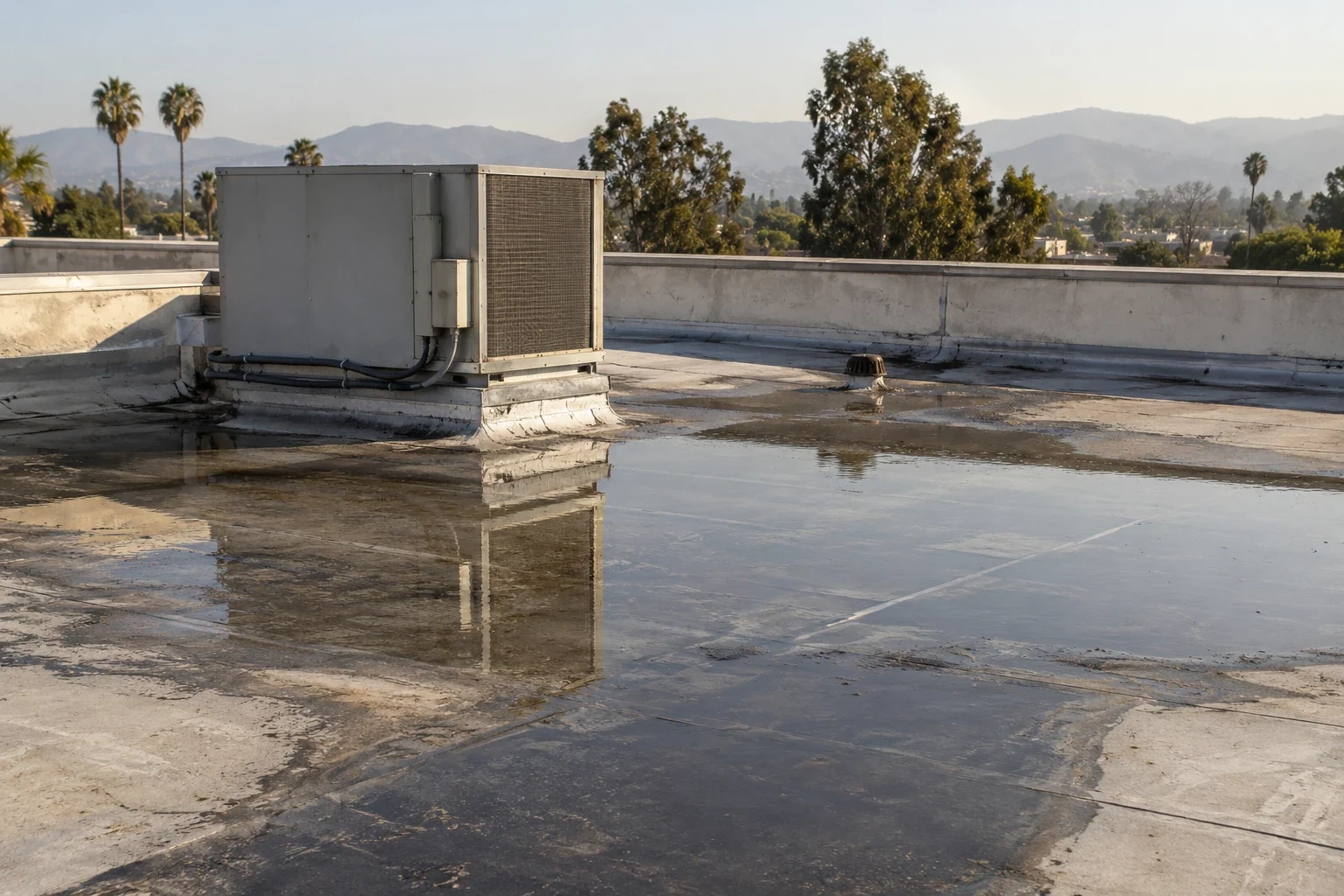
Timing matters as much as content. The storm of November 21 to 23, 2024 left almost 15 inches in Santa Rosa, and a report written within days of an event like that records ponding, overflow marks and wet seams while they are still visible. A month later the evidence has dried and the argument starts.
Fire works the same way. The Tubbs Fire crossed US 101 in October 2017 and took a Kmart, a Hilton hotel and many restaurants along that corridor; the 2020 Glass Fire followed. Dated photographs from before and after make an insurance conversation far easier, and our roof insurance claim assistance leans on exactly that paper trail. Heat belongs in the record too: the 115 degree day in September 2022 is the kind of event worth photographing against the seams that were tight the month before.
Skip the binder nobody opens
A bound report padded with generic pages about roofing is not worth it. Neither is a drone flight on a small, simple roof that two people can walk in twenty minutes, or an infrared scan on a roof whose walk showed nothing and whose last scan was clean. Spend on the roofs where a question remains.
One report per building, built to the same format each time, is the economical way to do it. When a buyer asks for more, the same material grows into a due diligence roof survey without starting over.
Commercial Roofing Questions
How long before I get the written report after the roof walk?
Quick enough that the visit is still fresh, and that matters more than a number of days. Urgent findings, like an open seam or a blocked drain ahead of a storm, are called out the same day, before the full report is done. The finished report follows with the plan, the photographs and the ratings, and we talk through it if you want to.
Can I give the report to my lender or insurance adjuster as it is?
That is what it is built for. Photographs are dated and located, findings are rated and the recommendation is stated in plain terms, so a third party can follow it without us in the room. If an adjuster needs more, we can add detail on a specific area instead of reworking the whole document.
What is the difference between your report and a roof inspection form?
A form is a checklist, and checklists record that a box was ticked. A report explains what we saw, where, how bad it is and what to do. It also carries a roof plan, which is the piece that lets a different contractor price the same work and get to the same scope.
We have older masonry buildings with parapets. Does the report change?
It leans harder on the parapet, coping, wall flashing and drains, and it states plainly what could not be accessed. On older masonry buildings we record the roof layers where we can confirm them and flag the places where the history is unclear.
Do you charge extra to rank the roofs across several buildings?
Ranking is built into the method, since every roof gets the same rating scale. Where you own several properties, we line the reports up so the worst roofs rise to the top. That list is what a property manager takes to the owner when budgets are set.
Get a report you can actually use
Call Commercial Roofing Santa Rosa. We will walk the roof, write it up with photos and a roof plan, and tell you plainly whether it needs work now, later or not at all.