Standing Seam Metal Roofing in Santa Rosa, CA
Roof Systems
Standing seam looks like the expensive roof, and over a long ownership it is often the cheap one. The panels run from ridge to eave with raised, interlocking seams, and the fasteners hide beneath the panel instead of poking through it. Fewer holes means fewer leaks, and bare metal does not burn.
That second point carries weight in Santa Rosa, CA, where the Tubbs and Nuns fires struck in the same October 2017 siege. Standing seam is not right for every building, and it is certainly not the roof to buy on a tight budget for a low, flat addition. For the right structure, though, it is among the most durable systems available. The test is slope, structure and how long the owner plans to keep the building.
Serving Santa Rosa • Rohnert Park • Petaluma • Windsor • Healdsburg • Sebastopol • Napa
Winery and long-span buildings suit it
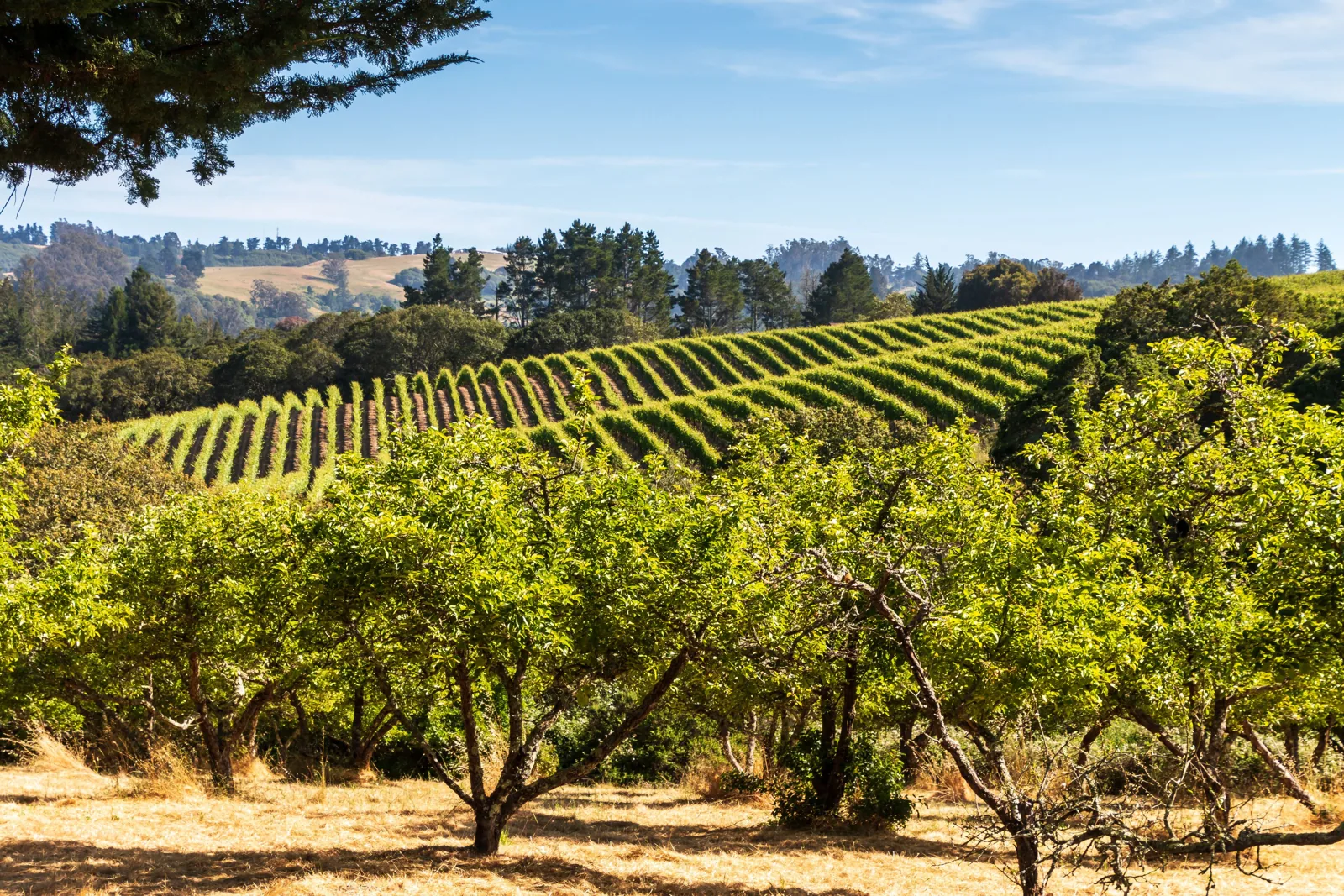
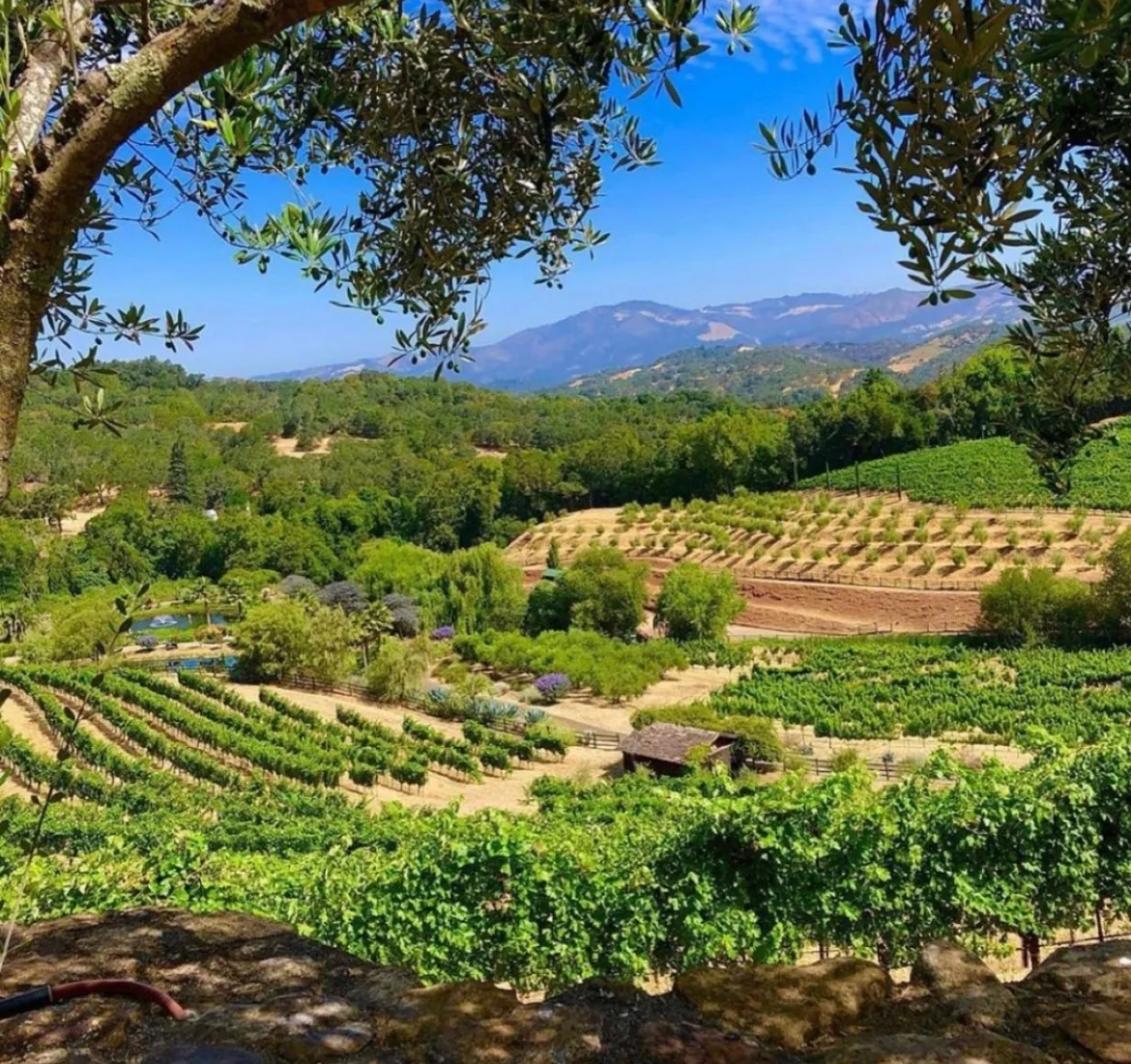
Standing seam shines on buildings with a real slope and a long ownership horizon. Sonoma County has more than 350 wineries, and the production, barrel storage and tasting-room buildings that come with them, including those at the Kenwood and Glen Ellen wineries, are structures where a metal roof can last as long as the building. Kunde Estate Winery in Kenwood dates to 1879, and a roof on a long-held property is judged over decades.
Large assembly buildings are the other natural fit. The Santa Rosa include the 40,500 square foot Grace Pavilion indoor arena, and the Luther Burbank Center holds a 1,612-seat theater. Buildings with big clear spans and public use need a roof that sheds water cleanly and does not demand frequent access.
Verdict: if the roof has real pitch, the structure is sound and you plan to keep the building, standing seam is a strong choice.
Embers have nothing to hold on to
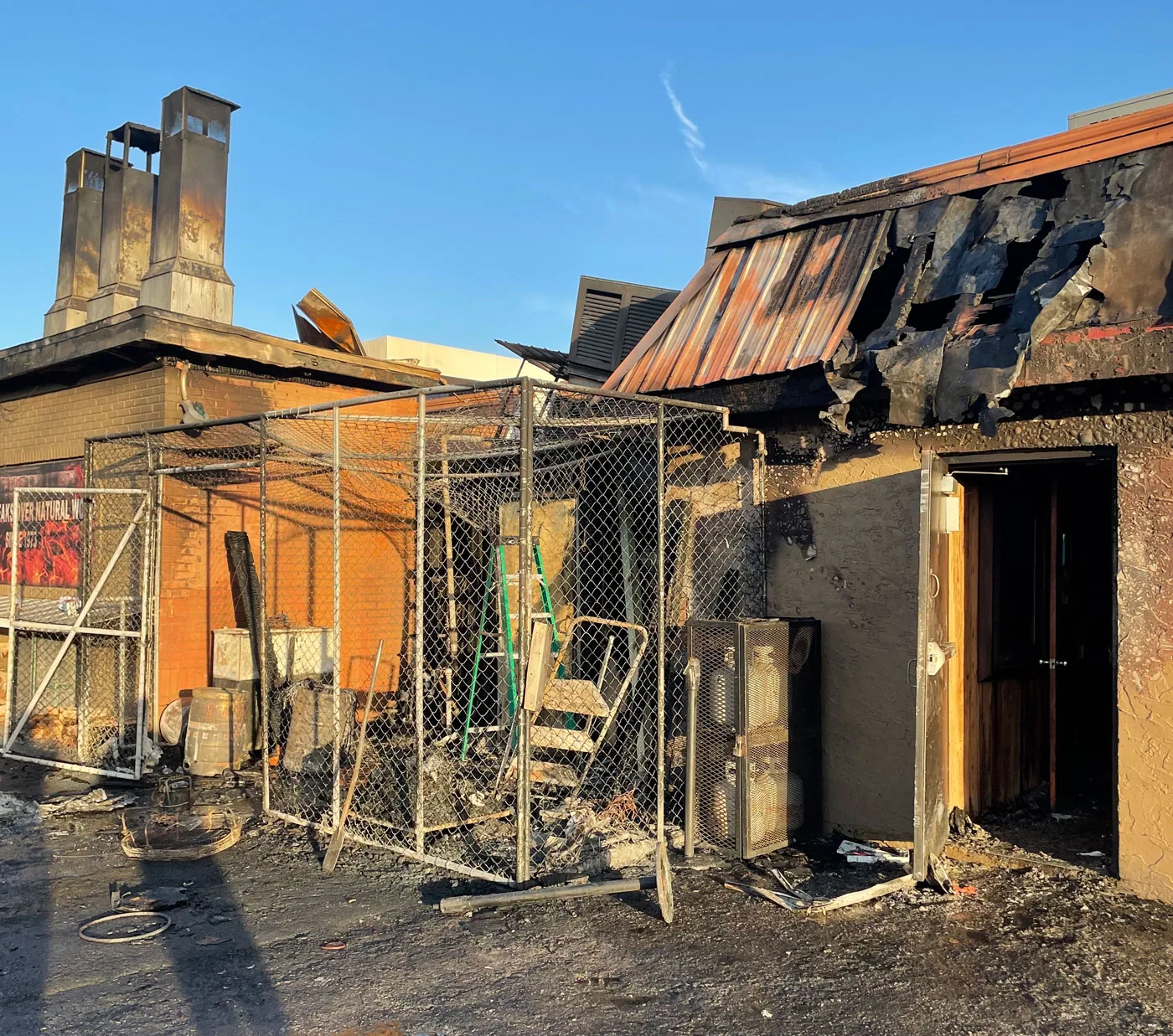
The October 2017 fire siege put Diablo winds at up to 70 mph, and the Tubbs Fire destroyed 5,643 structures. The 2020 Glass Fire burned 67,484 acres and destroyed 1,555 structures across Napa and Sonoma counties, including 343 commercial buildings in Napa County. Metal panels do not catch and carry embers the way many roof surfaces can, and a seamed panel gives them few pockets to settle in. A fire-damaged roof is a long, expensive repair, so the choice is worth making before the next red-flag day.
The fire rating belongs to the whole assembly, including the underlayment, so we confirm it for the exact build-up. Rain follows the same logic: Santa Rosa gets about 32 inches in a year, and nearly 15 of them came down in the three days of the November 2024 atmospheric river. A pitched metal roof sheds that load fast, as long as the gutters, downspouts and valleys can pass it.
Heat expands metal. On a day like September 6, 2022, when Santa Rosa reached 115 degrees, long panels expand along their length and pull back overnight, which is why clip design matters so much.
Clips, penetrations and condensation
Floating clips and a real underlayment
The system works because the panel can move. Floating clips hold it down while letting it expand and contract, and the clip spacing has to match the wind load and the panel gauge. We pay attention to the slope too. Mechanically seamed panels tolerate lower slopes than snap-lock ones, and neither should be pushed to the edge of its limits without sealant and a careful detail.
- Choose the gauge and profile for the wind exposure, not the catalog photo.
- Specify a high-temperature underlayment beneath the panels.
- Detail penetrations with prefabricated flashings, not caulk.
Existing buildings can also take standing seam as a retrofit over old roofing, and a metal roof retrofit starts with the framing, not the panels. Edge metal, gutters and trim are part of the same system, so we plan edge metal and gutters with the panels, not afterward.
Not worth it on low flat roofs
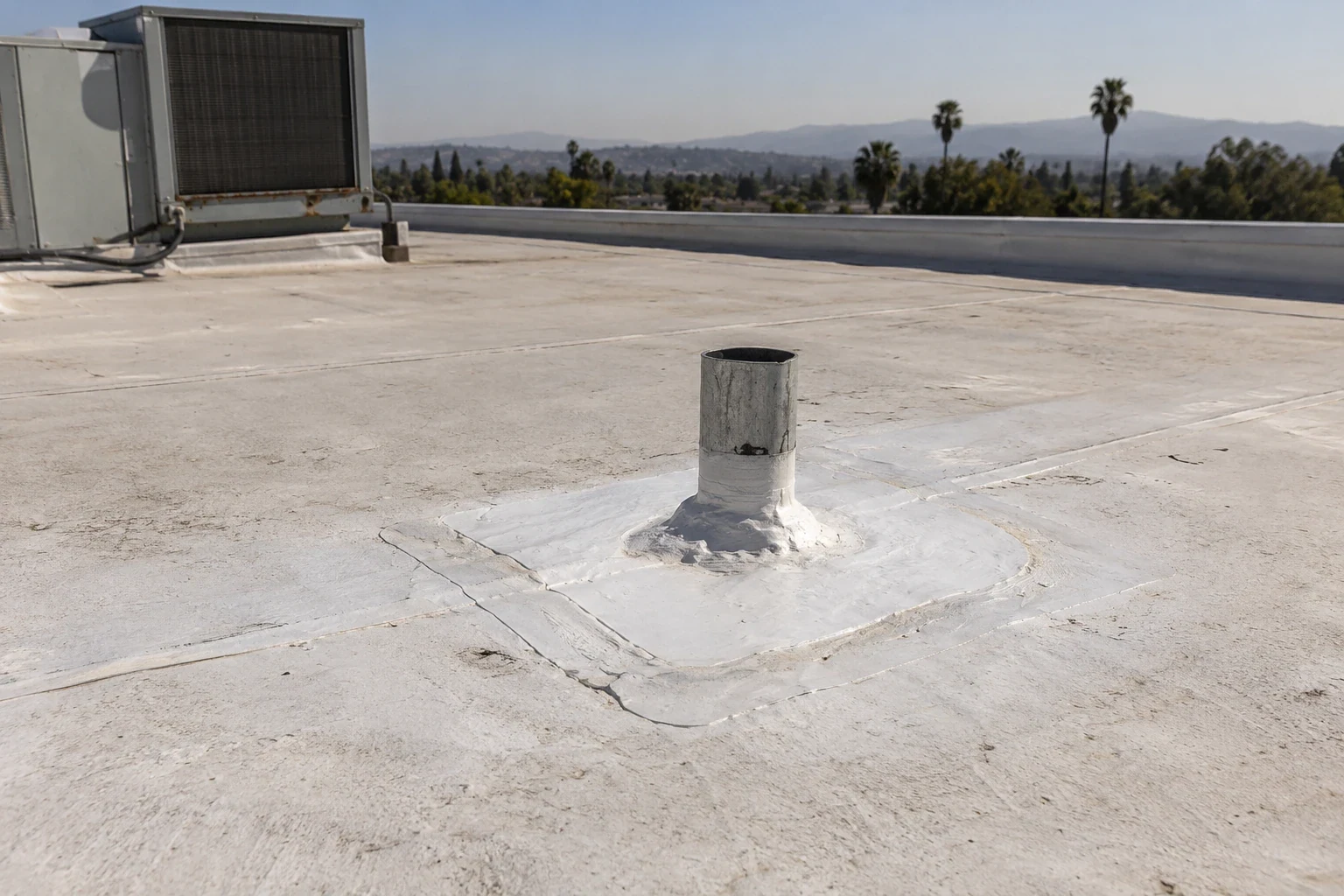
A near-flat roof with many curbs and penetrations is a poor home for standing seam. Every cut is a place to leak, and a low slope leaves no margin when a seam is stressed. For that kind of building, a welded membrane such as TPO is usually the sensible choice. If the existing building needs a full tear-off anyway, commercial roof replacement is the moment to price both options side by side.
It is also not worth the premium if the building will change hands soon, or if the structure will not carry the added load of a retrofit. Spend on drainage and details first, and consider metal when the time horizon matches the price.
We will give you the straight comparison, including the case where a cheaper roof is the right call, and let the numbers speak.
Compare panel profile, gauge, seam type, clip spacing, underlayment, and substrate before treating two metal roofs as equivalent. Expansion movement must remain possible at the eave, ridge, and penetrations. Trace any interior condensation separately from a roof leak, because ventilation and vapor control can be part of the problem. A mock-up around a curb can reveal whether the selected detail keeps the seam system intact. Put access, replacement-panel availability, and inspection points into the owner’s maintenance record.
Commercial Roofing Questions
How steep does a roof need to be for standing seam?
Mechanically seamed panels can work on low slopes when they are installed with the right sealant and details. Snap-lock panels need more pitch. Anything near flat should be treated cautiously, since low slope concentrates risk at the seams. We check the framing and slope before we recommend a profile.
Does a metal roof make a building louder in the rain?
It can, depending on insulation and the deck beneath it. A roof with solid decking and good insulation muffles it much more than an open frame. For a tasting room or a school, we recommend asking about acoustic underlayment before the order is placed.
Why does my metal roof drip when it is not raining?
Usually condensation. Foggy mornings cool the panels, and warm humid air inside the building turns to water on the underside. Better underlayment, ventilation and vapor control fix that. We check for it before assuming the roof is leaking.
Can standing seam be repaired if a panel is damaged?
Yes. Individual panels can be replaced or patched at the damaged section. Matching the finish on an older roof can be tricky, since coatings fade, so we discuss color match before we start. Small dents are cosmetic, and torn seams or failed clips are the repairs that matter.
Will a metal roof help with insurance after the fires?
Some insurers look favorably on a noncombustible roof, but policies vary. We document the roof type, the underlayment and the fire rating of the assembly in writing so you can share it with your agent.
See if your building suits standing seam
Call Commercial Roofing Santa Rosa. We will look at the slope, the structure and the details, then tell you plainly whether metal is worth it for your building or another roof will serve you better.