Fire and Smoke Damage Roof Repair in Santa Rosa, CA
Roof Damage Repair
A roof does not have to burn to be fire damaged. Most of what a wildfire does to a commercial roof is small, scattered and easy to miss: a pinhole where an ember landed, a melted vent cap, a skylight dome gone soft, a coat of ash that holds water against the sheet. Owners look up, see an intact roof, and move on.
That is the mistake. After the Tubbs Fire in October 2017 and the fires that followed, roofs in and around Santa Rosa, CA were exposed to embers and ash, and damage of that kind often does not show until the first heavy rain. The surviving roof is usually worth saving. The job is to find each burn and each melt, clean what the fire left behind, and get a written record to your insurer before anything is swept away.
Serving Santa Rosa • Rohnert Park • Petaluma • Windsor • Healdsburg • Sebastopol • Napa
Embers burn small and melt big
Fire reaches a roof in three ways. Embers land and burn through thin material or lodge in a gap. Radiant heat from a nearby structure blisters and softens the surface without ever igniting it. Smoke and ash settle over everything, and ash is more damaging than it looks: it is abrasive underfoot, it clogs drains, and it holds moisture against flashing and seams once it gets damp.
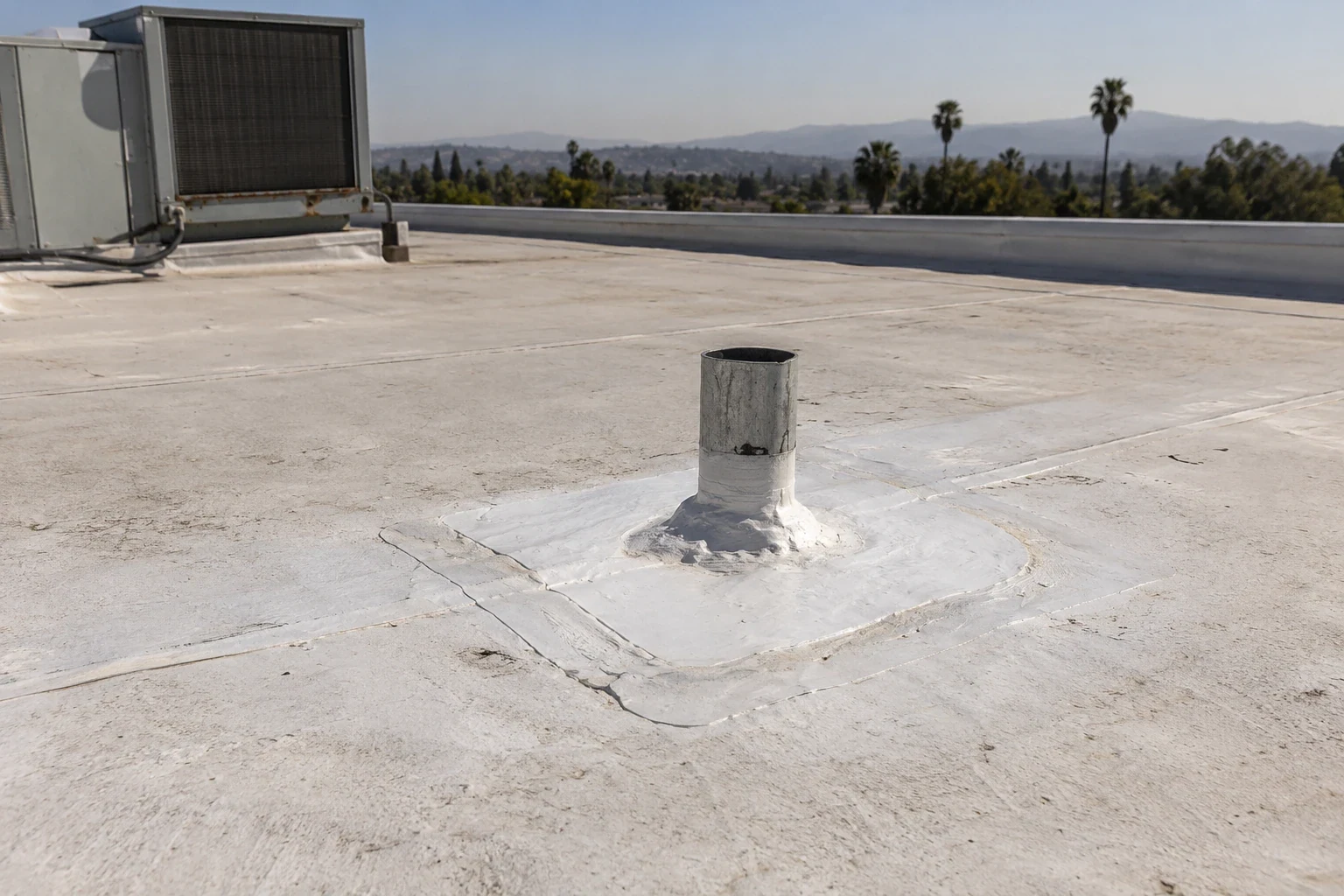
Plastics suffer first. Skylight domes, vent caps, pipe collars and sealant lines melt or deform at temperatures a membrane can survive. Behind each burn there may be wet insulation, because firefighting water and later rain follow the damage down. A pinhole in the sheet from an ember looks the same as any other puncture until the ceiling underneath goes brown.
Where the fire crossed matters
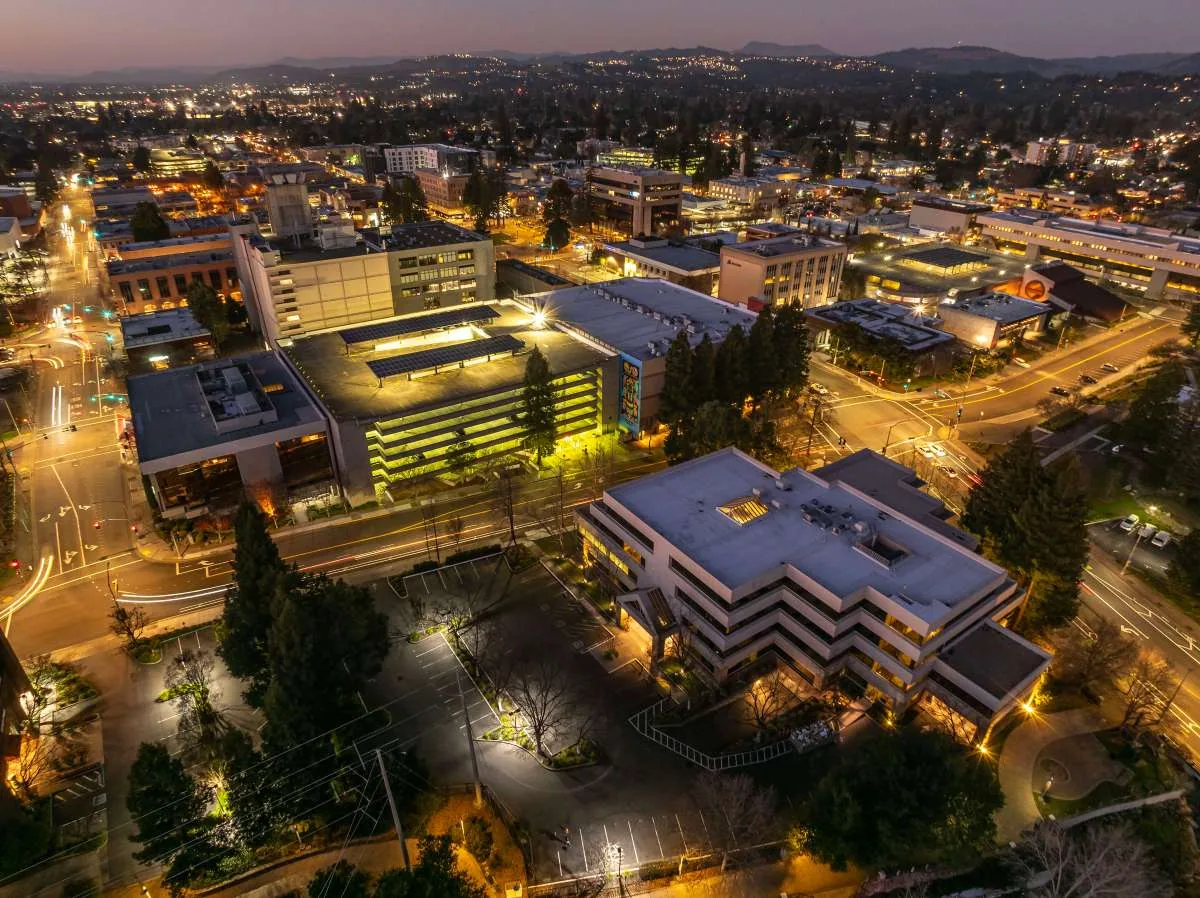
The Tubbs Fire crossed Highway 101 around 2 a.m. on October 9, 2017, and the highway became a dividing line. West of it, Coffey Park lost an estimated 1,300 structures, mostly detached homes. East of it sits the commercial zone, where the fire destroyed a Kmart, a Hilton hotel and many restaurants along the corridor. Any roof near losses like those deserves a close look for heat, ember and smoke exposure.
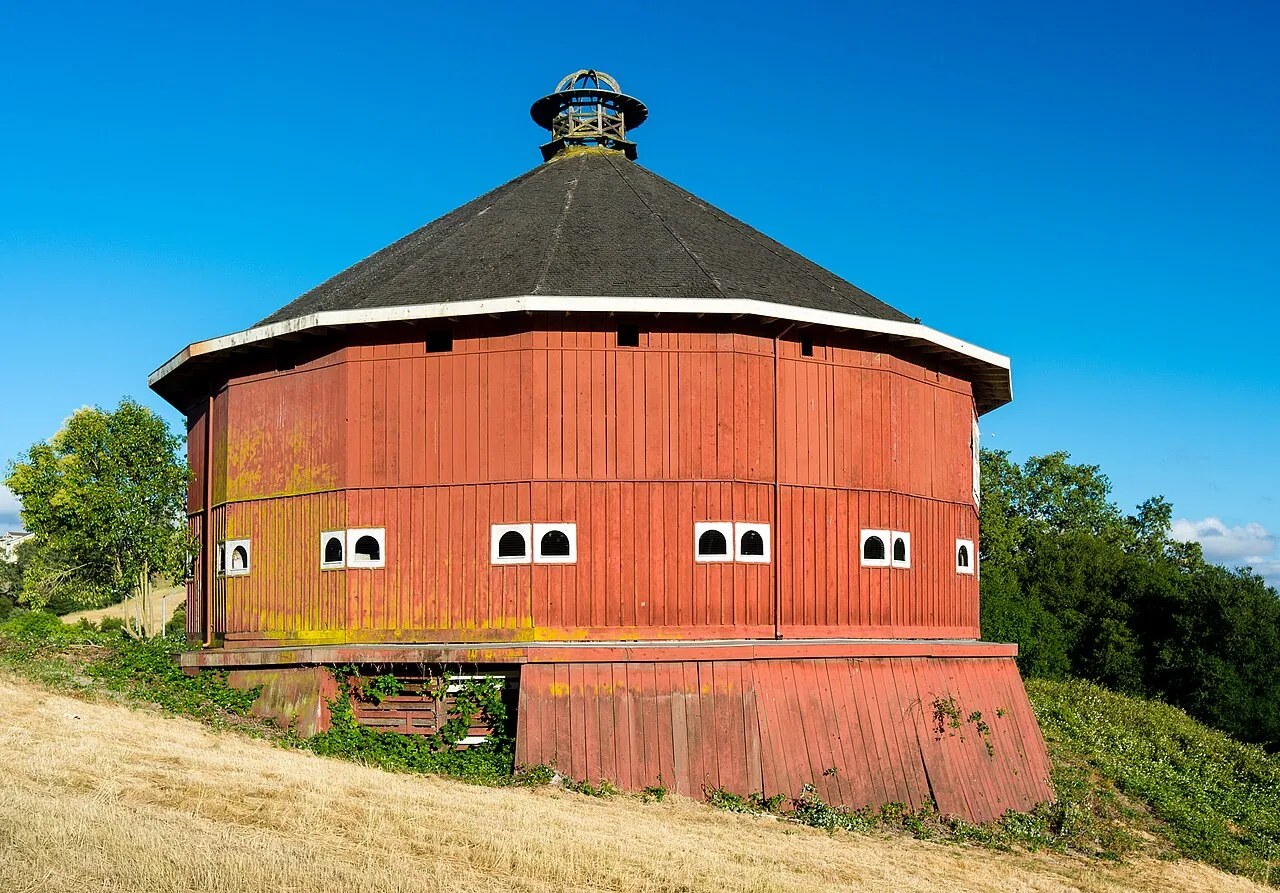
North of town, the Fountaingrove area lost homes, the inn and the historic Round Barn. In 2019 the Kincade Fire burned 77,758 acres near Geyserville, and in 2020 the Glass Fire destroyed 343 commercial buildings in Napa County. Smoke and ash from fires of that size travel well past the burn line, so distance from the flames is a weak guide to what a roof actually took.
Document it before the broom comes out
The first rain after the smoke
Ash and rain make a slurry that clogs drains faster than ordinary dirt. Santa Rosa took nearly 15 inches across three days of the atmospheric river in November 2024, and any roof still carrying fire residue was at higher risk of backing up. Burn scars from the Glass Fire east of the city also raise runoff and debris concerns during heavy rain, which means more material arriving at drains and downspouts.
Heat finishes the weakened details. A melted vent boot that survives winter can fail in a 115 degree September. So we sequence repairs: seal the openings first, clean drains and strainers before the rain, replace burned plastics and sealants, and only then deal with cosmetic staining. The order saves money because water damage inside is the expensive part.
Repair the burn, wash the ash
We cut out burned membrane back to sound material and patch with the same system, replace melted vent caps and skylight domes, and rebuild flashing where the heat cooked the adhesive. A skylight and penetration that took heat is replaced, not patched. Ash gets washed with controlled water and collected, so it does not wash into the drains, and strainers go back on before we leave.
If the insulation is wet, it comes out. A gravel or mineral surface behaves differently around embers: a built-up roof with gravel gives embers little to hold on to, while a thin single-ply sheet can burn through at a point. We repair to the existing system, and we tell you if the fire exposed a weakness that is cheaper to fix now than after the next one.
Check the zone before choosing the system
Fire pushes owners toward expensive upgrades they may not need. Santa Rosa is expanding its Wildland-Urban Interface fire zone for the first time since 2009, adding 3,082 parcels and removing 811 after new CAL FIRE hazard maps. Check where your parcel stands and what your reroof permit will require before you pick a system, because the County reroofing guidelines treat reroofing differently from new construction.
For a roof that took only scattered burns, a wholesale metal replacement or a full tear-off is often more than the damage deserves. Repair what burned, document the rest, and revisit the question at the end of the roof life, with the updated map in hand.
Fire debris is one exposure; summer heat also ages sealants through heat and UV damage.
Commercial Roofing Questions
We were outside the burn zone but smoke covered the area. Do we still have roof damage?
Possibly, though not always. Smoke leaves ash and residue, which can clog drains and hold moisture against the sheet, and it can carry embers a long way past the fire line. A walk of the roof after a heavy smoke event takes under an hour on most buildings and usually finds nothing worse than debris. If something is there, it is easier to fix before rain than after.
How do we know whether embers burned through the membrane?
Look for small dark pits, melted spots, or bubbled areas around vents and skylights, and for staining on ceilings below. Many holes are hardly visible. An electronic leak survey or an infrared scan after the roof is dry finds the ones that matter. Do not wait for a stain, because by then water has been in the insulation for a while.
Will the insurer treat fire damage and ash cleanup as one claim?
They may well, but the details depend on your policy, and we do not decide coverage. What we can do is keep burn damage, smoke cleanup and old wear on separate lists with photographs and dates. That structure makes it easier for you and the adjuster to agree on scope, and it keeps older maintenance items from being argued into the fire claim.
Our building is a Class A assembly. Does that mean we are safe from embers?
It means the assembly resisted fire spread in testing, not that nothing burned. Penetrations, vents, skylights and edge details are usually the weak points, and they sit outside the rating. We check those first, since they are where embers get purchase on a roof that otherwise did what it was rated to do.
Can a damaged roof wait until after the rainy season?
Not if anything is open. A dry-in is quick and cheap, and it prevents a leak from turning into wet insulation and ceilings. The permanent repair can be scheduled in the dry season if the roof is sealed and the drains are clear. We tell you which items cannot wait and which can.
Call before the first rain
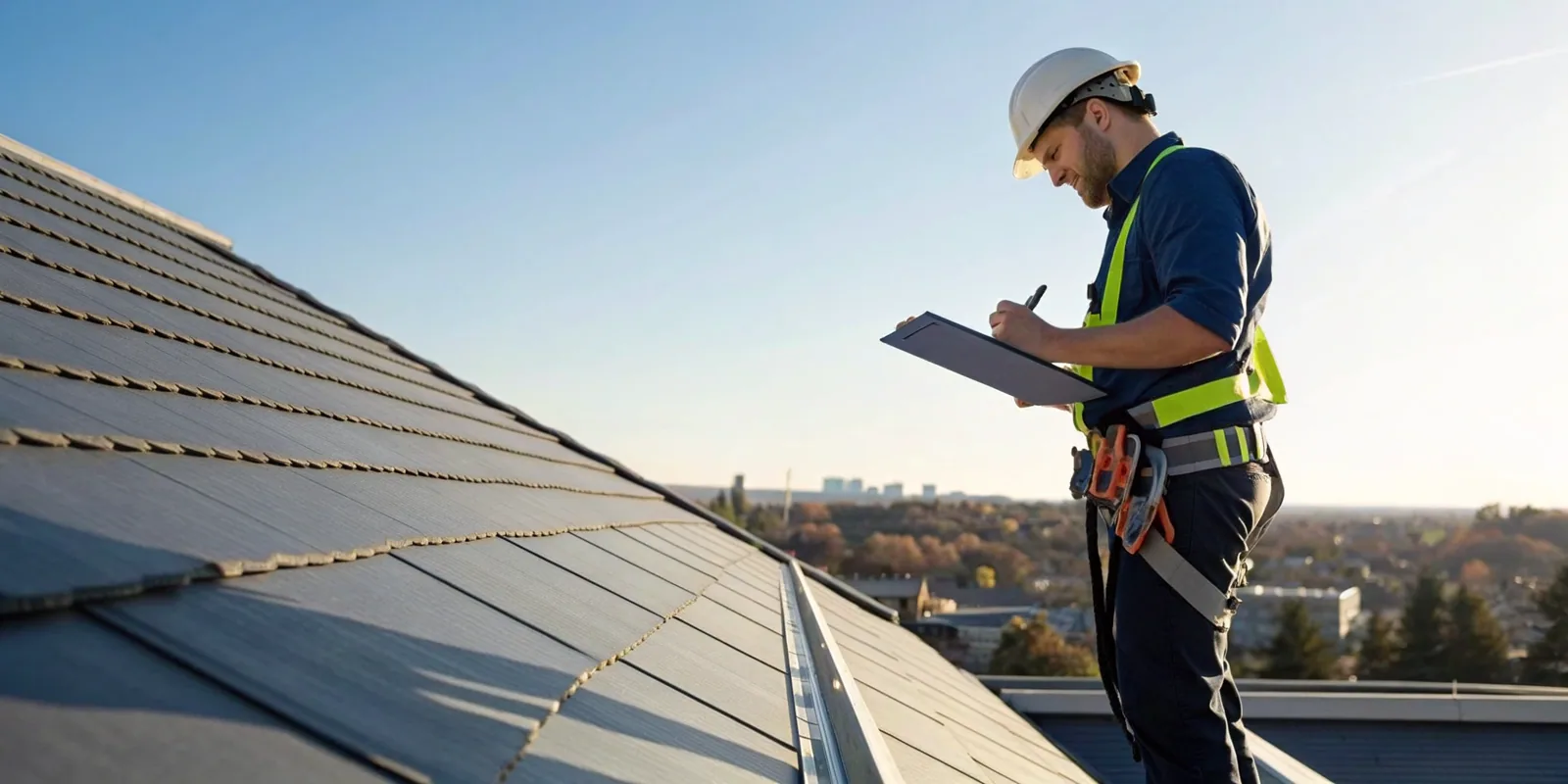
If smoke or embers reached your building, have us walk the roof. We will tell you plainly whether it needs work now, later, or not at all.