Heat and UV Roof Damage Repair in Santa Rosa, CA
Roof Damage Repair
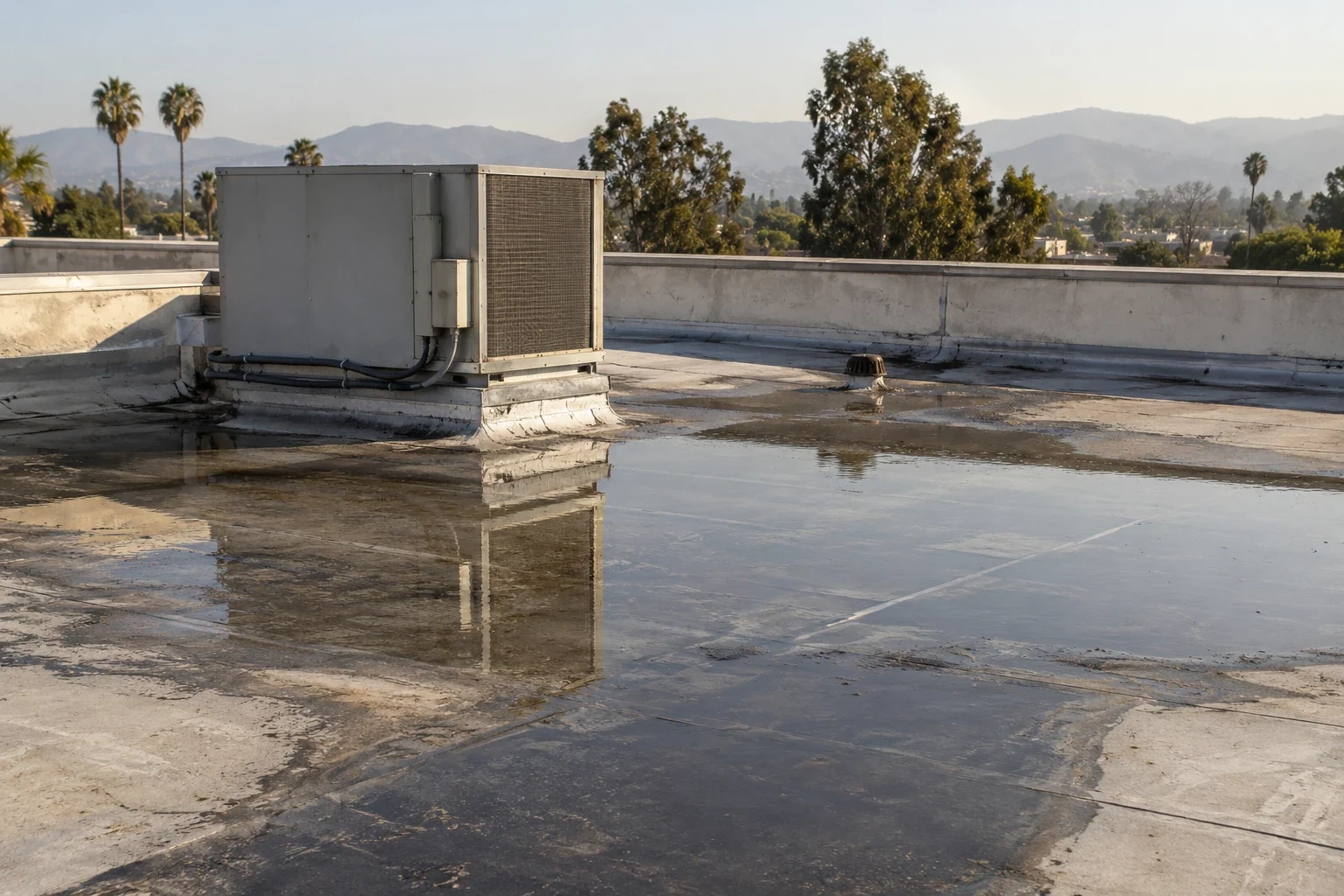
Sun does not wreck a roof in one summer. It wears it down over years, and a record hot day just shows you how far the wear has gone. When Santa Rosa, CA hit a record 115 degrees on September 6, 2022, any roof with a stiff, tired surface was under a load it had not been built to carry for long: cracks, loose seams and curling flashing are what that kind of day exposes.
That is the nature of heat and UV damage. It is slow, it is mostly cosmetic until it is not, and it is the one kind of roof damage an owner can often get ahead of. A roof with faded, chalky, slightly crazed surface may need a coating, a handful of repairs and a maintenance plan, not a new sheet. The trick is telling that roof apart from one that is already brittle, and doing it before the rains arrive.
Serving Santa Rosa • Rohnert Park • Petaluma • Windsor • Healdsburg • Sebastopol • Napa
What the sun takes first
Ultraviolet light breaks down the top layer of every roof material. On single-ply sheet, the surface chalks and dulls, and over time it loses flexibility. On PVC, plasticizers migrate out of the material, leaving a stiffer sheet that shrinks and pulls at its seams. On modified bitumen the granules wear off and expose the asphalt, and on built-up roofs the surface crazes into a pattern like dry mud.
Heat works with the sun. A dark roof can run much hotter than the air above it, which speeds every one of those processes and softens adhesives. Flashing pulls back from walls, sealant cracks, and metal fasteners back out as the panels expand and contract. The damage is cumulative, and the roof does not announce it until water finds a crack.
Why 115 degrees is a stress test
The September 2022 record was not only about the peak. Healdsburg reached 117 degrees the same day, and the surface of a roof under that sun gets far hotter than the air. A membrane that is already stiff cannot absorb the daily swing between a cool, foggy morning and a scorching afternoon, so it cracks at the weakest points: seams, corners, penetrations.
Santa Rosa has a warm-summer Mediterranean climate, so most of the sun exposure arrives in the same months when the roof is dry and no one is looking at it. The damage is then carried into the wet season. A crack that opened in August lets in November water, and the roof appears to fail in winter when it was actually damaged in summer.
Heat changes town by town
Bend the sheet before you judge it
How a roof looks and how it performs are different things. A chalky white surface can still be flexible, and a clean-looking one can be brittle. We check by feel and by test: flexing a sample at a seam, probing for shrinkage at walls, measuring remaining thickness and cutting a core when it is worth it. Wherever moisture is a question, an infrared survey shows whether cracks have already let water into the board.
The result is a verdict in plain terms. Some roofs have plenty of life and need only cleaning and a coating. Some need targeted repairs at stressed details. A few are past it, with brittle sheet, widespread shrinkage and cracks at most seams, and for those, patching more than a few spots wastes money.
Restore the surface, replace what shrank
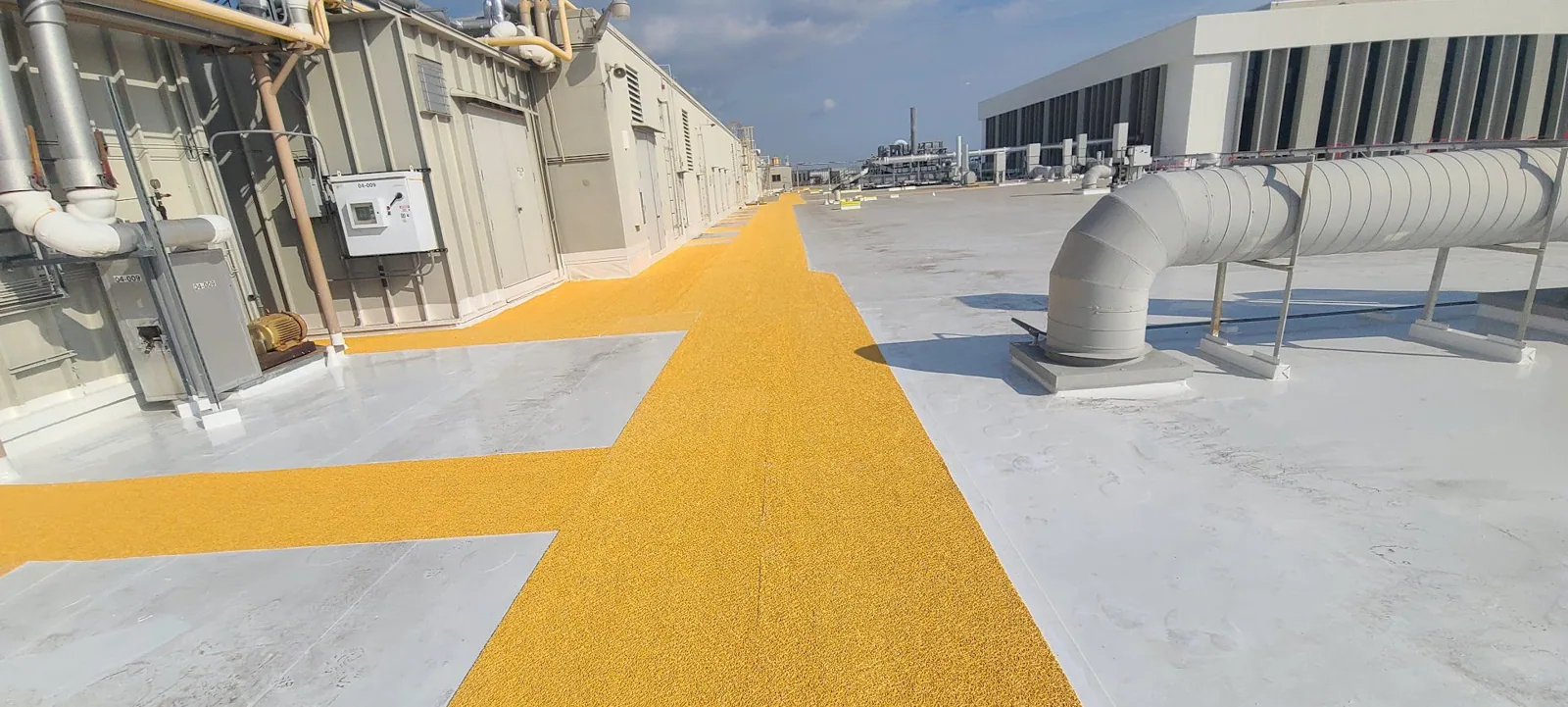
For a sound roof with a tired surface, restoration is the practical answer. We clean it, repair the seams and flashings, and apply a coating that returns UV protection and reflectivity. Our coating restoration work uses acrylic where the roof drains well and silicone where some water sits. A reflective surface also runs cooler, which slows the next round of damage.
Where the sheet has shrunk, no coating helps. Flashing that has pulled up needs to be rebuilt, and shrunken seams need re-welding or re-lapping. Our maintenance program puts a spring walk on the calendar before the heat arrives, so the small cracks are sealed before the first hot week, not after.
A white coat is not a cure
The most common heat mistake is coating a roof that is wet inside or too brittle to hold the coating. A coating applied over wet insulation traps the moisture, and one over a crazed, cracking surface tends to peel in sheets. Test first.
It is also not worth installing a cool roof upgrade solely for the energy savings on a failing roof; fix the roof, then decide on the surface. California's 2025 Title 24 Energy Code applies to permit applications filed on or after January 1, 2026, so check what your reroofing permit requires before choosing a color. Spend on the roof first and the finish second.
Heat ages sealant while wind tests the perimeter; a condition report should separate wind damage from thermal wear.
After a fire, separate fire damage to roof surfaces from the slower wear caused by heat and UV.
Commercial Roofing Questions
The surface of our roof is chalky and faded. Is it failing?
Not necessarily. Chalking is the surface wearing off, and many roofs carry it for years without leaking. What matters is what lies under it: flexibility, seam strength and moisture. A bend test and a quick probe of the seams give a clear answer. If those pass, cleaning and a coating can add years of service.
Do dark roofs really wear out faster than light ones?
Generally yes, because they absorb more heat and run hotter on sunny days, which speeds up aging in most materials. The difference shows up over many seasons, not in one. If your dark roof is sound, a reflective coating is an option, but if it is already brittle, the coating will not rescue it.
We have a metal warehouse in Cloverdale. What does heat do to it?
Metal expands and contracts every day, which works fasteners loose and splits sealant at laps and penetrations. The first signs are backed-out screws and weeping at flashing. In a hot climate like Cloverdale, check fasteners, replace failed washers and reseal laps on a schedule, and coat only after the panels are tight and rust-free.
How often should a coating be renewed?
It depends on the coating, the thickness applied and how much water the roof carries, so we look at wear, not dates. A coating that is thinning, chalking or losing bond at laps is ready for a recoat. Doing that before it erodes through to the sheet is far cheaper than repairing the sheet afterward.
Could heat damage be covered by insurance?
Gradual sun wear is usually treated as maintenance and not as a covered event, though your policy governs. Sudden damage from something like a fire is different. We keep a record of what is wear and what is event damage, so that if an insurance conversation happens you have the facts organized.
Find out how much life is left
Ask us to look at the roof before next summer. We will tell you plainly whether it needs work now, later, or not at all.