Commercial Roofing in Cloverdale, CA
Service Areas
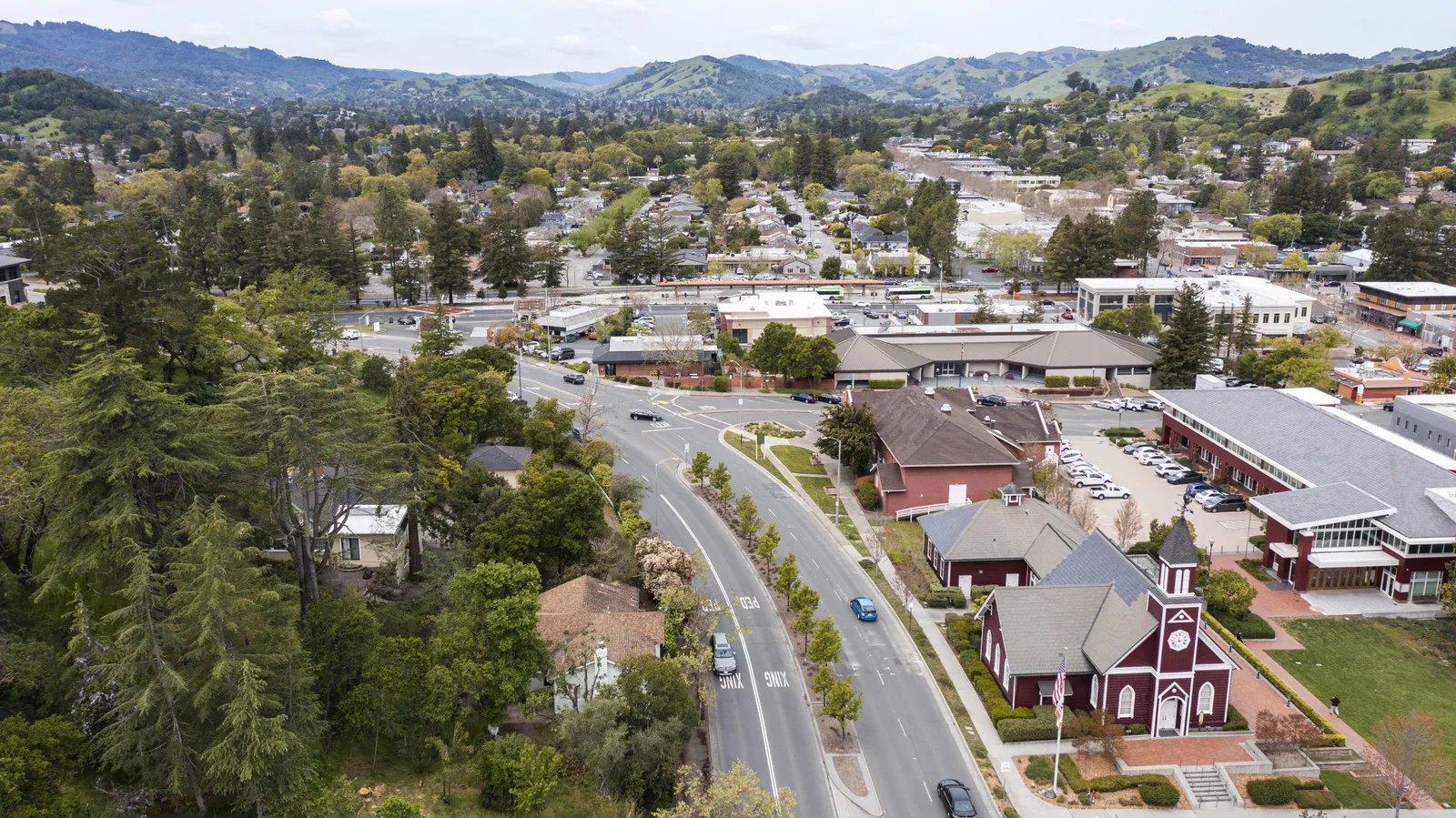
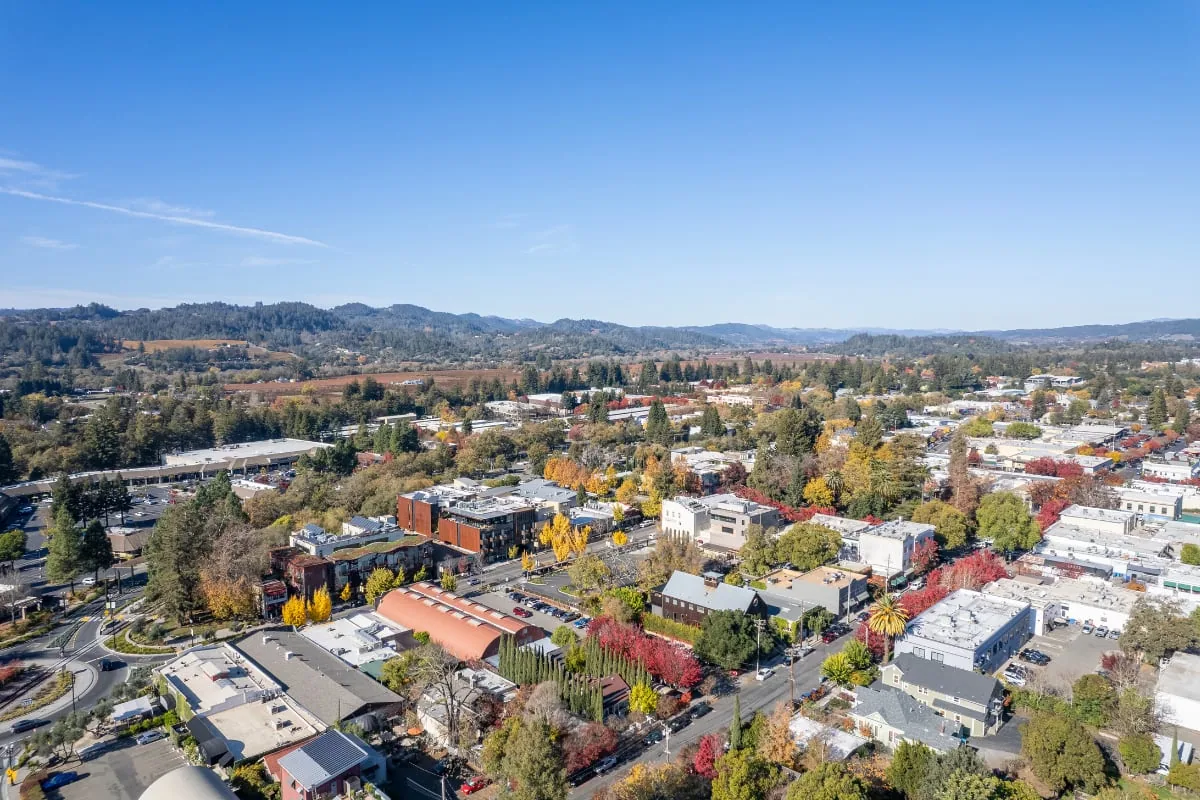
Most roof advice in Sonoma County is about rain. In Cloverdale it should start with the sun. The northernmost city in the county, home to 8,996 residents, has summer temperatures that can exceed 100 degrees, and a roof that sits through that heat is already stressed by the time the first storm shows up.
We repair, recover, coat and replace commercial roofs in Cloverdale, CA, and across Santa Rosa, CA and Sonoma County. The buildings worth talking about here follow the city's own record: industrial buildings in a town that lost manufacturing jobs, properties near a rail station that may get service, and venues that run to an event calendar. Each one asks a different question of its roof, and none of those questions are about brand names.
Serving Santa Rosa • Rohnert Park • Petaluma • Windsor • Healdsburg • Sebastopol • Napa
What 100 degrees does to a membrane
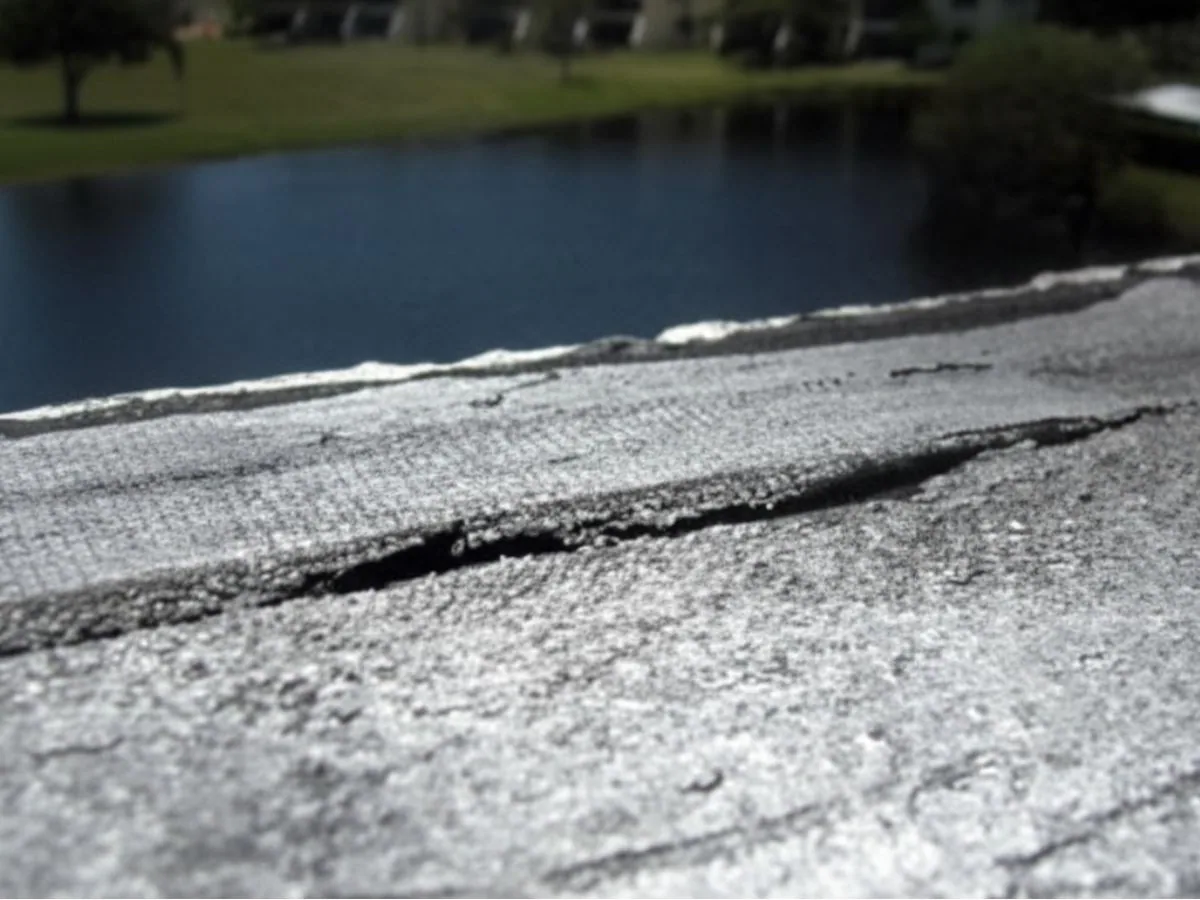
Heat works on a roof in three ways. It softens the surface, so foot traffic and rooftop equipment leave marks that thin the membrane. It makes the whole assembly expand during the day and contract at night, which pulls on seams, flashing and fasteners. And it dries out sealants until they crack and let go. None of this looks dramatic in July. It shows up in November, when the first real rain finds every spot that cracked during the summer.
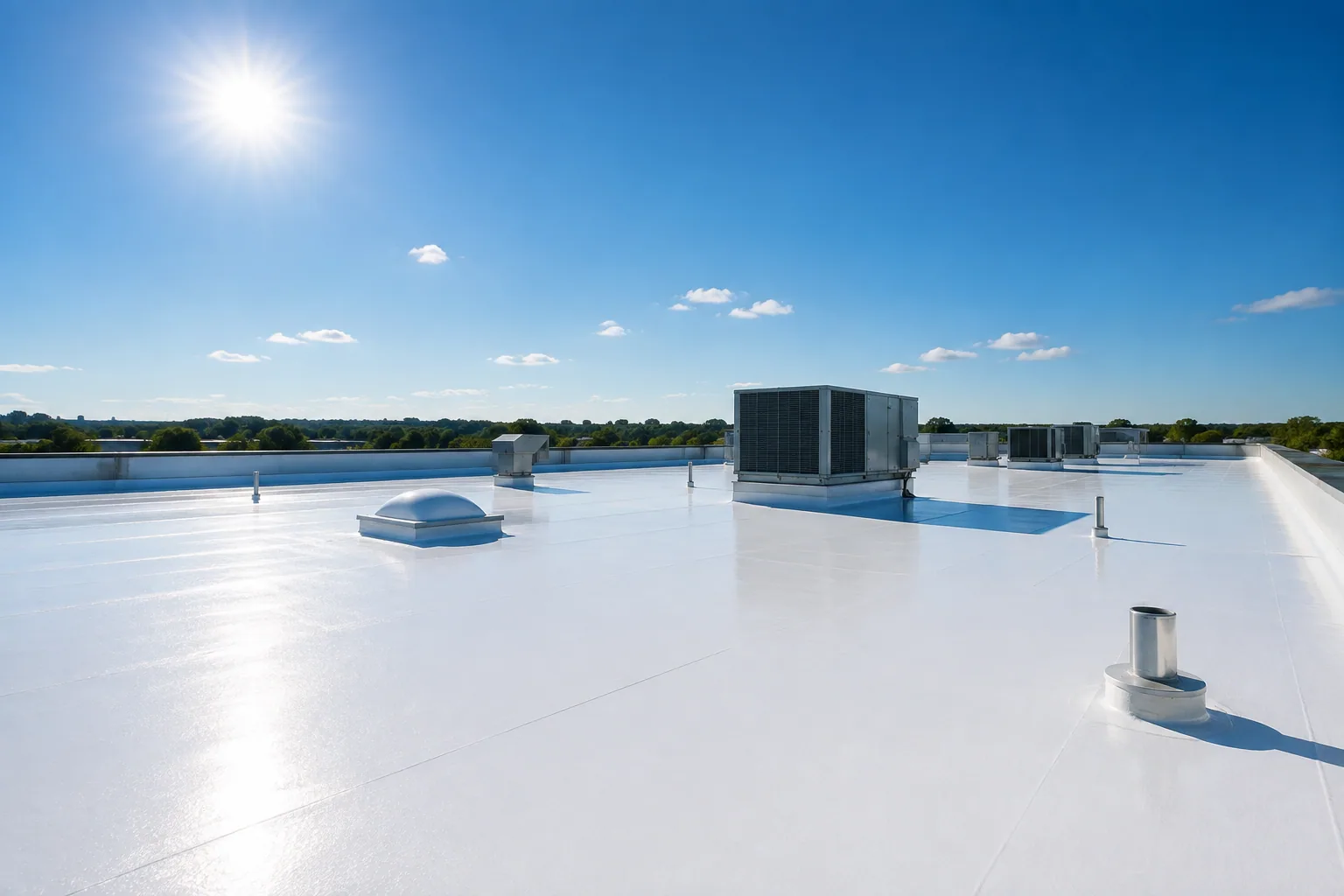
The wider county shows how far a record day can go: Santa Rosa hit 115 degrees on September 6, 2022, while Healdsburg reached 117. Cloverdale's own summers can pass 100 without a record, so the same logic applies here every year. We check seams, sealants and flashing bases first on a hot-climate roof. If the membrane is still sound, a cool roof installation puts a lighter surface on it and lowers the temperature the roof has to survive. If heat has already cooked it, heat and UV damage repair comes first.
When a building sits quiet
Between 1988 and 1994 the city lost 500 to 600 manufacturing jobs, including a Louisiana-Pacific mill. Any owner of an industrial building in a town with that history can ask a practical question: what has the roof been through since the last time anyone looked? Has the use changed? Has the building sat partly empty? Who has been walking the roof?
Buildings that go through a change of use or a stretch of low occupancy often go years without maintenance, because the roof is nobody's budget line. Then a new tenant arrives and the first rain finds a drain that has been blocked for a long time. If you own a manufacturing building that is partly used, the plan is cheap and boring: keep the drains open, fix small leaks the week they appear, and walk the roof twice a year. Do not put a new membrane on a building that has no tenant lined up. Keep it dry and wait.
A station on the south side
Roofs over a busy calendar
The Cloverdale Citrus Fair, established in 1892, runs the San Francisco Chronicle Wine Competition. A fairground that hosts a big annual competition schedules everything around it, and the roof has to fit into the same calendar. A leak in the wrong week is a very public failure.
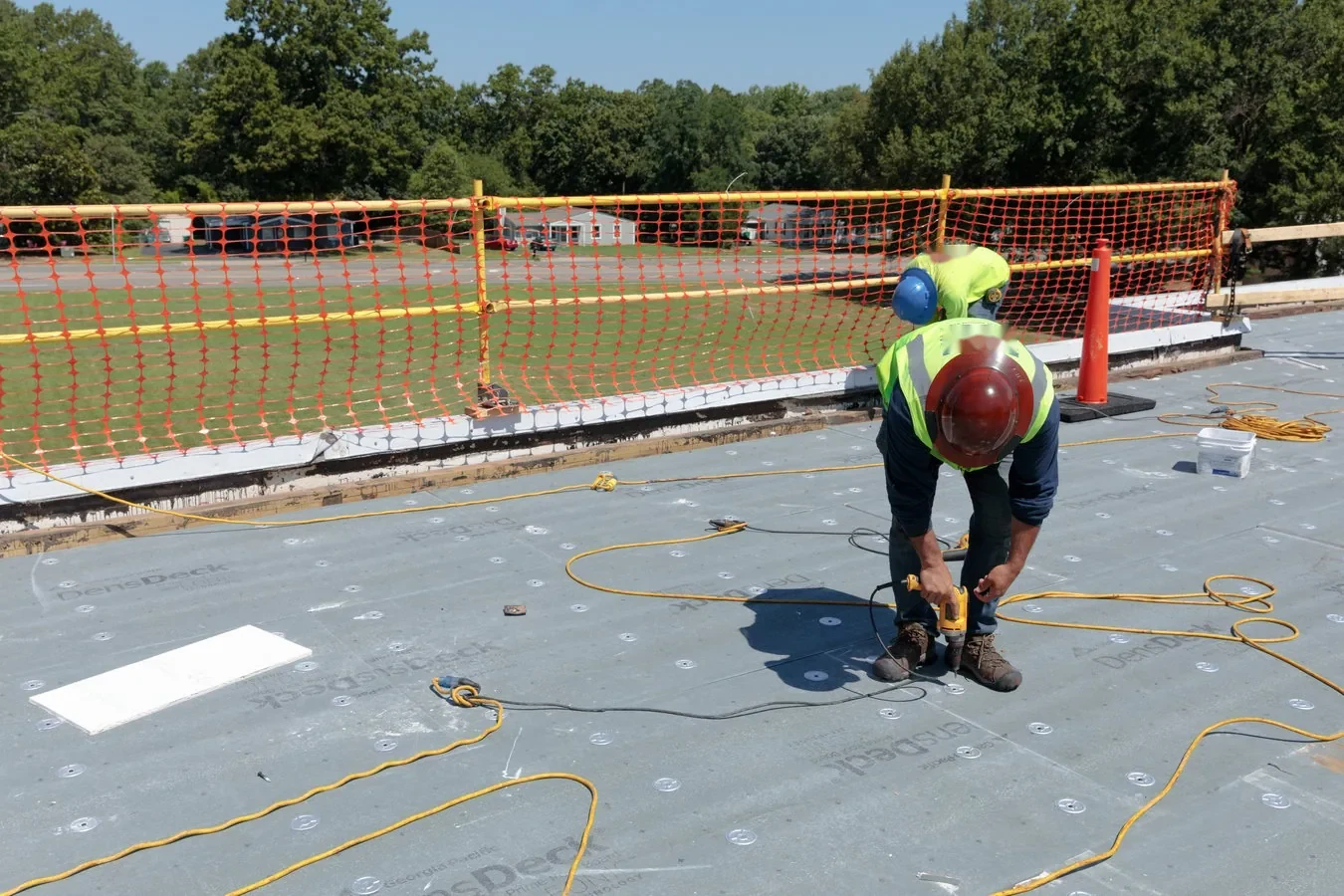
The plan is straightforward. Do the roof inspection and drain cleaning well before the event season. Schedule tear-off, hoisting and noisy work for the weeks when the venue is quiet. Keep the work in sections, so each part of the roof is sealed by evening. And keep a temporary repair kit and a phone number on hand, because a storm does not check the event calendar. For an active leak, identify the affected area and protect people, equipment, and inventory below it while arranging a safe roof assessment.
What to hold off on
A few tempting choices cost owners money here:
- A dark membrane chosen only because it is cheaper, on a roof that bakes every summer afternoon.
- A full replacement on a building with no tenant lined up and no plan for the space.
- Sealant over cracks that heat will reopen within a season.
- Waiting for a stain to show up before anyone goes up.
A white TPO roof suits many buildings in this climate, but it is not the answer for every roof. A short walk first costs a lot less than the wrong membrane.
Commercial Roofing Questions
Do we need a white roof on a building that sees 100 degree summers?
Reflective surfaces earn their keep in this heat, since they keep the membrane cooler and cut the stress on seams. White is not automatic, though. A roof with good life left can be coated to reflect more sunlight, and a roof with wet insulation needs the water out first. We check the insulation, then recommend a surface. Dark membranes are a poor match for the afternoons here.
How do we keep a partly empty industrial building watertight until we find a tenant?
Spend on the envelope and nothing else. Clear the drains, patch every small leak within days, and walk the roof twice a year with photographs. A quiet building leaks unnoticed, because nobody is inside to see the stain. Skip a full replacement until a tenant's needs are known, since a new roof over the wrong layout can mean cutting into it later.
Why does the roof leak in the first November storm if it looked fine all summer?
Because the cracking happened in the heat, and the rain only reveals it. Sealants harden over a hot summer, laps shrink, and flashing pulls away from walls a little each day. None of it leaks until water shows up. A walk in September, before the rains, catches those spots while the weather is dry and the repair is small.
What should we ask for about the roof before buying a building in town while a rail extension is on the way?
Ask for repair records, the last two years of invoices, and any photographs of the roof. Then have someone walk it, ideally with an infrared scan to find wet insulation. A seller's statement that the roof is fine tells you very little. A condition report with photographs tells you what to negotiate and what to budget over the next several years.
Can a roof be replaced around a venue's busiest weeks?
Schedule the tear-off for the quiet months and keep each phase short enough to be closed in before the crew leaves. If an event week arrives mid-project, we leave the roof tight, with temporary protection at every open edge, and pick back up after. It takes planning with the venue manager, but the roof should never be the reason an event moves.
Call before the heat or the rain
Call and tell us about the building in Cloverdale. After we have been on the roof, we will say plainly whether it needs work now, later, or not at all.