Preventive Roof Maintenance in Santa Rosa, CA
Commercial Roofing Services
Most maintenance programs are sold as insurance. They work better as a calendar. A roof does not give out on a random Tuesday. It gives out at the one detail nobody checked before the first big storm, and in Santa Rosa, CA that storm can park over the county and drop weeks of rain in a few days.
Preventive maintenance is a scheduled, hands-on visit, a short list of small fixes made on the spot, and a written record of what is left. It costs far less than a mid-winter emergency, and it keeps small problems small. It is also the cheapest way to learn which roofs are worth keeping and which are not. We set the schedule from your building, your tenants and the wet season, not from a number of visits that merely sounds good on a proposal.
Serving Santa Rosa • Rohnert Park • Petaluma • Windsor • Healdsburg • Sebastopol • Napa
Every building type wears differently
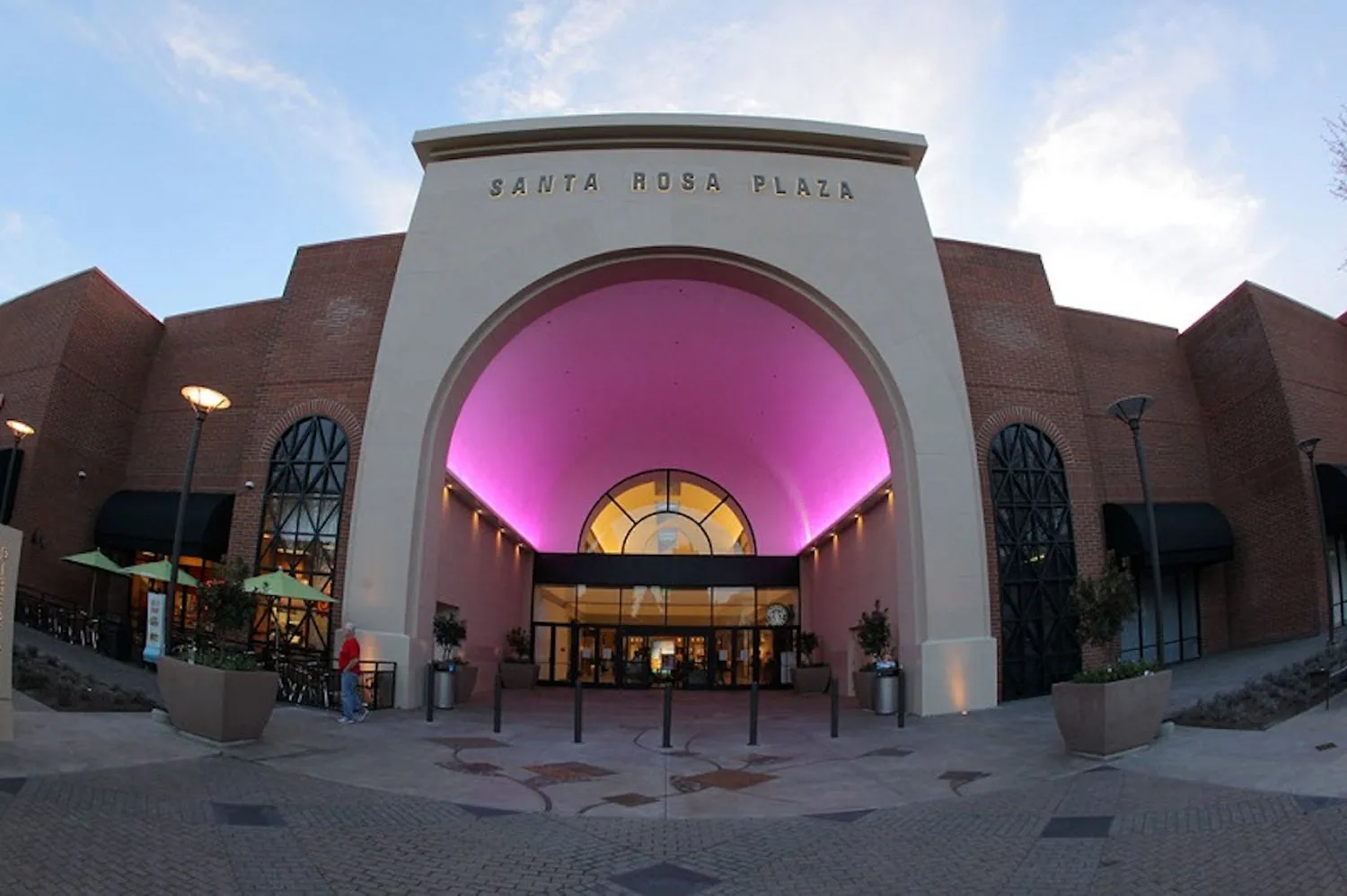
A row of storefronts, a flex building and a winery barrel hall do not need the same visit. Retail roofs collect foot traffic from service techs and tenant add-ons, so the damage is usually mechanical: a dropped tool, a worn path to the rooftop units, a dead penetration nobody sealed. If you own a shopping center roof along Mendocino Avenue or Highway 12, that is the pattern to watch.
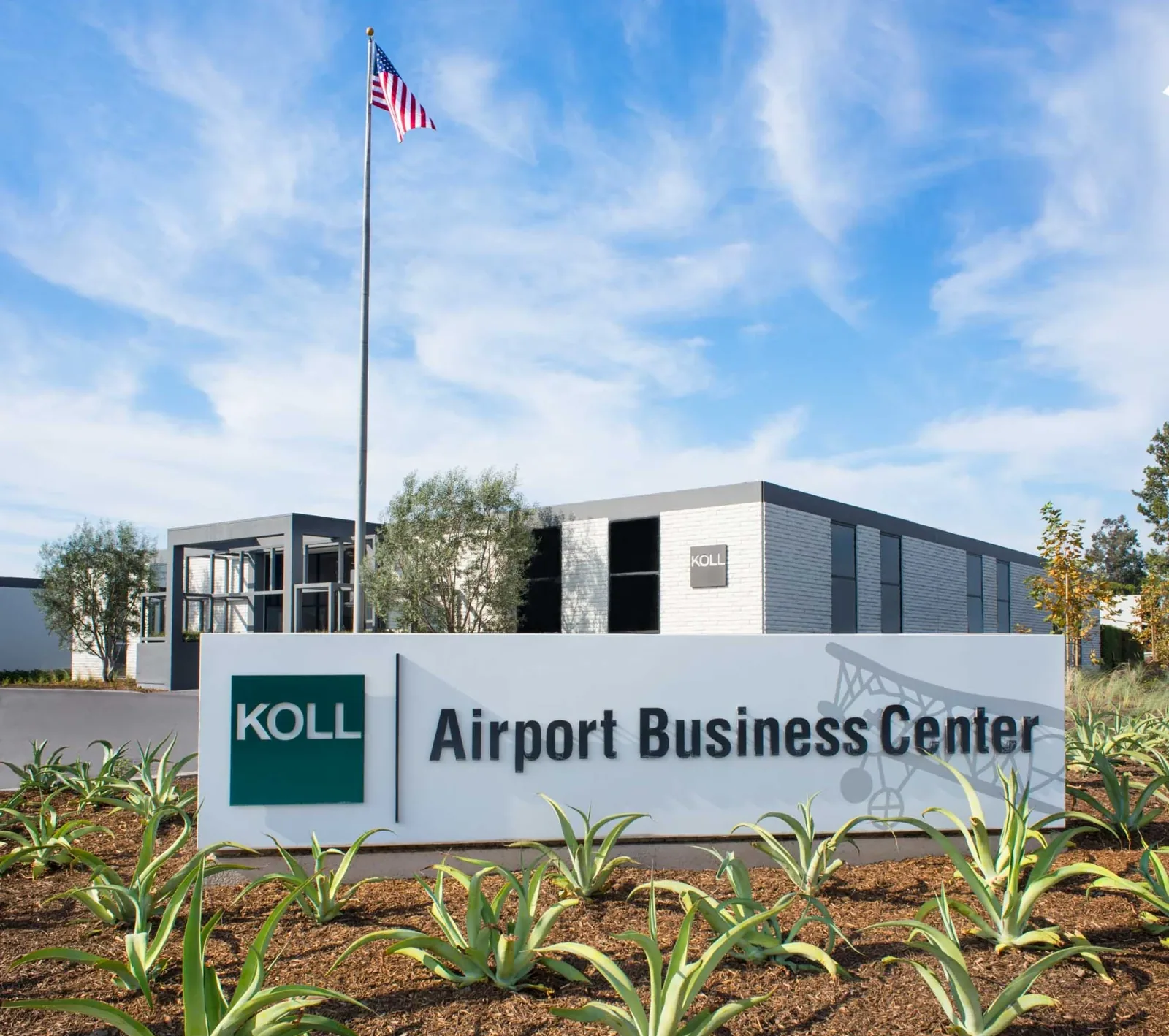
Flex and light industrial buildings, like the mix at the Airport Business Center, tend to show trouble at the roof edge and the dock side, where wind and water find the thinnest metal. Winery and production buildings across Sonoma County add exhaust fans, process equipment and long drainage runs. We write each checklist for the building in front of us. Do not accept a one-page form that looks the same for every address.
What one visit involves
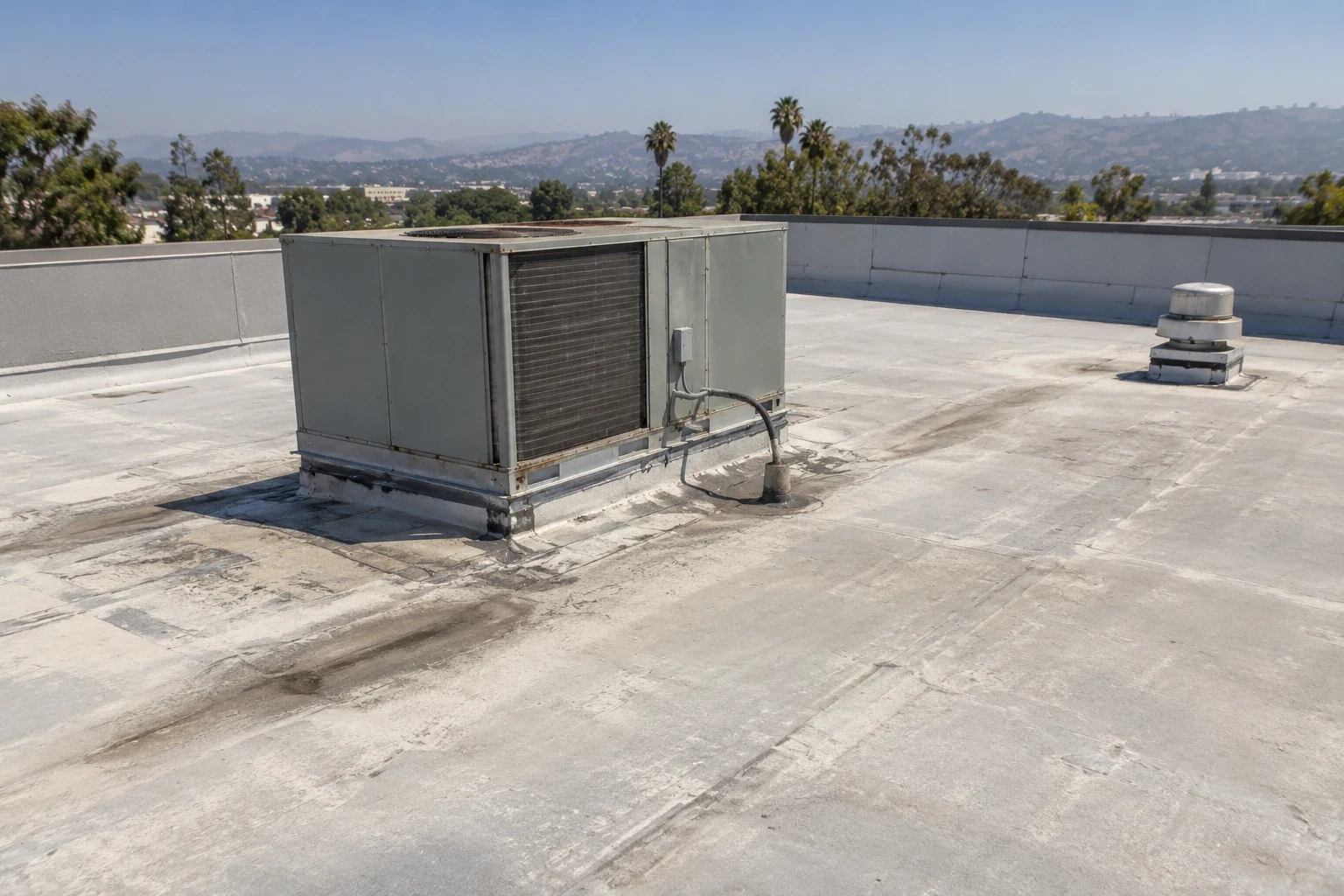
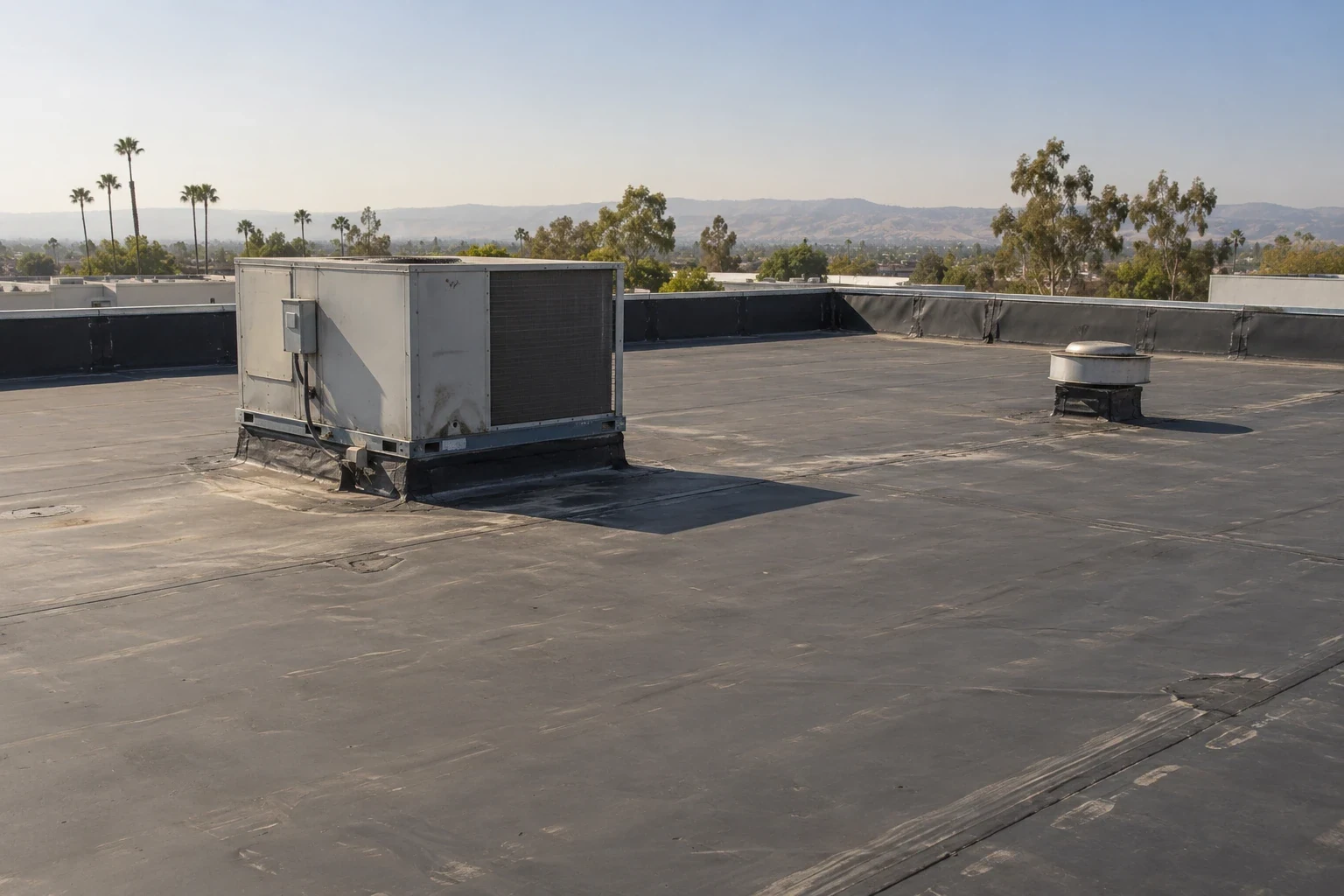
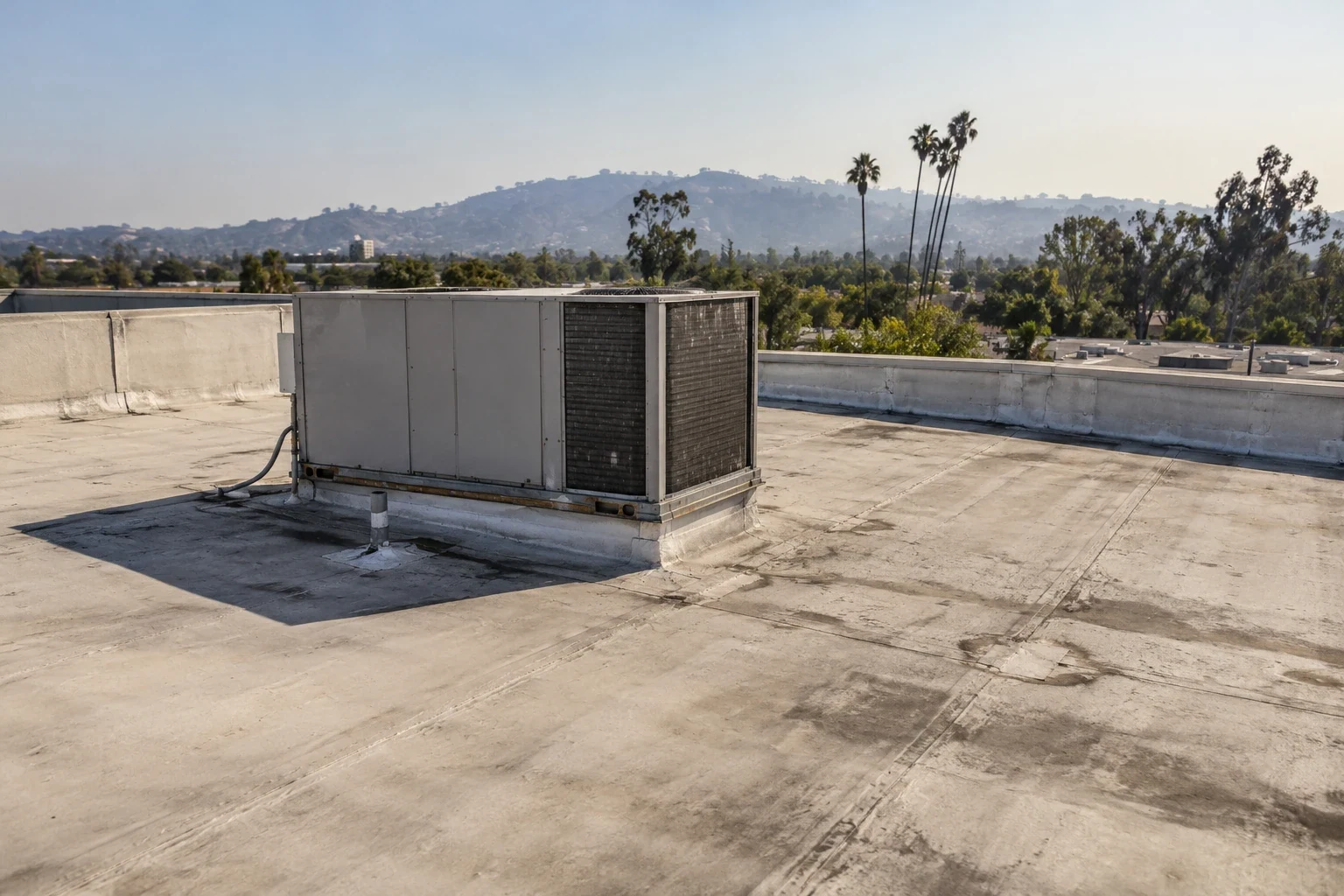
A good visit is slow and physical. We walk the roof, clear every drain and scupper, test the seams by hand, look at each flashing and sealant joint, and check the fasteners and straps around rooftop equipment. Photos go with every finding, so you can see what we saw without climbing a ladder.
Small repairs happen on the same trip: a failed pitch pocket, a lifted seam edge, a cracked boot, a missing termination bar. Anything bigger goes on a written list with a plain recommendation beside it: fix now, fix this year, or watch. That list feeds a roof condition report you can hand to a lender, a tenant or a board without rewriting it. If the walk turns up wet insulation or a failing system, we say so, and we price the next step with roof capital planning in mind.
Rain, ash and heat set the calendar
Skip the extras that are not worth it
Quarterly visits on a young, clean roof are not worth it. Neither is a blanket sealant coat laid over seams that are still sound, or a monthly drone flight on a roof that has not changed. Those add cost and tell you nothing new.
Spend on the things that actually move risk: open drains, intact flashing, secured equipment curbs and a roof edge that stays tight. Put money into a drain and scuppers program before a coating. Where a roof is aging but still sound, a later coating restoration can stretch its life, and the maintenance records make that decision easy. Where it is past saving, the records make that obvious too, and you stop paying for repairs that cannot hold.
How a program stays on track
We plan visits around tenants, receiving schedules and the quiet hours of your building. Everything lands in one running file: dated photos, what was repaired, what was deferred and what it will probably cost to address next. That file is the program. Without it, a maintenance visit is just a stranger walking on your roof.
Storm calls do not wait for Monday, so require a clear escalation process. If a seam opens in January, the file should show its location, prior repairs and known access limits before an assessment begins. For owners with several buildings, the visits can be grouped by route to keep the schedule tight. If you need a baseline first, a full commercial roof inspection sets it.
A maintenance record is useful when it changes the next visit. Note each drain that was cleared, each seam or curb that needs follow-up, and any area that could not be inspected. Keep the photos tied to roof zones so the next technician can compare movement rather than repeat the same general walkthrough. Set the return interval from roof condition, exposure, and the owner’s operating needs. A program should make repair timing clearer; it should not turn every observation into a replacement recommendation.
Commercial Roofing Questions
How many maintenance visits does a flat roof in Santa Rosa actually need?
Two a year covers most buildings: one in early fall, before the first November storm, and one in spring, after the wet season has shown you what failed. Add a third after a wildfire smoke event or a record heat spell. A young roof in good shape can drop to one visit with a drain check in the fall, but we would not go below that on any low-slope building.
Is maintenance worth it on a roof that is close to replacement?
Only a thin version. If the roof is within a couple of seasons of replacement, spend on drains, leak response and moisture checks, and skip cosmetic work like resealing every seam. The money is better held for the new system. We will tell you plainly when a roof has crossed the line where more upkeep is not worth it.
Will a maintenance record help with a manufacturer warranty claim?
Most manufacturer warranties expect the owner to keep the roof clean, drained and free of unapproved penetrations, so dated visit records are useful if a claim ever comes up. They do not replace the warranty terms, though. Send us the paperwork and we will read what it asks of you, then build the visit list to match.
What do you do about ash and debris after a wildfire?
We clear it before the rain, starting with the drains, scuppers and the low corners where water collects. Ash holds moisture against the membrane and sits on seams, so we also look for pooled spots and surface damage from embers. Schedule that visit as soon as air quality allows, not at the next calendar date.
What should a winery or production building ask for that an office does not?
Ask for a closer look at exhaust penetrations, equipment curbs and drainage routes. Process buildings often carry more rooftop equipment and more foot traffic around harvest, so the flashing and walk areas take a beating. Put the visit before crush season, and tell us when the building is loudest or busiest so we stay out of the way.
Find out what your roof needs this year.
Call Commercial Roofing Santa Rosa. We will walk the roof and tell you plainly whether it needs work now, later, or nothing at all, and we will put a schedule on paper before the next storm.