Modified Bitumen Roofing in Santa Rosa, CA
Roof Systems
Modified bitumen is the old-school roof that keeps winning arguments, and in Sonoma County the argument is usually about fire. A torch is an open flame, and this is a place where a wind-driven fire has burned down neighborhoods. That single fact changes how the system should be chosen and installed here.
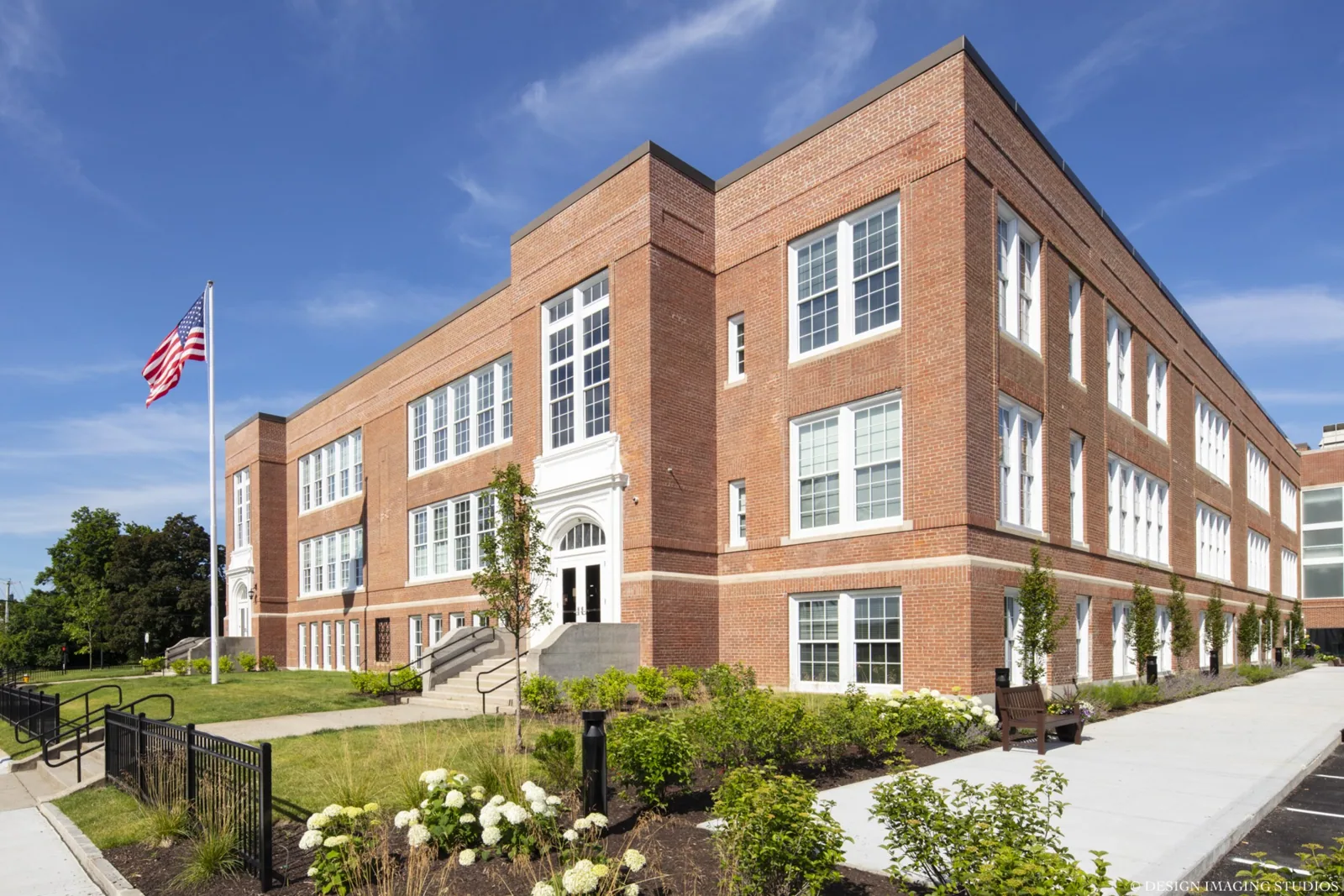
Modified bitumen is an asphalt sheet stiffened with a polymer, either SBS rubber for flexibility or APP plastic for heat tolerance, laid in plies over insulation and finished with a granulated cap. It is tough, repairable and familiar to every building department. In Santa Rosa, CA it can also be the right roof for a school, a clinic or an older retail block. The question is how it goes on, and whether the building can accept that method.
Serving Santa Rosa • Rohnert Park • Petaluma • Windsor • Healdsburg • Sebastopol • Napa
Torch season and fire season overlap
In October 2017 the Tubbs Fire crossed Highway 101 into Santa Rosa on near-hurricane-force wind, and Diablo gusts that month reached 70 mph. The 2019 Kincade Fire burned 77,758 acres near Geyserville. A crew with a propane torch on a dry roof in September is not a casual thing in that setting.
So we do not default to open flame. Many modified bitumen roofs can be installed cold, with self-adhering sheets or cold adhesive, and those are our first suggestion for buildings with combustible neighbors, vegetation close to the roof edge or insurers who object to hot work. Where torch application is the right method, it comes with a fire watch, extinguishers on the roof and a cooldown period before the crew leaves.
Santa Rosa is also expanding its Wildland-Urban Interface zone for the first time since 2009, adding 3,082 parcels. If your building is near the new edge, ask about fire watch and ember resistance up front.
Laps, flashings and granule loss
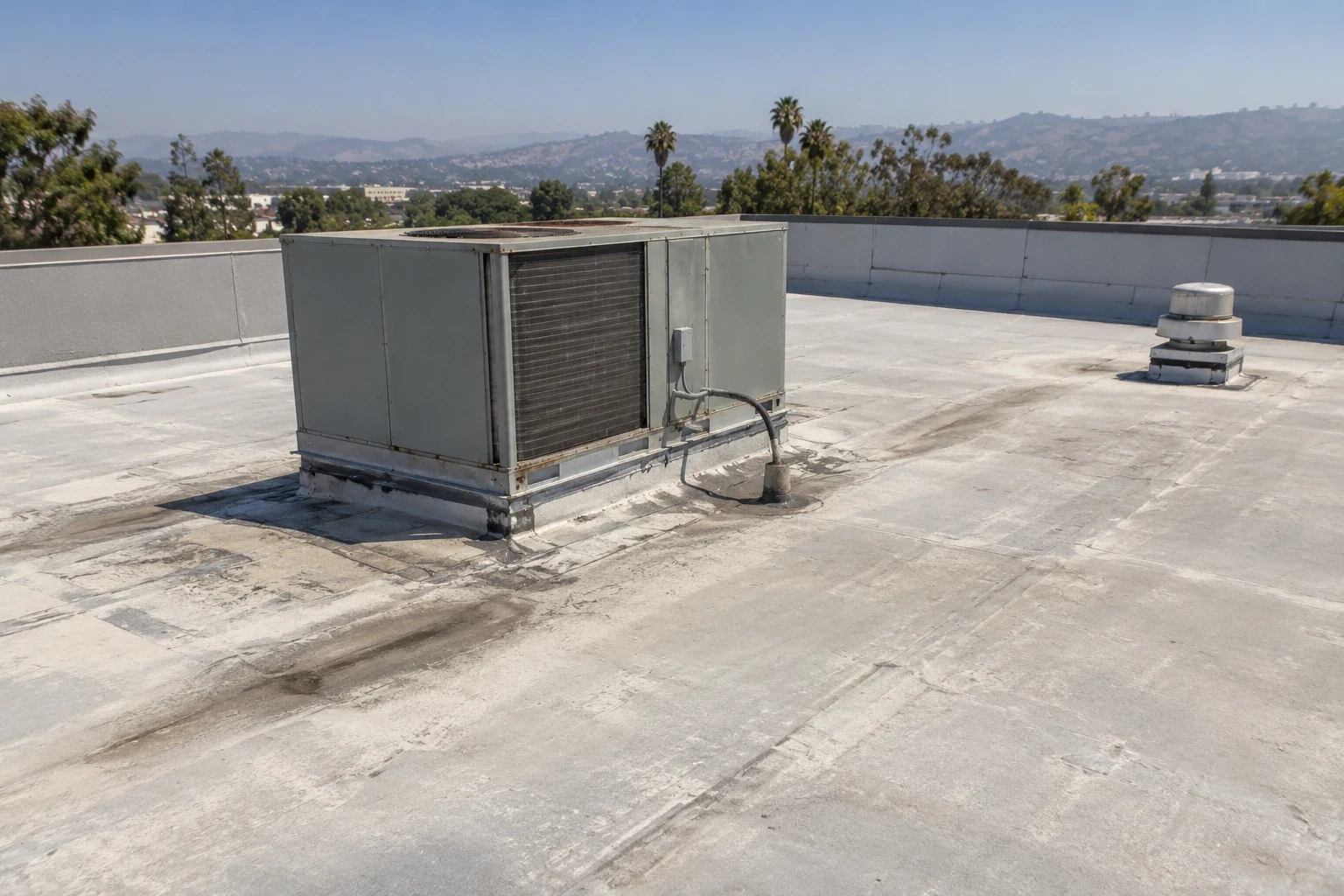
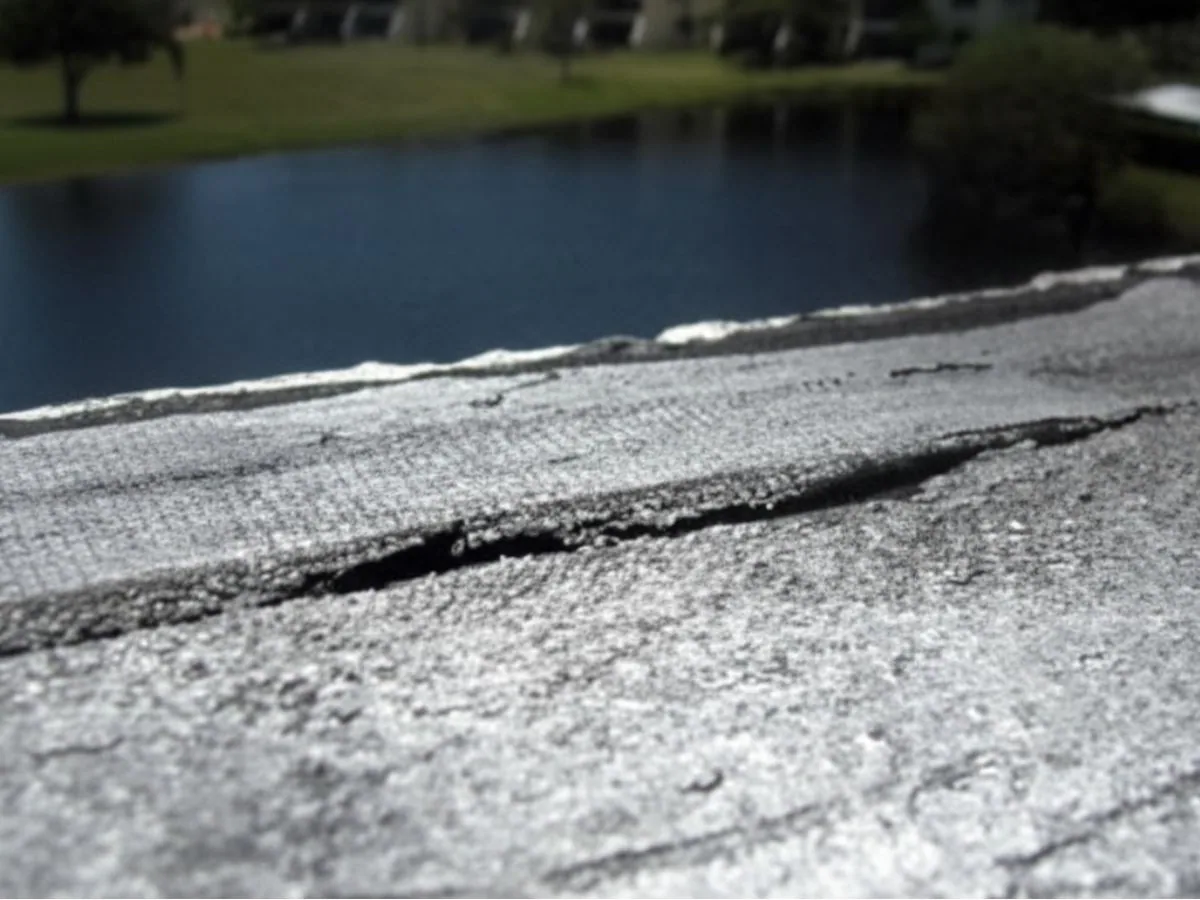
Modified bitumen fails at its edges and its laps long before the field. Side laps that were poorly heated or cold-applied in damp weather lift. Flashings at walls and curbs split along the corners where the stiff sheet is folded. Cap sheet granules wear off along drains and foot paths, exposing the asphalt to sun.
Heat and UV damage takes a toll. A cap sheet that has lost its granules ages quickly, and surface blisters show up where trapped moisture heats and expands. Blisters are not always leaks, but a broken one is an open door for the next storm.
The good news is that multiple plies give the roof some redundancy. A failed cap does not always mean the base ply underneath has let go. We probe, core and survey before we call it, and we say clearly which layer failed.
Recommendation: fix laps and flashings first, since those repairs are cheap compared with new roofing.
Schools, clinics and older blocks
SBS for flex, APP for heat
The two polymer types behave differently, so the choice is a real one.
- SBS rubber-modified sheets stay flexible in cold and recover well from movement, which suits roofs that see temperature swings or structural shifts.
- APP plastic-modified sheets resist sun and heat, which suits exposed roofs with long dry summers like ours.
On a new system we usually specify two plies, a base sheet and a granulated cap, over polyiso insulation and a cover board. A reflective cap sheet or a coating over the finished roof is one way to meet cool-roof expectations, and permits filed on or after January 1, 2026 fall under the 2025 Energy Code, so we confirm the requirement before pricing.
Modified bitumen is one of the reroof types the Sonoma County Reroofing Guidelines address, alongside built-up, metal and tile, and the guidelines include a self-certification reroof inspection policy. We read them against the job and confirm permit steps with the building division before we write a scope.
Skip torch-down near dry brush
Do not torch a roof with vegetation touching the parapet, wood-framed neighbors or a long dry spell and wind in the forecast. Cold-applied or self-adhered systems cost a little more in material and save a lot of risk.
It is also not worth choosing modified bitumen purely because it is familiar. If you want fewer seams and a light-colored surface, TPO may serve better, and if you want many plies and a long track record, built-up roofing is its closest relative. A restoration coating can also stretch a sound modified bitumen roof several more seasons.
We will name the cheapest option that does the job and the safest one, and tell you if they are not the same.
The scope should name the base and cap sheets, reinforcement, attachment, and surfacing rather than relying on a generic modified-bitumen label. Check how the new work will terminate at walls, drains, and equipment curbs, and whether the existing roof can accept added weight. If heat-applied work is considered, document fire watch, protection, and the site conditions that govern the installation method. A cold-applied or self-adhered option may change the work sequence, but it still needs compatible preparation and secure transitions.
Commercial Roofing Questions
Can modified bitumen be installed without an open flame?
Yes, in several forms. Self-adhering sheets and cold-applied adhesives need no torch, and they are what we lean toward near vegetation or in dry weather. They cost more in material, but that premium is small next to the risk of hot work on a roof in fire country.
What should I look for on a modified bitumen roof that is aging?
Granule loss, open laps, blistering and split corner flashings. Light surface wear is normal. A cap sheet that is exposing the black layer, or flashings that have pulled away from a wall, are signs the roof needs attention before the next wet season.
SBS or APP, which is better for a roof in this climate?
APP handles heat and sun well, and SBS handles movement and cold better. With a record of 115 degrees in September 2022, an exposed Santa Rosa roof makes a fair case for APP, but SBS earns its place on roofs with structural movement. The deck and the detailing drive the call.
Will a coating extend the life of my modified bitumen roof?
On a roof with dry insulation and sound laps, a reflective coating can add years and cut surface heat. It is not worth applying over blisters, wet spots or open seams. We repair first, test for moisture, then coat what is left.
How does a modified bitumen reroof get permitted in Santa Rosa?
Reroofs go through the Building Division under the 2025 California Building Code the city adopted by Ordinance 2026-001, and the county reroofing guidelines describe the inspection process. We confirm the layer count and any energy-code requirements before work starts.
Get the install method that fits your building
Call Commercial Roofing Santa Rosa. We will look at the roof and its surroundings, then tell you plainly whether modified bitumen fits, whether it should go on cold, or whether another system serves you better.