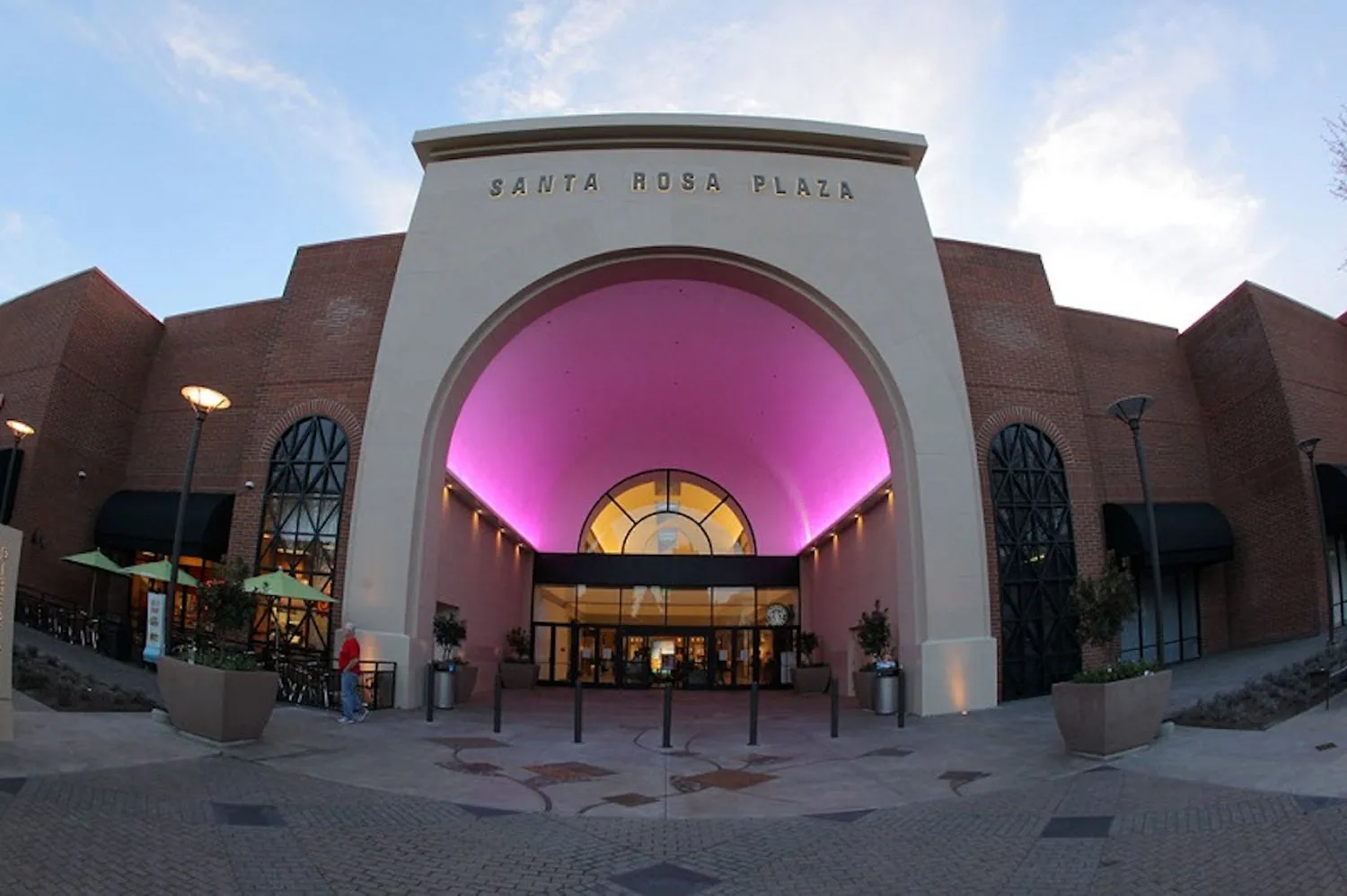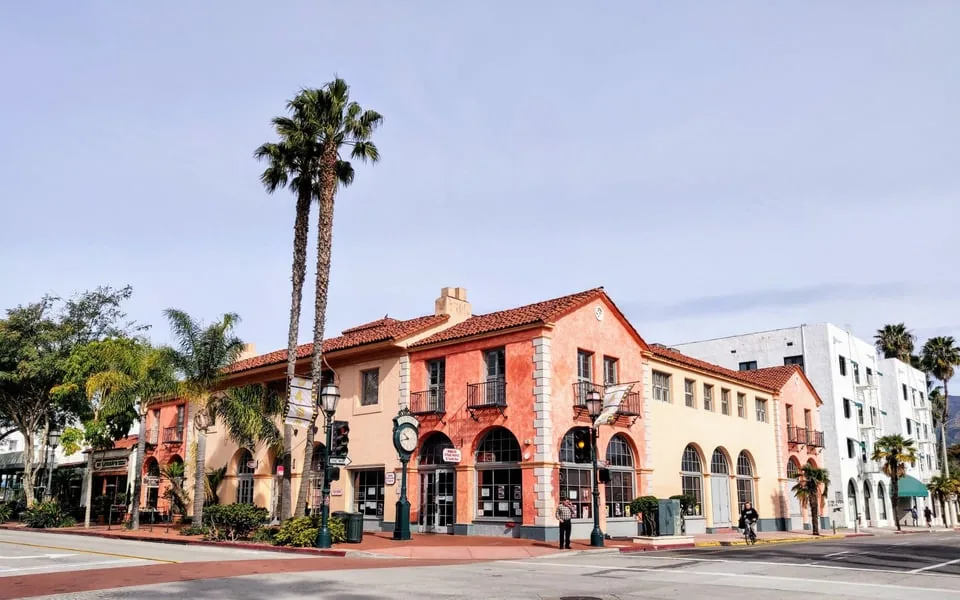
Commercial Roofing at Railroad Square, Santa Rosa, CA
Service Areas
Thick stone walls make an owner confident that an old building is solid, and the walls usually are. The weak point is the line where the roof meets them. Hotel La Rose, a three-story andesite stone building from 1907 at 5th and Wilson Streets, has walls 20 to 24 inches thick and still takes guests. A wall like that takes a long time to fail. A parapet cap, a counterflashing or a roof edge above it can fail in a few winters, and then the water goes where the wall cannot defend itself.
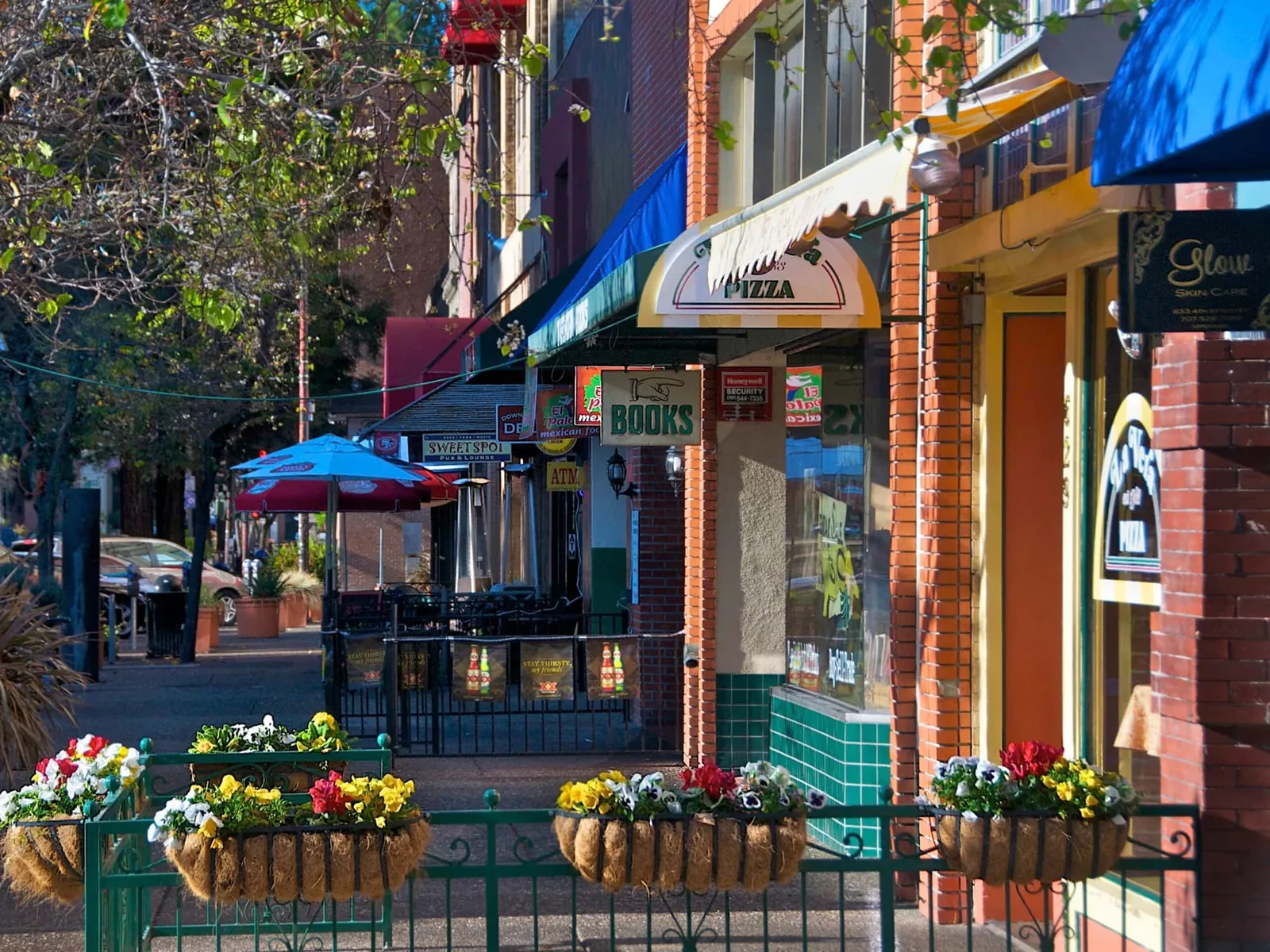
We repair, recover and replace commercial roofs in Railroad Square, the historic district on the west side of Santa Rosa, CA near US 101. Roof work in the district comes down to the details where masonry and roofing touch.
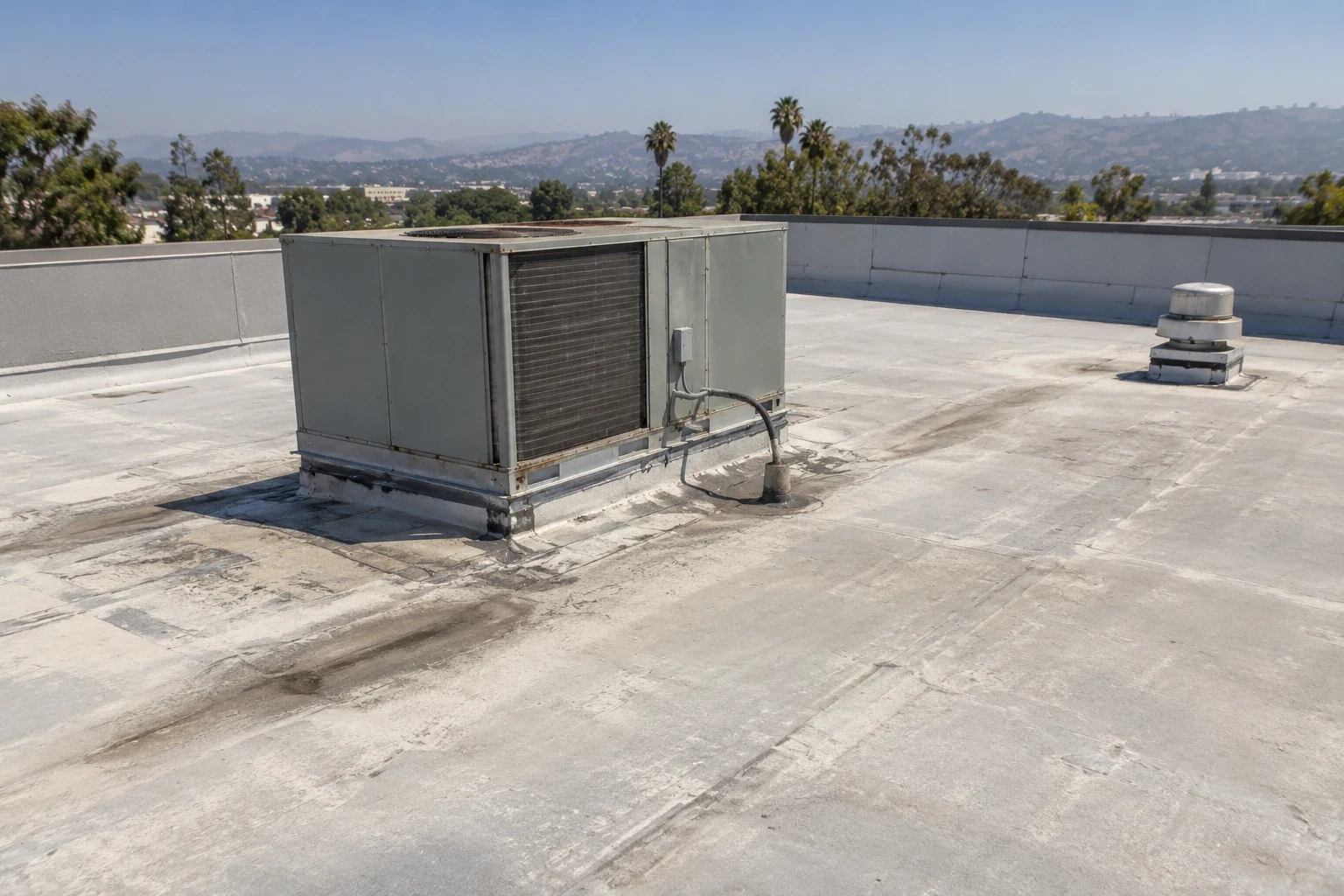
Serving Santa Rosa • Rohnert Park • Petaluma • Windsor • Healdsburg • Sebastopol • Napa
Leaks start at the wall
The Railroad Square district is bounded by 3rd, Davis, Wilson and 6th Streets and earned its National Register of Historic Places listing in 1979. Rosenberg's Department Store was listed separately in 1994 and is typical of the older masonry commercial buildings that need careful roof and parapet work. Whatever the roof is made of, the first place to look is the wall.
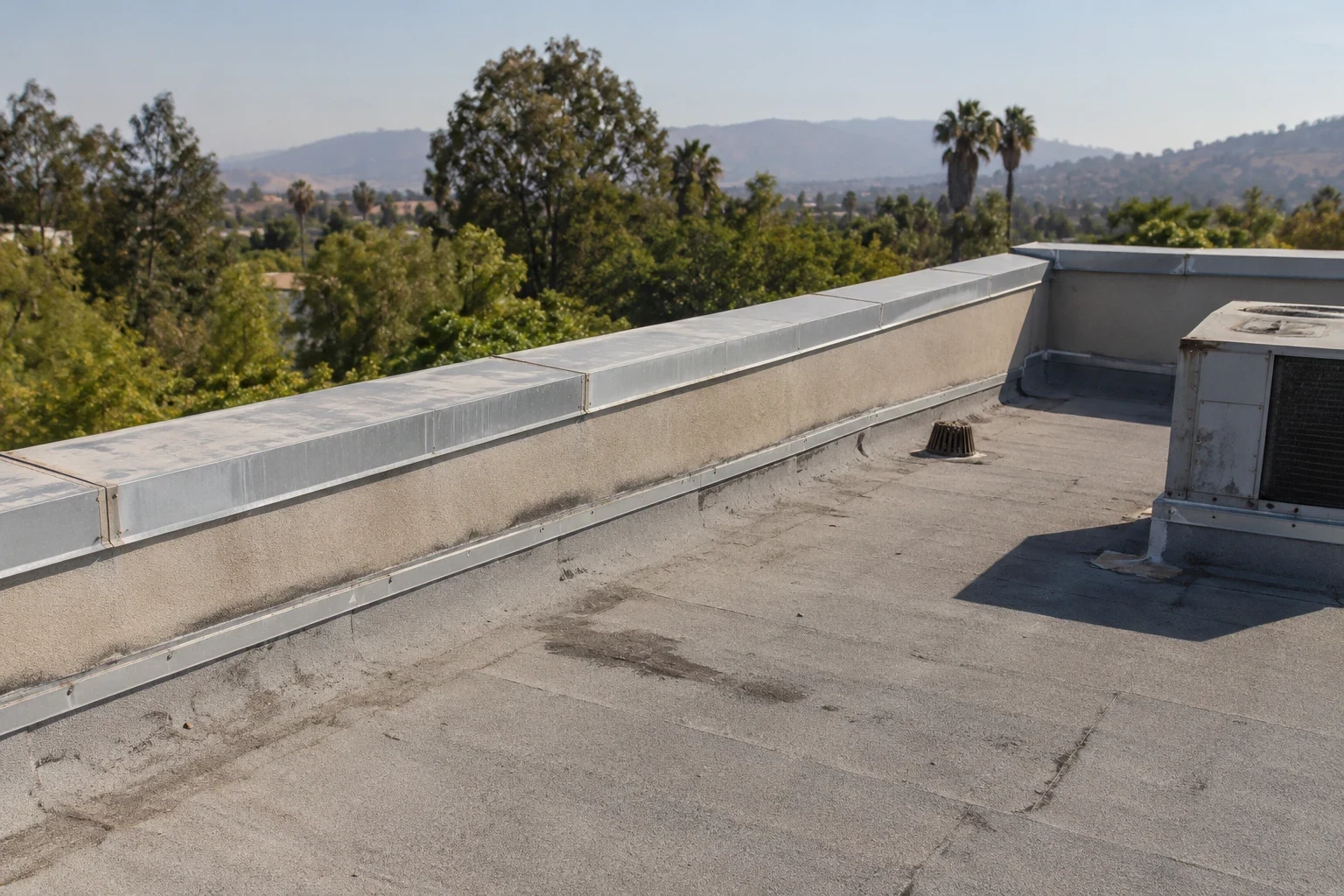
On a masonry building with a low-slope roof, we check the top of the wall before we check the membrane. Coping or cap stones that have shifted, mortar joints that have opened above the roof line, a counterflashing that has pulled out of its joint and a base flashing that has hardened and cracked are the usual suspects. Water that enters at the wall top tends to travel down inside it and appear as a stain on the interior plaster far below the actual opening, which makes the source easy to misread. A careful coping and edge metal repair is often the cheapest way to stop a leak that has been blamed on the whole roof.
The verdict is to repair the junction first and judge the membrane second.
Listed does not mean frozen
A National Register listing does not by itself tell a private owner what to do with a roof. Rules arrive from other directions: local review, a lender, or a program that offers a tax credit for rehabilitation, any of which may set standards for visible materials and details. A preservation consultant, the building division or a lender sets those terms, and we supply the roof facts they need: photographs, measurements, a description of what is there and what each repair option would change.
On a historic building the least invasive repair that actually works is almost always the right one. A flashing replaced in kind, a section of membrane welded back into place or a cap reset on fresh mortar is usually both cheaper and easier to approve than a full replacement. When replacement is truly warranted, we price it with the documentation reviewers will want, and we choose between systems such as modified bitumen and built-up roofing by what the building and the review allow.
Embers, ash and an old roof
Roofs over guests and diners
Hotel La Rose is a working hotel, and any restaurant or shop under a roof has customers who do not care about a roofing schedule. We plan for that by scheduling loud work for daytime hours that avoid sleeping guests, covering any entrance below a work zone and keeping hoisting off the main sidewalks wherever possible. Rooftop work above kitchens needs particular attention to grease, exhaust curbs and fire safety. Hot work with torches is a decision to make carefully on an old building, and we prefer cold-applied or mechanically attached options where they will do the job.
The same planning applies to any hotel roof or restaurant roof. Whatever the use below, the roof job has to be quiet, dry and out of the way.
Skip the quick fix
Old masonry buildings collect bad repairs. These are the ones we advise against:
- Black mastic smeared over a cracked flashing. It looks like a repair until the next cold snap.
- A coating on the whole roof when the real leak is at the parapet.
- Sealing the wall top with a hard, non-breathable coat that traps moisture in the stone.
- Piling a new layer on a roof whose insulation is already saturated.
If the building is a long-term hold, a measured plan beats a patch every winter. The same advice carries to any older masonry building near downtown Santa Rosa.
The wide low-slope fields at North Station Area call for a different drain map than Railroad Square's roof-to-wall details.
Commercial Roofing Questions
Why does a stain appear far from where the water actually enters a masonry building?
Water that gets in at a parapet or wall top does not drop straight down. It follows mortar joints, plaster and framing before it shows itself, sometimes a floor below and a long way sideways. We trace it by wetting suspected areas in a controlled way and checking from inside, then repair the entry point. Treating the stain's location with sealant almost never works.
Does a National Register listing limit what we can do to the roof?
Listing alone does not tell a private owner how to maintain a roof, but other programs can. Local review, a lender or a tax credit for rehabilitation may attach standards to visible materials and details. Ask your preservation consultant and the building division early, and gather photographs and a roof description so reviewers can see exactly what is changing. A repair in kind rarely draws much attention.
Can an older stone building take a modern roof without harming the walls?
In most cases the roof is not what stresses the wall; moisture is. A modern membrane installed with correct flashings and a working drainage path protects the masonry better than a worn roof does. What matters is the attachment at the wall, the termination bars and the counterflashing, which need to be set into joints without damaging the stone. We would plan those details with the owner's architect before ordering any material.
What should we do about ash and debris after a wildfire smoke event?
Clear the drains and sumps first, because wet ash packs hard and blocks outlets. Sweep the field of the roof, look behind the parapet and around equipment where debris collects, and check for pitting or scorched flashing. Then watch the first rain from inside the building. If water backs up or a stain appears, call us at once, since a small blocked drain can load a roof with a lot of water.
How do we keep a hotel or restaurant open during roof repairs?
Agree on the hours, the noise limits and the entrances that must stay clear before the first truck arrives. We keep the work area sealed from the interior, isolate small sections so the roof is dried in daily, and avoid hot work above kitchens and occupied rooms. A walkthrough with the property manager the afternoon before gives staff time to move whatever is under the work zone.
Let us look at the wall line
Call with the address in Railroad Square. We will walk the roof and the parapets, then tell you plainly whether it needs work now, later, or not at all.