Restaurant Roofing in Santa Rosa, CA
Property Types We Roof
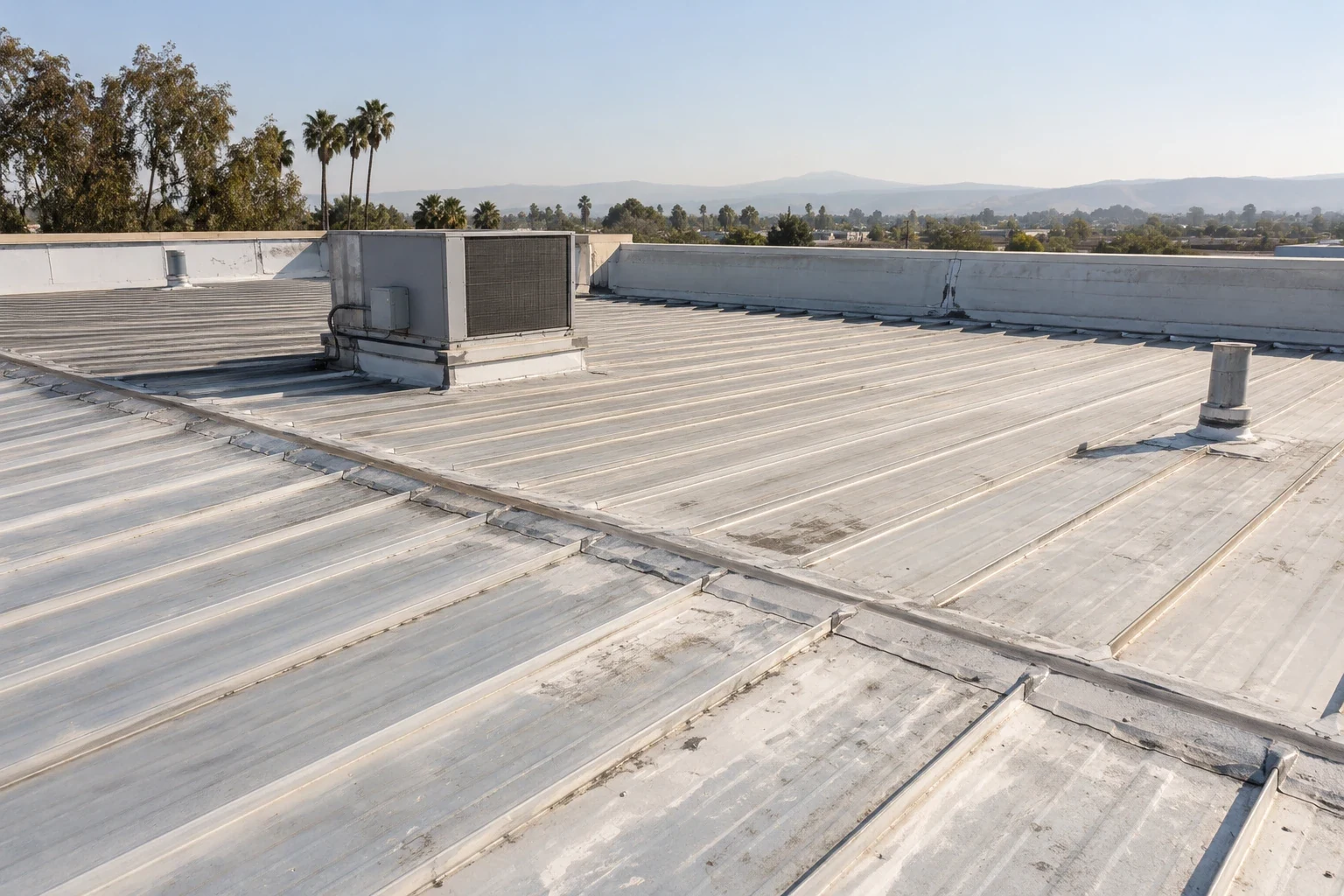
Restaurant roofs are small, so owners assume they are cheap and simple. They are neither. A modest roof can carry a hood exhaust fan, a make-up air unit, a walk-in cooler condenser and a tangle of plumbing vents, all feeding grease, heat and vibration into the same patch of sheet. That is a lot of punishment for a roof nobody walks except the people cleaning the fans.
For restaurant owners and landlords in Santa Rosa, CA, we treat the roof as part of the kitchen. We find where the grease lands, where the water enters and who has been up there, then tell you whether the roof needs a repair, a better membrane around the fans, or nothing at all.
Serving Santa Rosa • Rohnert Park • Petaluma • Windsor • Healdsburg • Sebastopol • Napa
Small roof, many holes
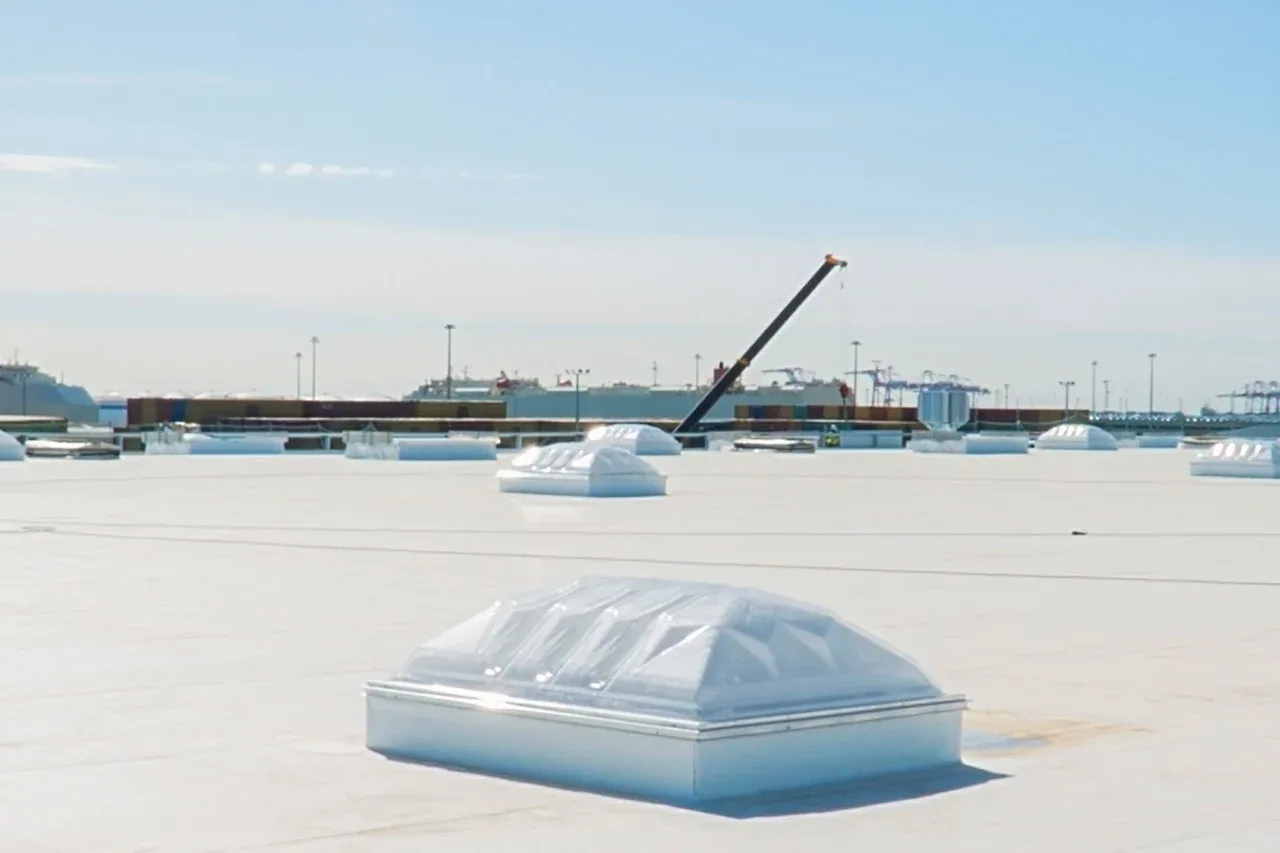
Count the penetrations on a restaurant roof and you often find more holes than a much larger roof carries. Hood exhaust, make-up air, walk-in condensers, gas lines, plumbing vents and sometimes a patio heater or sign support all cut through the sheet. Each hole is flashed with a boot, a curb or sealant, and each was sealed by a different tradesperson with a different idea of how.
That is why restaurant leaks cluster around the equipment instead of out in the field. The membrane between the units is often in decent shape while the details around them are failing. We start by walking each penetration, checking the flashing, and noting which ones were added after the original roof went on. The flashing around penetrations usually needs more attention than the sheet itself. Fix those details and you have fixed most of the problem.
Grease ruins the wrong sheet
Hood exhaust throws grease that lands on the roof around the fan and runs downslope into low spots. Some membranes swell or soften under it, and a fan with a failed grease cup can leave a stained patch within a season. The fix starts at the fan: working containment, a hinged fan base so it can be cleaned without dragging it across the sheet, and a cleaning schedule that actually gets followed.
Where grease reaches the roof anyway, material matters. PVC is the usual choice for kitchens because it tolerates fats better than most thermoplastics. A restaurant that is one tenant in a strip should not pay to reroof the whole building in PVC. A zone around the exhaust, in a compatible sheet with a good tie-in, often does the job. Match the sheet to the grease, not to the building.
A leak lands on a table
Embers, overflow and heat
In October 2017 the Tubbs Fire swept over Highway 101 and took a Hilton hotel and many restaurants with it, driven by Diablo winds that gusted up to 70 mph. Wind-driven embers are the reason roof edges, vent openings and exhaust caps deserve a look: they are the gaps where embers lodge. Keep leaves, needles and grease buildup off the roof surface as a basic fire habit, and ask about the ember-resistance of any vent you replace.
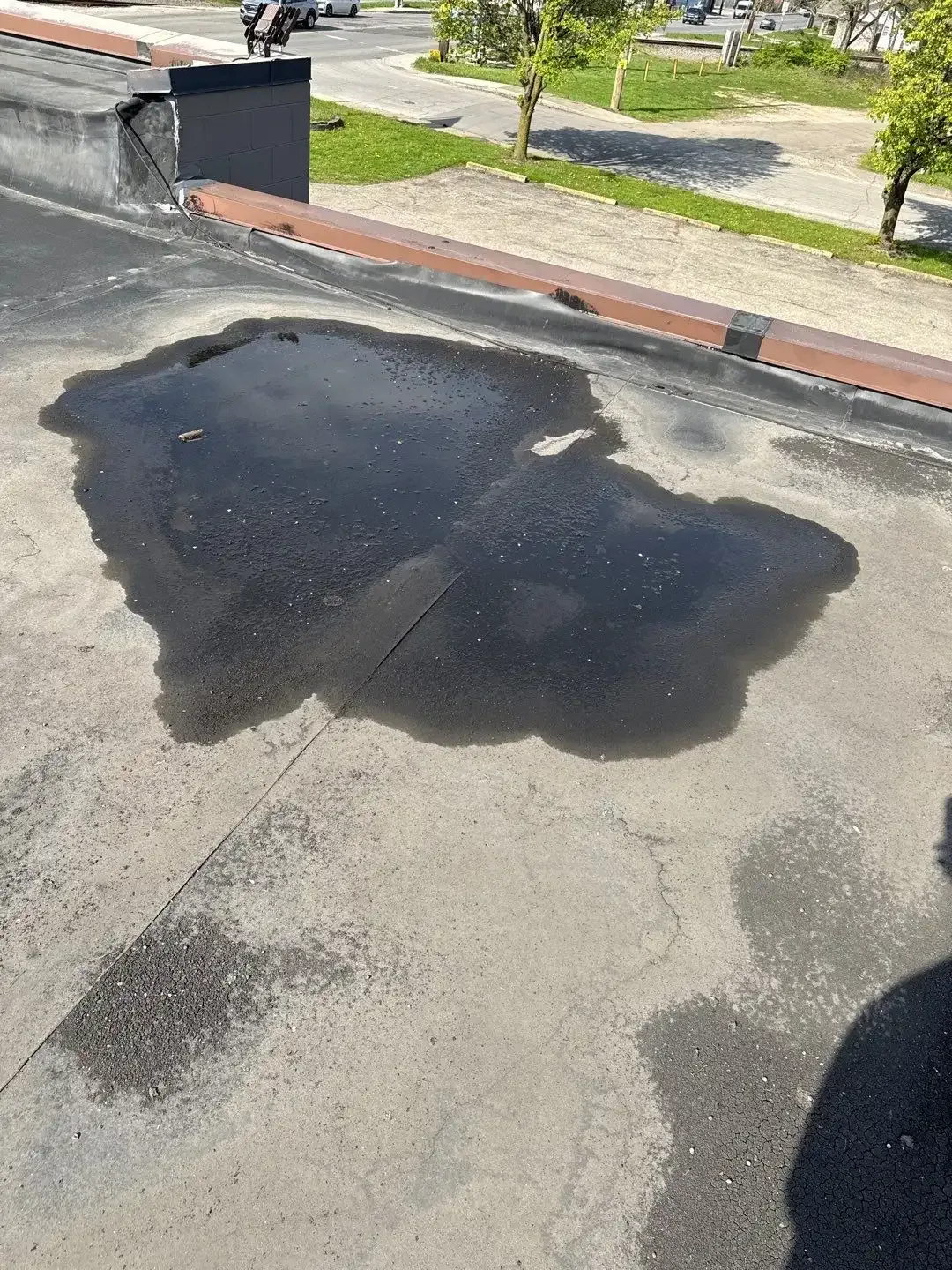
Rain and heat do the rest. Nearly 15 inches fell on Santa Rosa between November 21 and 23, 2024, and a small roof with one clogged drain or blocked scupper ponds fast. Kitchens also make heat and steam, and the record 115 degrees on September 6, 2022 meant roofs over working kitchens took a double dose. Clear the drains in October and check the roof over the kitchen after every heat wave.
Settle who owns what
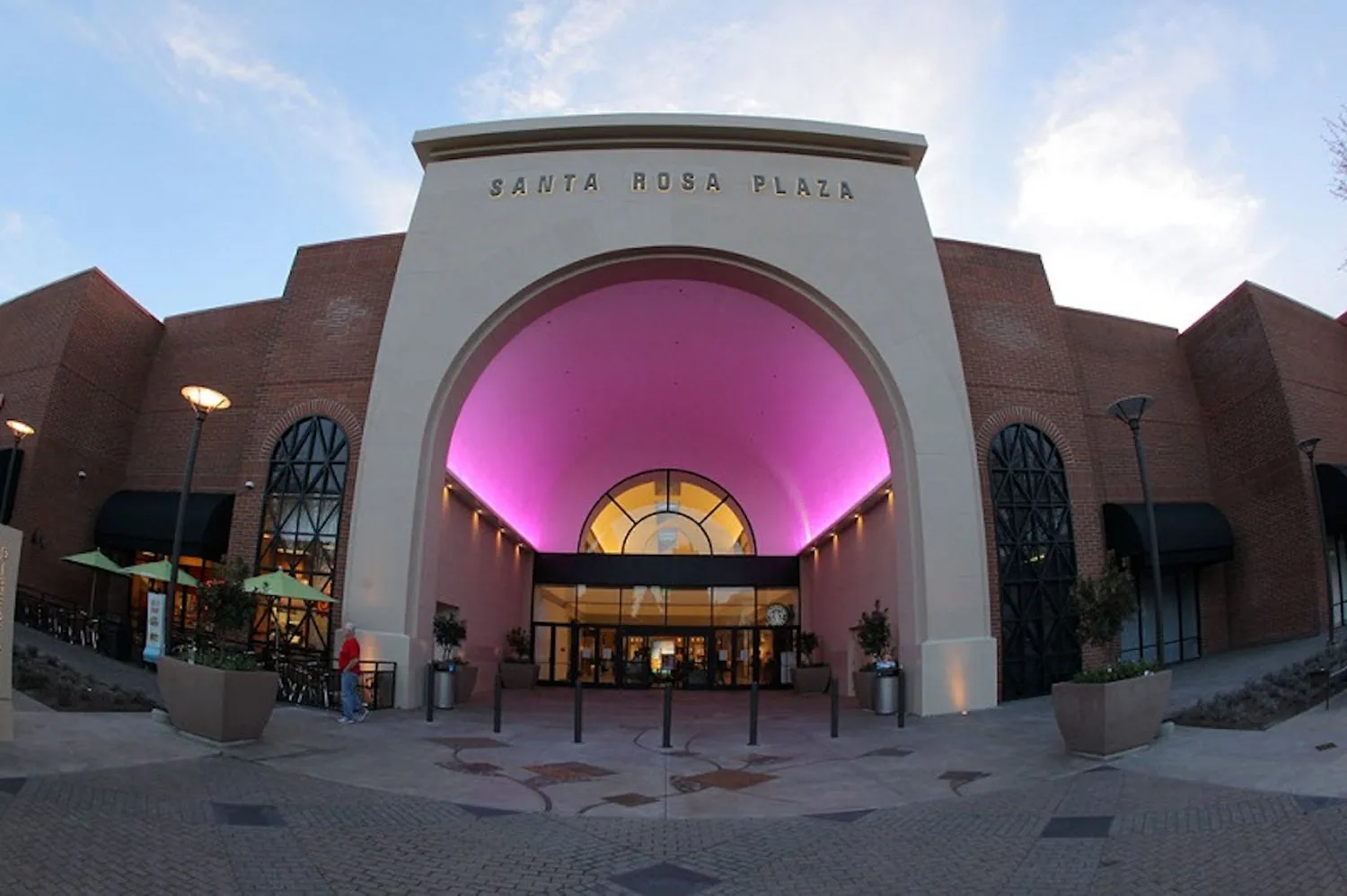
Half of restaurant roof trouble is a lease problem. The landlord owns the roof, the tenant owns the fans, and the fan contractor owns nothing. Put it in writing: who cleans the grease, who inspects the flashing, who pays when a fan swap damages the membrane. Keep a short roof-access log for every vendor and require a photo of the finished work. In a shopping center like Santa Rosa Avenue Corridor, with more than 60 shops and restaurants, that clarity is worth more than any product choice.
Schedule a preventive visit before the wet season and another after the summer heat. Each visit checks every penetration, clears grease and debris, tightens fan bases and photographs the results. Add sound curbs and supports under the heavy units, and the roof stops being a surprise. A hotel kitchen follows the same logic.
Skip the tube of sealant
A caulk gun is how most restaurant roofs get worse. Sealant smeared around a fan base is a temporary patch that hides the real failure and traps water. Do not replace the whole roof when only the exhaust zone is bad. Do not coat over a greasy membrane, because a coating will not bond until the surface is properly cleaned. Do not accept a bid that fails to name the sheet around the fans.
Fix the details, protect the exhaust zone, and replace the roof only when a scan or a core cut says the field is finished. Not worth it: a premium membrane over the dining room when the real trouble sits at the fan curb. Worth it: a cleaning schedule that is followed, a hinged fan base and a roofer who walks the penetrations twice a year.
Commercial Roofing Questions
Why does my restaurant roof leak only around the exhaust fan?
The flashing, not the roof, is usually what failed. A fan base moves when it is cleaned, vibrates when it runs and cooks in grease, so the boot or sealant around it cracks first. We pull the old sealant back, check the curb for rot or rust, and rebuild the flashing. Patching around it again will only move the leak.
Who pays for grease damage to the membrane, the landlord or the tenant?
Check the lease language on maintenance and damage before anyone argues. Many leases put the roof on the landlord and fan upkeep on the tenant, which means the answer often turns on who let the grease escape. A dated photo from each visit makes that clear. We document the condition at every visit so the record exists before the dispute does.
What kind of membrane holds up under restaurant exhaust?
PVC and KEE handle fats and oils better than most thermoplastic sheets, and a grease containment tray reduces the load on either. Modified bitumen can also work with good containment and regular cleaning. For a small roof with heavy exhaust, we usually recommend PVC in the exhaust zone and keep the rest of the roof on its existing system.
How do we stop a leak over the dining room on a busy night?
Move the guests first, then call. Put buckets and plastic where the drip lands, protect the bar and point-of-sale equipment, and call for emergency dry-in. A crew can seal or tarp the entry point and leave the permanent repair for dry weather. Tell us which table or ceiling tile shows the water, and we trace it upslope.
Do wildfire and smoke seasons change how a restaurant roof should be maintained?
Wind-driven embers and ash make the fall walk more important. Clear leaves and debris from roof edges and drains, wash ash off the membrane if the manufacturer allows it, and check vent covers and exhaust caps for gaps. Keep grease buildup off the roof too. A clean roof is both a better roof and a lower fire risk.
Get the straight word on the kitchen roof
Call Commercial Roofing Santa Rosa. We will walk the penetrations, check the grease zones and tell you plainly whether the roof needs work now, later, or not at all.