Wind Damage Roof Repair in Santa Rosa, CA
Roof Damage Repair
Owners in Santa Rosa, CA tend to think wind damage means a roof that blew off. It almost never does. What the wind actually takes is a few feet of edge metal, a loose corner of sheet, or the lid of a rooftop unit, and those small losses are what let the next rain inside.
Diablo gusts of up to 70 mph fed the October 2017 fire siege, and gusts like that start damage nobody sees from the ground. The repair is rarely dramatic. The hard part is finding every spot the wind loosened before an atmospheric river finds it for you. Fix the perimeter, reset what moved, and leave the sound field of the roof alone.
Serving Santa Rosa • Rohnert Park • Petaluma • Windsor • Healdsburg • Sebastopol • Napa
The edge goes first
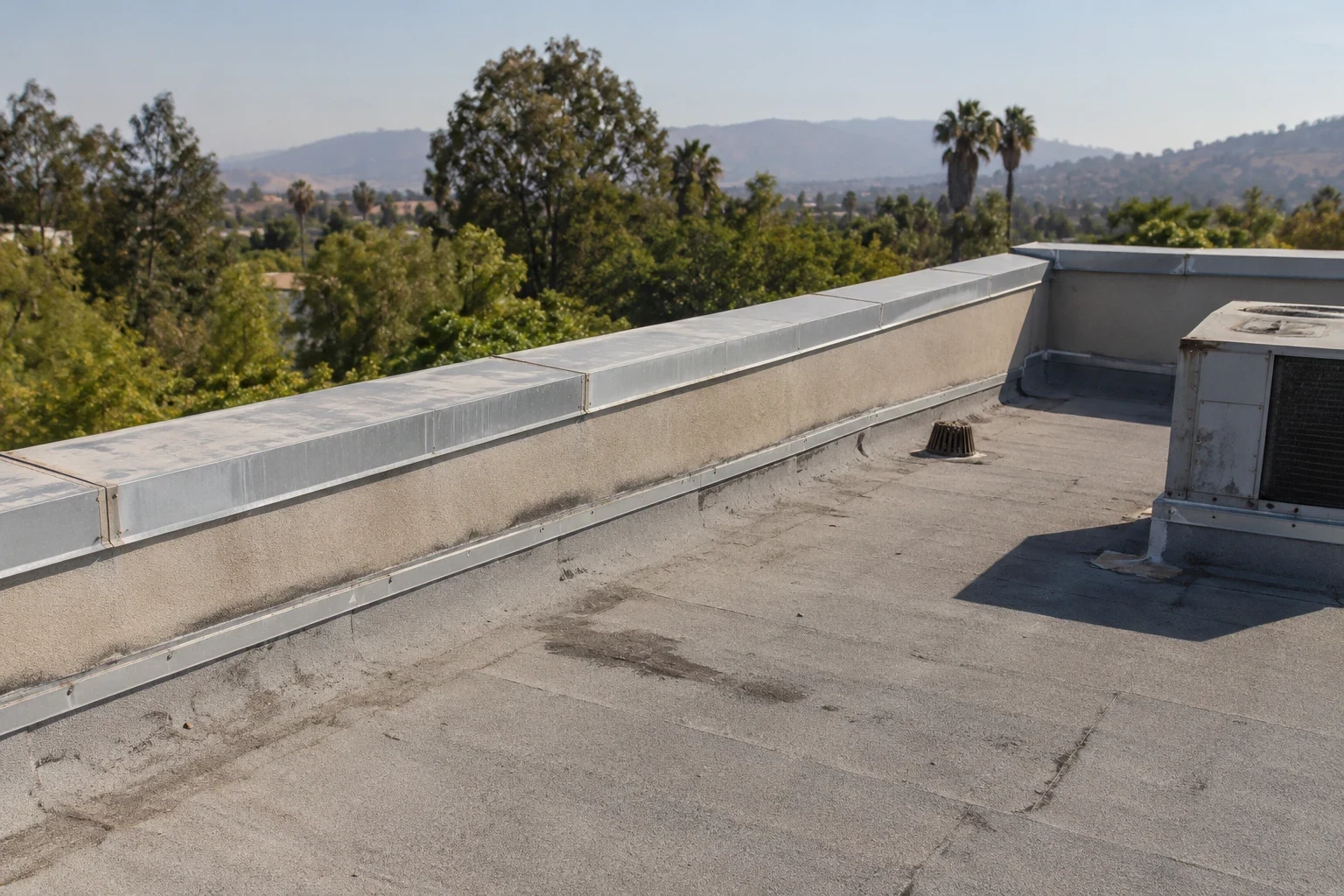
Wind does not push on a roof. It pulls, and it pulls hardest at corners, eaves and parapet caps, where air tumbles over the building and creates suction. That is why the edge metal fails before the field of the roof does. A coping cap loses a cleat, lifts a quarter inch, and rattles loose over a few storms. Then the membrane tucked under it is exposed.
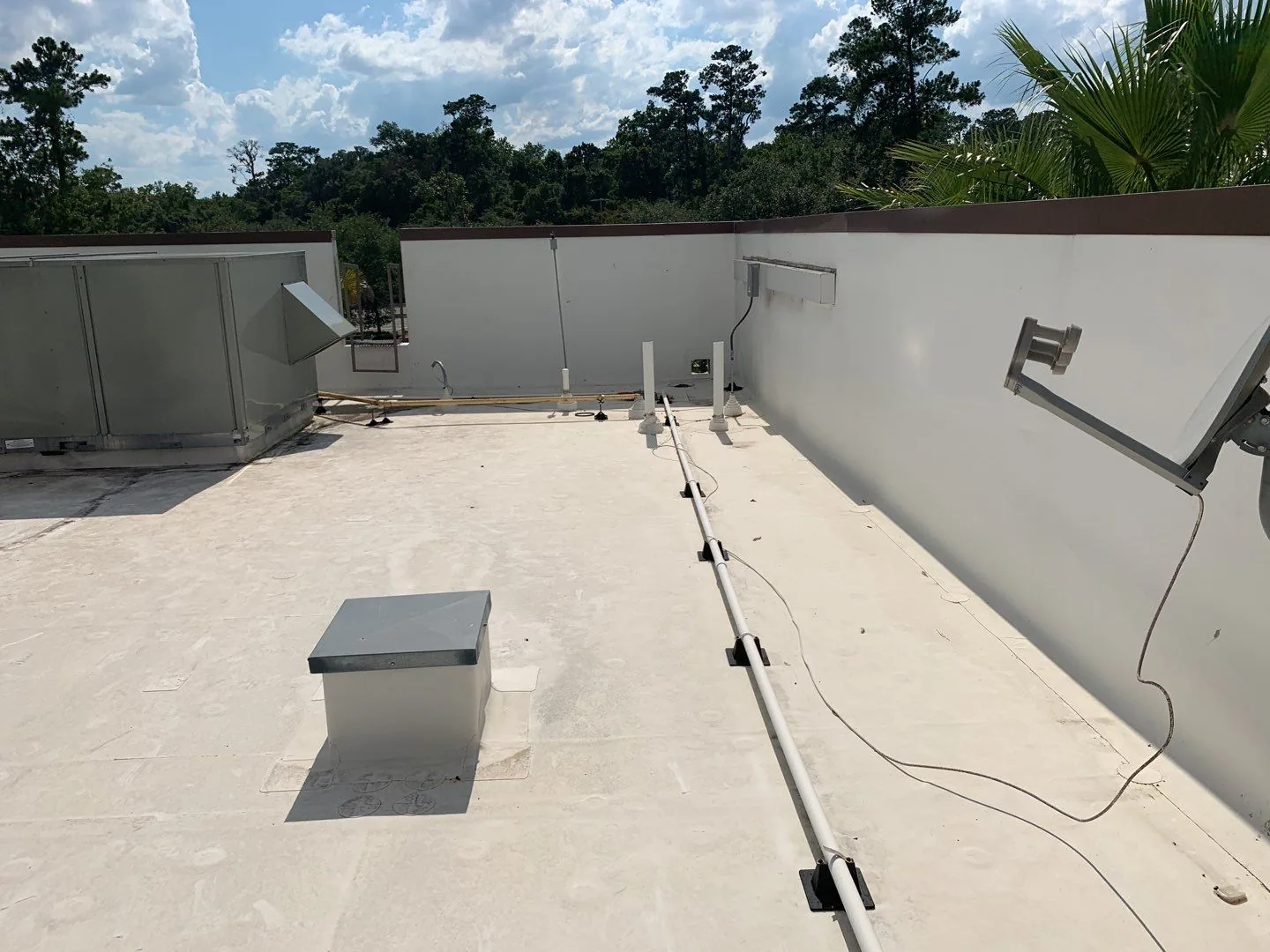
Once that happens the sheet starts to flutter. A single-ply roof that is fluttering fatigues at its fasteners and seams, and a fully adhered one can peel away from the substrate in a long strip. Ballast and gravel get thrown, which dents flashing and clogs drains downhill. We walk the first ten feet in from every edge before we look at anything else, because that is where nearly every wind claim starts.
Your attachment decides the damage
How a roof is held down decides how it fails. A mechanically fastened sheet shows backed-out screws and torn plates along the fastener rows. An adhered sheet shows long bubbles and clean lift lines. A ballasted roof shows bare patches where the stone moved. A TPO roof and a modified bitumen roof behave differently under the same gust, so a repair written for one will not work on the other.
Building type matters too. Open-air retail like Montgomery Village on Highway 12 means long runs of exposed edge and canopies, and canopies catch wind from the side. The flex and light industrial buildings in the Airport Business Center put most of their wind exposure at the perimeter, the same as any low-slope box. Across a county with more than 350 wineries, the larger production and barrel buildings have long eave edges that take wind load on a big surface. We start from the building, not from a generic checklist.
Wind opens the door for embers and rain
Rebuild the edge to the wind
Our repair is simple to describe. We re-secure or replace damaged edge metal with continuous cleats and fastener spacing that fits the exposure, rather than re-bending the old pieces and hoping. Our edge metal work follows the same pattern whether the roof is a mall box or a warehouse. Loose sheet gets reattached with the right plates, bars or adhesive for that system, and torn membrane gets a properly welded or bonded patch, not a smear of mastic.
Then we reset what the wind moved: access hatches, rooftop equipment covers, vent caps, lightning-protection cable and drain strainers. After a blow we also check the roof for hidden water with a drone survey on large, hard-to-reach roofs. The verdict goes in writing, split into three groups: fix now, fix before the wet season, and watch.
Date the damage before the cleanup
If an insurer is involved, the order of operations matters. Photograph lifted metal, displaced membrane and debris where they lie before anyone sweeps or screws anything back down. Our crew records what the wind did and separates it from older wear, such as shrunken sheet and dry-rotted sealant, which is a different cost and often a different carrier discussion. Our claim documentation keeps the storm items on one list and the maintenance items on another.
That separation is also useful for repair planning. A roof whose perimeter was already tired when the wind arrived may need more than a patch, and we say so plainly. The same goes for open seams that started as wind flutter and only show up after the next storm.
Skip the tear-off for a torn corner
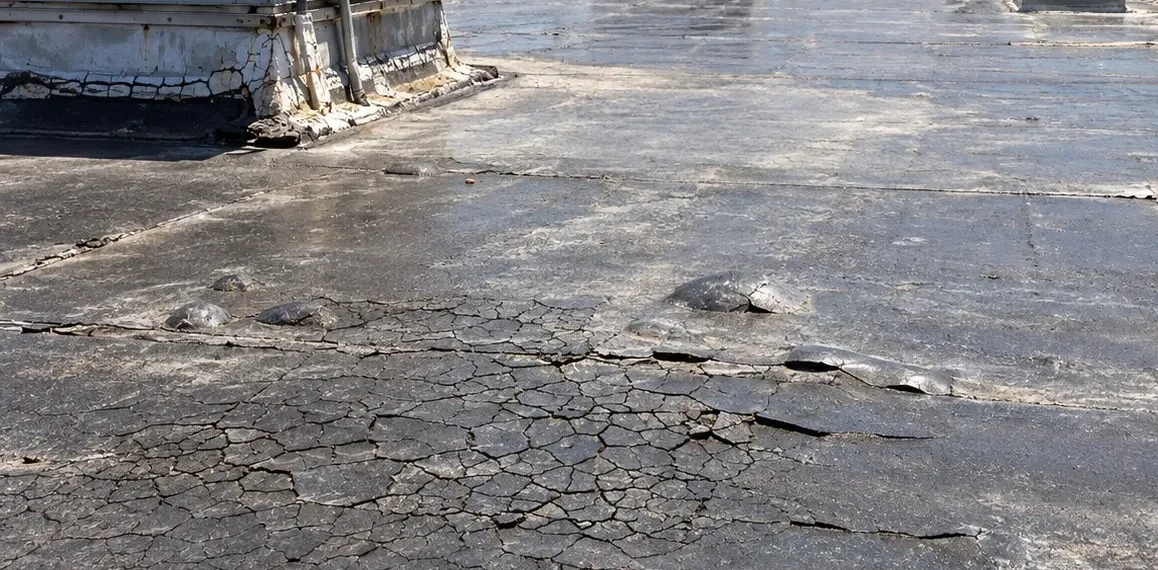
A torn corner or stripped edge on a dry, attached roof is usually a repair; full replacement costs more than the evidence supports. Be just as skeptical of a coating pitched as a wind fix. A coating does not hold a loose edge in place, and it will not stop a sheet from lifting.
What is worth spending on is the edge system and the attachment around it. For a flex building with several tenants under one roof, that often means one coordinated edge repair instead of four separate tenant fixes. Put the money in the metal and the fasteners.
After a wind event, the roof edges and equipment at Airport Business Center deserve a documented inspection before broad membrane work is approved.
Separate fire damage from wind.
Commercial Roofing Questions
How do I know whether wind lifted my roof if nothing is leaking yet?
Look from the parking lot first. Edge metal sitting a hair higher than its neighbors, loose sealant lines, and gravel in the gutters or on the ground are the early signs. A leak usually comes later. We walk the perimeter, press on the sheet near corners for movement, and check fasteners, because a roof can be partly lifted and dry on the inside for months before the first stain.
Does a repair after wind hold up if the rest of the roof is old?
Usually it does, provided the repair is done to the original system and not improvised. A weld or bonded patch on sound material lasts as long as the sheet around it. Where the old sheet is brittle or heavily shrunk, the patch fails at its edges. We test the area first and tell you if a bigger section is the right answer.
Will the insurance carrier pay for edge metal that was already loose?
That is a claim question, and we do not decide it, but the record helps. A photographed, dated list of what the wind moved, separate from older wear, gives the adjuster something to work with. Pre-existing problems tend to be treated differently from storm damage, so a clean record keeps the two apart instead of leaving them argued over later.
We have a winery barrel building with large eaves. Is it more at risk?
Large eaves and tall walls give the wind more to work with, so yes, the edges deserve a closer look on those buildings. Check fasteners and trim where the roof meets the wall, and have the gutters and downspouts looked at as well. The fix is the same pattern as any other roof, applied to more linear feet of edge.
Should I wait for a calm week to fix a loose edge?
No, secure it now with a temporary measure and schedule the permanent repair for the first dry stretch. A loose cap or lifted corner can get worse in a single gust, and the next wet system turns it into an interior leak. Temporary work is cheap compared to what the water does once it gets under the sheet.
Let us look at the edges
Call and tell us what the wind did. After a walk of the perimeter we will tell you plainly whether it needs work now, later, or not at all.