Flex and Light Industrial Roofing in Santa Rosa, CA
Property Types We Roof
A flex building has one roof and four tenants, which means nobody feels responsible for it. The landlord assumes the tenants would say something, the tenants assume the landlord handles it, and the HVAC contractor who drilled through the roof last spring did not tell either of them. That is the real story behind most flex building leaks, and it has little to do with the membrane.
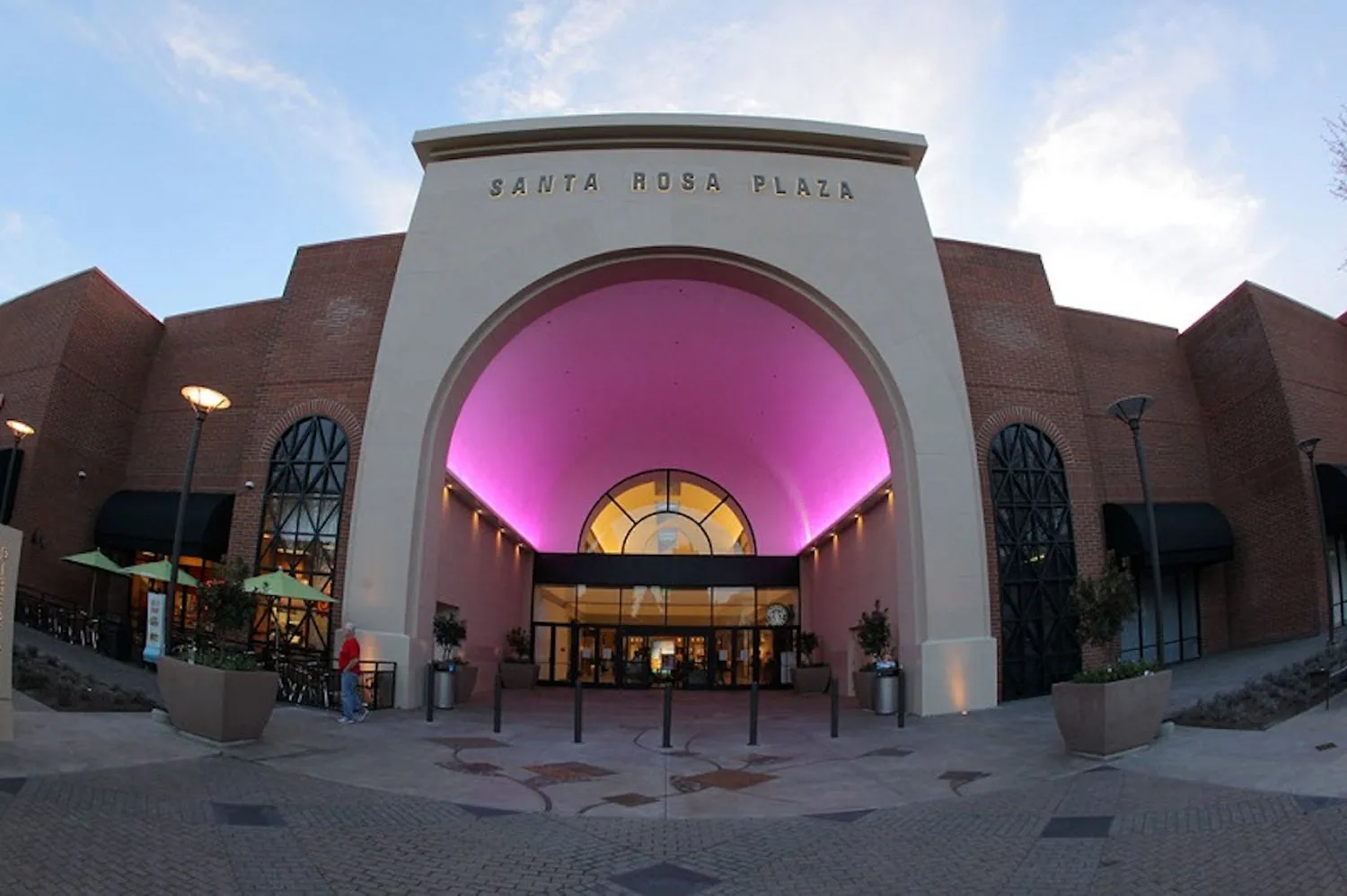
Santa Rosa, CA has a clear example. The Airport Business Center near the Charles M. Schulz-Sonoma County Airport is the largest business park in the North Bay, a mix of office, flex and light industrial space that draws tenants for its Highway 101 and airport access. South of downtown, the Roseland Area plan projects roughly 129,000 square feet of industrial space alongside 802,000 of office and 617,000 of commercial. We start every flex job by finding out who has been on the roof and what they changed.
Serving Santa Rosa • Rohnert Park • Petaluma • Windsor • Healdsburg • Sebastopol • Napa
One roof, several suites, several histories
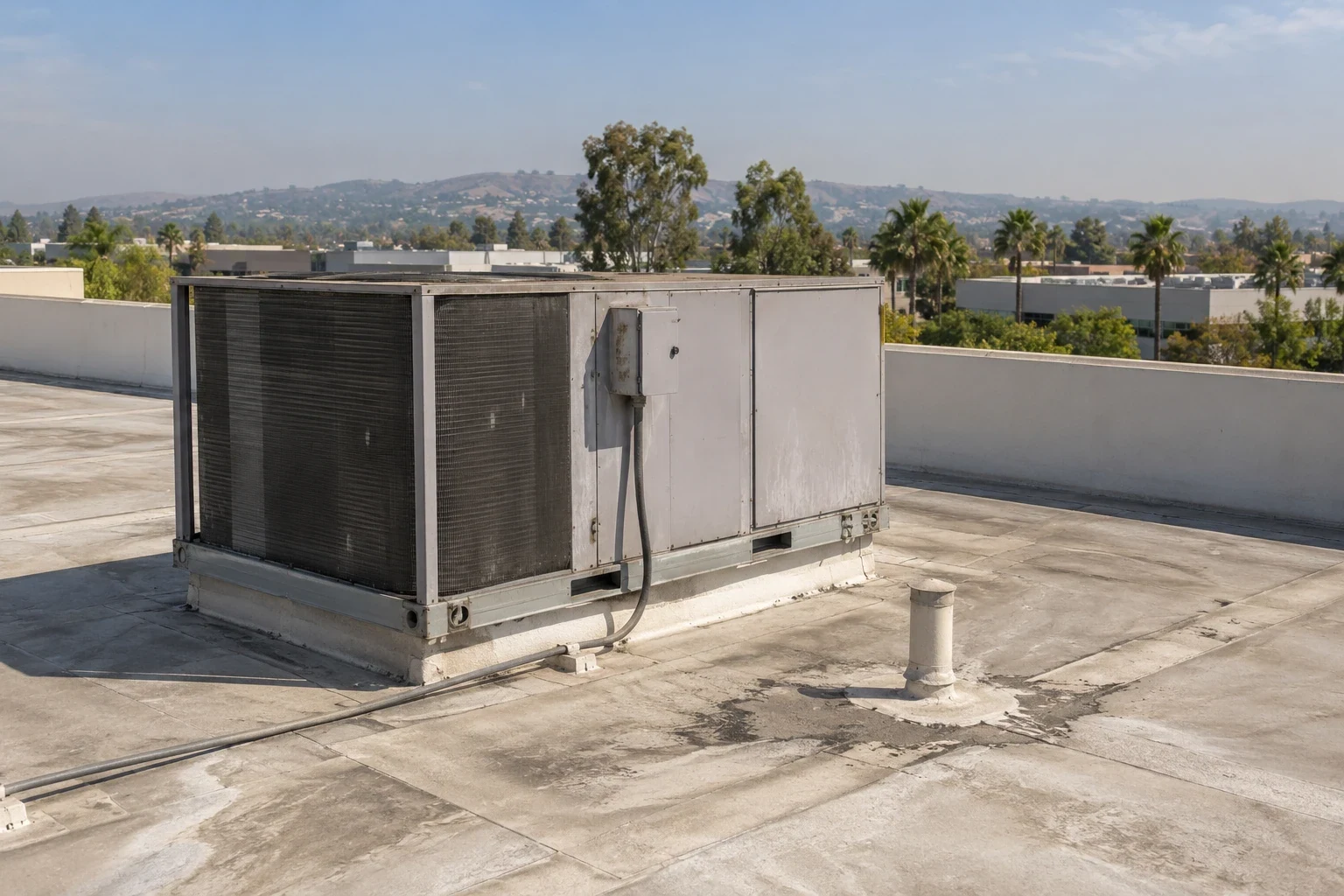
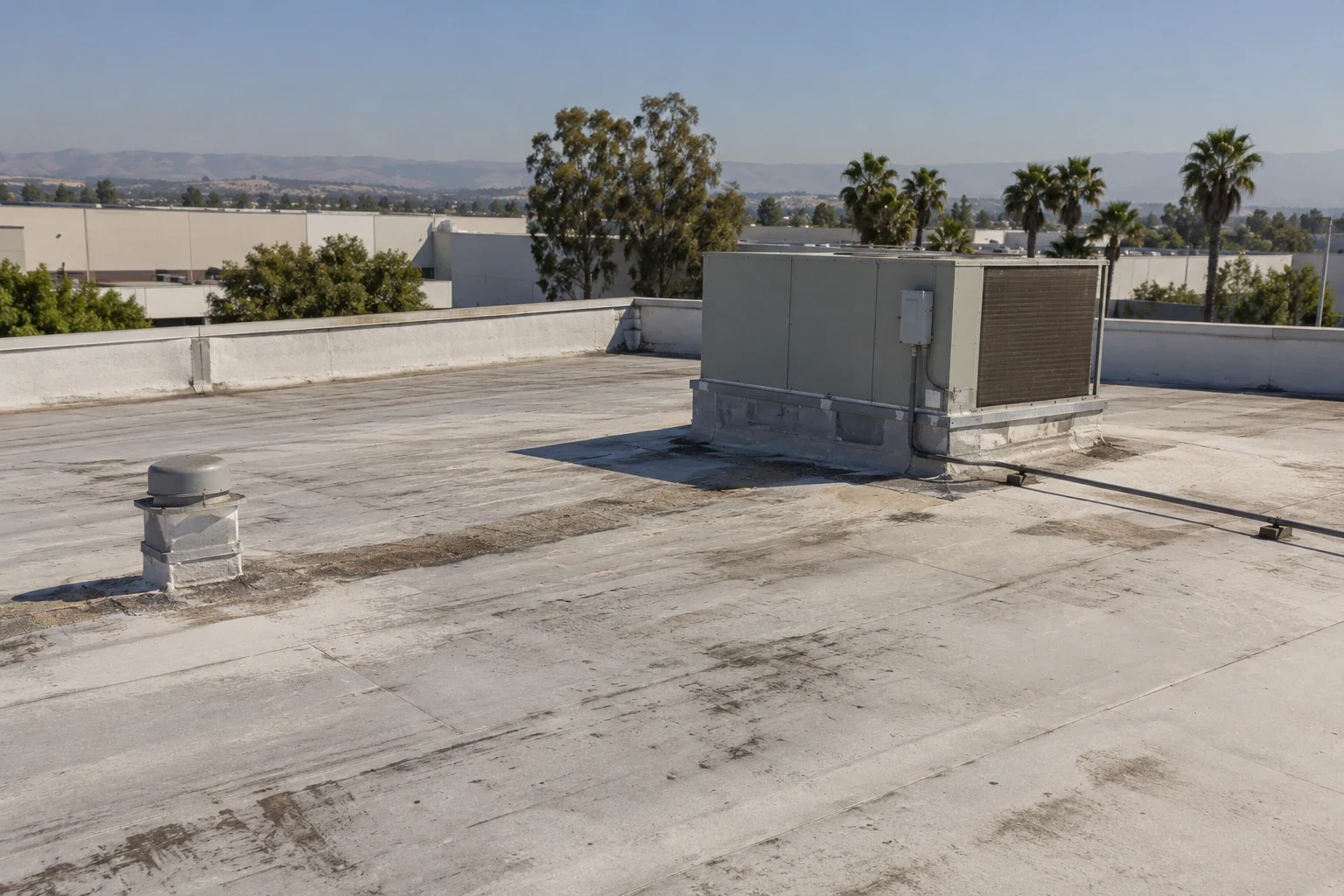
The typical flex building has an office-style front and a warehouse-style rear, divided by demising walls into suites. Walls are often tilt-up concrete or block, and the roof is a low-slope membrane over insulation, with a parapet around the edge. Every suite adds its own rooftop unit, exhaust fan or vent line, and each tenant move-in leaves another penetration behind.
That makes the roof a patchwork of work done at different times by different people. A demising wall reaching the roof deck becomes a flashing detail that someone has to maintain. A tenant's lab exhaust or kitchen fan becomes a curb that was never checked. Owners who manage these properties through property management companies need a record that outlives any one tenant.
Where the building mixes office and shop space, parts of the roof will behave like an office building roof and parts like a warehouse roof. Verdict: survey the building as separate zones and price each one.
Leaks start where tenants have been
The real problem on a flex roof is traffic and alterations. Service technicians walk the same path to the same unit for years, wearing the membrane thin. A new tenant adds a unit and the curb flashing is done by whoever was cheapest. A removed unit leaves a patched hole that nobody wrote down. Cause and effect disappear into the lease file, and the only evidence is a ceiling stain in the wrong suite.
Foot traffic punctures are the fastest to fix and the most overlooked. A single dropped tool can open a membrane puncture that runs for months before it shows. Walk pads along the service path protect the field, and a better-built rooftop equipment curb keeps new units from becoming new leaks.
Priority one on any flex building is the drainage path. If water ponds around the units or at the back wall, nothing else on the roof gets a fair test. Verdict: clear and correct drainage before spending on membrane work.
Weather on a roof full of rooftop units
Keep one roof record for the whole building
The best thing a flex building owner can do is start a roof log. It lists each rooftop unit and who it serves, every penetration and who made it, the walk pad path and the date of the last inspection. Require a written approval and a roofer on site for any new rooftop work, and the log writes itself. A twice-yearly preventive roof maintenance visit keeps it current and catches small problems while the tenant who caused them can still be identified.
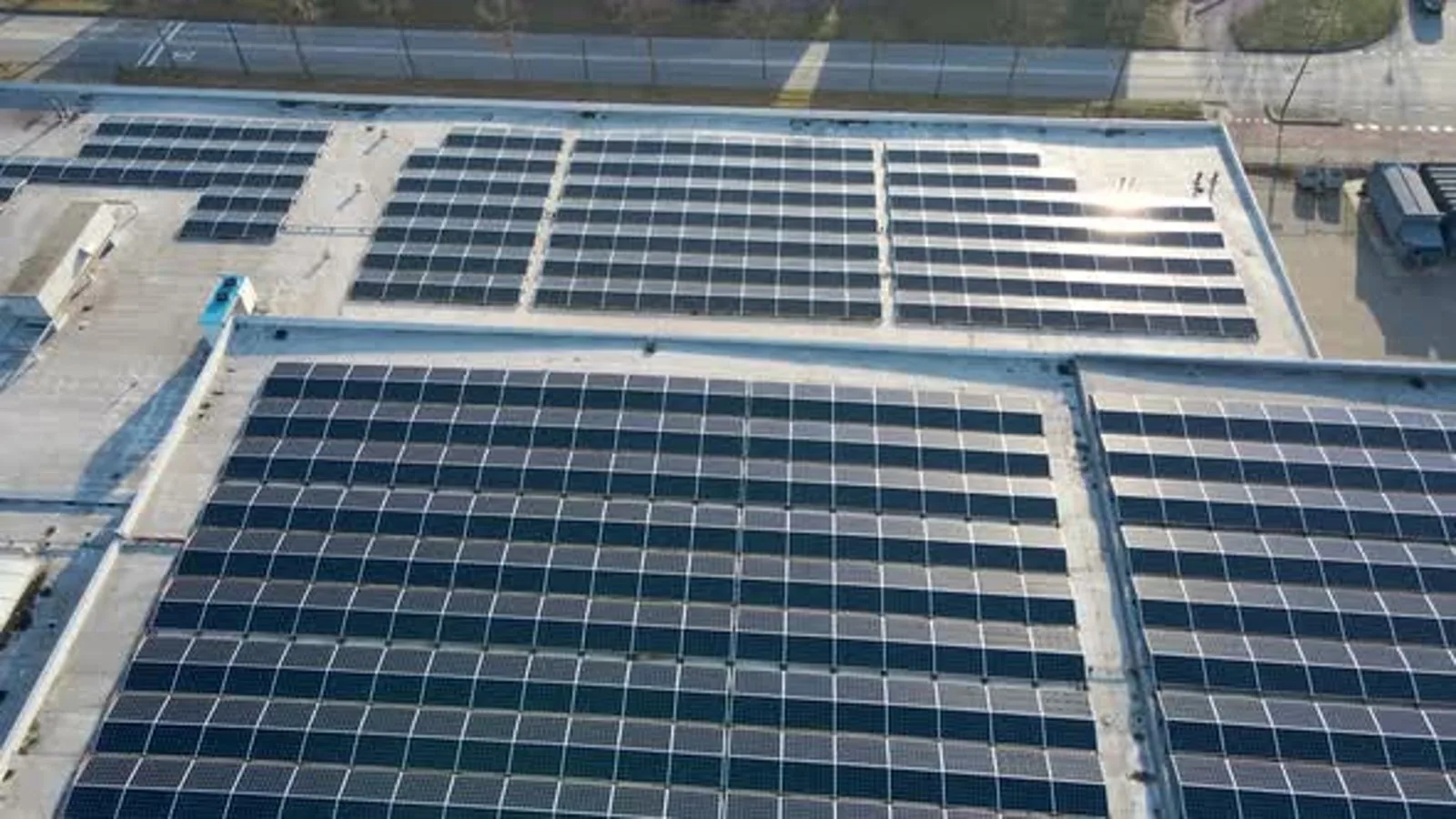
When the membrane does reach the end of its life, flex roofs are often good roof recover candidates, since a new membrane over dry insulation avoids tear-off dust and noise in occupied suites. Our moisture survey tells you whether the insulation qualifies. If it does not, we replace the wet sections and recover the rest.
Recommendation: do the recover or repair in one phase, with tenants notified ahead, so the building has one roof event instead of five.
Do not coat before the tenants finish
Timing mistakes cost the most on flex buildings. Coating or recovering a roof just before three tenants add rooftop units means cutting new penetrations through a fresh surface. Ask the leasing team what is coming first. A vacant suite is also not a reason to reroof the building. Not every flex roof needs replacing when one corner leaks. Target the failed section, fix the drainage, and plan the larger investment around the lease calendar rather than the other way around. Owners in the Airport Business Center or along Sebastopol Road in Roseland face the same decision: plan the roof around the leasing calendar.
Commercial Roofing Questions
A new tenant wants to add rooftop units. What should we require first?
Written approval, a named roofing contractor and a plan for the curb and flashing. The units should sit on proper supports, with walk pads from the access point to the equipment, and the penetration should be logged with its date and owner. A short inspection afterward confirms the flashing is tight. That small process prevents most tenant-caused leaks.
Who is responsible when one suite leaks because of another tenant's rooftop work?
The lease answers that, not the roofer. Most flex leases split roof responsibilities among the landlord, tenants and common area charges, and the log of who touched what is the evidence. We photograph the cause, record when the repair happened and hand that file to the property manager. Clear records make those conversations short.
Can a flex building roof be recovered instead of torn off?
Sometimes, if the existing insulation is dry and the deck is sound. A recover adds a new membrane over the old one and spares tenants the noise, dust and exposure of a tear-off. We run a moisture survey and take cores before recommending it. If large areas are wet, those sections come out and the rest is recovered.
How do we find a leak in a building with several suites and a ceiling grid?
Start outside. Water inside a ceiling travels along ducts, conduit and framing before it drops, so the stain is rarely under the entry point. We trace from the stain uphill and toward the nearest rooftop unit, wall flashing or drain, then test the suspects with water. Marking the roof from the outside beats lifting tiles in every suite.
What goes wrong after a tenant moves out?
Vacant suites mean nobody watches the ceilings, so a leak that would be reported in a week can run for a season. The removed rooftop unit may leave a capped or poorly patched curb. We check those spots on a vacancy walk, confirm the roof is tight and log the result before the next tenant moves in.
Find out what is on your roof
Call Commercial Roofing Santa Rosa. We will walk the building zone by zone and tell you plainly whether the roof needs work now, later, or not at all.