Commercial Roofing in Roseland, Santa Rosa, CA
Service Areas
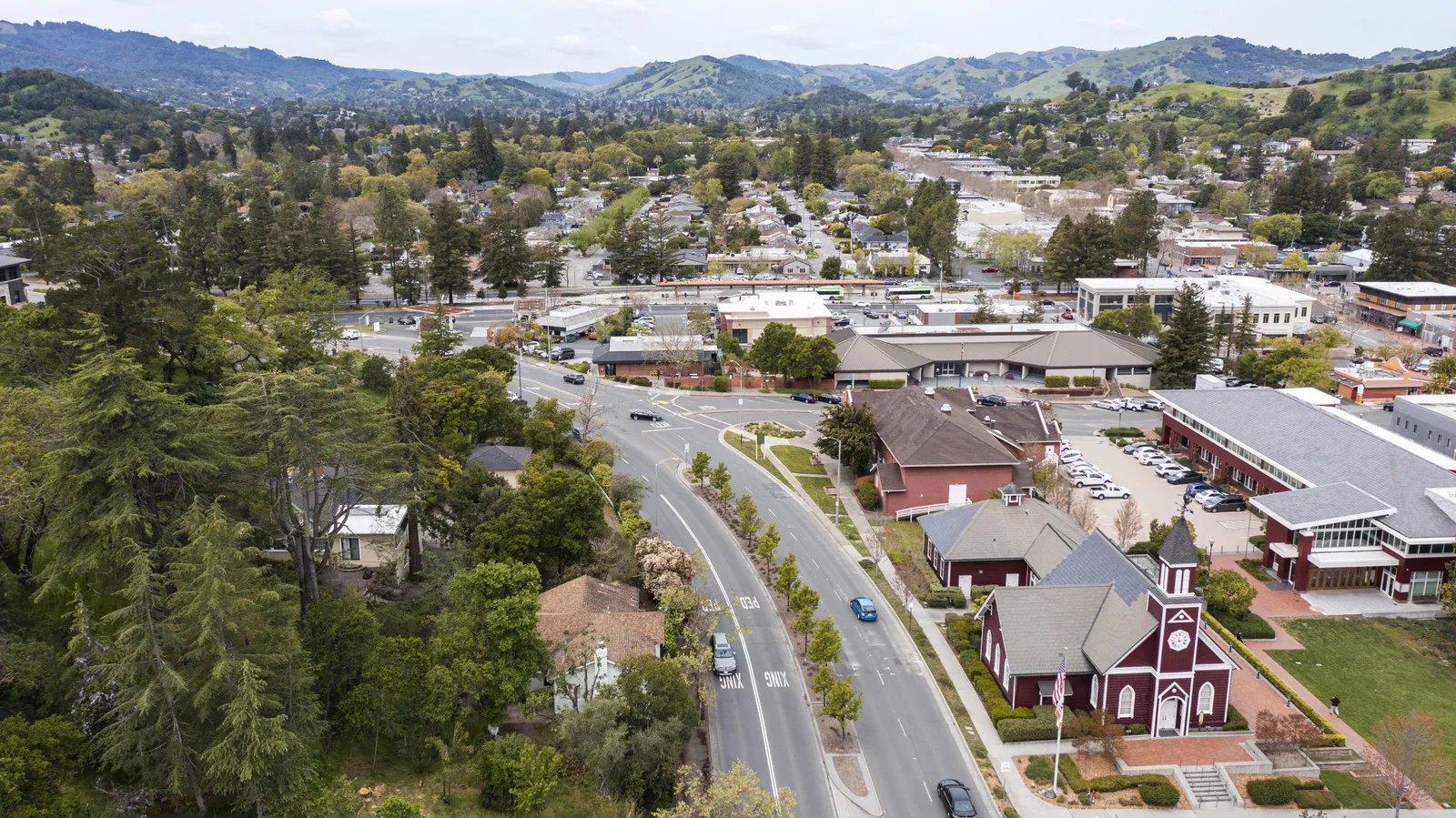
Roseland has a plan that is bigger than its roofs. The Roseland Area/Sebastopol Road Specific Plan draws its boundary around roughly 1,800 acres, with Highway 12, Bellevue Avenue, Highway 101 and Stony Point Road as the edges. Its environmental review pencils in around 802,000 square feet of offices, 617,000 of commercial space and 129,000 of industrial. Those are projections, not buildings. The roofs an owner has to deal with today are the ones already standing along Sebastopol Road, and the roofs the plan may add over the coming years.
We work on both. For existing commercial buildings in this part of Santa Rosa, CA, that means inspection, repair, recovers and replacement. For new construction, it means checking a roof before it is accepted and keeping it healthy through its first seasons.
Serving Santa Rosa • Rohnert Park • Petaluma • Windsor • Healdsburg • Sebastopol • Napa
What is already up there
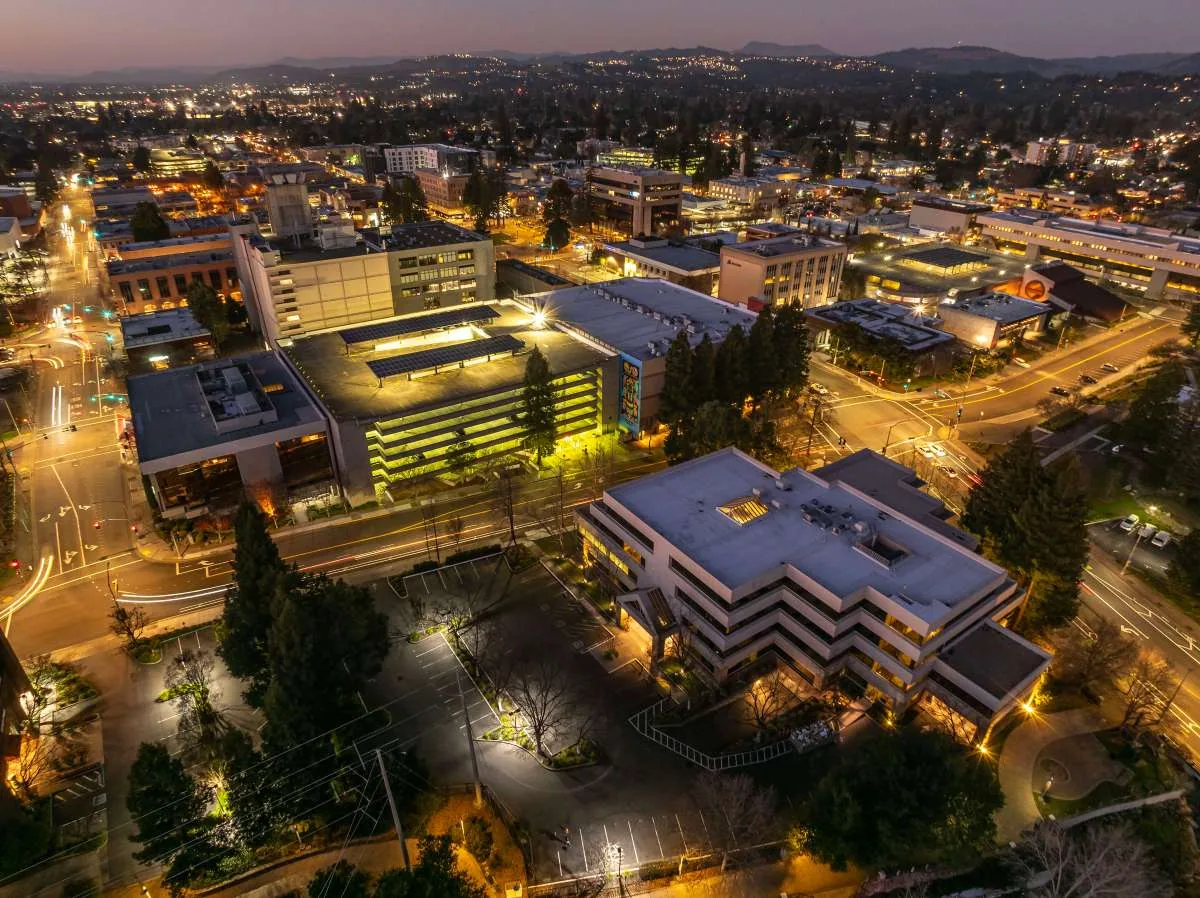
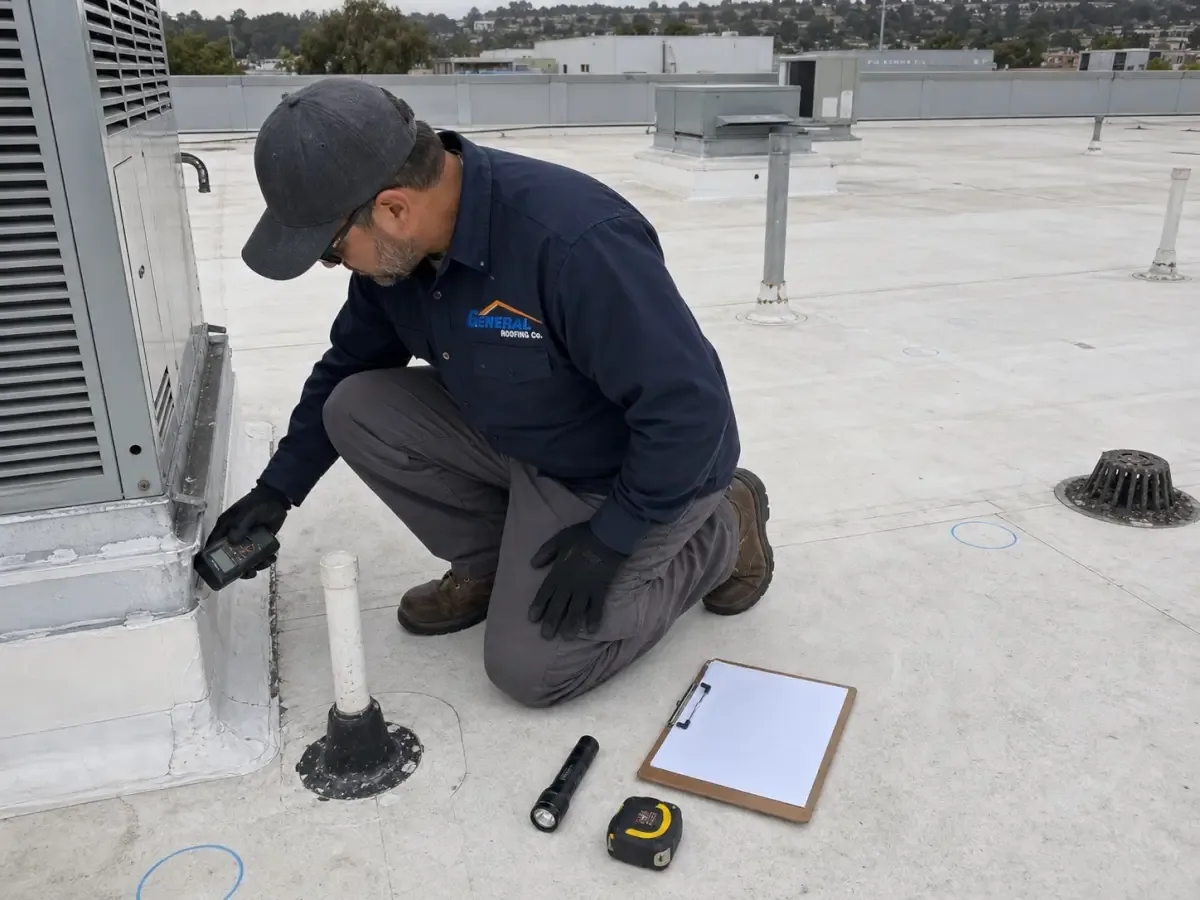
Roseland is a commercial district along Sebastopol Road, just south of downtown and southwest of the interchange where US 101 meets Highway 12. Our first walk on a building in the district is a survey: membrane or metal, number of layers, age of each section, drain count, equipment on the roof and every place a previous repair was made.
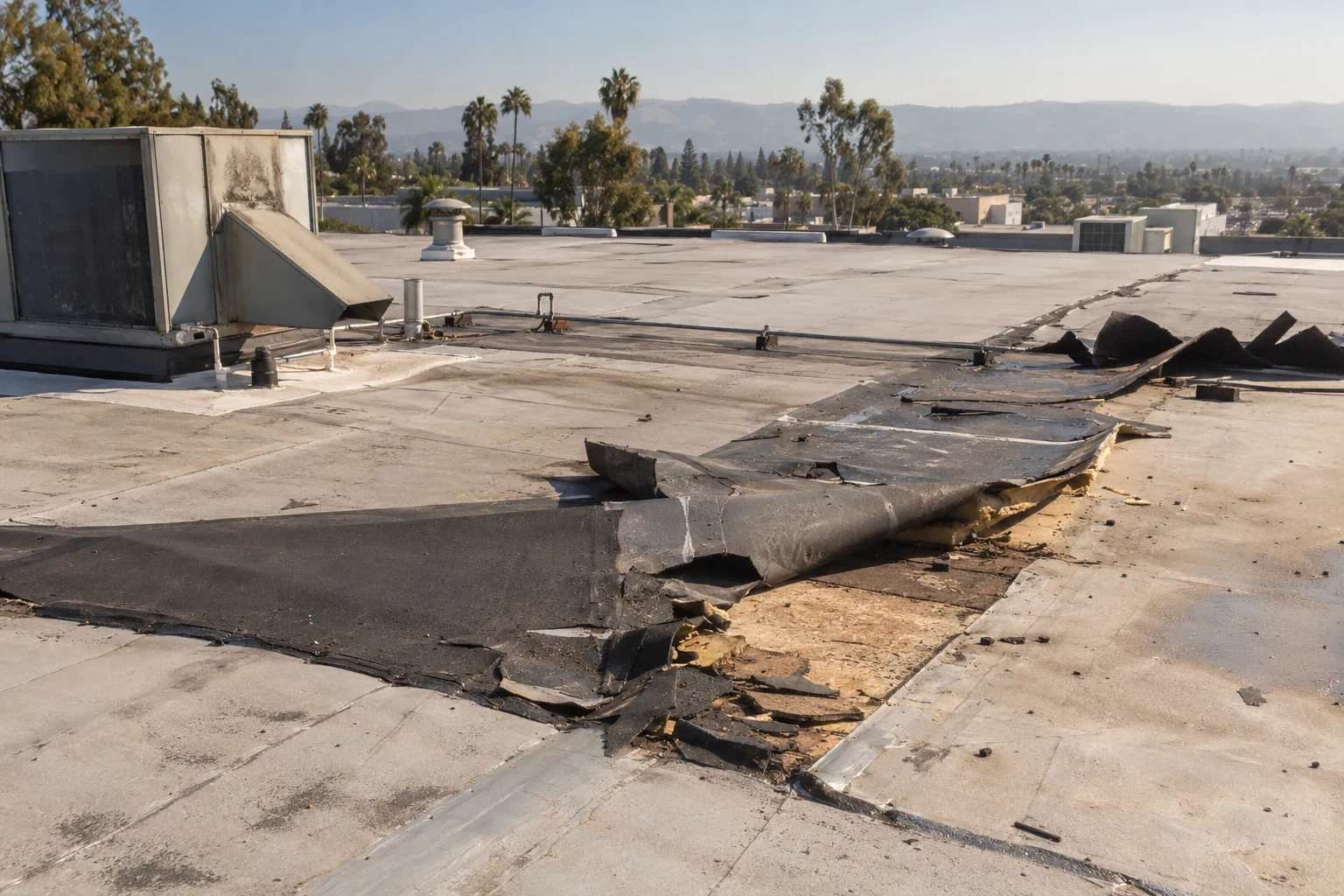
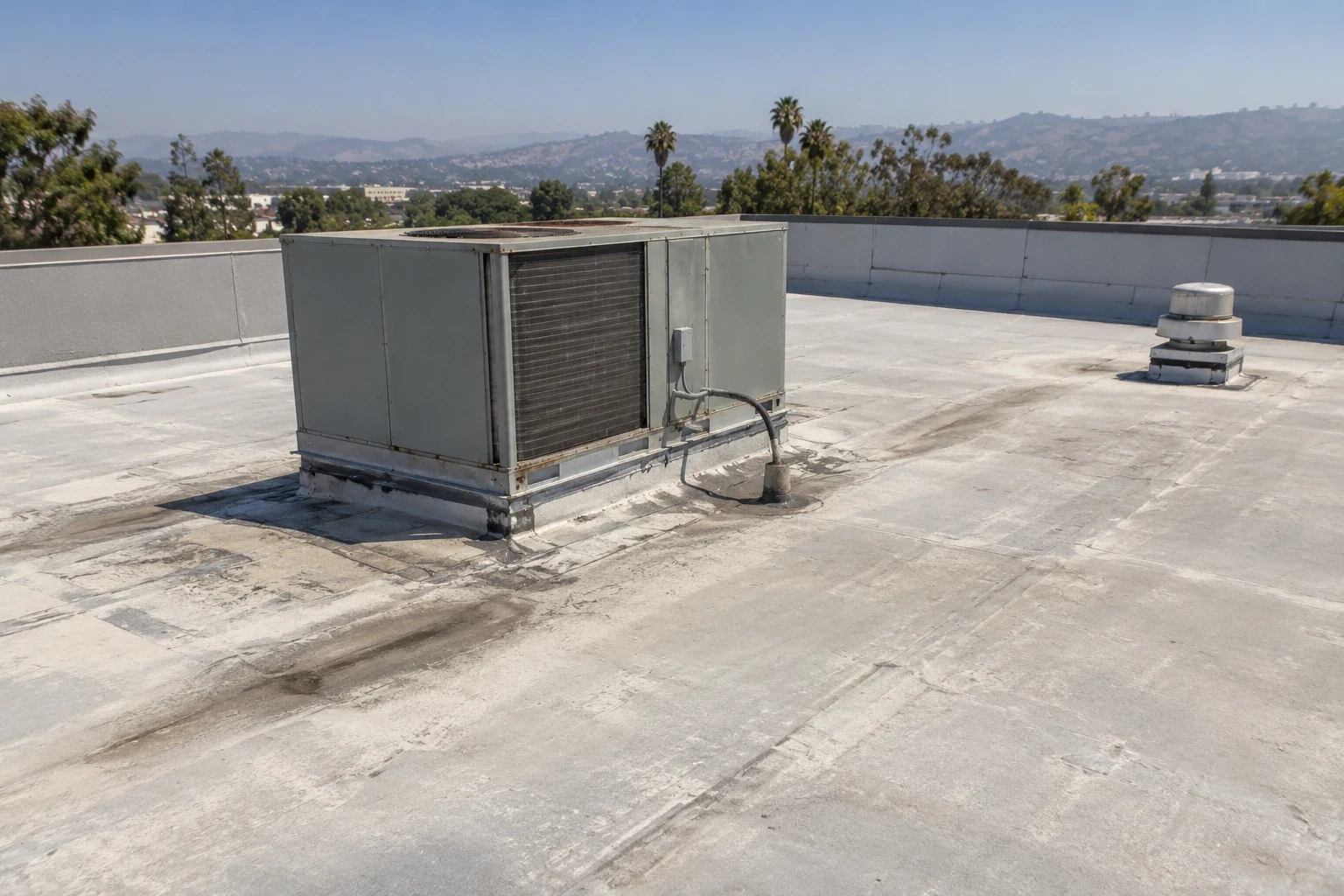
Commercial buildings that have had several tenants tend to share a few problems wherever they stand: parapet flashings nobody has looked at in years, rooftop units added by tenants in different decades, and few drains, so that a single blocked outlet is enough to hold water against a wall. The written report ranks these in order, with photographs, so a landlord can see what to fix this season and what can wait. A commercial roof inspection is the cheapest piece of the whole job, and it decides everything after it.
Check the new roof before you accept it
An owner who takes delivery of a new building gets a new roof, and new does not mean right. We look at how water leaves the roof, whether the slope into the drains is real, how penetrations are flashed, whether seams were welded evenly and whether the insulation and cover board match the specification. A roof that fails in its first winter usually fails because of a detail somebody covered up on a Friday afternoon.
Once tenants move in, the roof starts to change. Heating and cooling units get added, exhaust fans appear and cable runs cross the membrane. We recommend a first-year walk, then a seasonal routine documented in a preventive maintenance program, and clear paperwork for every manufacturer system so that warranty management does not depend on anyone's memory. For general contractors building out the district, the sequence is the same: roofing coordinated with the rest of the trades costs less than repairing a rushed one.
City rules since annexation
Wet winters and hot Septembers
Rain in Santa Rosa totals about 32 inches a year over roughly 74 days, nearly all of it between November and March, and one atmospheric river in late November 2024 left close to 15 inches in about three days. Roof work that is not finished by October is a bet on the weather, so we plan major reroofs for spring and early summer and keep the fall for repairs and drain cleaning.
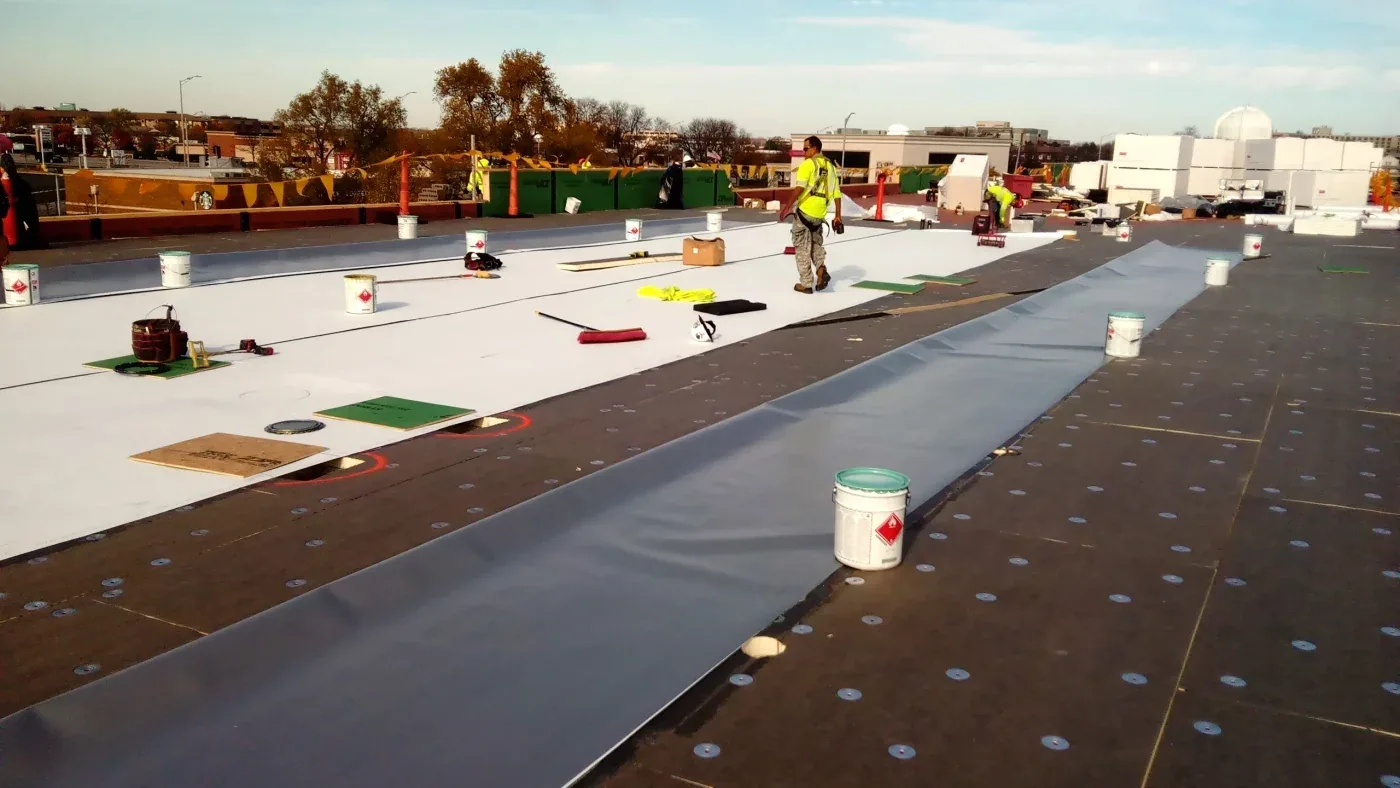
Heat has its own calendar. The record high of 115 degrees came on September 6, 2022. Membranes welded or adhered in that kind of heat need early starts, extra water for the crew and tighter attention to how the material is stored. A TPO or other single-ply system welded at noon in a heat wave is a different roof from one welded at seven in the morning.
Spend and skip
A district with a growth plan leaves owners deciding whether to sell, redevelop or hold, and the roof budget should follow that decision. Here is how we sort it:
- If the building will stand for the long term, fund repairs and a maintenance routine now, and plan a replacement when the survey says so.
- If a sale is likely within a few years, stop the leaks, document the condition and do not pay for a new system a buyer may tear out.
- If redevelopment is the plan, keep the roof watertight until then and spend nothing more.
Not worth it, in every case: a coating over wet insulation or a recover that hides a bad drain. The same sorting applies to owners in Railroad Square and downtown Santa Rosa.
Commercial Roofing Questions
We are buying an older commercial building on Sebastopol Road. What do we check on the roof first?
Start with the drains and the parapet flashings, since those are cheap to examine and expensive to ignore. Then ask for the roof history: any permit records, repair invoices and warranty documents. We would add an infrared scan before closing, because wet insulation is invisible from above and is the largest hidden cost on a roof this age. The findings go straight into your price or your inspection contingency.
Who inspects a reroof now that Roseland is inside the city?
The City of Santa Rosa Building Division handles permits for work in Roseland, as it does elsewhere in the city. The county's reroofing guidelines include a self-certification inspection policy, so for some reroofs the inspection route may differ from a standard visit. Confirm with the Building Division what applies before the contract is signed and put the inspection steps into the schedule.
What does a brand new commercial roof need in its first winter?
A walk after the first heavy rain, with someone looking at every drain, every seam near a penetration and every spot where water stood for more than a day or two. New roofs shed construction debris into drains, and tenants add equipment faster than anyone expects. Catching a bad detail in month three is a warranty conversation. Catching it in year three is an argument.
If redevelopment could be years away, how much should go into the roof?
Only what it takes to keep water out until then. Repair active leaks, clear the drains twice a year and record the condition with dated photographs. Do not coat, recover or replace unless the roof will not last through your horizon. If the plan changes and you hold the building longer, the photographs and repair log tell you exactly where to begin.
When in the year should roof work start in Roseland?
Spring through early summer is the sweet spot, after the wet season and before September heat. Large replacements scheduled for October get caught by rain, and mid-summer afternoons push membrane welding into the early morning. If you must work in fall, keep the scope small and let repairs and drain clearing carry the winter. Planning the project in January for an April start usually gives the best price and schedule.
Send us the address
Give us the address on Sebastopol Road or anywhere in the district. After a walk of the roof, we will tell you plainly whether it needs work now, later, or not at all.