Roof Warranty Management in Santa Rosa, CA
Roofing Capabilities
Most roof warranties are lost long before the roof ever leaks. They are lost on a Tuesday afternoon when an HVAC tech cuts a new penetration, a tenant adds a satellite mount or a handyman patches a seam with whatever was in the truck. Nobody calls the manufacturer. Nobody writes it down. Two years later the claim is denied for exactly that reason.
Warranty management in Santa Rosa, CA is the unglamorous work of preventing that. It means finding the paperwork, reading the conditions, keeping the roof in the state the warranty assumes and recording every touch. We do the walking, the repairs and the record, and we will not pretend a warranty rescues a roof that has stopped performing. The aim is narrower and more useful: if the roof is covered, nothing done on it should void that coverage.
Serving Santa Rosa • Rohnert Park • Petaluma • Windsor • Healdsburg • Sebastopol • Napa
Read the exclusions before the coverage
The coverage paragraph is the one everybody remembers. The exclusions are the ones that decide claims. Most manufacturer warranties on commercial membranes carry conditions about approved repair methods, notice before alterations, routine maintenance, foot traffic, standing water and damage from outside events. Wording differs between manufacturers and between warranty types, and nobody should assume a roof is covered for something because a neighbor's was.
Here is the truth about the term most owners misread: a warranty usually covers defects in the product or workmanship, not leaks in general. A drain that clogs with leaves and floods a seam is a maintenance failure, and most warranties say so. A puncture from a dropped tool is damage, not a defect. The practical effect is that the warranty protects you against a narrow set of failures and punishes you for a wide set of habits.
That is why the first job is to get the actual document in front of someone who can read it with the roof in view. Manufacturer systems differ, and each membrane manufacturer has its own approved details, but the pattern of conditions is similar enough to plan around.
Multi-tenant roofs break warranties fastest
Single-tenant warehouses rarely lose coverage to a surprise. Shopping centers do. Each tenant in a multi-tenant center brings a mechanical contractor who may or may not know a warranty exists, and the retail centers in Windsor, from Lakewood Shopping Center to Shiloh Shopping Center, are the kind of property where that happens. More units means more curbs, more penetrations and more people on the membrane.
Hotels and medical buildings are the other group worth checking. The six-story, 200-room hotel at Graton Resort & Casino in Rohnert Park is a large-footprint hospitality roof, and with that much roof under one owner, the paperwork is the first thing to locate. If the papers cannot be found, that is itself a finding, and we note it in the roof record.
The fix for both is a single named contact who must be told before any trade goes onto the roof, and a written rule that the roof is not a work platform.
Ponding, ash and heat are the usual disputes
Keep a warranty file and call first
We keep a warranty file for every covered roof, built from the same walk that feeds your roof asset record.
- The warranty document itself, plus the installer and date it came from.
- A list of the conditions in plain language, with the ones that matter highlighted.
- Every maintenance visit, with photos of drains, seams and flashings.
- Every repair, made the way the manufacturer allows, with the material noted.
- Notice dates for any rooftop work by other trades.
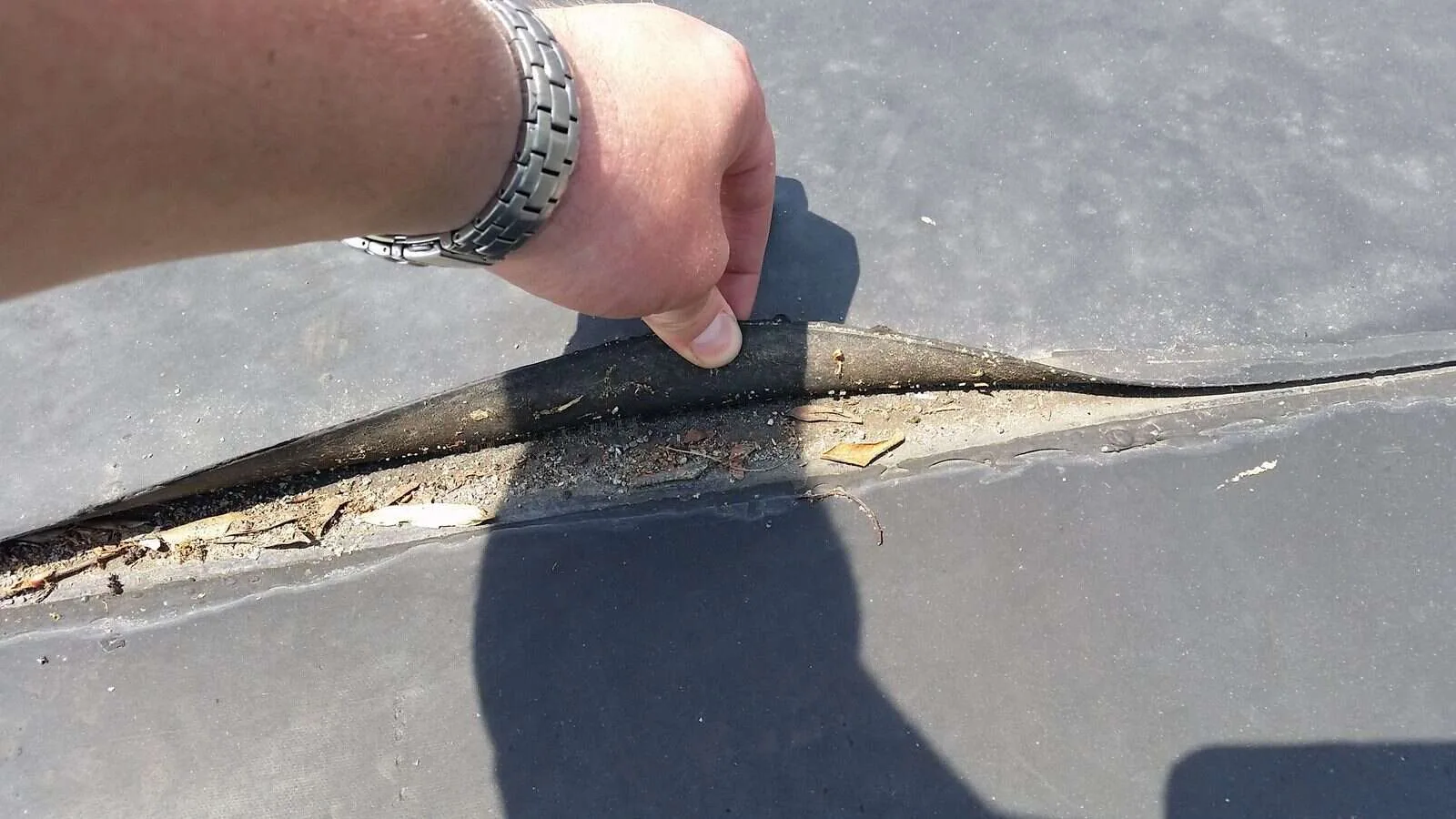
When a leak shows up, call before anyone patches it. A repair done in the manufacturer's approved way, by a crew that documents it, keeps the claim alive. A commercial roof repair on a covered roof follows that rule, and the written condition report that goes with it is the proof you want in the file.
Do not pay to protect a roof that is past saving
A warranty on a failing roof is paper. If the insulation is wet and the membrane has run its course, spending money on record keeping, patching and claim letters is not worth it. The better move is to run the replacement plan and make sure the new system's coverage starts clean.
Extended warranty offers are also worth a skeptical read. Before paying for one, ask what conditions it adds and whether the roof can realistically meet them. And do not buy a warranty as a substitute for drainage. A roof that ponds and carries a long warranty is a roof with a long list of reasons to deny your claim.
Commercial Roofing Questions
I cannot find the warranty for a building I just bought. What now?
Start with the seller's closing documents and the property manager's files, then ask whether the original installer is still in business. If the papers do not turn up, treat the roof as uncovered and rely on the condition report, not the assumption. A due diligence survey done before closing is the cleanest time to settle.
A tenant wants to install rooftop equipment. How do we protect the coverage?
Require written notice to you before the work, then have the penetrations flashed in the manufacturer's approved way and photographed. We can attend the install or inspect it afterward and record the details. Without that step the tenant's contractor decides how a new curb is sealed, and the person who loses is the owner.
Does a repair by someone other than the original installer void the warranty?
Often it can, depending on the wording, which is why the call comes before the patch. Many warranties name who may repair and which materials are acceptable. A repair made in an unapproved way, or with an incompatible sealant, is a common reason a claim is denied. Check the document, then decide who does the work.
Will ash on the roof after a fire event affect a warranty claim?
The ash itself rarely matters. What matters is whether it clogged drains and held water, because ponding is the condition most warranties push back on. Clear the outlets quickly, photograph them with a date and keep the visit in your log. That record shows the roof was maintained when it counted.
How long should I keep roof records once a roof is under warranty?
For as long as the coverage runs and a while after, and pass them to the next owner when the building sells. Warranty transfers usually need notice, and a buyer who inherits a complete file has a much stronger hand than one who inherits a rumor.

Find out what your warranty really requires
Call Commercial Roofing Santa Rosa. We will read the conditions with the roof in front of us, set up the file and tell you plainly where coverage is safe and where it is at risk.