Silicone Roof Coatings in Santa Rosa, CA
Roof Systems
Silicone is not the premium coating most owners assume. It is a specialist. Nothing handles a roof that holds water better, it is a poor choice on a roof that sheds water fine, and it is close to impossible to undo once it is on. Pick it for the right reason and it earns every dollar. Pick it because someone called it the best and you may be married to it for the life of the roof.
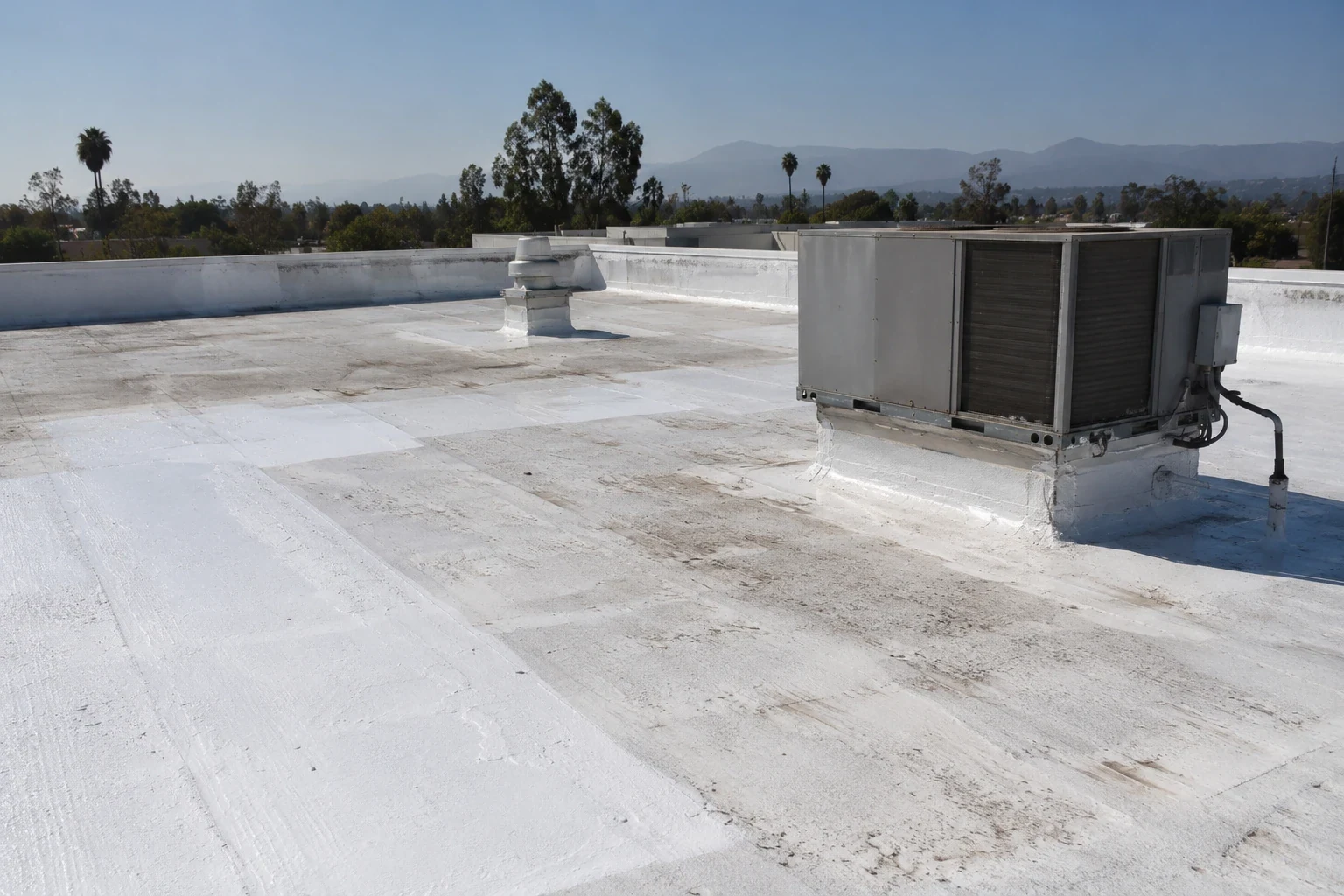
A silicone roof coating is a liquid-applied membrane that cures into a flexible, rubbery skin. Unlike water-based coatings, it keeps its bond when water sits on it, and it shrugs off sun for a long time with very little chalking. Both points are real. In Santa Rosa, CA, where weeks of rain can land in a few days, the first one matters most. The downsides arrive later, after a few seasons of dust and ash have settled into the surface.
Serving Santa Rosa • Rohnert Park • Petaluma • Windsor • Healdsburg • Sebastopol • Napa
Silicone belongs on roofs that pond
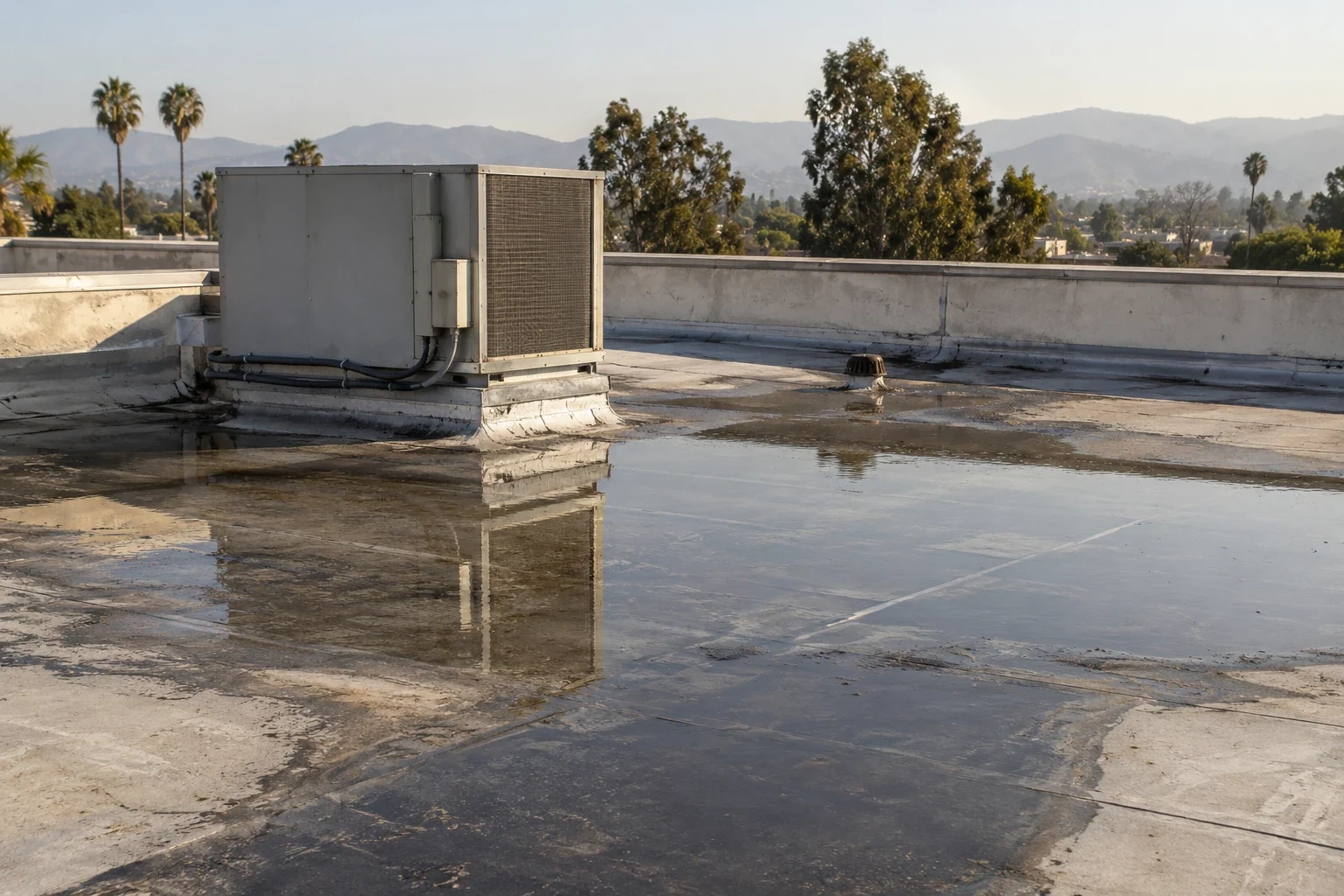
Over the three days of November 21 to 23, 2024, an atmospheric river left Santa Rosa with nearly 15 inches of rain, and any low-slope roof with slow drains, a sagging deck area or a clogged scupper would have held that water for hours, sometimes days. A roof like that is where silicone makes sense, because a coating that stays bonded under standing water is the whole point.
Think of a store near North Station Area with a long run of roof that drains toward a single line of scuppers, or a flex building at the Airport Business Center with a shallow bay between two rooftop units. If water lingers there a day after a storm, an acrylic skin will eventually blister and let go. Silicone will not.
The verdict: silicone covers what the slope cannot, but it does not replace drainage. Open the drains and scuppers first, and treat chronic ponding water as a problem to reduce, not a condition to coat over.
Dirt is the price of admission
Silicone stays slightly tacky for its entire life. That is why it flexes so well, and it is also why it grabs dust, pollen, soot and ash. A bright white roof goes grey in a few seasons if nobody washes it, and a grey roof reflects less sun.
Then comes the recoat trap. Almost nothing bonds to cured silicone except more silicone. If the owner later wants a different coating, a tear-off with different layers, or even a patch from a contractor who stocks something else, the old skin gets in the way.
The other failures we see come from the install. Thin film over fasteners and seams, bonding failure where the surface was not clean, and fish-eye pinholes where oils or residue were left behind. All of them are preventable, and all of them are expensive to find after the warranty paperwork has been signed.
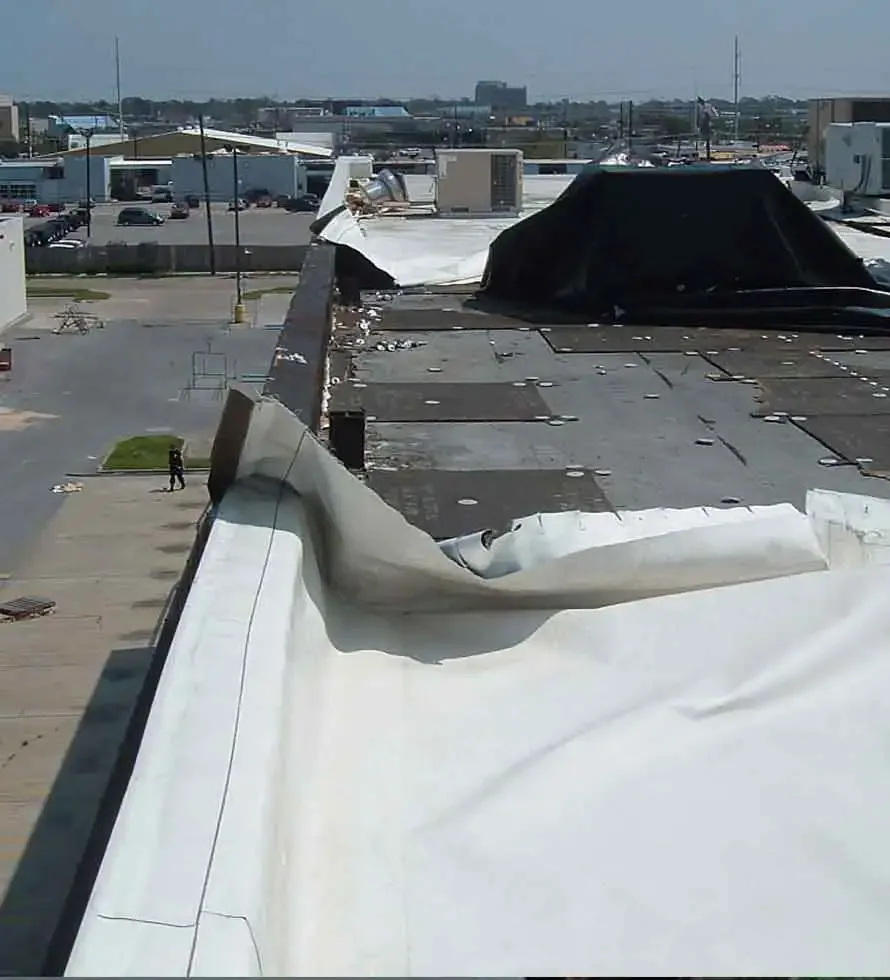
Fog is fine, rain is not
Prep is where the bond is won
Silicone fails on a dirty roof, not a bad product. The surface gets washed, scrubbed, and dried completely. Oils, old sealants and loose granules get removed. Rust on metal gets treated. Over modified bitumen, a primer or tie coat keeps asphalt oils from staining or interfering, and over certain old coatings a test patch tells us whether the bond holds before we cover the whole roof.
Before any of that, the roof has to be worth coating. Seams, flashings and penetrations get repaired, and a core sample or infrared moisture scan shows whether wet insulation is hiding under a dry-looking surface. Silicone over a wet roof does not dry it out. It seals the moisture in.
The verdict: if a contractor offers a silicone price without asking about the existing roof type, get a second price from someone who does.
Where silicone pays off
Silicone works best on large, low-slope roofs that are still sound but showing age: an older modified bitumen roof past its prime, a metal roof with tired seams, or a built-up roof with sun damage. Big-box roofs and shopping center roofs, from a mall to an open-air center such as Montgomery Village, are the usual candidates, since coating a large area is where the economics start to work.
The 2025 Energy Code governs permit applications that come in on or after January 1, 2026, and a reflective coating is one way to move an existing roof toward a cool roof.
If the roof does not pond and you expect to recoat in the future with a lower-cost product, acrylic coating is often the more practical choice.
When to walk away from silicone
Skip it when the deck is soft or the insulation is wet across a wide area. Skip it when the roof is within a few years of replacement, because a silicone skin complicates tear-off and disposal. Skip it where service crews are on the roof every week, because the surface is slick when wet and scuffs under constant foot traffic unless walk pads are added.
Also skip it when the budget cannot cover the washing. A silicone roof that is never cleaned loses much of its benefit. If that is the situation, the honest plan is to repair the roof and let it run its course, or move to a replacement. We would rather tell you that than coat a problem.
Commercial Roofing Questions
Can I put acrylic over silicone later if I change my mind?
Almost never. Cured silicone resists bonding from most other coatings, so acrylic usually peels or fails to adhere at all. The realistic options are recoating with silicone, or removing the old coating, which is slow and costly. That is why we ask owners to think about every future repair and recoat before they approve silicone.
My roof ponds for two days after every big storm. Will silicone fix that?
It will protect the roof while the water sits, but it will not make the water leave. Standing water adds weight and can point to a drain problem or a low spot in the deck. We clear the drains, check the structure, and add or lower drains where it makes sense. Silicone then handles whatever water the slope still cannot.
How should a silicone roof be cleaned after a smoky fire season?
Rinse first, scrub second. Low-pressure water and a mild cleaner lift soot and ash from the tacky surface without scarring it. Check drains and scuppers afterward, because washed ash tends to collect there and slow drainage.
Will silicone stain or bleed over my old modified bitumen roof?
Asphalt oils can migrate into a silicone skin and leave yellow or brown blotches if the roof is not primed correctly. A tie coat or primer built for that substrate stops the migration, and a small test area shows the result before the full application.
Is silicone worth it on a roof with a lot of rooftop units and service traffic?
Only if you add walk pads or protected paths. Silicone is soft and slick when damp, and repeated foot traffic scuffs it down to the base. The pads cost little compared with a patch every other year. On a roof with heavy traffic and no ponding, a firmer coating usually lasts longer under shoes.

Get a straight answer on silicone
Call Commercial Roofing Santa Rosa. We will look at the drainage, the existing roof and the cleaning plan, then tell you whether silicone fits now, later, or not at all.