Ponding Water Roof Repair in Santa Rosa, CA
Roof Damage Repair
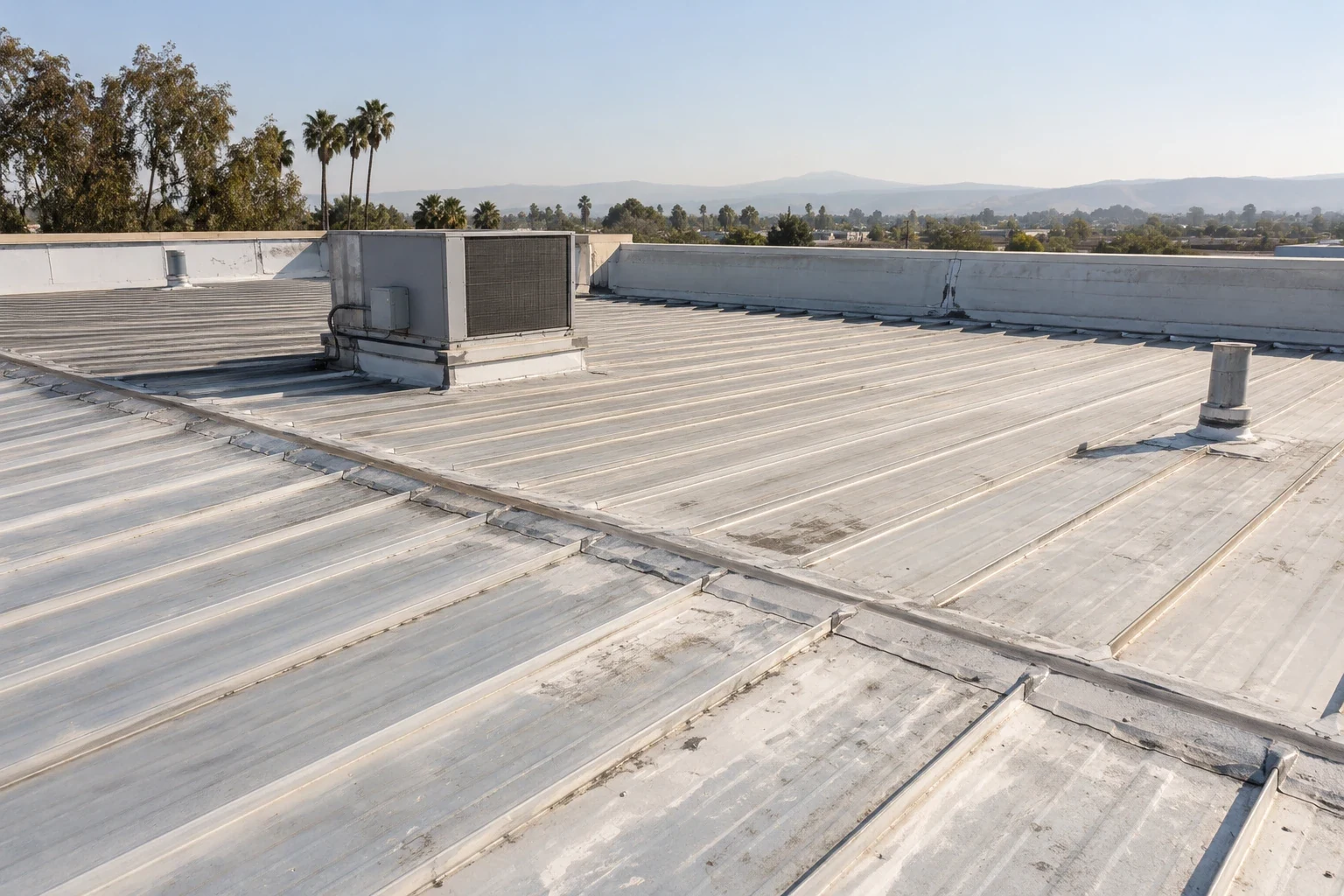
A puddle on a flat roof the morning after a storm is normal. A puddle that is still there two days later, with the sun out, is a defect, and no amount of patching the membrane underneath will make it go away.
A flat commercial roof in Santa Rosa, CA takes most of its water between November and March. That concentration is why ponding shows up here: a roof that handles an ordinary shower can fall apart when a wet month lands on it. The right fix is almost never a new sheet. It is getting the water off the roof faster, then deciding what the sheet underneath has been through.
Serving Santa Rosa • Rohnert Park • Petaluma • Windsor • Healdsburg • Sebastopol • Napa
The sheet is rarely the culprit
Water stays on a roof for a short list of reasons. The deck sagged between supports. The drains were set high, or a roof recover changed the slope. A rooftop unit, a pipe support or a stack of old layers built a small dam. Or the drain is partly blocked and nobody has looked since the last storm. Sometimes it is two of these together.
The membrane suffers in the long run, but it is the victim. Standing water holds dirt and algae against the sheet, softens some adhesives, fatigues seams at the pond edge and lets small flaws leak a little at a time. A roof with a six-foot pond over a seam will open that seam long before the same seam fails in a dry field. Find the cause, and the repair gets cheap and obvious.
Fog keeps puddles alive
Santa Rosa gets about 32 inches of rain a year over roughly 74 days, so the load is bunched into the winter months. Add the Pacific fog and low overcast that move in on many evenings and mornings, and shallow ponds on a shaded or north-facing section dry slowly between storms. Water that sits for weeks grows a film that looks like staining and is much harder to clean off later.
The extremes are worse. In the November 2024 atmospheric river, nearly 15 inches fell in about three days, with 20 inches or more at Occidental. A roof built to move a normal storm cannot move that. Ash and burned debris from a wildfire season add to it by clogging drains with a fine grey sludge. Heat then bakes whatever the pond left behind into the surface. Wet winter, dirty drains, baked residue: it is one cycle, and the roof is stuck in the middle.
Big flat roofs hold the most
Mark the pond, then measure it
We do not guess about ponding. After a rain, and again two days later, we mark where water is standing, measure its depth and note whether it collects at a drain, a seam, a unit or a low point in the deck. A level and a few photographs tell more than an opinion does. Where a pond sits over insulation, an infrared moisture survey finds out whether the water has reached the board underneath, because wet insulation changes the whole repair.
That information sorts roofs into three groups. Some need only drains cleared and strainers installed. Some need new drain sumps, additional scuppers or a protected overflow. A few have a deck low enough that the real solution is rebuilding the slope above it. You deserve to know which group yours is in before anyone writes a price.
Move the water first
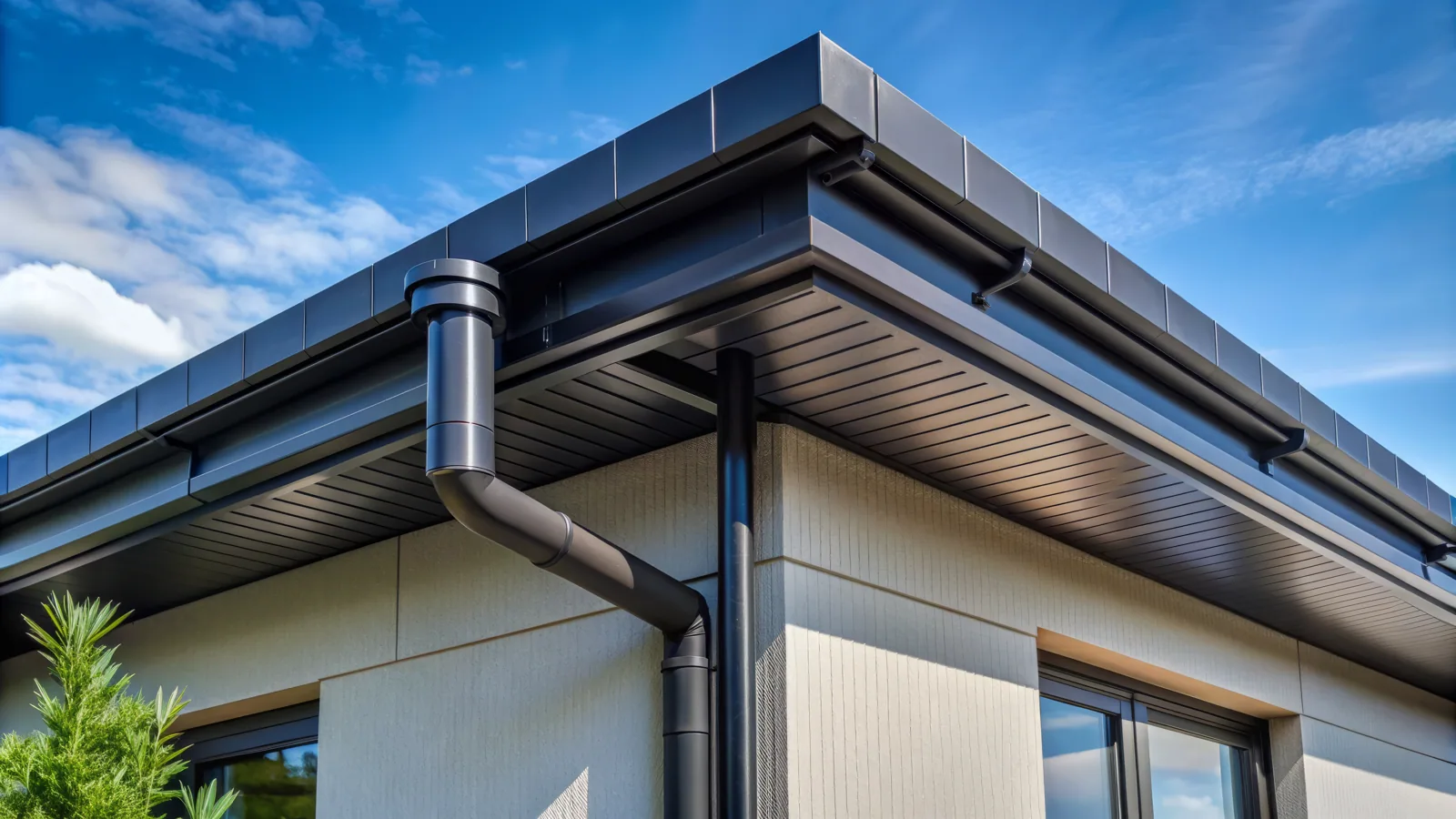
The usual repair sequence starts at the drain. Clean and re-seat the bowls, add strainers, and open or enlarge scuppers where the parapet traps water. Our drain and scupper work includes protected overflows set above the primary drain, so a blocked outlet does not turn into a flooded roof. Next comes slope. Tapered insulation or crickets behind equipment steer water toward the drain, and a new cover board over tapered boards gives the membrane a firm, even surface.
Only then do we deal with the sheet. If seams at the pond edge have opened, they get welded or re-bonded. If the field is still sound, a fluid-applied coating such as a silicone coating is a reasonable choice for a roof that will keep a little water, since silicone tolerates immersion. That sequence works because it fixes the cause before the symptom.
Do not coat a pond you did not drain
The worst money spent on a ponding roof is a coating over standing water. An acrylic coating in particular softens and washes out when it stays wet, and the roof ends up with the same pond under a newer color. Even silicone does not fix a sagging deck or a blocked drain.
The other bad spend is a full tear-off for a roof whose only problem is two low spots. If the insulation is dry and the sheet is sound, repairing the drainage and the failed seams is a better use of the budget than a replacement. When the wet insulation spreads beyond a few pockets, or the deck has to be rebuilt, replacement becomes the right answer, and we say so.
Standing water can expose weak roof seams, but drainage still needs correction before the membrane takes blame.
A low spot can leave water against flashing failures, so drainage correction and the wall detail need separate checks.
Commercial Roofing Questions
How long can water sit on a flat roof before it counts as a problem?
Plan around about two days. Water that is gone within a day or so of the last rain is normal on a flat roof, and many membrane manufacturers treat water that lasts past roughly 48 hours as ponding that affects the warranty. A pond that is shallow but permanent is still a pond, and it deserves a look before the wet season rather than during it.
Our drains look clear but there is still a pond near the middle. Why?
Clear drains tell you the pipe works, not that the roof slopes to it. The deck may have deflected under rooftop equipment or an old layer of insulation may have changed the grade. We measure the depth and the distance from the nearest drain. Often a cricket or a small run of tapered board moves it, with no need to touch the rest of the roof.
Is wet insulation under a pond something I should worry about?
Yes, since it holds water and stops insulating, and wet board does not dry out by itself under a sealed membrane. Cut a few cores or run an infrared scan, and you will know within a day. If only a small pocket is wet, we remove and replace it. If the whole area is wet, the conversation turns to a bigger repair.
We have a warehouse in Healdsburg. Does the extra rain change what you recommend?
It does. Healdsburg averages around 42 inches of precipitation a year, well above what Santa Rosa sees, so drains and overflows deserve more capacity there, not just a cleaning. For a building that far north we lean toward sized-up scuppers and a protected overflow, and we check for leaf and debris loading from nearby trees.
Do small ponds on a mall roof need attention if nothing leaks?
Mark them and watch for a season. A shallow pond that dries in a day or two is not an emergency. One that grows, turns green or sits over a seam deserves a repair before it turns into a ceiling stain over a storefront. A written note of where each pond is and how deep gives you a baseline for the next wet winter.


Find out what the water is telling you
Send us the roof address and we will check the drains, the low spots and the seams, then say plainly whether it needs work now, later, or not at all.