Roof Insulation, Tapered Systems and Cover Board in Santa Rosa, CA
Commercial Roofing Services
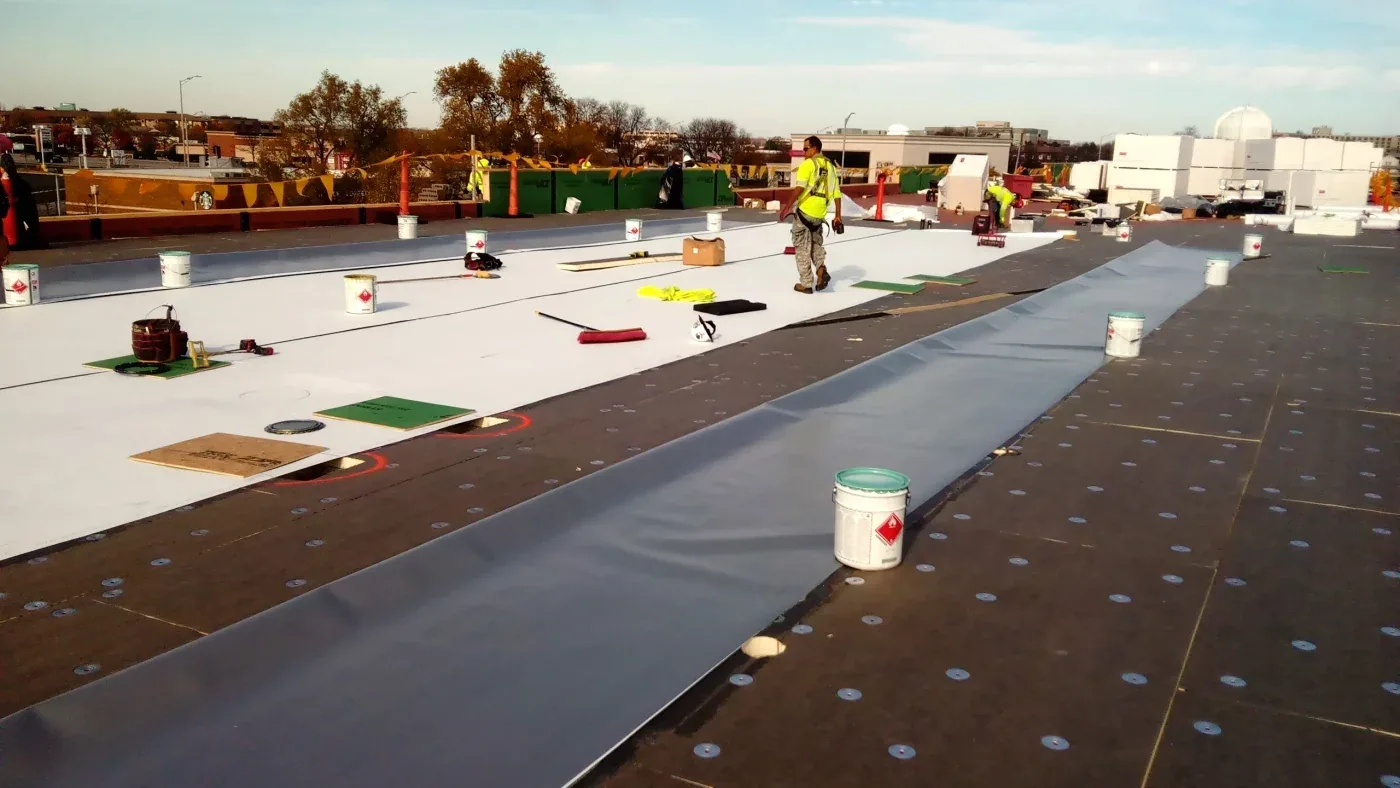
Nobody sees the insulation, which is why nobody argues about it until it is wet. Under the membrane of almost every low-slope commercial roof sits a layer of rigid board that does three jobs at once: it holds the heat in or out, it carries the slope that moves water, and it gives the membrane something firm to stand on.
When that layer is chosen carelessly, the roof pays for it in ponding, blistering, crushed spots and energy bills. In Santa Rosa, CA the choice also touches fire resistance and the 2025 energy provisions of California's Title 24. We design the insulation, tapered slope and cover board as one system with the membrane above it, not as a line on a bid sheet that gets filled in later.
Serving Santa Rosa • Rohnert Park • Petaluma • Windsor • Healdsburg • Sebastopol • Napa
Wet insulation does not dry out
Once water gets into rigid insulation it stays. The board loses its thermal value, softens under foot traffic and turns the roof into a sponge that feeds leaks long after the original hole is closed. A membrane that looks fine can hide a deck full of saturated board.
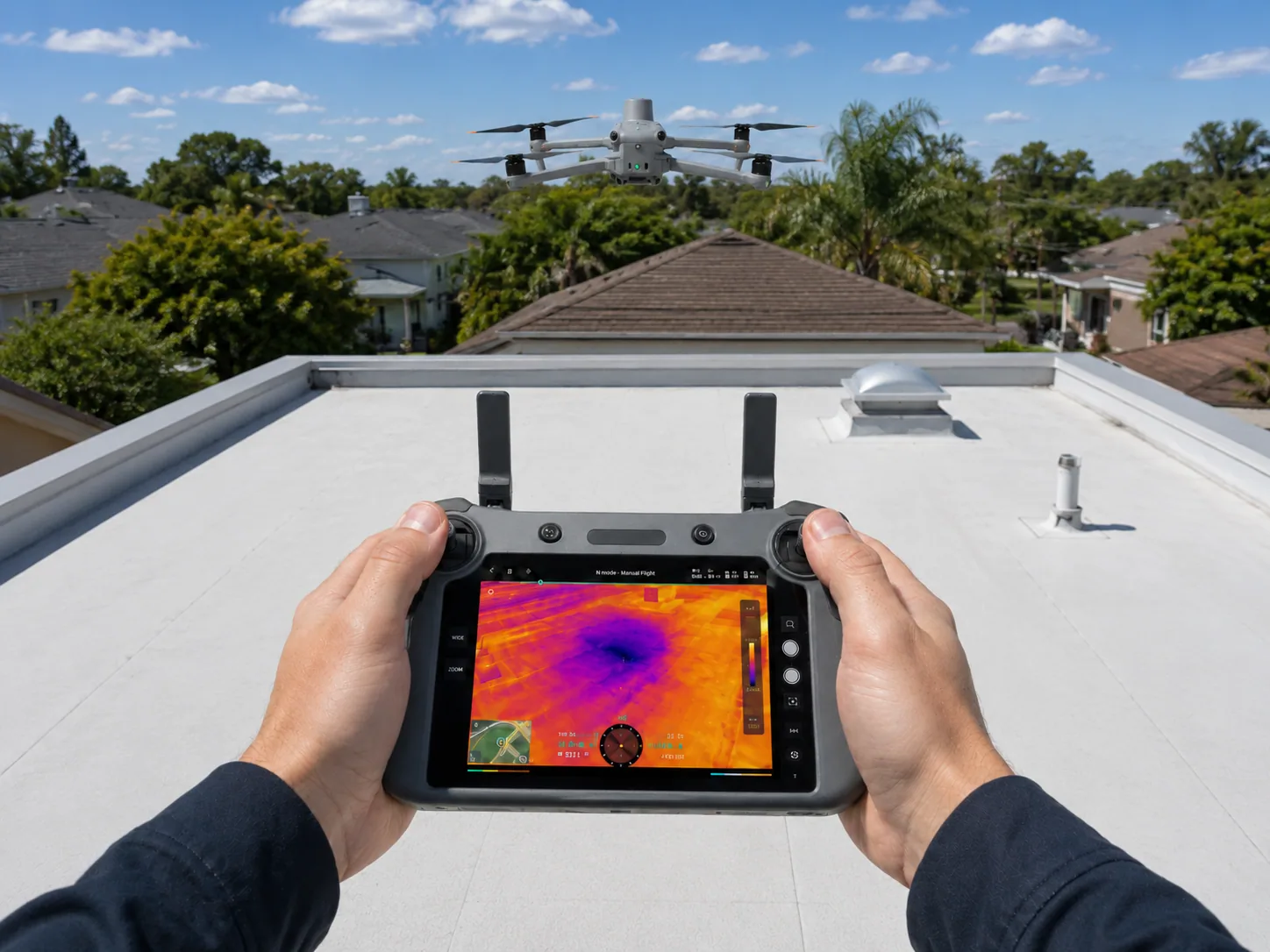
That is why we start with an infrared moisture survey and confirm with cores before recommending anything. Santa Rosa's wet season and its evening fog both raise the stakes, since a small leak that runs through a winter can soak a wide area. The honest rule is simple. Wet board comes out. It does not get coated over, sealed in or hoped away. Replace what is wet, find out how the water got in, and fix that before the new insulation goes down.
Pick the board for the building
Different buildings want different insulation. A big retail or flex roof with plain geometry can take thick, high-R board in a mechanically attached or adhered system. A warehouse may care more about low cost and fast install. A food or winery production building may need steady interior temperatures and moisture control. Heavy foot traffic from equipment service calls on an office or retail roof calls for denser board.
Common choices include polyiso for high R-value per inch, EPS for light weight and cost, and several cover boards, including gypsum-based, high-density polyiso and mineral-based products. Which one fits a building near North Station Area is not the same as which one fits a winery barrel hall. We choose by load, fire rating, wind uplift and the membrane that will cover it. Do not let a bid default to whatever was cheapest last year.
Tapered systems fix the slope
Fire zones and hot summers shape the assembly
Santa Rosa's Wildland-Urban Interface fire zone is growing for the first time since 2009, with 3,082 parcels added, and the October 2017 Tubbs Fire destroyed a Kmart, a Hilton and restaurants along Highway 101. Roofs in and near those zones deserve an assembly that resists fire from above, and many fire-rated roof assemblies rely on a specific board or cover board to earn that rating. Always check the assembly listing, not just the product name.
Heat comes next. The city's 115 degree record in September 2022 puts real stress on a roof surface, and a thicker, well-protected insulation layer reduces how hard the membrane works through the day. California's 2025 Energy Code applies to permit applications on or after January 1, 2026, and it can change how much insulation a reroof has to carry. Rain is the third test, since a board that soaks up a wet November does not belong under a lightweight membrane. Work that changes the roof's reflectivity often becomes a cool roof installation in the same pass.
Do not pay for thickness you cannot use
More insulation is not always better. Adding inches the code does not require can force you to raise every curb, extend every flashing and rework door thresholds, and the cost of that work often outweighs the energy savings. It is not worth it on a building where the ceiling is already well insulated or the HVAC load is light.
Spend instead on the pieces that protect the roof: a good cover board over soft insulation, tight joints, correct fastening and a taper that gets water off. Where a roof is dry and sound but tired, a recover with cover board can add protection without a tear-off. Where the insulation is wet or crushed through a wide area, a full replacement is the cleaner answer. We price both side by side and say which one we recommend.
The assembly should account for what sits below the new board. Confirm deck type, existing layers, moisture findings, fastening pullout, edge height, and the load limits of the structure before setting thickness. At drains and curbs, show how the added build-up will preserve a positive route for water and keep equipment interfaces serviceable. A sample area can reveal whether the proposed attachment works with the actual substrate. Put those assumptions in the scope so field changes do not arrive as a surprise after tear-off.
Commercial Roofing Questions
Do I need a cover board, or is that an upsell?
On most low-slope roofs with soft insulation a cover board earns its keep. It protects the insulation from foot traffic and impact, gives the membrane a firmer base and often supports the fire rating. On a very simple roof with no traffic it can be skipped, and we will tell you when that is the case.
Can tapered insulation fix my ponding without replacing the roof?
Only as part of a re-roof or a recover, because the taper goes under the membrane. For a roof you want to keep, smaller ponds are handled with local fill or added drains instead. We measure the slope first and recommend the cheapest option that actually clears the water within a day or two of rain.
How do I know if my insulation is wet?
You cannot tell by looking at the surface. A moisture scan finds the wet areas, and cores confirm what the scan suggests. Spongy spots underfoot, blisters in the membrane and recurring leaks in the same area are warning signs. Book the scan before the wet season so you are not guessing when the first storm arrives.
Will adding insulation change my roof drainage or door heights?
It can. Extra thickness raises the roof surface relative to drains, thresholds and curbs, which can create new low spots or leave flashing too short. We check every height during design and adjust the layout, curb extensions or door details before anything is ordered. A doorway that ends up too low is a design miss, and we catch it on paper.
Does the 2025 energy code apply to a roof repair?
Small repairs usually fall outside the reroofing requirements, but a larger re-cover or replacement can trigger insulation and reflectivity rules for permits filed on or after January 1, 2026. The city building division makes the final call. We confirm the scope with them before we price, so the numbers you receive already include what applies.
Find out what is under your membrane
Call Commercial Roofing Santa Rosa. We will test the insulation, check the slope and tell you plainly whether the roof needs new board now, later, or nothing at all.