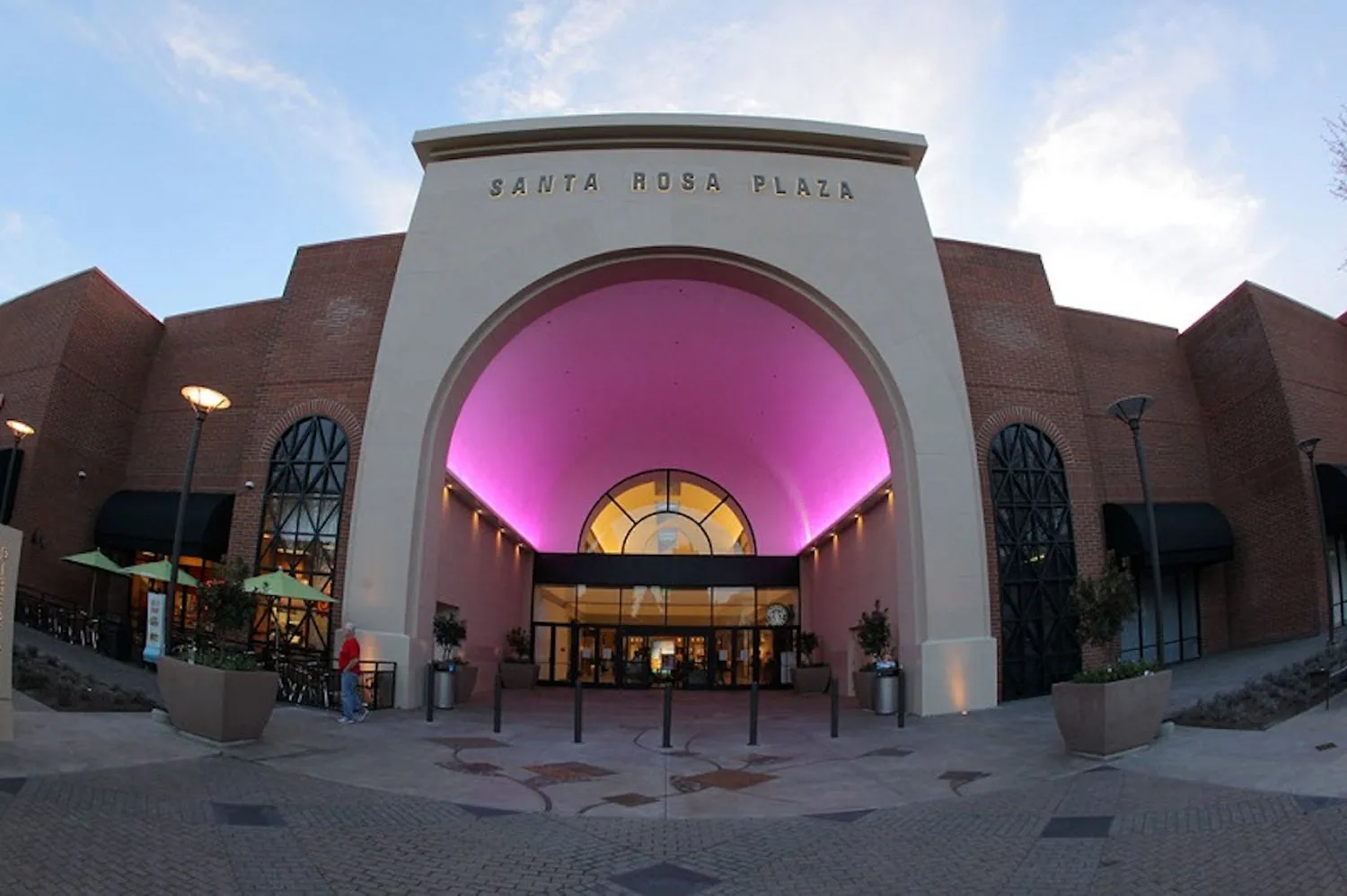
Cold Storage Roofing in Santa Rosa, CA
Property Types We Roof
Cold storage roofs fail from the inside out. Everyone looks up for rain, but the damage starts with warm, damp air creeping toward a cold room and condensing in the insulation. By the time a drip shows up in a freezer, the roof has usually been losing the fight for a long time.
That makes cold buildings in Santa Rosa, CA a different roofing problem from the dry boxes around them. The winters are wet, the evenings fold in Pacific fog, and summer has touched 115 degrees. A roof over a chilled space is stuck in the middle of all of it, with warm and humid on one side and well below freezing on the other. We treat the vapor path as seriously as the weather.
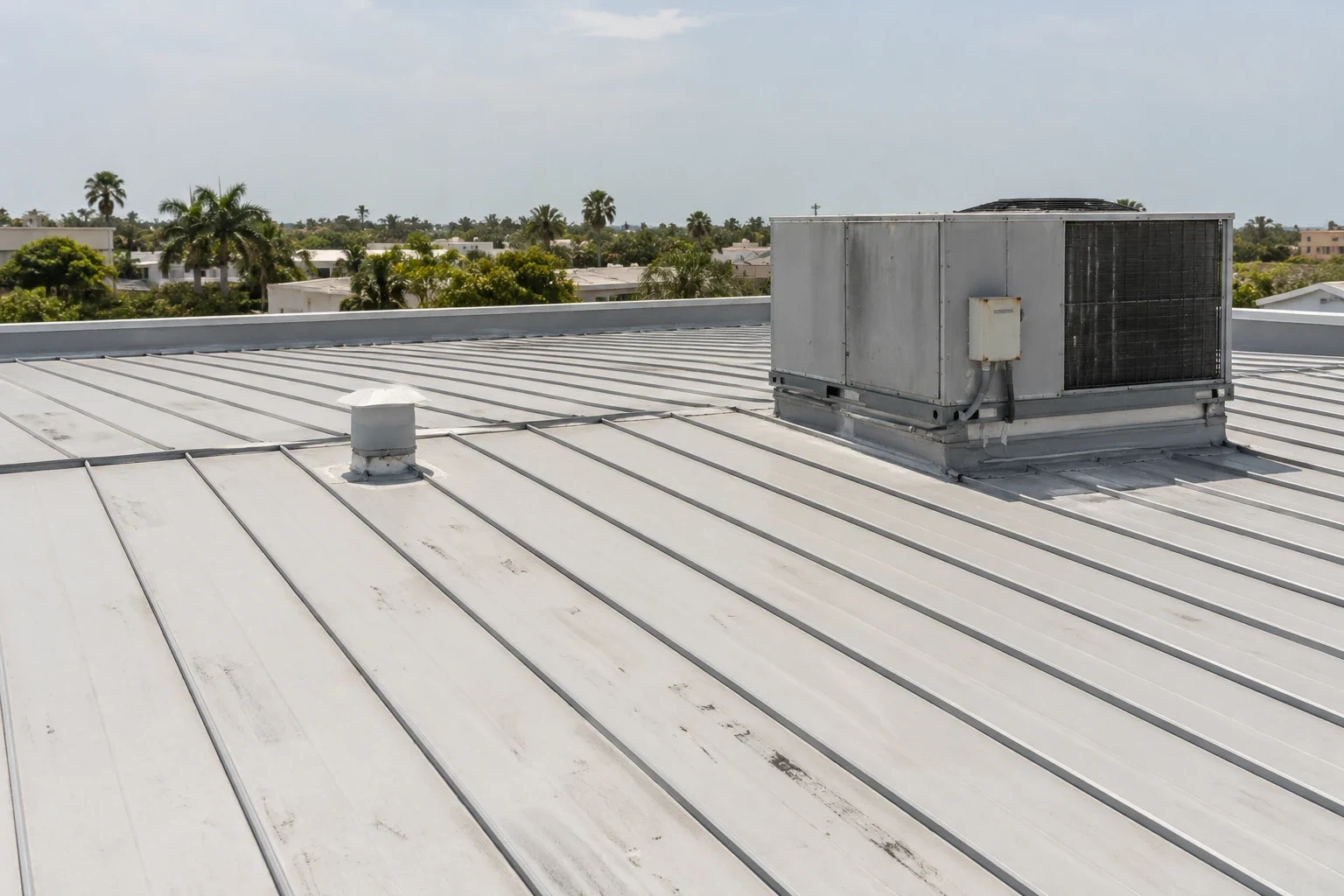
Serving Santa Rosa • Rohnert Park • Petaluma • Windsor • Healdsburg • Sebastopol • Napa
Vapor drive runs one way
Water vapor moves from warm to cold and from humid to dry. On a cold storage building, the cold side is the room below the roof, so vapor from outside is always pushing down through the roof assembly. If the vapor retarder is torn, lapped badly or cut by a penetration that nobody sealed, moisture reaches the insulation, condenses and stays.
The thick insulation these buildings carry is expensive and easy to ruin. Once it is wet, it loses value fast. Ice can build up inside the assembly, and the compressors below work harder to hold the setpoint. A cover board and insulation upgrade only works if the vapor control under it is intact, so that layer is the first thing we look at when a cold roof is opened.
Recommendation: treat every penetration in a cold roof as a vapor leak waiting to happen, and seal it as one.
Wet insulation does not dry out here
In a warm building, a damp patch of insulation can dry out slowly over a sunny season. In a cold building, it freezes. The water stays, the insulation compresses and the roof loses its thermal value in a patch that grows each season. The visible sign is often a stain or frost on the underside of the deck, not a puddle on the roof.
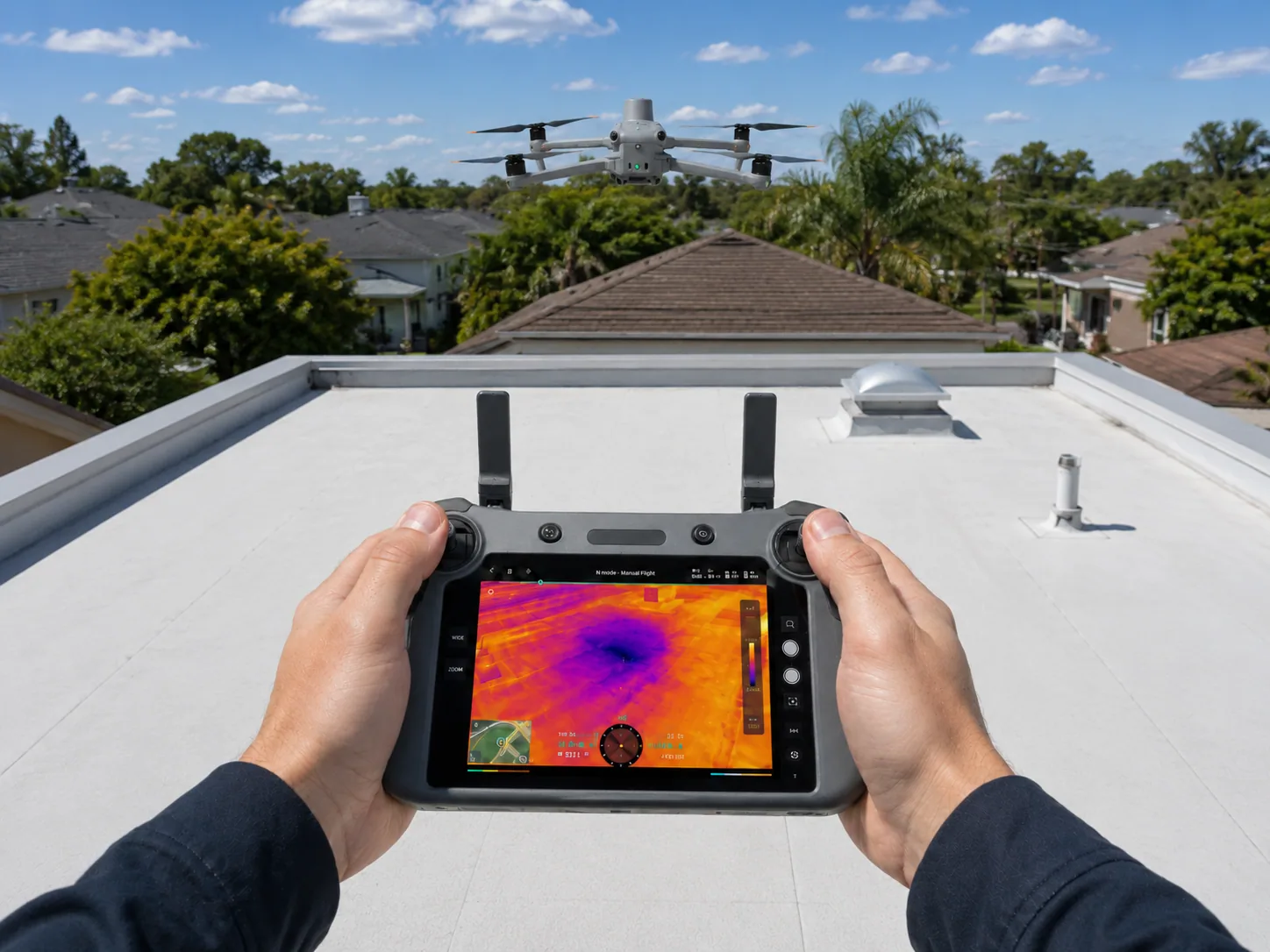
An infrared moisture survey flown or walked in the evening, while the roof is giving up the day's heat, shows where wet material sits. Core cuts confirm it. We have no use for a roof repair done over a wet area, because the patch seals the moisture in. The answer for a wet zone is to cut it out and replace it with dry insulation and a continuous vapor retarder.
Heat loads the cooling equipment
Rebuild the vapor path, then the sheet
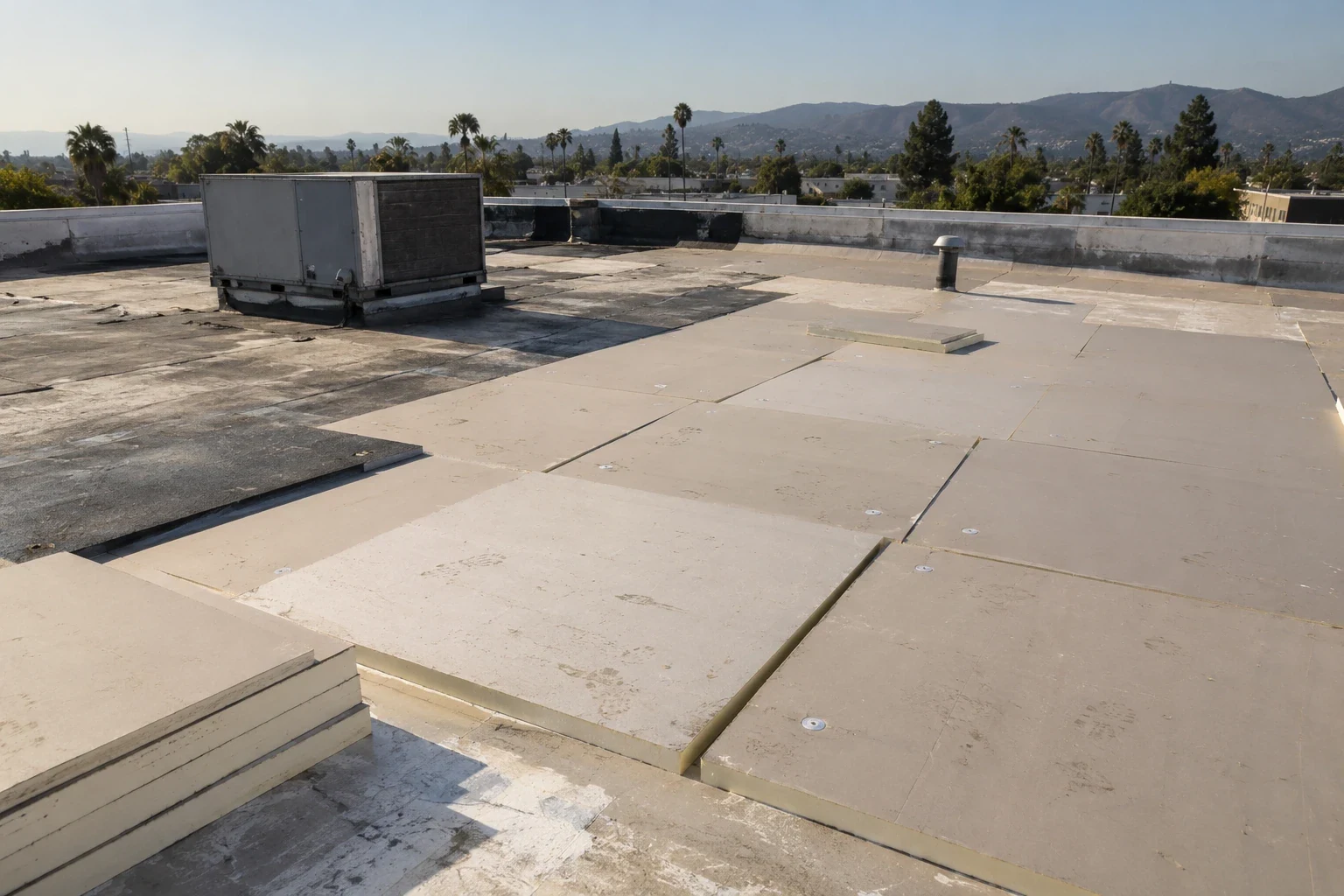
When a cold storage roof is failing, replace it in layers that belong together: a continuous vapor retarder, dry insulation in staggered joints, a cover board and a reflective roof surface such as a spray polyurethane foam system or a fully adhered single-ply. Spray foam is attractive on cold buildings because it forms its own continuous insulation and seals around penetrations when it is properly done, but it needs dry, warm weather to cure and careful sequencing around the refrigerated space.
Where a full tear-off is not warranted, a partial replacement that removes only wet sections and tapers the new work into the existing roof can be worth it. We will say plainly which version your building needs, and why.
Do not coat what you have not tested
Coating a cold roof without a moisture test is wasted money. If the insulation is wet, the coating traps the problem, and the first freeze finishes it. Skip also the cheap trick of adding a second membrane over the first, which shuts off one more path for trapped moisture to escape.
Better money goes to a survey, a written report and a short maintenance route that checks curbs, drains and penetrations. Petaluma's top employers include Petaluma Poultry Processors and Clover Sonoma dairy, and food businesses of that kind often run chilled space, so the same survey logic applies to a building in Petaluma as to one along US 101. If the site also runs dry goods or production space, the dock and process concerns that drive distribution center roofing and manufacturing plant roofing apply to those wings.
Before opening the roof, coordinate temperature-sensitive operations and identify who can approve access to the cold side. Review refrigeration alarms, interior frost, vapor retarder continuity, and previous equipment work alongside roof observations. A small test can determine whether moisture is isolated or spread beyond the visible stain. Sequence the repair so exposed insulation and deck do not remain open while the room is operating. The closeout should record both the roof layers and any vapor-control detail that future mechanical work must protect.
The inspection record should include room temperature conditions, visible frost, and the location of refrigeration lines that cross the roof assembly. Ask when alarms last showed a change and whether service work opened the vapor retarder. Those details help distinguish a roof entry from condensation or a mechanical source. If the evidence is mixed, test a defined area before deciding how much insulation to remove, then coordinate restoration with the cold-room operator.
Commercial Roofing Questions
Why is there frost or ice under my freezer roof deck?
Warm, humid air is getting into the roof assembly and condensing against the cold side. The path is usually a torn vapor retarder, an unsealed penetration or a wet section of insulation. We open the area, map how far it extends and rebuild the vapor path along with the insulation. Patching the surface alone will not stop it.
Can you reroof a cold storage building without letting the temperature swing?
Yes, with the right sequence. We work in small sections, keep the old assembly in place until the new one is ready, and avoid opening more roof than we can close the same day. The interior cooling plant keeps running, and the vapor retarder goes down before the crew leaves each section. We coordinate with the refrigeration contractor on equipment shutdowns.
Is spray foam a good fit for a freezer building?
Often, since it insulates and seals in one pass. It also needs dry weather, a clean substrate and a protective coating over it, and it does not forgive wet insulation underneath. We recommend it where the existing deck and insulation are sound and the schedule allows a dry window, and we recommend something else when they are not.
How can I tell if the insulation on my cold storage roof is wet without tearing it up?
An infrared moisture survey, run in the right conditions, shows temperature differences that mark wet material, and core cuts confirm what the scan suggests. The scan costs far less than a tear-off, and it tells us which of three paths fits: repair, partial replacement or full replacement. We give you a map with photographs, so the decision is not left to guesswork.

Find out what is happening inside your roof
Call Commercial Roofing Santa Rosa. We will test the roof assembly over your cold space and tell you plainly whether it needs work now, later or not at all.