Occupied Building Reroofing in Santa Rosa, CA
Commercial Roofing Services
An occupied reroof goes wrong on the ground long before it goes wrong on the roof. The membrane is the easy part. The trouble starts when adhesive fumes drift into a fresh-air intake, a delivery truck finds the dock blocked, or a tenant learns about the noise by hearing it. Keeping a building open is mostly a planning job, and the planning is where reroofs in Santa Rosa, CA are won or lost.
Plenty of owners assume they have to empty the building or pay for night work on every square foot. Most of the time they do not. A reroof can run above shoppers, clinic patients and office tenants if the work is phased, sealed off and scheduled around the way the building actually runs.
Serving Santa Rosa • Rohnert Park • Petaluma • Windsor • Healdsburg • Sebastopol • Napa
Phase the roof, not the people
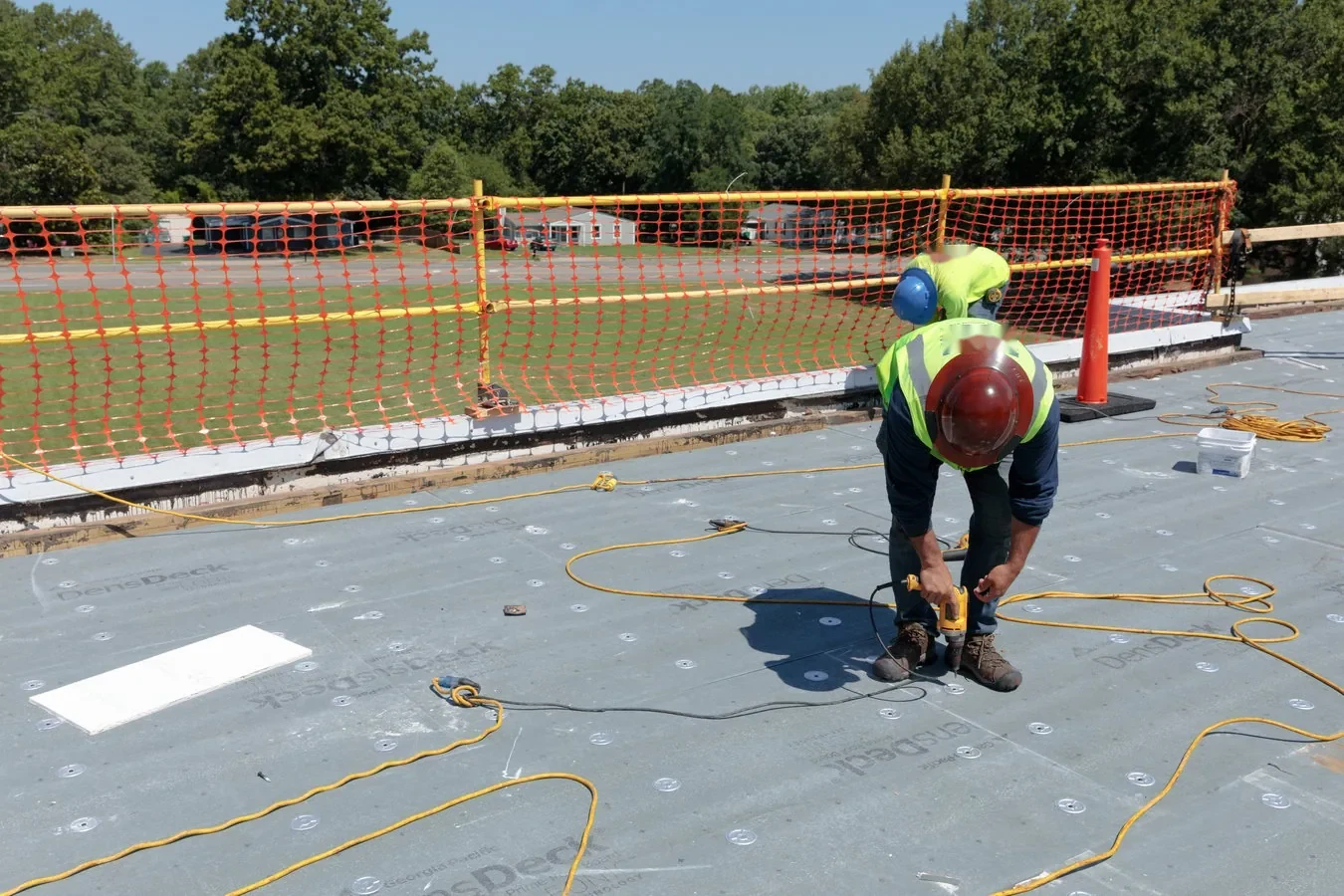
The roof gets divided into sections small enough to tear off, install and dry in on the same day. That rule is priority one. A half-open roof overnight is an invitation to a storm, and the November 2024 atmospheric river, a three-day soaking that came close to 15 inches in the city, shows how much water a three-day storm can put on an open roof.
Sections also limit what tenants live through. The noisy cutting and tear-off happen over one area while the rest of the building carries on under an untouched roof. When the section is closed, the crew moves on, and the disturbed part of the building shrinks as the job advances. For most buildings in the area, the dry months from spring to fall give the cleanest run, with winter work held to smaller sections and tighter weather calls.
Noise, fumes and the air intake
Tenants complain about three things: the sound of a tear-off overhead, the smell of adhesives and the dust that finds its way through a metal deck. Each one has a fix.
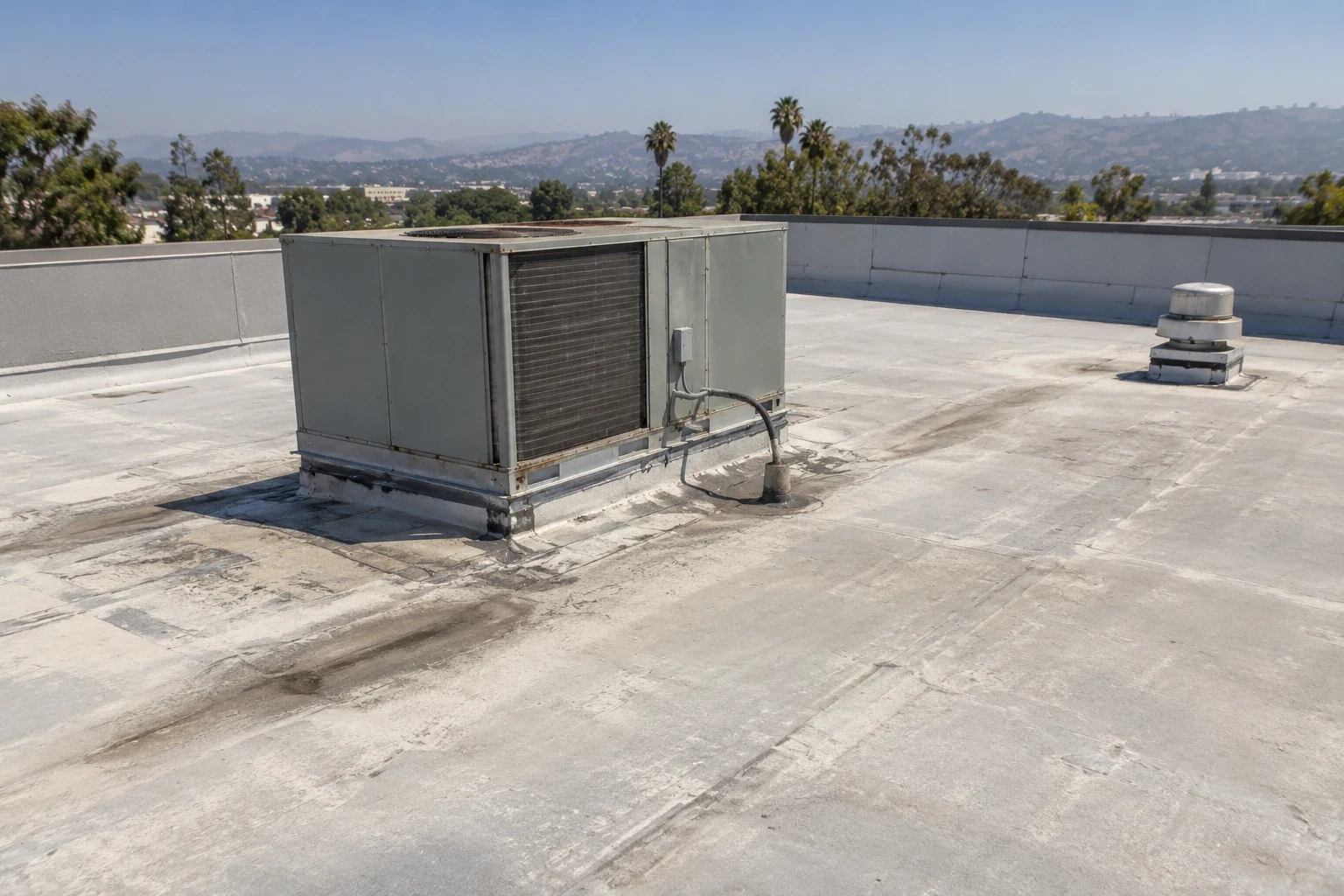
- Fumes: walk the roof with the building engineer, locate every fresh-air intake, and cover or shut down the nearest ones during adhesive work. Mechanically attached and heat-welded systems keep odor low.
- Noise: schedule the loudest cutting for early hours or for the quiet part of the tenant's day, and tell them when.
- Debris and dust: lay drop protection over sensitive spaces, and keep fastener work away from the areas where ceilings are open or tile is old.
Then check the work from underneath. A short walk-through with the property manager at the end of each day catches the stain, the smell and the complaint while they are small.
Every building keeps a different clock
Smoke days and 115-degree days
The calendar here carries hazards of its own. In smoke season, crews working outdoors need air quality checks and the right to stop, and the building's own air handling needs to be protected from ash. On Santa Rosa's record 115-degree day in 2022, adhesives and membranes behave differently, and a crew on a hot dark roof gets exhausted fast. Early starts and shade breaks are not a luxury.
Winds matter too. The Diablo winds that gusted to 70 mph during the October 2017 fires lift loose insulation, unfastened sheets and open edges. Anything we leave exposed at the end of a shift is secured for the worst case. If a section cannot be dried in before weather arrives, we stop early and stage temporary protection rather than gamble with your tenant's ceilings.
Tell tenants before the first truck arrives
People tolerate noise they were warned about. They do not tolerate noise that surprised them. Give tenants written notice about a week ahead that names the work dates, the hours, the parking and access routes that change, and one person to call. Follow it with short daily updates through the property manager and a clear way to reach us when something goes wrong. A tenant who knows the loud part ends Thursday is a tenant who stays patient. Keep an emergency number visible, because a leak during the job needs fast attention and an answer. Our emergency roof repair service focuses first on assessment and temporary water control when roof access is safe.
Skip the tear-off if the roof allows it
The least disruptive reroof is the one that leaves the old roof in place. When the insulation is dry and the existing system can carry a new layer, a recover removes far less debris, noise and truck traffic than a full replacement. When it cannot, a tear-off is the right call, and no amount of clever scheduling should push you into a recover over wet insulation. We find out which one you have before we write the schedule.
Commercial Roofing Questions
Will my tenants have to move out during the reroof?
Almost never, unless interior damage or a hazardous condition is already forcing the issue. Occupied reroofs run on every building type, from stores to clinics to schools, with phased tear-off and protection below. What you give up is flexibility: some work shifts to early mornings, evenings or weekends, and some areas near intakes and entries need extra protection. Spell out the sensitive spaces now and we will plan the order of work to avoid them.
How do you keep fumes out of a medical or office space?
Start with a walk to find every intake and exhaust on the roof, then decide where odors can travel. Cover or shut down nearby intakes during adhesive work, choose attachment methods with less odor and monitor the wind. Keep a facility contact on call, and be ready to pause. Medical tenants often want extra measures, such as a pre-work meeting with their safety lead, and those are reasonable to ask for.
What happens if it rains in the middle of a reroof?
Nothing gets exposed that cannot be dried in. Each day's open area is sized to what the crew can close before the weather window ends, and temporary seals and tarps stay staged on the roof. If the forecast turns, we shrink the work area or stop. Santa Rosa's wet season runs from November to March, so winter reroofs get shorter sections and daily weather calls from the foreman.
Can the work be timed around our busy season?
Yes, as long as you share the calendar early. A retailer's holiday weeks, a campus term, a fairground event or a harvest crush can all become blackout dates in the schedule. The tradeoff is that fewer working days may push the job into weather you would rather avoid. We give you the options in plain terms, with what each one costs in time, noise and risk.
Do we need to be there while the crew is working?
You do not need to be on site, but someone should be reachable. Name one decision-maker at the property, usually the facility manager, who can approve changes and respond to tenant concerns. We check in daily, walk the work at the end of shifts and report problems the same day. A property manager who responds quickly is the best protection a tenant has against delays.

Keep the building open. We will plan around it.
Call Commercial Roofing Santa Rosa. Tell us who is under the roof and when they cannot be disturbed, and we will tell you what the job looks like on that calendar.