College and University Roofing in Santa Rosa, CA
Property Types We Roof
Fixing campus roofs one leak at a time is the most expensive way to own them. Every call goes to a different building, a different roof type and a different budget line, and nobody ever sees the pattern. The pattern is the whole story: which wings keep taking water, which drains back up every wet season, which roofs have quietly gone soft underneath.
Colleges and universities around Santa Rosa, CA, from the 100-acre Santa Rosa Junior College main campus to the 269 acres of Sonoma State in Rohnert Park, tend to grow in layers, and each layer brings its own roof. We start with a roof-by-roof inventory, rank the work by what is actually failing, and leave you a plan facilities staff can budget against. Some roofs need replacing. Plenty need a cleared drain and a date on the calendar.
Serving Santa Rosa • Rohnert Park • Petaluma • Windsor • Healdsburg • Sebastopol • Napa
A library is not a kitchen
A library, a teaching kitchen and a concert hall do not ask the same things of a roof. Santa Rosa Junior College has the Doyle Library and the Burdo Culinary Arts Center on one campus. A culinary teaching building usually carries kitchen exhaust, makeup air and grease, while a library mostly needs a quiet, dry ceiling over its collection. Sonoma State has the Green Music Center and the Schulz Information Center, two buildings with very different jobs under their roofs.
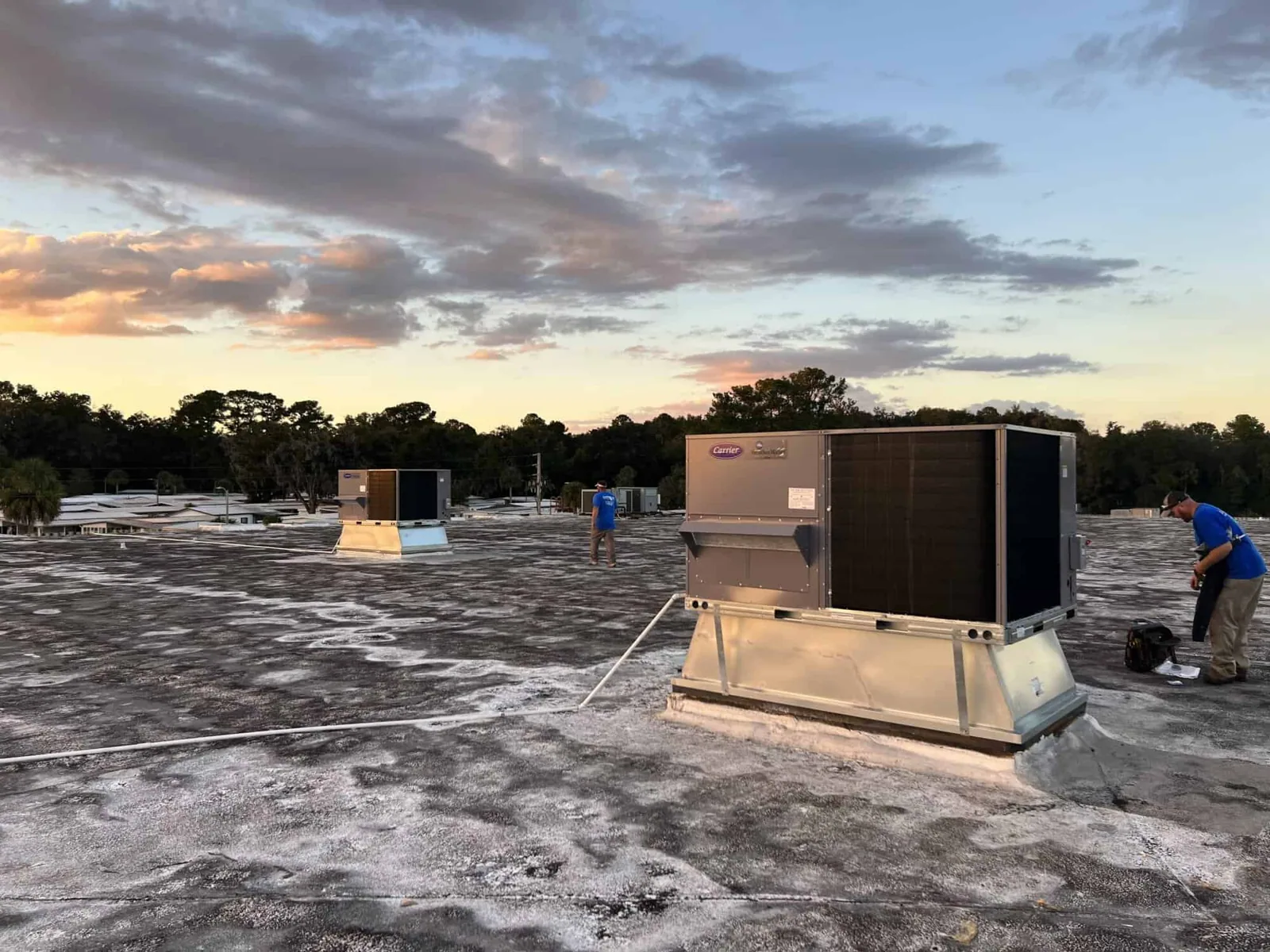
Treat each building type as its own file. Buildings with constant rooftop equipment, such as kitchens and labs, wear their roofs fastest. Libraries and performance halls lose the most when a leak reaches contents. Lab and science buildings add exhaust stacks, and every stack is a penetration that has to be flashed properly. Sort the roofs by use first, then decide how aggressive to be with each one.
Inventory before budget
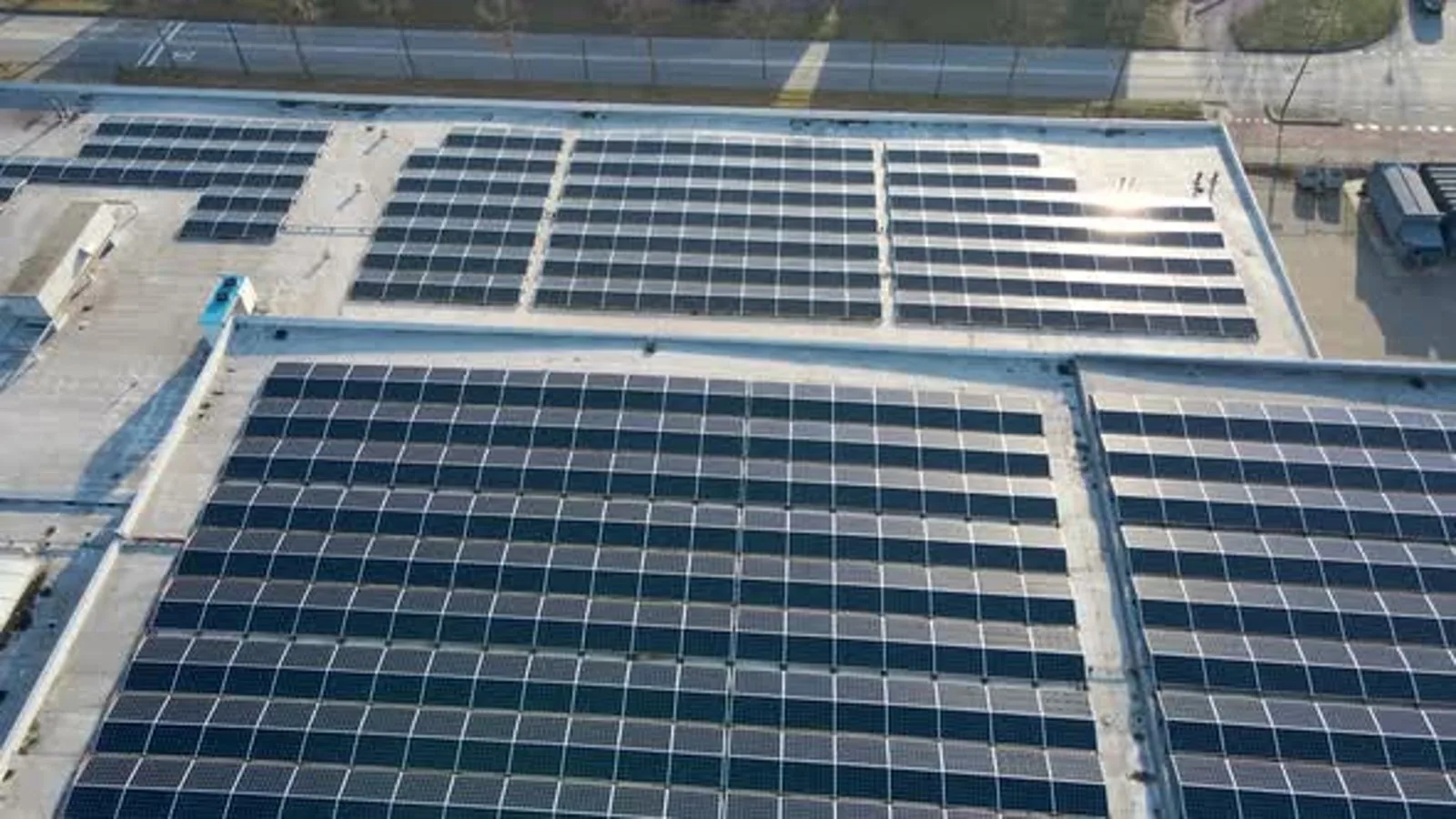
The first deliverable on a campus is not a repair. It is a list. We walk each roof, or fly it with a drone where access is awkward, and record membrane type, drainage, penetrations, visible damage and the areas that look wet. Then we confirm the suspicious ones with an infrared scan. What comes back is a ranked inventory that tells a facilities director which roofs are leaking, which are close and which are fine.
Without that, deferred maintenance is a guess. With it, a board can fund two roofs this summer and four next, and the numbers hold up. Our drone roof inspections speed up the survey on large or awkward buildings, and the findings feed a roof asset management file the campus can keep updating. Start there, and let the file set the order of work.
Equipment swaps hurt roofs
Burn scars and September heat
Rain does the damage, but fire changed how the rain behaves. The 2020 Glass Fire burned ground east of the city, and those scars send more runoff and debris down in heavy storms. Any building near those slopes or under tall trees sees more litter in its gutters and downspouts. The November 2024 atmospheric river, nearly 15 inches in about three days, put every undersized outlet at its limit.
Heat is the other half. The record 115 degrees on September 6, 2022 arrived in the first week of September, just as campuses fill for fall, and dark membranes over dining and residence buildings cook in that kind of weather. Heat ages sealants and softens seams, so a late-summer walk with a moisture scan catches problems before the wet season starts. Walk in September, repair in October, and go into the rain with clear drains.
Work around the term
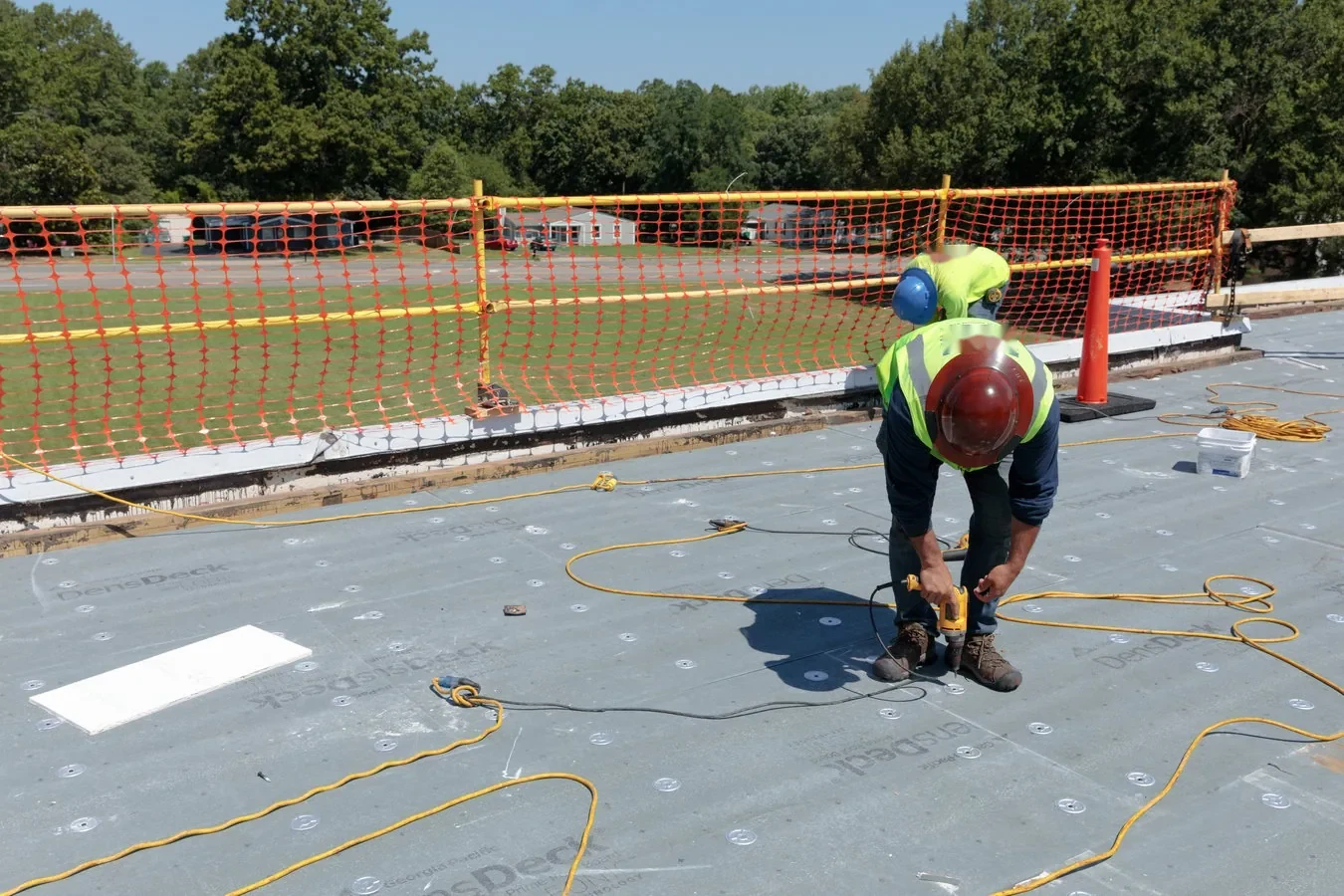
A college does not hand you an empty building the way a school does. Residence halls fill, summer sessions run and events come and go. Plan the loud work, such as tear-offs and hot-applied systems, for the quietest weeks, and keep quieter repairs like seam welding and flashing for the rest of the year. Tell faculty and event staff which days will be loud, which entrances are closed and where the crane will sit.
Santa Rosa Junior College also runs a 20-acre Public Safety Training Center in Windsor and a Petaluma campus, so a plan covering those sites should be scheduled separately. A multi-site roof program bundles the roofs by location so one mobilization reaches several buildings. Near the Mendocino Avenue Corridor, that means choosing weeks that miss exams and commencement.
Do not replace by birthday
Not every roof needs replacing, and a campus is where that truth saves the most. Do not replace a sound roof because it reached an age on a spreadsheet. Do not coat a roof with wet insulation underneath. Do not specify a premium sheet for a small equipment-room roof that nobody walks on and that is scheduled for demolition. Put the money into drains, details and a written plan instead.
One cost cannot be skipped: the code check. Any permit application submitted on or after January 1, 2026 is reviewed against the 2025 California Building Standards, including the 2025 Energy Code, so insulation and reflectivity numbers need confirming with the building division before bids go out. A recover may avoid a tear-off, but only if the old insulation is dry and the code allows another layer.
Classroom plans can reference school roof schedules. Protect care areas with hospital roof phasing.
Commercial Roofing Questions
How do we find out which campus roofs are actually failing?
Start with a walk of every roof and a thermal scan of the suspicious ones. Stains inside rarely line up with the leak above, and a drive-by tells you almost nothing. We record membrane type, drain condition, penetrations and wet insulation, then rank the roofs. The ranked list shows which buildings need work now, which need a plan and which should be left alone.
How loud is a residence hall tear-off, and when should it happen?
Loud enough that it belongs in the quietest weeks of the calendar. Removal, fastening and hot work all make noise, and equipment lifts can close parking and entrances. We schedule the noisiest steps for summer break where we can, post the daily plan for hall staff, and move the quieter flashing and detail work into the shoulder weeks.
Do lab and kitchen exhaust stacks need special roof details?
Yes, because every stack is a hole in the membrane and some carry grease or heat. Each one needs a properly flashed curb or boot, spaced so the roofer can reach it. Grease can break down certain sheets, so material choice near kitchen exhaust matters. Check the details whenever equipment is replaced, not only when a leak shows up.
Should we replace roofs on a fixed cycle or wait for failures?
Neither one works well. A fixed cycle replaces sound roofs too early, and waiting for failures puts water into classrooms, labs and library stacks. Replace on condition. Annual inspections and the occasional infrared scan show when a roof has reached the end of repair, and that gives the budget office real notice instead of a surprise.
How should a college with several sites handle roofs at each one?
Treat each site as a separate schedule under one plan. A main campus, a public safety training center in Windsor and a satellite in Petaluma have different calendars and different access. Bundle the roofs by location, document each with photos, and let one inventory track them all so the board sees one set of numbers.
Find out which campus roofs matter
Call Commercial Roofing Santa Rosa. We will inventory the roofs, tell you plainly which ones need work now, which can wait, and which should be left alone.