Commercial Roofing on the Mendocino Avenue Corridor, Santa Rosa, CA
Service Areas
A corridor needs a roof plan that respects the block below it. Santa Rosa’s Mendocino Avenue Corridor is an adopted City planning area with goals for walking, bicycling, transit, traffic calming and mixed-use development. Storefronts, offices and occupied buildings along a shared route can have very different roof assemblies and access constraints. We start at the property line, identify the leak or planning question, then inspect the roof system that sits above that address. The recommendation should explain where water enters, which details have failed and how to do the work without blocking the building’s daily use. A commercial roof leak repair begins with tracing the path, not guessing from the ceiling stain.
Serving Santa Rosa • Rohnert Park • Petaluma • Windsor • Healdsburg • Sebastopol • Napa
A street corridor can contain many roof problems
The City’s plan encourages a corridor identity that complements surrounding areas and supports multiple travel modes. For a building owner, that means deliveries, pedestrians and tenant entrances may all share the same frontage. A crane, dumpster or material drop cannot be placed by looking only at the roof. We review the street side, service access, overhead lines and safe route for workers before recommending a lift. On a compact property, the membrane work may be simple while the staging plan carries the risk. The City also identifies Mendocino Avenue among its corridor plans, separate from the North Station Area’s broader planning boundary. The North Station Area includes employment, education and commercial destinations; the corridor follows the street itself. Owners comparing a roof on this route with one in Downtown Santa Rosa should keep the property records separate.
The edge is where street-facing buildings often need attention
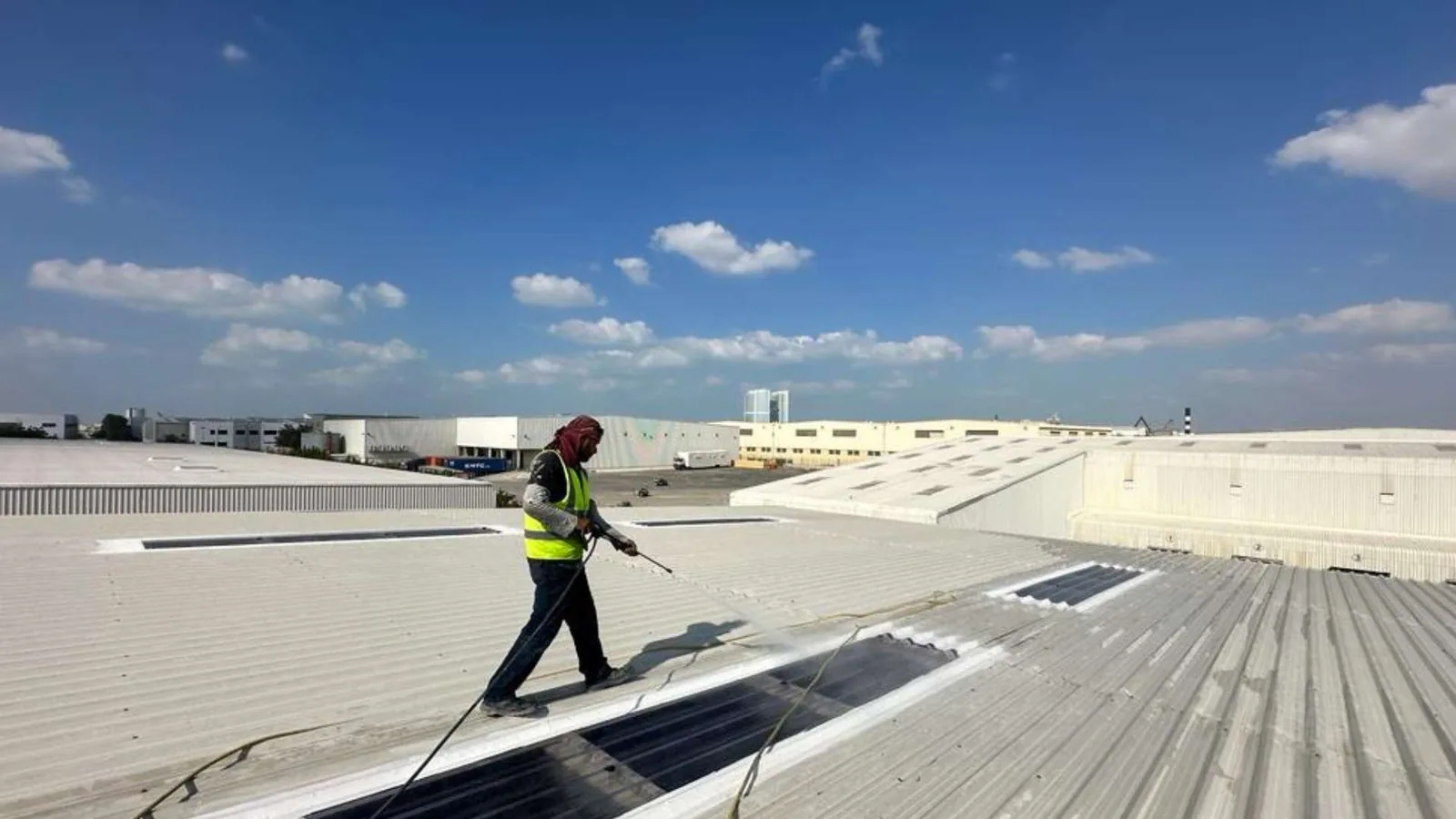
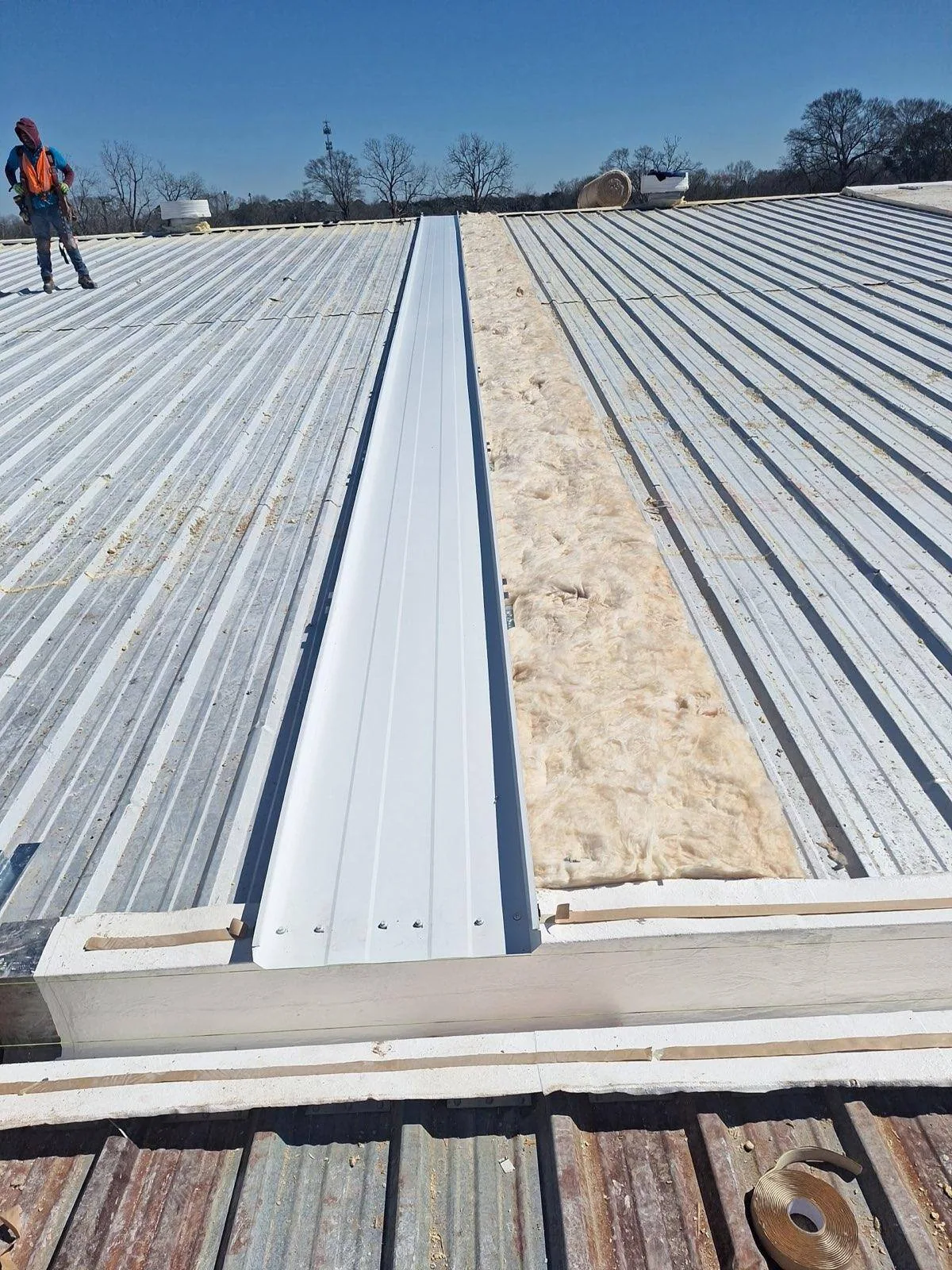
Parapets, storefront canopies and rooftop equipment all interrupt a simple membrane field. Water can pass behind a loose counterflashing, travel along a wall and show up several feet away from the actual breach. We inspect coping joints, wall transitions, penetrations, drains and the underside of the roof deck when access permits. A reliable repair ties into dry, stable material rather than covering a wet edge with more sealant. If several tenants occupy one building, we also ask who controls the roof and which spaces below are sensitive to noise or dust. Edge metal and gutter repair should restore the water path and secure the perimeter, not merely improve how the line looks from the sidewalk.
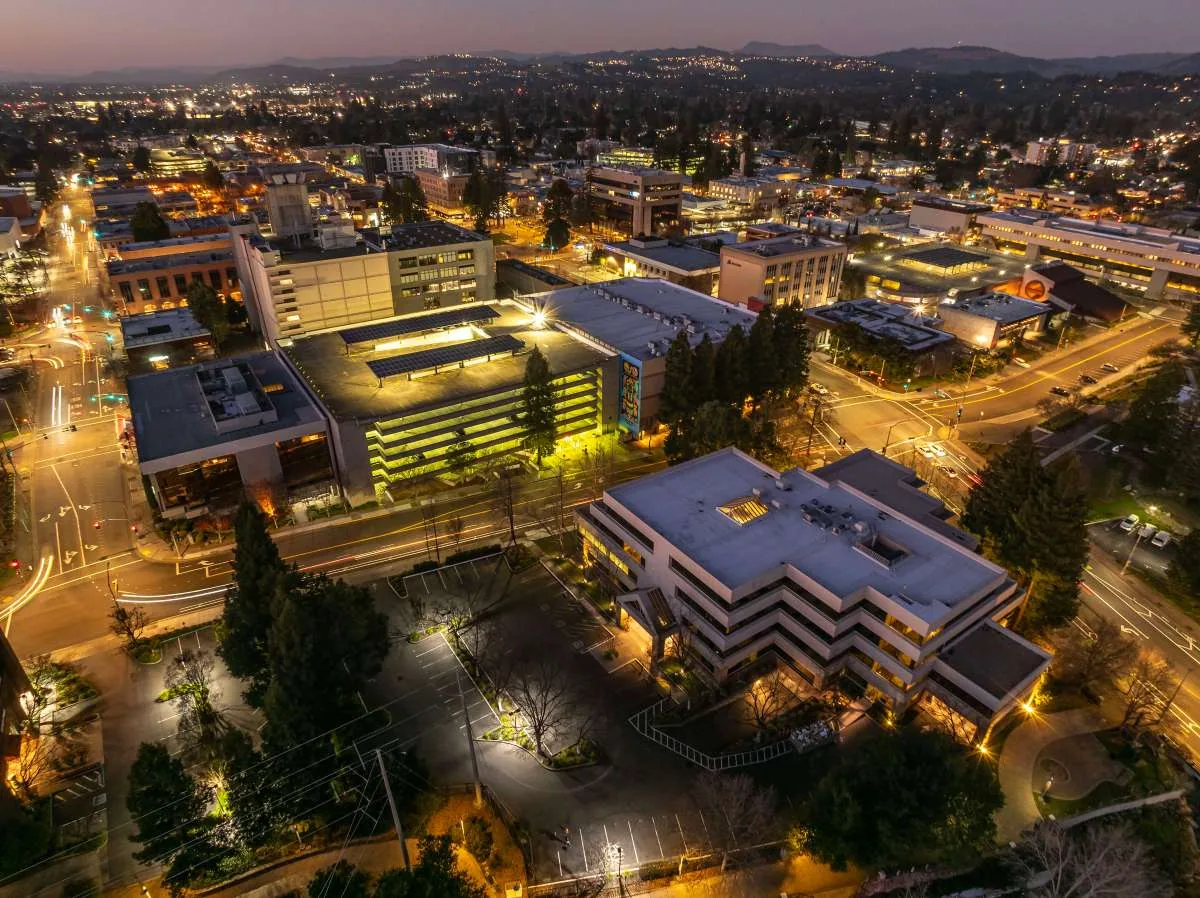
A survey can help when a roof has many curbs or a long setback from the street. We use aerial imagery to map the roof plane and identify where equipment, drains and transitions cluster, then confirm the details at roof level. The image does not establish membrane condition by itself. It gives the owner and crew a shared drawing for access planning and follow-up, especially when traffic or landscaping limits the view from the ground.
For roofs with rooftop units, we look closely at the support rails and the membrane around each curb. Vibration can work sealant loose, and service technicians sometimes leave a cover or conduit shifted after equipment work. We photograph each penetration before and after repair so the owner can see what changed. Where a tenant has added equipment, we note the condition and ask who will maintain it; the roof scope should not absorb an unapproved electrical or mechanical alteration.
Plan around use, not a generic corridor schedule
Santa Rosa rain is concentrated into a short season
Santa Rosa averages about 32 inches of rain annually, with most falling from November through March. In late November 2024, an atmospheric river delivered nearly 15 inches in roughly three days and drove local creeks to high levels. On the roof, that volume tests every drain, overflow, seam and wall transition at once. We check whether the water path stays open, whether scuppers sit below the vulnerable membrane edge, and whether ponding remains after the storm passes. A clean primary drain is not enough if the overflow route is blocked. Drain and scupper work should be tied to a written map of the roof’s low points, so the property manager can see what was cleared and what still needs repair.
Wildfire debris needs a careful roof inspection
When the 2017 Tubbs Fire crossed Highway 101 into Santa Rosa, the damage reached homes and businesses. A corridor roof can be affected by windblown embers, ash, broken rooftop equipment covers or debris from nearby structures. We look for punctures, melted pipe boots, damaged sealant and material trapped against drains, then document whether each item compromises the waterproofing. A surface that looks dirty may still be intact; a small impact can also hide beneath a ballast stone or screen. Cleanup and repair are different scopes, and the report should say which one the roof needs. Wildfire-related roof repairs begin with safe access and a close inspection of penetrations and edges.
Keep the scope tied to the roof condition
A corridor property may have a one-off leak, an aging field membrane or several layers that should not be covered again. We test for moisture, inspect seams and flashings, and check whether the deck and insulation can support a repair or recover. If the base assembly is dry and stable, a coating or recover may extend its service. If water has spread through insulation or the perimeter has failed repeatedly, replacement may be the more dependable choice. The scope should say what will be removed, what remains and how drainage details change. A TPO system is one option when the building and project conditions suit it, but no material choice replaces a sound substrate and well-built transitions.
Commercial Roofing Questions
A leak appears inside, but the roof above it looks dry. Where do you start?
We compare the interior location with the roof’s drainage path, walls, curbs and nearby penetrations. Water can move beneath the membrane or along a deck before it appears inside. We use moisture readings and a controlled inspection to narrow the source, then document the failed detail before opening more of the roof.
Can you stage a lift on a corridor street?
We confirm the property has a safe, approved place for equipment and identify whether traffic control or permits are needed. The City’s corridor goals include several travel modes, so pedestrian access and deliveries have to remain part of the plan. We do not assume the curb can serve as a staging area.
What should be checked before the wet season?
Drain bowls, scuppers, overflow paths, laps, wall flashings and any repair that has moved since the last inspection. We clear debris and record low points, then distinguish routine maintenance from details that need repair before heavy rain.
Will a coating fix a seam leak?
Not by itself. We first confirm the membrane is compatible, the assembly is dry enough and the seam can be prepared properly. A coating can help protect a sound field, but it does not replace failed flashing, wet insulation or a loose edge.
How do you keep storefronts and offices usable during reroofing?
We phase the roof, protect entrances and air intakes, and set clear work hours with the property manager. Noisy tear-off can be scheduled separately from quieter detailing. The owner gets a sequence that shows which area is open, protected or temporarily restricted.