Senior Living Roofing in Santa Rosa, CA
Property Types We Roof
Scheduling roof work for a weekend does nothing at a senior living community, because nobody who lives there goes anywhere on the weekend. Meals, naps, medication rounds and visiting family run all day, every day, so a roof crew is always working over somebody's home. That changes the job more than the choice of membrane does.
Across Santa Rosa, CA, care is a major part of the local economy. Kaiser Permanente employs 3,371 people and St. Joseph Health System 2,409, which puts healthcare among the biggest employers in town. The roofs over assisted living wings, memory care units and independent-living apartments face the same atmospheric rivers, fire seasons and heat as every other building here, and they have to be repaired without making a resident's day harder. We start by learning how the building runs, then decide what the roof needs.
Serving Santa Rosa • Rohnert Park • Petaluma • Windsor • Healdsburg • Sebastopol • Napa
Residents live under the work
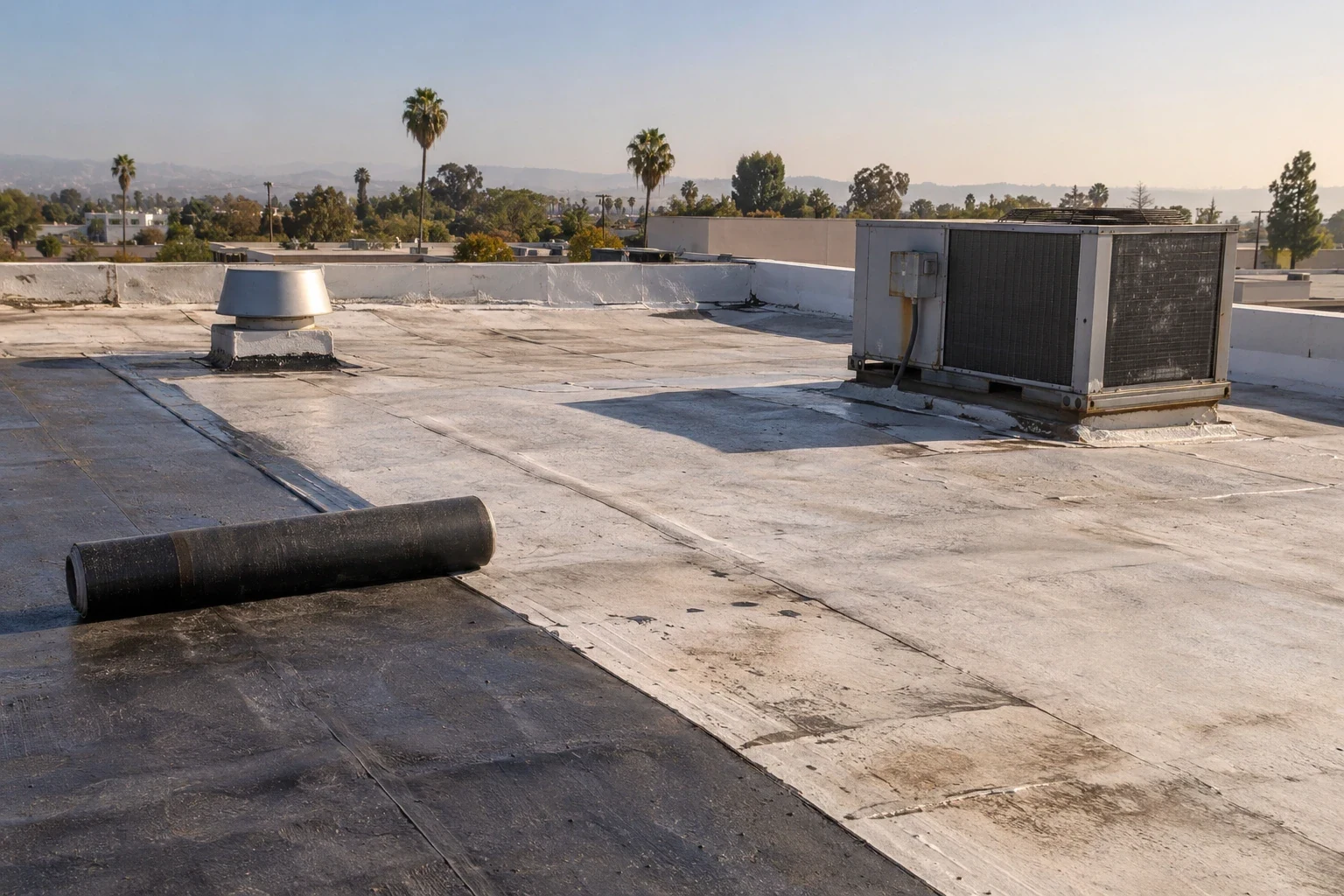
A senior living property is rarely one roof. There is usually a low-slope main block over the resident wings, a flatter kitchen and dining section with exhaust fans, covered walkways and a porte-cochere, and sometimes a pitched residential-style section over the entry.
Noise and smell change the job. Fan removal, curb work and fastener driving carry straight into the rooms below, and hot asphalt or strong adhesives drift into fresh-air intakes. An unfamiliar thud overhead at seven in the morning lands hardest in a memory care hallway. So we map the intakes and the sleeping wings before choosing a system. Mechanically attached TPO roofing and cold-applied details keep fumes and open flame off the roof, and the torch stays in the truck.
That is the discipline of occupied building reroofing, with higher stakes when the people below are residents instead of tenants. Verdict: choose the method for the people underneath first, and the product second.
Slow leaks cost more than loud ones
The real problem on a care property is not the dramatic ceiling drip. Staff report those within the hour and somebody puts a bucket down. The expensive failure is the quiet one: insulation that took on water through a cracked pipe boot or a lifted curb flashing, stayed wet for a season, and fed mold behind a wall until a resident complained about a smell.
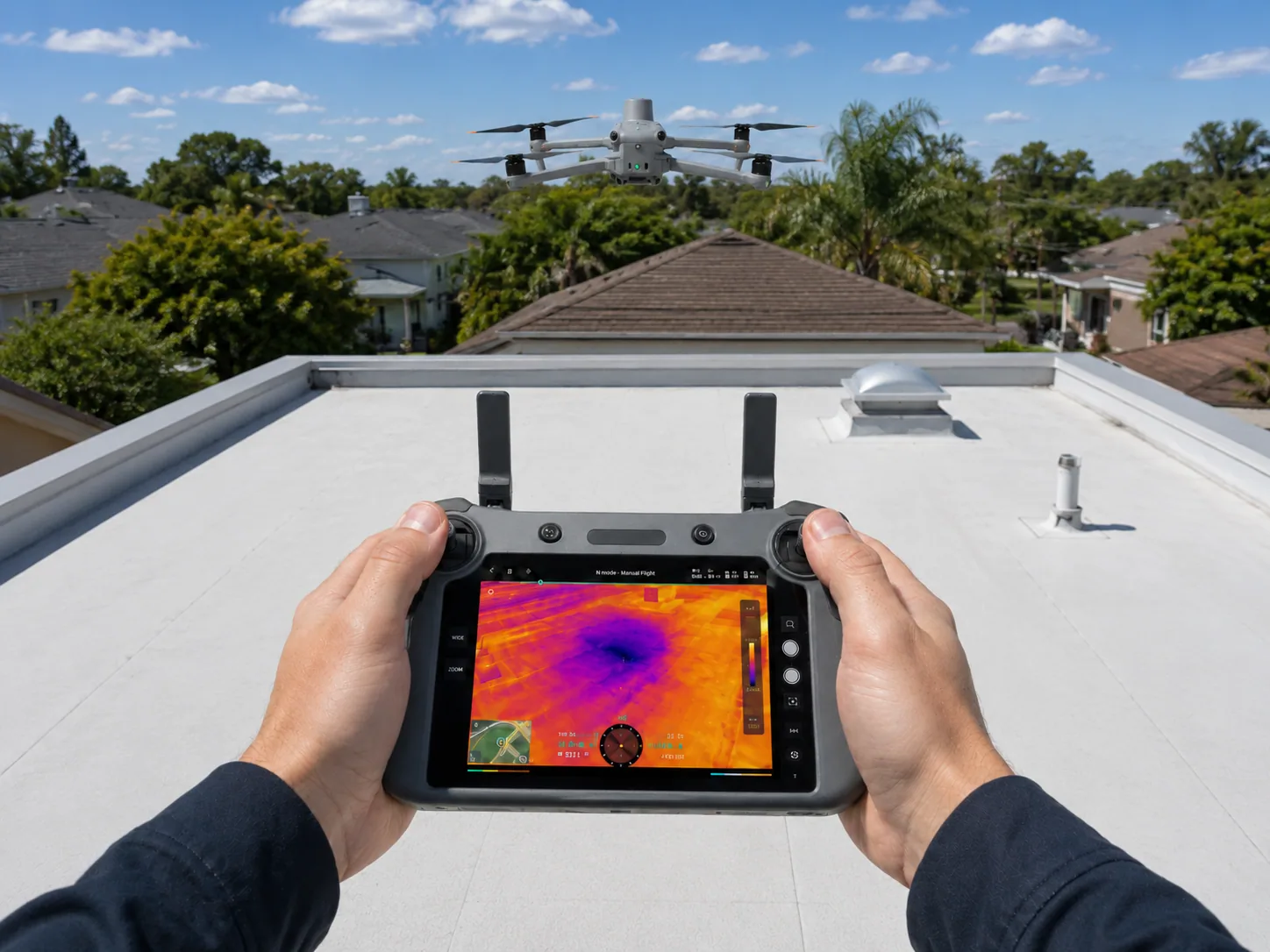
We find that hidden water with an infrared moisture survey after dusk, when wet areas of a roof stay warmer than the dry ones around them, and then confirm the readings with core cuts. Once the wet insulation is mapped, you repair patches instead of replacing a roof the building may not need.
Verdict: ask for moisture mapping before anyone quotes a price. A guess is how a community ends up paying for a full tear-off to cure four wet squares.
Evacuation, outages and 115 degrees
Work the roof in sections around care
The plan we recommend for care properties is also the least dramatic: work one wing at a time, and never leave a section open overnight. Loud tasks go between breakfast and lunch rounds, when the halls are busiest and residents are most likely to be out of their rooms. Staging stays clear of walkways and ambulance routes.
Before a single panel is lifted, the administrator and the maintenance lead should see a written scope with a wing-by-wing sequence, a fire watch arrangement for any hot work, and a plan for the fire alarm and sprinkler zones that run under the roof. A photo-backed roof condition report gives them something concrete to approve, and a twice-yearly maintenance visit keeps the next report short.
Dust and moisture control of the kind used in hospital roofing belongs here too, because both buildings house people whose lungs and immune systems cannot be taken for granted.
Skip the reroof the building does not need
Not every roof on a senior living property needs replacing. A wing with dry insulation and a sound membrane can often be cleaned, re-flashed at its penetrations and left alone for years. A tear-off to answer one leaking kitchen exhaust curb is not worth it, and neither is paying for the thickest membrane on the market when a repair at the kitchen vents would do the job.
Where the money does belong: drains and overflow scuppers before the rainy season, kitchen exhaust flashings, and any wing where the moisture survey shows saturated insulation. The independent-living apartments behave like any apartment roof, with many small penetrations over many small units, and the same drain-first thinking applies. Recommendation: spend on water control and documentation first, finishes later.
Commercial Roofing Questions
Can residents stay in rooms directly under the work?
Usually, with conditions. We schedule the loudest tasks away from rest hours, close off one section at a time, and keep the deck covered at night so rain cannot reach the rooms below. The administrator should flag any resident who is especially sensitive to noise or routine changes, and those rooms can be moved for a day or two if staff think it is kinder. The roof does not need to empty the building.
How do you keep roofing fumes out of memory care?
Start with the air intakes. We locate every fresh-air intake and exhaust on the property, choose cold-applied or mechanically attached methods, and avoid hot asphalt entirely near care wings. Intakes close to the work can be shut or covered during critical hours with the maintenance lead's agreement. The rule is simple: if staff can smell it inside, we change the method.
Our community is near the new Wildland-Urban Interface map. Does that change the roof we choose?
Check the parcel before anything else. The county's reroofing guidelines treat the Chapter 7A wildfire standards as a new-construction matter, but a parcel pulled into the updated map can draw questions from insurers and lenders. We pick assemblies and edge details that resist ember entry whether or not the parcel is on the map.
Is a coating worth it on a senior living roof, or should we replace it?
Coat when the insulation is dry and the membrane is sound but tired. A restoration coating adds life without a tear-off, which means far less noise, odor and disruption for residents. It is not worth it over wet insulation or a membrane that is splitting at seams. The moisture survey tells us which situation you have, and we put the result in writing so your board or ownership group can see it.
What does the administrator need to approve before a crew starts?
Three things: the wing-by-wing sequence, the working hours, and the fire safety plan. That last item covers any hot work, fire watch, temporary shutdowns of alarm or sprinkler zones, and who gets notified. Add a contact name for the day, a staging area, and a clear route for emergency vehicles, and the crew has what it needs.
Let us walk the roof over your residents
Call Commercial Roofing Santa Rosa. We will look at every wing, tell you plainly whether the roof needs work now, later, or not at all, and plan any repair around your care schedule.