Military Barracks Roofing in Santa Rosa, CA
Property Types We Roof
A barracks never empties out, and that is what makes its roof hard. Offices close at five and hangars go quiet between sorties. A barracks has someone asleep in it at almost every hour, because the people living there work every shift the mission demands.
Around Santa Rosa, CA the scale of it shows at Travis Air Force Base, about 45 miles east-southeast in Fairfield, the largest employer in Fairfield and Solano County with 13,414 employees. Mission hours on a base do not follow anyone's office day. At the former Hamilton Army Airfield in Novato, the original 1930s barracks still stand. Either way the roofing rule is identical: finish every day with a dry, quiet, sealed roof, because somebody lives right under it.
Serving Santa Rosa • Rohnert Park • Petaluma • Windsor • Healdsburg • Sebastopol • Napa
Every room is somebody's home
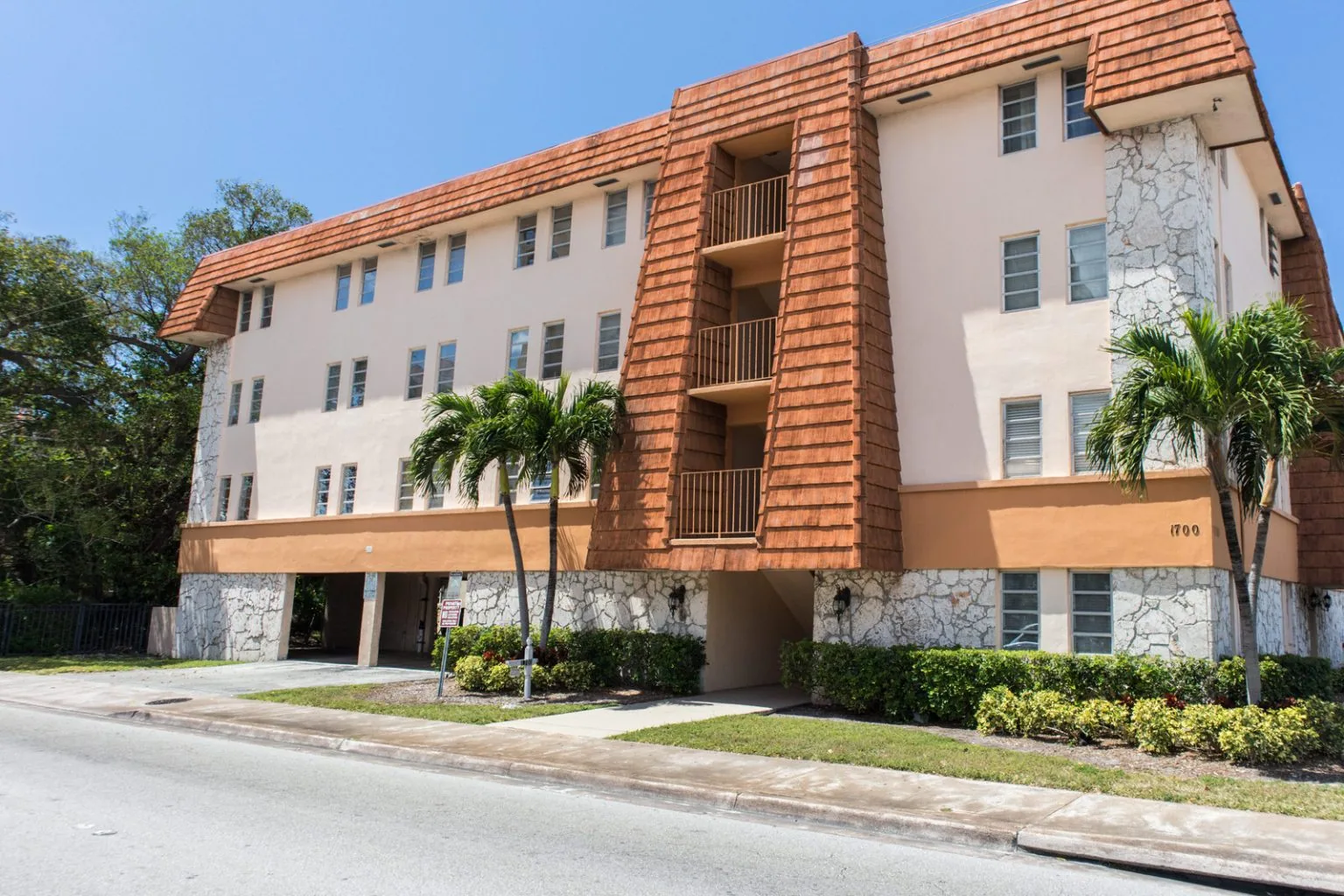
Barracks and unaccompanied housing repeat. The same room, the same bath and the same corridor run down a long wing, floor after floor. That repetition is useful, because it tells us what the roof above carries: a regular grid of plumbing vents, bath exhaust fans, mechanical units and drains. It also means a single failure can take rooms out of service in a line.
That is why we treat a barracks more like an apartment building than a warehouse. Water in a room means a person moves out, a bed is lost and a mold risk begins, and no unit commander enjoys explaining that. A regular cadence of roof walks beats a heroic repair. Recommendation: walk the roof and check the top-floor ceilings after every heavy rain, not once a year.
The vent pattern gives it away
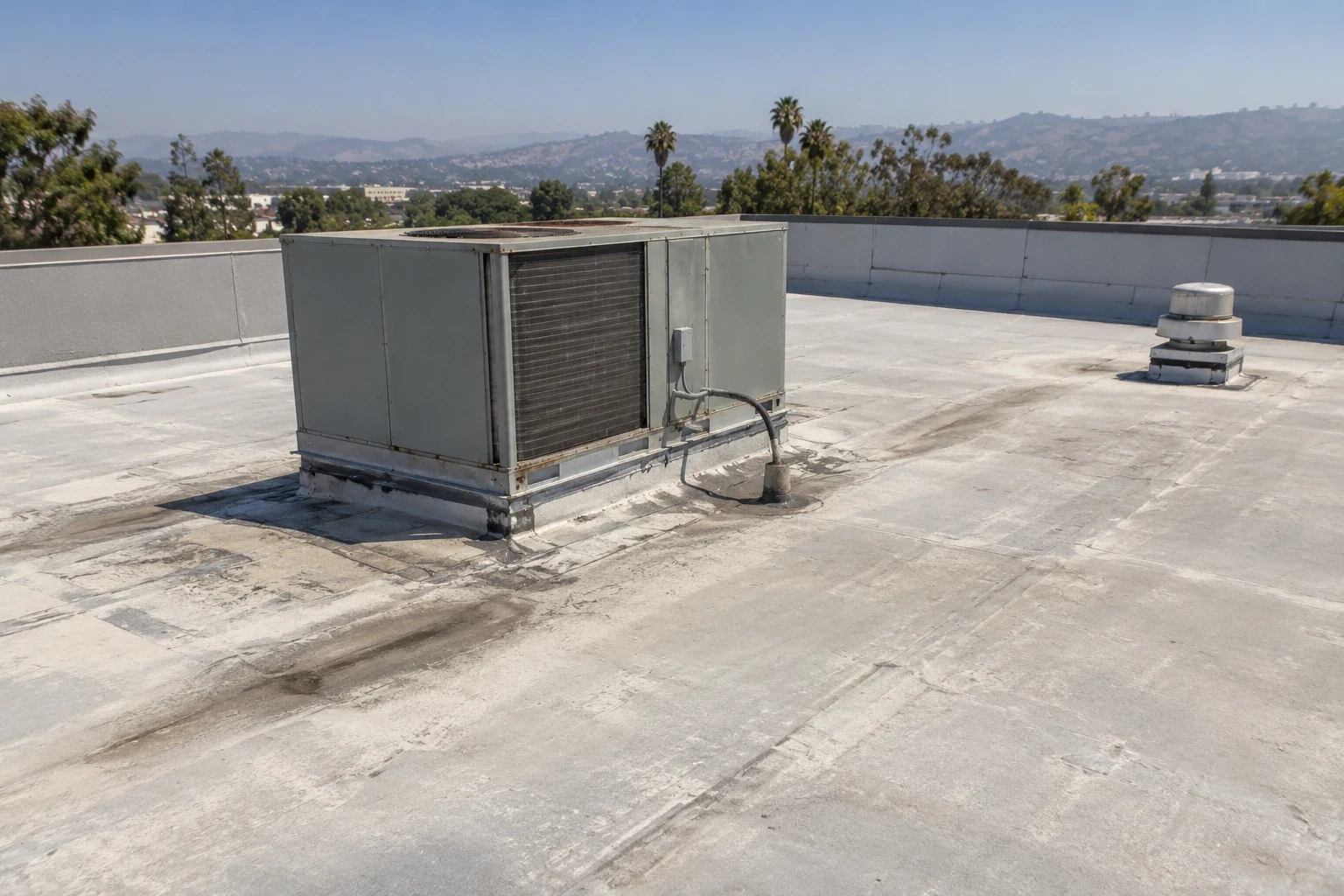
The real problem is rarely the open field of the roof. It is the dozens of small holes punched through it: plumbing stacks, exhaust fans, antenna mounts, conduit and the curbs for mechanical units. Each has a flashing, and each flashing ages at its own speed. When one lets go, water follows the pipe into a wall and appears in a room well away from the leak.
We replace flashings one detail at a time instead of smearing mastic over a worn boot, and we pay special attention to penetration flashing on every line of vents. Bath exhaust that discharges at the roof surface instead of through the roof adds moisture where it is least wanted. Where fans or units need new bases, the work follows the habits of rooftop equipment curbs and supports.
Roof by wing, finish by dark
Fire sits close to the bedrooms
Fire is the specific hazard here. During the October 2017 siege, Diablo winds hit 70 mph at their worst, and 5,643 structures were lost to the Tubbs Fire alone. Coffey Park lost an estimated 1,300 structures, mostly detached homes, carried by near-hurricane-level winds. Wind-borne embers settle into any open edge, clogged gutter or debris pile on a roof.
For a building full of sleeping residents, the lesson is plain: use a roof assembly with a Class A fire rating, keep drains and valleys clear, and close the gaps at edges and vents where embers lodge. Heat is the other test. Santa Rosa reached 115 degrees in September 2022, and a top-floor room under a dark, uninsulated roof holds that heat long after sunset.
Skip the all-wings-at-once tear-off
Not every barracks wing needs a new roof this year. Replacing every roof on a base at once stacks cost, noise and displacement into a single season, and the oldest wing is often not the one leaking. A phased plan that repairs, restores or replaces by building is easier to fund and easier to live with. For a sound membrane with dry insulation, a roof recover may avoid the debris and noise of a tear-off.
Older quarters add another layer. The original 1930s barracks still standing at Hamilton in Novato are a reminder that an old building can carry many rounds of alteration, so we ask about construction before pricing. The same live-in logic governs a senior living community or a base, and any military installation roofing plan has to put the occupants first.
Residents need notice before a crew reaches their wing. Identify sleeping rooms below the work area, access restrictions, quiet periods, and the contact authorized to move the phase forward. A roof map should connect each repair to the room or corridor where a leak was reported without assuming every wing shares the same assembly. At the end of a shift, record temporary protection and any interior area that needs a follow-up check. That makes the work traceable for both facilities and occupants.
A barracks roof plan should name the building and wing, the rooms below the work, and the person who releases each area. Confirm escorts, roof access rules, material staging, and any periods when crews cannot enter. If the inspection finds different systems across additions, separate them in the bid rather than averaging condition across the complex. That makes the schedule and repair boundary usable for facilities staff and residents.
Commercial Roofing Questions
How do you roof a barracks when residents sleep at different hours?
Ask the housing office for the quiet hours that matter most, then put the loudest steps outside them. Tear-off and fastening run in the late morning and early afternoon when the building is least asleep, and finishing work like flashing and trim happens at other times. Residents get written notice, and a point of contact handles complaints the same day.
Does torch-applied or hot asphalt roofing belong on a barracks?
Rarely. An open flame or a kettle beside sleeping quarters adds a fire hazard that cold-applied, adhesive or mechanically attached systems avoid. If a hot method is the only choice, the plan needs a permit, a fire watch and a long cooling period after the last torch. We would rather price a different system.
What is the first sign that a barracks roof is failing?
Look at the bathroom ceilings and the corners of top-floor rooms. Brown rings, soft paint and a musty smell appear there before water drips. A walk across the roof then checks vent boots, exhaust fans and drain basins. That short check usually finds the cause before anyone has to move out of a room.
Can residents stay in their rooms during a wing reroof?
Often, if the roof is done in small bays and each one is dried in the same day. Rooms directly under open work may need protection overhead or a short move, which the housing office arranges. No one should return to a room under an unfinished deck, and we do not leave one.
Does a 1930s barracks need different handling than a newer one?
It needs more questions up front. Old buildings can hide several roof layers, tight parapets and details a reviewer may want to see preserved. We open a test cut, photograph what we find, and ask the building's owner about any review requirements before settling on a scope. The answers can change both method and budget.

Walk the building with us
Call Commercial Roofing Santa Rosa. Give us the wing, the occupant schedule and the access rules, and after we look we will say plainly whether the roof needs work now, later or not at all.