Commercial Roofing in Fairfield, CA
Service Areas
Travis Air Force Base employs 13,414 people and is the largest employer in Fairfield, but it is not the only roof story in town. The County of Solano and NorthBay Healthcare follow it, and Jelly Belly Candy Company, Clorox and Westamerica Bancorporation are among the city's other employers. A hospital, a candy maker, a county office and a bank each ask something different of the roof overhead, and a roof job that fits one of them will not fit the next.
We repair, coat, recover and replace commercial roofs in Fairfield, CA, where Interstate 80 and Interstate 680 both pass through. The first thing we ask is what happens under the roof. A hospital, a plant, a county office and a bank all leak differently, because the cost of a leak is different.

Serving Santa Rosa • Rohnert Park • Petaluma • Windsor • Healdsburg • Sebastopol • Napa
A hospital roof is a patient-care decision
David Grant USAF Medical Center is a 265-bed hospital on Travis Air Force Base, and NorthBay Healthcare is one of the larger employers in the city. Any roof over care space carries rules that an office roof does not. Dust, odor, noise and vibration all matter to patients and staff, and a leak over an operating or sterile area is a clinical event, not a maintenance ticket.
On healthcare roofs the work is staged and negotiated: which section opens on which night, where the air intakes are, how adhesives and hot asphalt fumes are kept out of the building, and who signs off on each phase. For a hospital roof we plan around the infection control team before we plan around the weather. Priority one is that the patients never notice.
How base roof work runs
The 60th Air Mobility Wing at Travis is the largest wing in Air Mobility Command. Roofing on an installation like that follows a pattern: base access and escort procedures, badging for every worker, and schedules set by mission operations rather than the roofer's preference. Roofing is typically specified to the Unified Facilities Criteria, which sets detail, material and testing standards that a civilian building may never see.
That changes the sequence of a job. Materials arrive on a gate schedule, crews move with escorts, and an operation that looks simple on a private building can take longer on a base. Our military installation roofing estimates count the access time first and promise an end date second.
Plants have rules the roof must keep
Heat, wet winters and ponding
Santa Rosa, CA reached 115 degrees on September 6, 2022, and the atmospheric river of November 21 to 23, 2024 put nearly 15 inches of rain on that city in about three days. Swings like that age sealants and exposed membranes fast, and a storm that size finds any low spot on a low-slope roof.
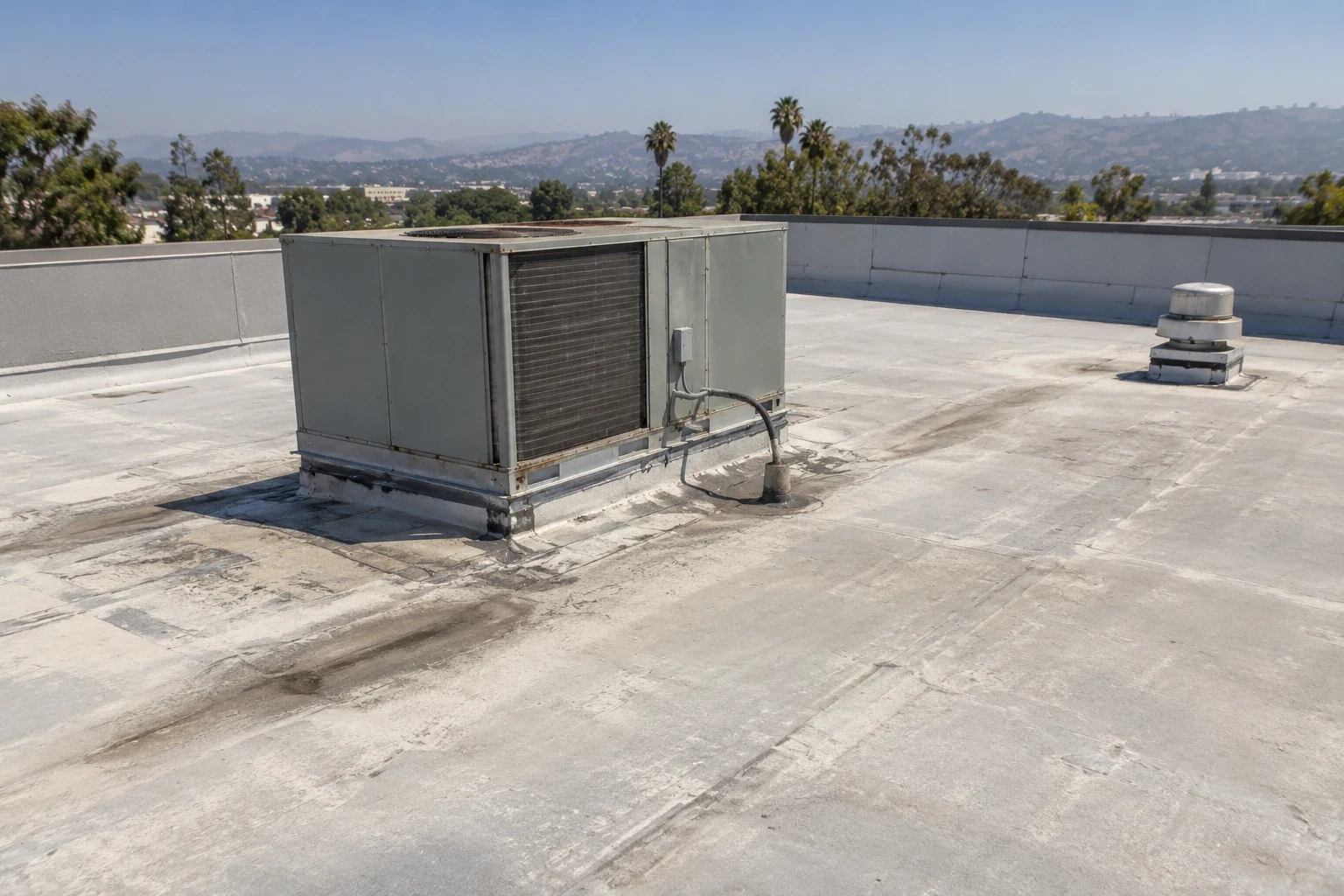
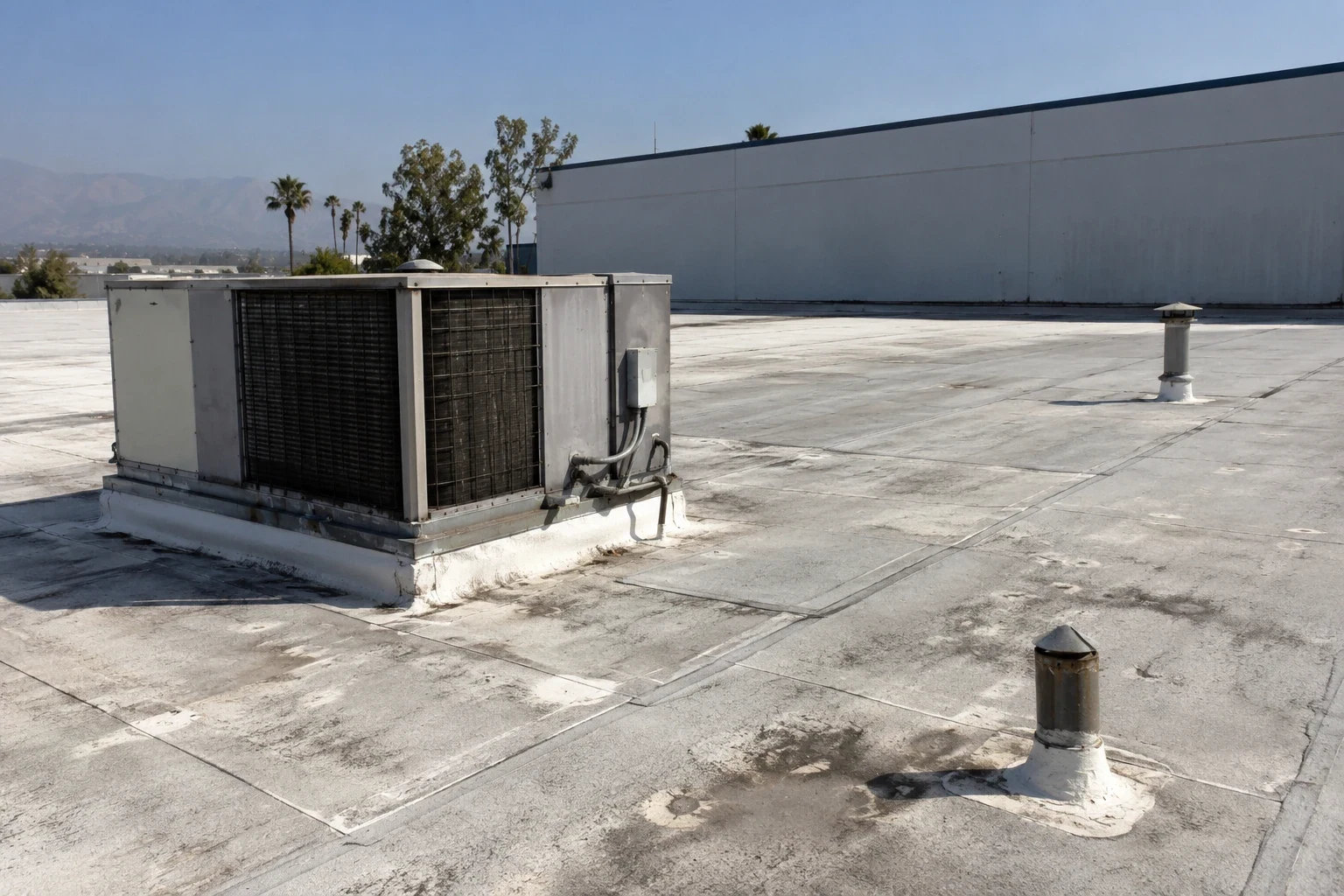
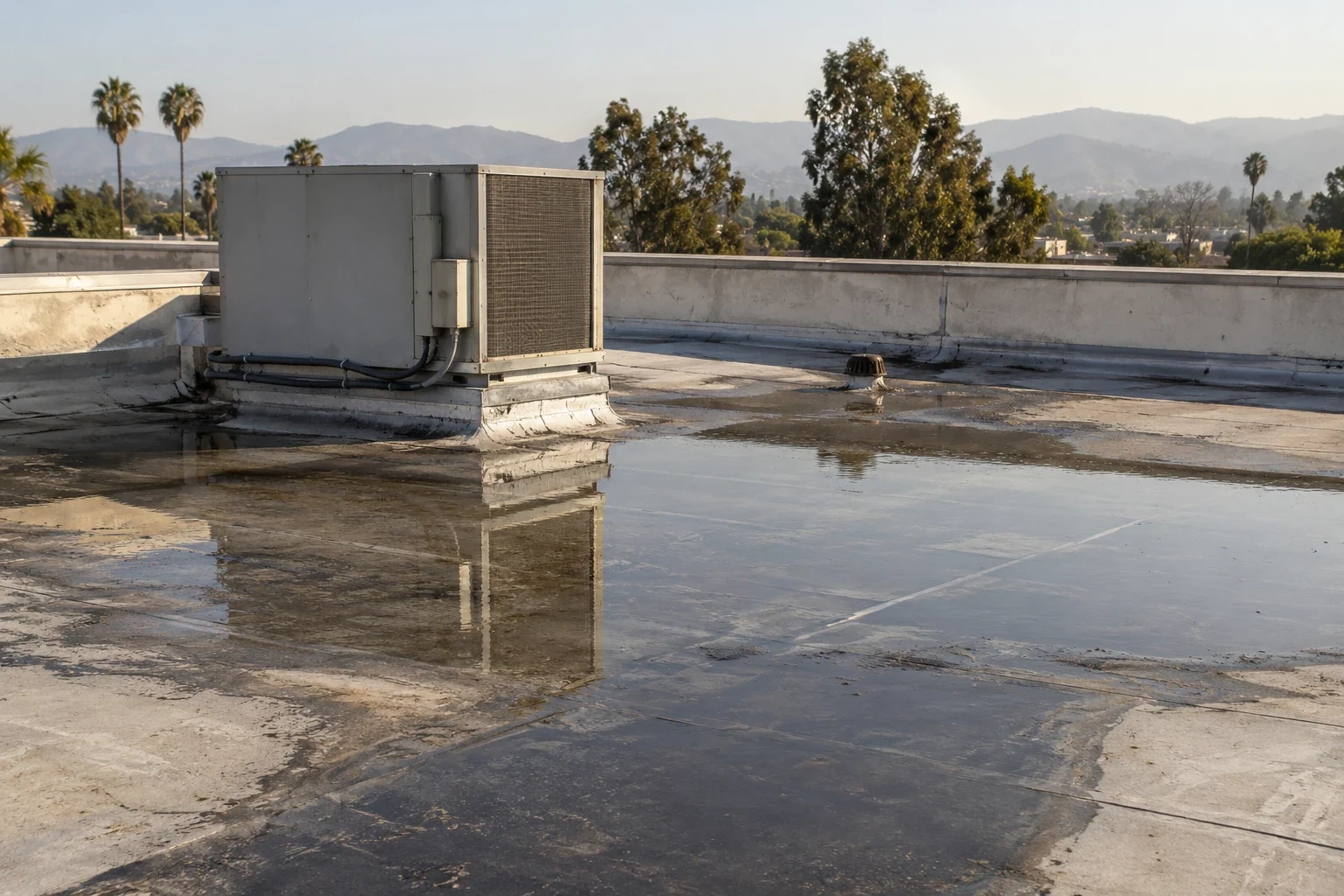
On a low-slope roof the usual culprit is water that does not leave. Look for dark stains, dirt rings and algae on the surface two days after rain. Those marks show where ponding water sits, and ponding is where seams and flashing wear out first. Clear the drains before the wet season and the problem usually shrinks.
Repair, recover or replace
For an office building with a sound deck and dry insulation, a recover over the old membrane saves tear-off cost and keeps tenants happy. For a roof with wet insulation, recover is a trap, because the wet material stays under the new surface. An infrared survey is how you tell the difference. Where a public owner like the County of Solano needs to justify spending, a written condition report with photos and a ranked repair list is the right tool.
Price follows access, tenant hours, how much of the roof is wet, and how many penetrations need rebuilding. Interstate access helps with deliveries, but a tight loading area still limits how much material can wait on the roof at once.
What not to spend on
Do not buy the most expensive membrane for a building the owner plans to sell. Do not coat a roof that is soaked underneath. And do not skip the pre-job meeting with facilities staff, because many of the surprises on healthcare, plant and base jobs come from access and shutdowns, not from the roof. In Napa, Napa County and the school district are among the top employers, and the same condition-report logic applies to public roofs there.
Petaluma is another service-area market where production and institutional roofs call for clear access plans.
A Fairfield roof assessment should separate conditions by building use and roof zone. Food production, medical operations, and office occupancy create different access and shutdown limits, even when the portfolio shares one owner. Identify who can approve work, where debris may travel, and which interior areas need protection before setting the sequence. Record the assembly and observed defect at each structure rather than carrying one building’s repair history across the whole account.
Commercial Roofing Questions
What changes when we reroof a clinic or medical building compared with an office?
The air and the schedule change. Roofing adhesives, hot asphalt and torch fumes cannot be drawn into intakes, so we cover or relocate them and often work at night. Noise and vibration limits apply over exam rooms and procedure areas. A leak is a bigger risk too, so the work is phased so no section is open when rain is forecast. Expect an infection-control meeting before the first day.
How does roof work on an installation like Travis actually get scheduled?
Around access. Workers need badges, materials come through the gate on a schedule, and escorts move crews to the work area. Mission needs can change the calendar on short notice. Roofing is generally built to the Unified Facilities Criteria, so the specification is stricter than most private buildings. The result is a longer calendar, and a good estimator builds that time in at the start.
Our plant cannot tolerate fumes or open flame. What roof systems work?
Mechanically attached single-ply membranes and cold-applied adhesives are the usual answers, because they need no torch. For repairs, liquid-applied flashings work without flame. Tell us about washdown, exhaust, and shutdown windows before we recommend anything.
Is a recover worth it on an older office building here?
It is worth it when the old insulation is dry, the deck is sound and the building code allows another layer. It is not worth it when moisture is trapped in the old roof, because the wet insulation will wick moisture upward, break down and cost more later. An infrared survey settles the question in an afternoon.
How do we justify roof spending to a county board or a bank's finance committee?
Bring a written condition report. It should rate each roof section, rank repairs by urgency and cost, and state what happens if work waits a year. Photos and a moisture map make the case better than any number.

Tell us which building
Call and tell us what the building does and what the roof has been doing. After we have walked it, you will hear plainly whether it needs work now, later, or not at all.