Storm Damage Roof Repair in Santa Rosa, CA
Commercial Roofing Services
Around Santa Rosa, CA the storm that hurts a roof is not always a storm. A three-day atmospheric river, a night of Diablo wind and a wildfire throwing embers all do the same job from different directions, and each one leaves a different kind of damage behind.
That matters because the repair follows the cause. A roof soaked by an overflow needs its drains and low spots looked at before anything else. A roof hit by wind needs its edges and attachment checked. A roof peppered with embers needs burn and melt damage found before the next rain turns it into a leak. Storm repair here starts with sorting out which of those happened to your building, then fixing that and leaving the rest alone.
Serving Santa Rosa • Rohnert Park • Petaluma • Windsor • Healdsburg • Sebastopol • Napa
Three weather events, three failure patterns
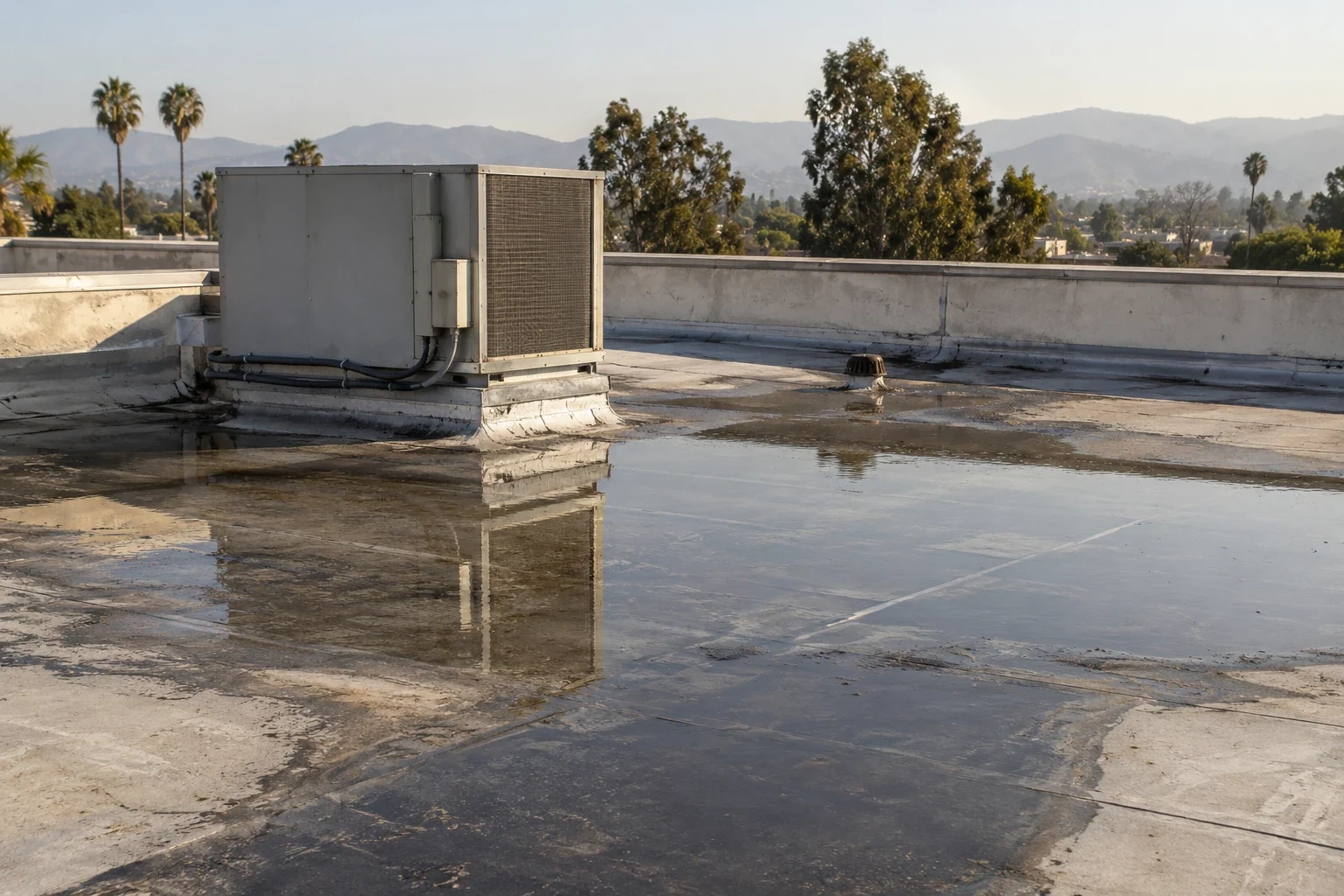
Rain damage is mostly about water that had nowhere to go. In late November 2024 nearly 15 inches fell on Santa Rosa in about three days, and nearly 21 inches fell near Occidental. When drains and scuppers cannot move that volume, water stacks up, loads the roof and finds the weakest seam or flashing joint. The membrane may be fine. The detail around it is not.
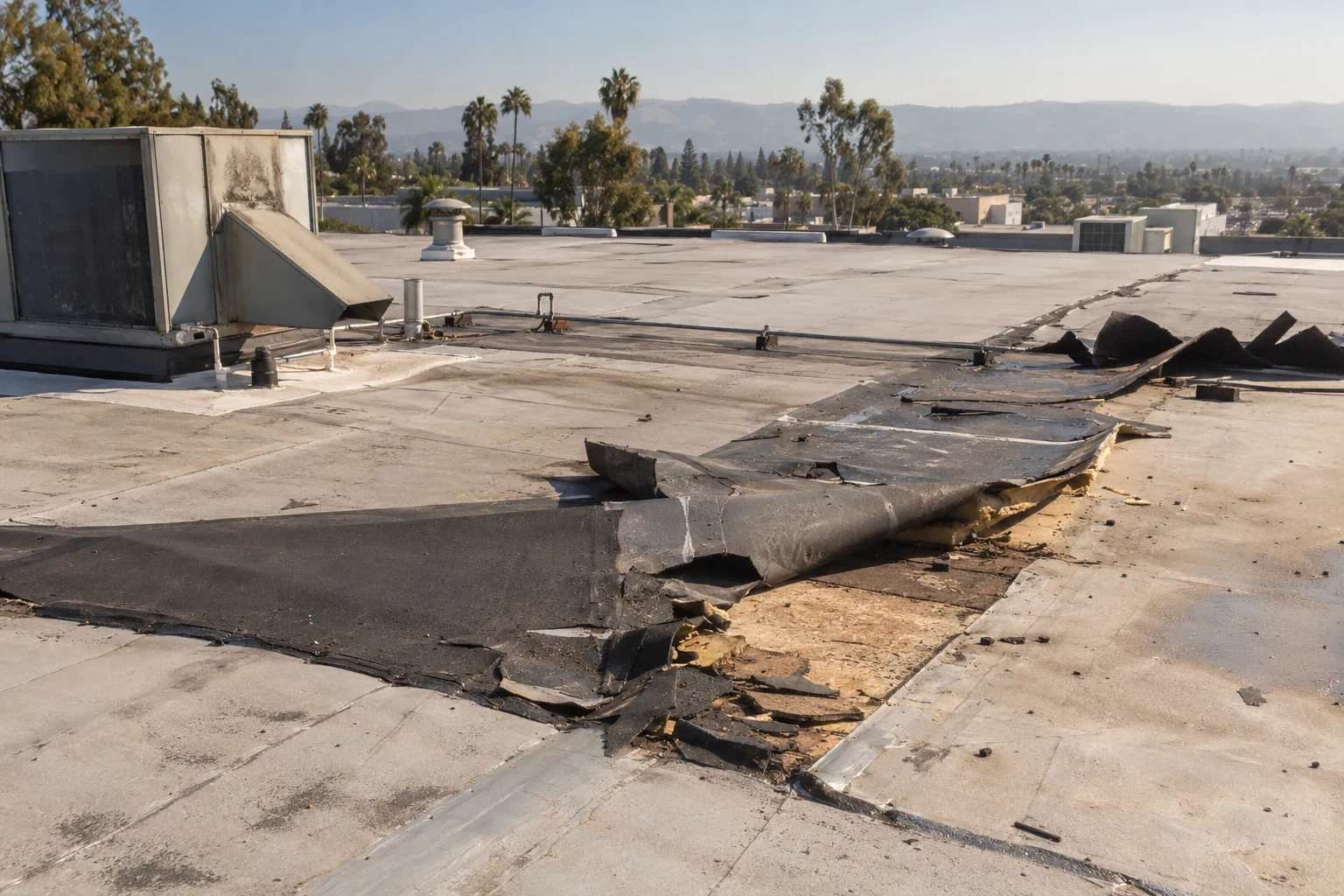
Wind damage is about the edges. The 2017 siege brought Diablo gusts up to 70 mph, enough to peel back edge metal, loosen perimeter membrane, toss rooftop equipment covers and throw debris across a roof. Fire damage is the odd one out: embers burn small holes, melt vents and skylight domes, and ash settles into every low spot. Each pattern shows up in a different place on the roof, so we check them in different orders.
Triage comes before the estimate
The first visit after a storm is about stopping damage, not selling work. We walk the roof, mark every opening, and tarp, seal or patch whatever lets water in before the next rain. A temporary dry-in is not a repair, and we label it as one on the paperwork so nobody mistakes it for the final fix.
For large roofs and for buildings with unsafe access, a drone survey gets eyes on the whole surface quickly. If water got in, an infrared scan after the roof dries finds the wet insulation that a visual pass misses. Then we put numbers on each repair, sorted into three groups: do it now, do it before winter, and watch it. For urgent leaks, prioritize interior protection and share the affected area and access limits so the first repair decision is based on conditions.
Some buildings catch more of it
Repair what the storm caused
Most storm damage should be repaired, not replaced, and it helps to know which kind you have. Wind repairs center on edges and attachment, while fire damage repairs center on burns and melted details. Edge metal gets re-secured or replaced, torn membrane gets a properly welded or bonded patch, flashing gets rebuilt, and damaged curbs and equipment supports get reset. When the damage sits on an aging roof, the repair should still be done to the original system's specification so it holds beside older material.
Replacement makes sense when the membrane has widespread punctures, the insulation is saturated across a large area, or the repair cost climbs close to a new roof. We lay out both options with the cost drivers named, so you are not guessing. If part of the work falls under an insurance claim, our claim documentation support keeps the storm repairs and the older wear separated in the record.
Fix the drainage before the finish
The 2020 Glass Fire burned 67,484 acres and left scars east of Santa Rosa that raise runoff and debris concerns during heavy rain. A building near that country, or one in Healdsburg where annual precipitation runs closer to 42 inches, can face more water and more debris than one in the middle of the city.
For those sites, spend first on drainage capacity and debris screens, not on a new membrane. A bigger scupper, a protected overflow and a cleared roof edge cost less than repairing the same interior ceiling every February. Do not buy cosmetic work or a coating before the water has a clear path off the roof. That is the order to follow after a wet winter.
Separate storm effects from conditions that were already present. Photograph displaced material, fresh punctures, impact marks, and opened seams before debris removal changes the evidence. Compare those observations with older repair records and note which roof zones were inaccessible. If the assembly has hidden moisture, recommend a test rather than assigning an unverified quantity. The owner can then divide immediate water control from permanent scope and decide whether additional documentation is needed before the repair proceeds.
For related local planning, review storm exposure in Petaluma.
Commercial Roofing Questions
When should a storm-exposed roof be checked?
Within a day or two if anything leaked, and before the next forecast rain if nothing did. Water that reached insulation keeps spreading after the storm ends. A quick walk now often means a patch instead of a section replacement later. If the building is hard to reach, a drone pass can confirm there is no open damage before a crew goes up.
Can you tell whether damage came from the storm or from old age?
Usually, yes. Fresh tears, lifted edges and impact marks look different from long-term shrinkage, cracked sealant or worn surface granules. We photograph both and mark them separately, which keeps a claim clean and keeps you from paying twice. Where it is unclear, we say that instead of calling it one way to make the paperwork easier.
My roof is under ash and debris after a fire nearby. What now?
Get it cleaned off before it rains, starting at the drains. Ash holds water against the membrane and can clog scuppers fast. Have the roof checked for burn holes and melted vents at the same time, since small ember damage is easy to miss. Delay is the main risk, so schedule the visit as soon as it is safe to be on the roof.
Should I replace the roof after a major atmospheric river?
Not by default. Most roofs that overflowed need drainage corrections and local repairs, not replacement. We test for wet insulation and look at seams and flashing before recommending anything. Replace if the moisture is widespread or the membrane is already near the end of its service life. Otherwise fix the drainage and the leaks and keep the roof.
What do you leave in place so the insurer can see the damage?
We photograph everything first, then do only the temporary work needed to keep water out. Removed material that shows the damage can be bagged and labeled for the adjuster. We write down each step and the date. That record is much stronger than a single estimate attached to a claim after the roof has been cleaned up.

Find out what the storm actually did
Call Commercial Roofing Santa Rosa. We will inspect the roof, stop the leaks, and tell you what needs fixing now, what can wait and what was never the storm's fault.