Grocery Store Roofing in Santa Rosa, CA
Property Types We Roof
Grocery roofs rarely wear out from the weather. They wear out under the people who service the refrigeration. A technician walks the same route to the same condensers every month, and most membranes were never laid to take that kind of repeat traffic. Add grease from the bakery and deli exhaust, and a roof that looks decent from the parking lot is quietly being worn down from three directions at once.
For store owners and operators in Santa Rosa, CA, the job is to keep water off the sales floor and out of the coolers. That is priority one. After it comes the question of what the roof actually needs: a repair along the service route, a better sheet near the exhaust, or, less often, a replacement. We look, we photograph, and we tell you which one it is.
Serving Santa Rosa • Rohnert Park • Petaluma • Windsor • Healdsburg • Sebastopol • Napa
Refrigeration sits on the roof
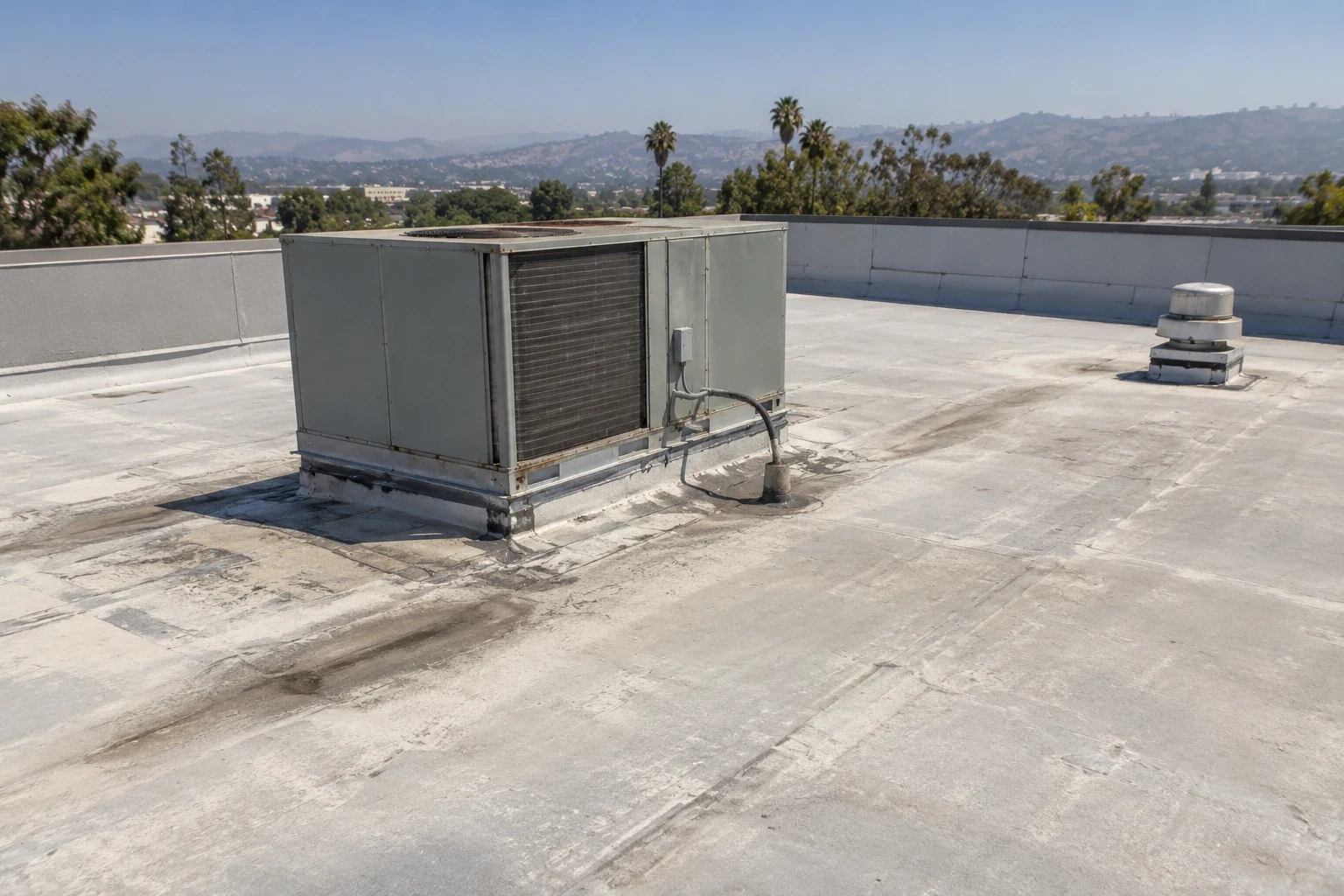
A supermarket roof works like a utility yard. Condensers, rooftop air handlers and exhaust fans for the bakery and deli share one deck, tied together by refrigerant and condensate lines that cross the membrane at penetrations. Every line is a place where a boot can crack or a pipe support can shift, and every unit is weight on a deck that has to carry it.
A grocery that sits in a larger center, the way Whole Foods does at Coddingtown, usually has to coordinate roof work with a landlord and neighboring tenants, much as any shopping center tenant does. A freestanding store carries more of the decision itself, much like a big-box store. Either way, start by mapping every unit, line and drain on the roof before choosing a repair.
Foot traffic cuts a path
Look at the roof of a store that has had the same refrigeration service for years and you can see the route: a faint line from the hatch to the condensers where the membrane has gone gray and thin. That strip carries far more traffic than the rest of the roof. The sheet there picks up scuffs, grit and dropped fasteners, and it fails first.
Install walkway pads along the full route and add a second layer at the turns and at each unit, where boots pivot. Make the refrigeration vendor sign in and out and photograph the pad route. Have a roofer check the route twice a year and replace worn pads before the sheet underneath shows wear. A maintenance program that includes the route costs less than repairing one split over the dairy case.
Grease and condensate eat the sheet
Overflow, heat and smoke
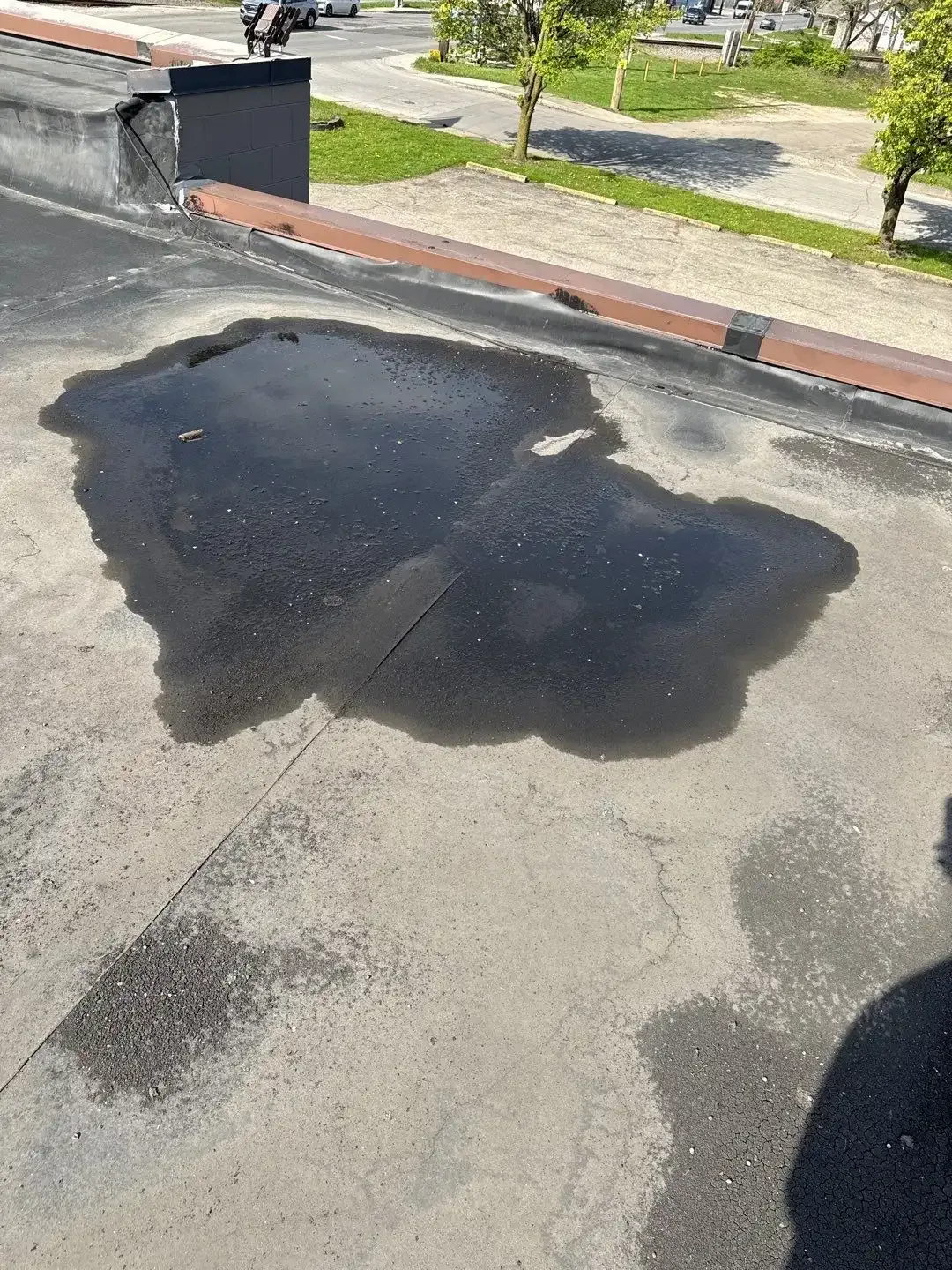
Rain finds a grocery roof the way it finds any other, through drains that cannot keep up. Nearly 15 inches fell on Santa Rosa from November 21 to 23, 2024, and any scupper that was clogged turned into a pond. Over a sales floor, ponding stops being a roof problem quickly. It becomes spoiled produce, wet ceiling tiles and a food-safety call. Clear outlets in the fall and keep overflow scuppers open.
Heat works against refrigeration directly. On September 6, 2022 Santa Rosa reached 115 degrees and Healdsburg 117, and condensers run hardest on days like that, pushing hot exhaust air across the membrane around them. Ash from the smoke seasons that followed the 2017 Tubbs Fire can gather in condenser coils and on the roof around them, so the equipment and the sheet wear together. Wash the coils and the roof surface in the same visit each fall.
Protect the sales floor
The floor below comes first on a grocery job. Before any tear-off or repair, the plan accounts for what hangs under the deck: cases, shelving, ceiling grid and coolers. Plastic drops protect the aisles beneath the work area. Crews stage materials away from the entrance and loading dock, and noisy or dusty steps run when the store is slowest, usually overnight.
The weak point is the forecast. Work in sections no bigger than the crew can dry in the same day, because a half-open roof over produce is the worst place to guess at the weather. If something does leak, emergency roof repair stops the water first and the permanent fix waits for dry conditions. A small-town store, such as the grocery store on Front Street in Forestville, also has to fit roof work around delivery days.
Skip the full replacement
Not every roof needs replacing, and a grocery roof with a worn service route and a few stained fan areas usually does not. Do not tear off a sound sheet because one corner is damaged. Do not coat over a wet deck near the condensers, since moisture there is often a leak from a refrigerant-line boot. Do not buy a heavier membrane everywhere when only the exhaust zones need the tougher chemistry.
Repair the route, the fans and the penetrations, and plan a replacement only when a scan says the field of the roof is finished. Ask for a condition report with photos of the route and each fan, so next year you have a baseline to compare against. Worth it: pads, fan details and clean drains. Not worth it: a new roof to fix a path.
Commercial Roofing Questions
Why do refrigeration technicians keep damaging my roof?
Because the route they walk was never padded. Boots grind grit into the sheet, hoses drag across seams, and tools get dropped. The fix is a marked walkway with pads, a sign-in sheet and a photo after each service call. Once the vendor knows the roof is being watched, damage drops and the cost of repairs becomes easy to assign.
Should a grocery store use PVC instead of TPO?
Near heavy exhaust, yes, because PVC and KEE resist grease better than most TPO formulations. Away from the fans, a thick, well-welded TPO sheet is often fine and costs less. Many stores end up with the better sheet only in the zones around the kitchen, bakery and deli, and a standard sheet elsewhere. We map the grease first, then pick.
How fast can a leak over the produce department be stopped?
Water control comes first. Once access and conditions are safe, temporary protection may limit further damage; the permanent repair can then be scheduled for suitable weather. Tell us exactly where the drip lands on the floor, and we will trace it upslope along the deck to the real entry.
What gets protected on the sales floor during roof work?
Everything below the work zone gets a plan. Plastic drops and covered fixtures protect shelving, cases and the ceiling grid. Staging stays clear of customer paths and the dock. Heavy or noisy steps run overnight when the store allows it. We agree on the plan with the store manager first, and update it when the weather changes.
Do ash and smoke seasons change the condenser and roof schedule?
Add a fall wash to the calendar. Ash packs into condenser coils, which strains the equipment, and it sits on the membrane and in drain sumps until the first rain pushes it into the outlets. We clear drains, wash coils and surfaces together in one visit, and check for scorch or embers near any exposed materials before the wet season arrives.

Keep the store dry and trading
Call Commercial Roofing Santa Rosa. We will walk the service route, check the exhaust zones and tell you plainly whether the roof needs work now, later, or not at all.