Johns Manville Roofing in Santa Rosa, CA
Roofing Manufacturers
The roof most likely to outlast a single-ply sheet is often the one owners call old-fashioned. Johns Manville puts built-up and modified bitumen on the same menu as TPO, PVC and EPDM, and that range is the reason to take it seriously. It does not push you toward one membrane. It lets the building decide.
That fits institutional roofs in Santa Rosa, CA, where the owner is thinking in decades and budget cycles, not in a quick fix. Here is the straight version of what a Johns Manville roof is, what goes wrong with each type, and when we would tell you to leave it alone.
Serving Santa Rosa • Rohnert Park • Petaluma • Windsor • Healdsburg • Sebastopol • Napa
Single-ply, built-up and bitumen on one menu
On the single-ply side, the line covers TPO, PVC and EPDM, the same three families Carlisle SynTec sells, each with its usual strengths. On the multi-ply side, the line covers built-up roofing, which is layers of reinforcing felt or fabric laid in hot asphalt, and modified bitumen, which is a factory-made sheet reinforced and rubberized for toughness. Beneath any of them goes polyiso insulation, the board that gives the roof its thermal value.
Multi-ply roofs trade speed for redundancy. If one layer is cut, the next still sheds water. That matters on a roof that sees maintenance crews, antenna installers and the occasional contractor. A built-up system and a modified bitumen roof both suit that kind of traffic better than a thin single-ply sheet does.
Campus roofs are a program, not a project
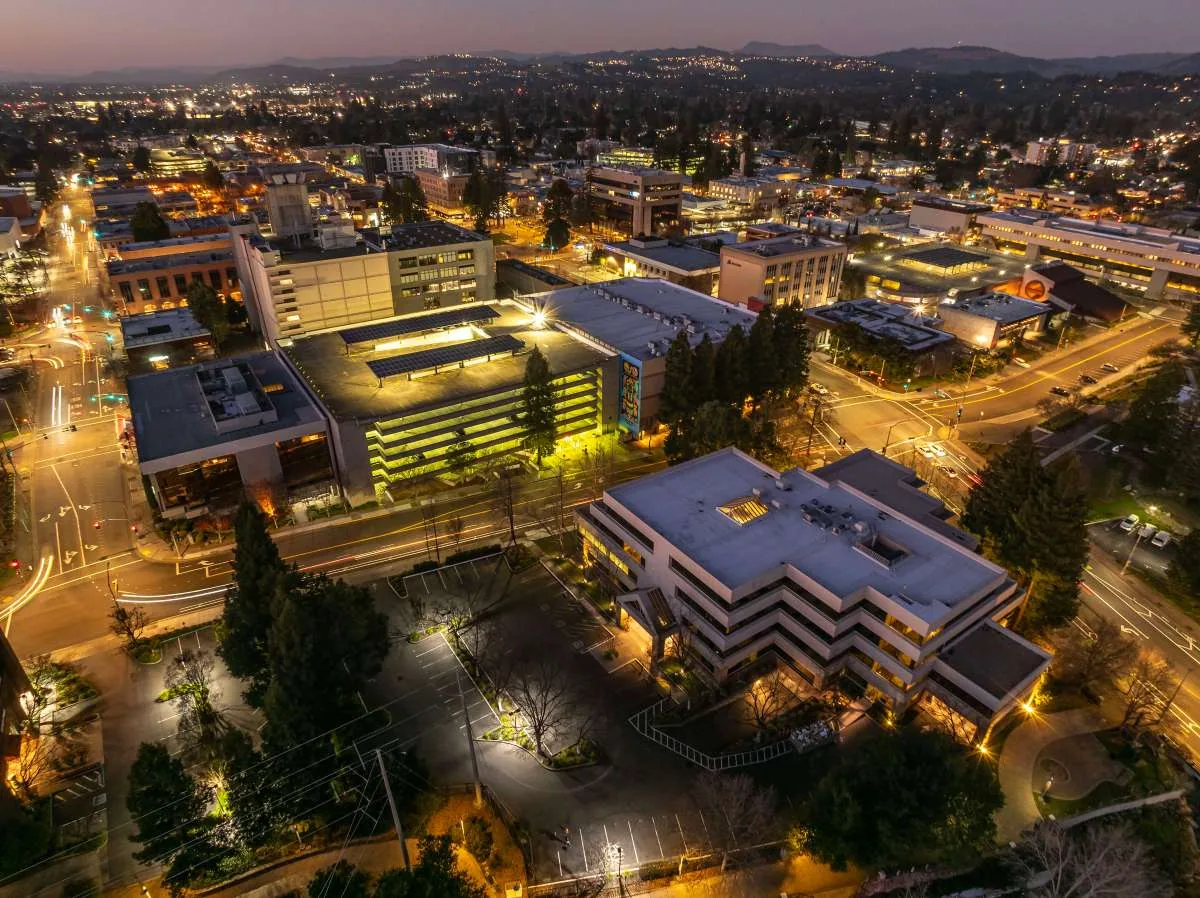
Mendocino Avenue Corridor runs a 100-acre main campus in central Santa Rosa. It is home to the Burdo Culinary Arts Center and the 145,000 square foot Doyle Library. A culinary building and a library want different things from a roof. One has kitchen exhaust, the other has books, and both have people inside during the school day.
A campus does better when its roofs are treated as a list, ranked by condition and consequence, and replaced in order. The same holds for the Keysight headquarters in Fountaingrove and for any private campus with a dozen roof areas of different ages.
Verdict: survey every roof on the grounds before replacing any one of them.
Sonoma County has a reroof playbook
Insulation and blisters give the game away
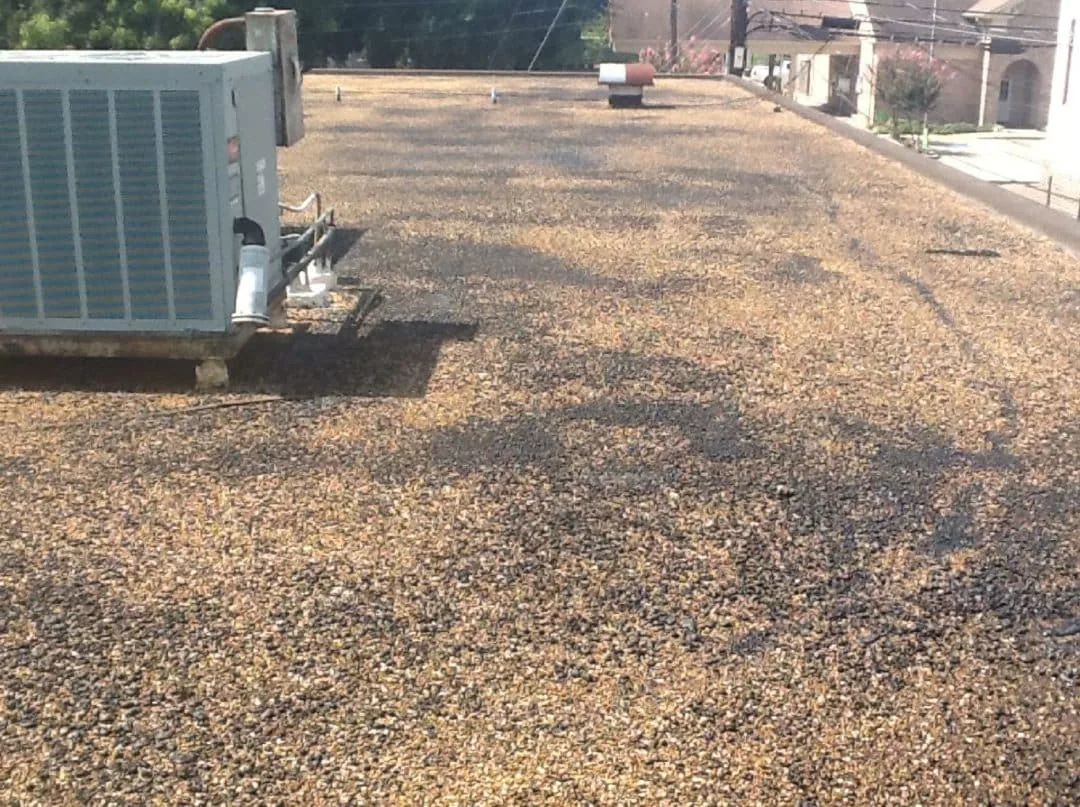
Multi-ply roofs rarely fail all at once. They show it in blisters, in alligatored asphalt, in ridges over insulation joints and in splits where the roof moves with the building. A blister that is soft underfoot is trapped moisture. A ridge that follows the board joint is insulation movement. Both are warnings, not leaks yet.
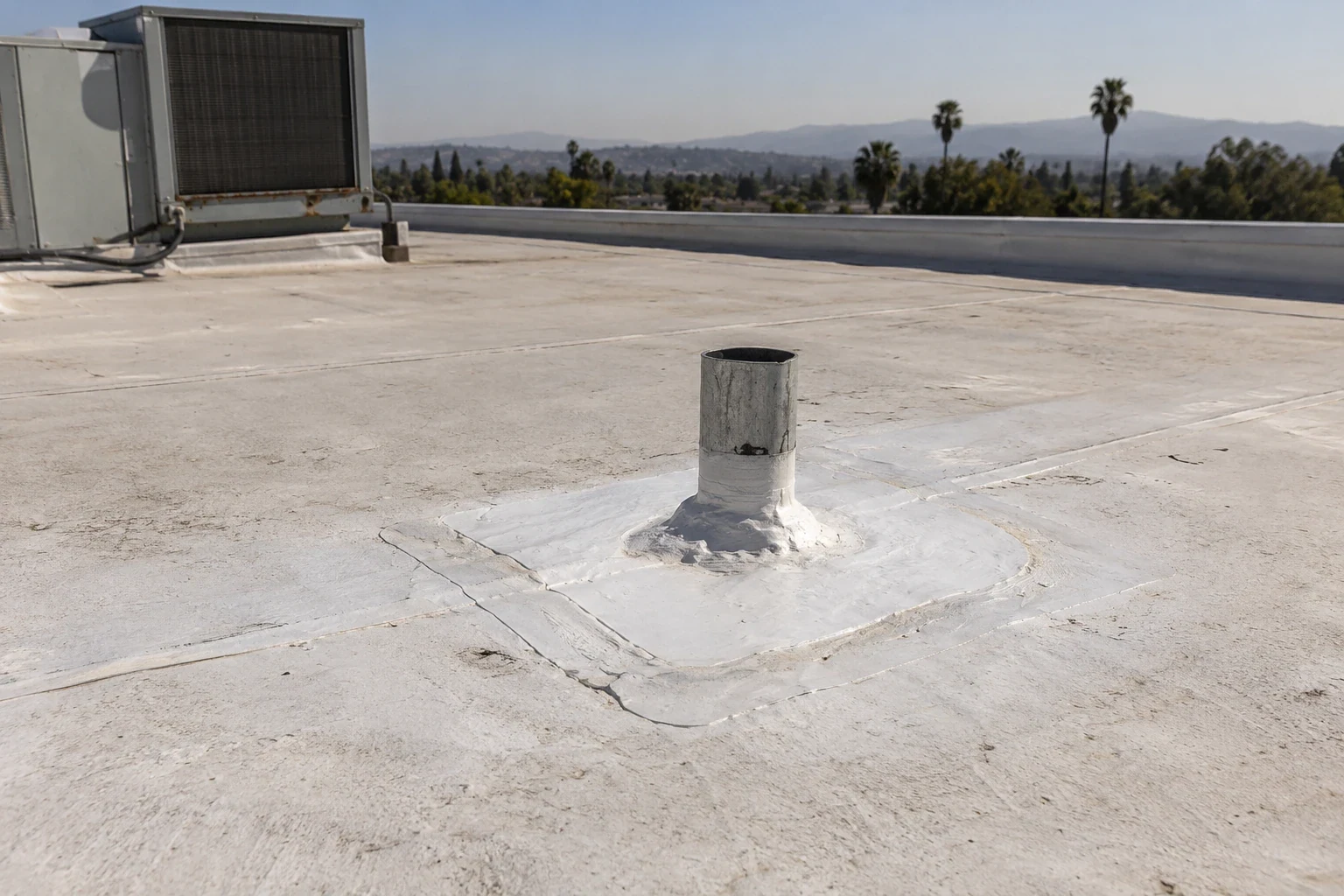
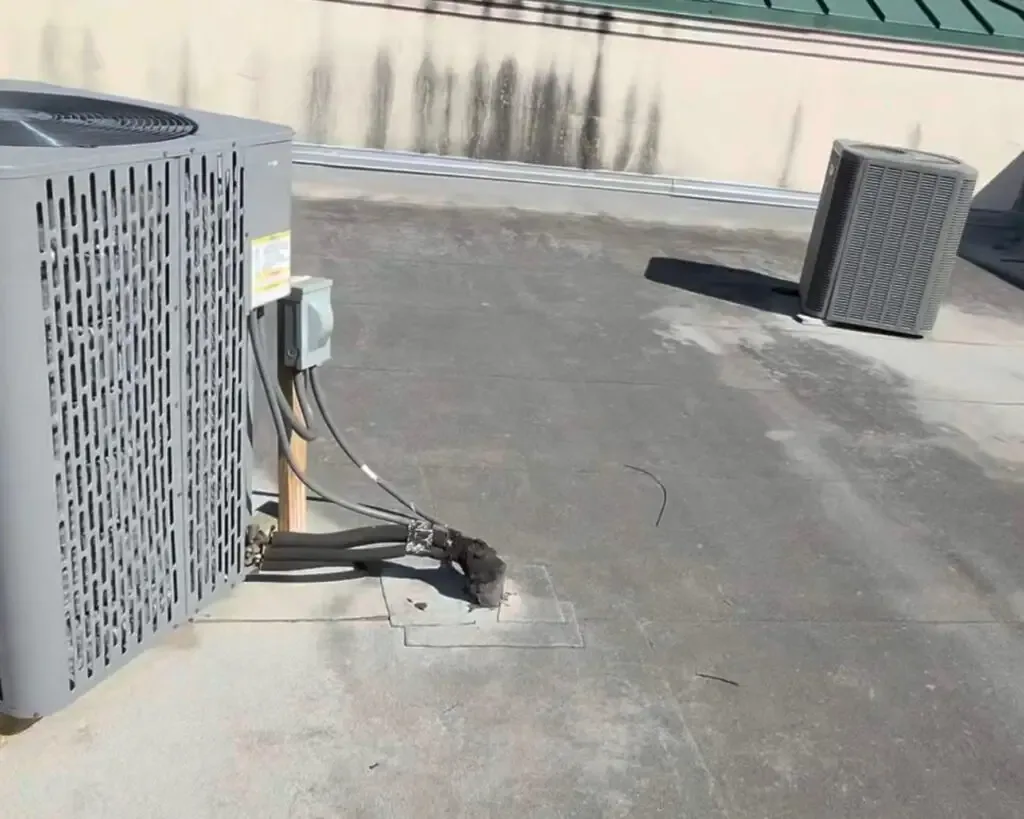
On modified bitumen, the seams and flashing laps are the weak points, and sun-baked surfaces lose their granules over time. On single-ply Johns Manville roofs, seams and penetrations are the usual weak points, as with any single-ply sheet. In every case, wet polyiso is the hidden cost. It loses insulating value and softens under foot, and a moisture survey is the only reliable way to map it.
Repair what is sound, replace what is wet
Start with a hands-on commercial roof inspection and a condition report that ranks the roofs by urgency. Where moisture is suspected, scan it before choosing a scope.
Sound multi-ply roofs with dry insulation often take a coating or a targeted repair. Roofs with wet insulation across a wide area need a replacement, because no surface treatment fixes a soaked board. For institutions, we also plan the work around the school calendar, exam weeks and the clinic day, and we protect the interior beneath the work zone.
Do not rush a hot tar job in fire country
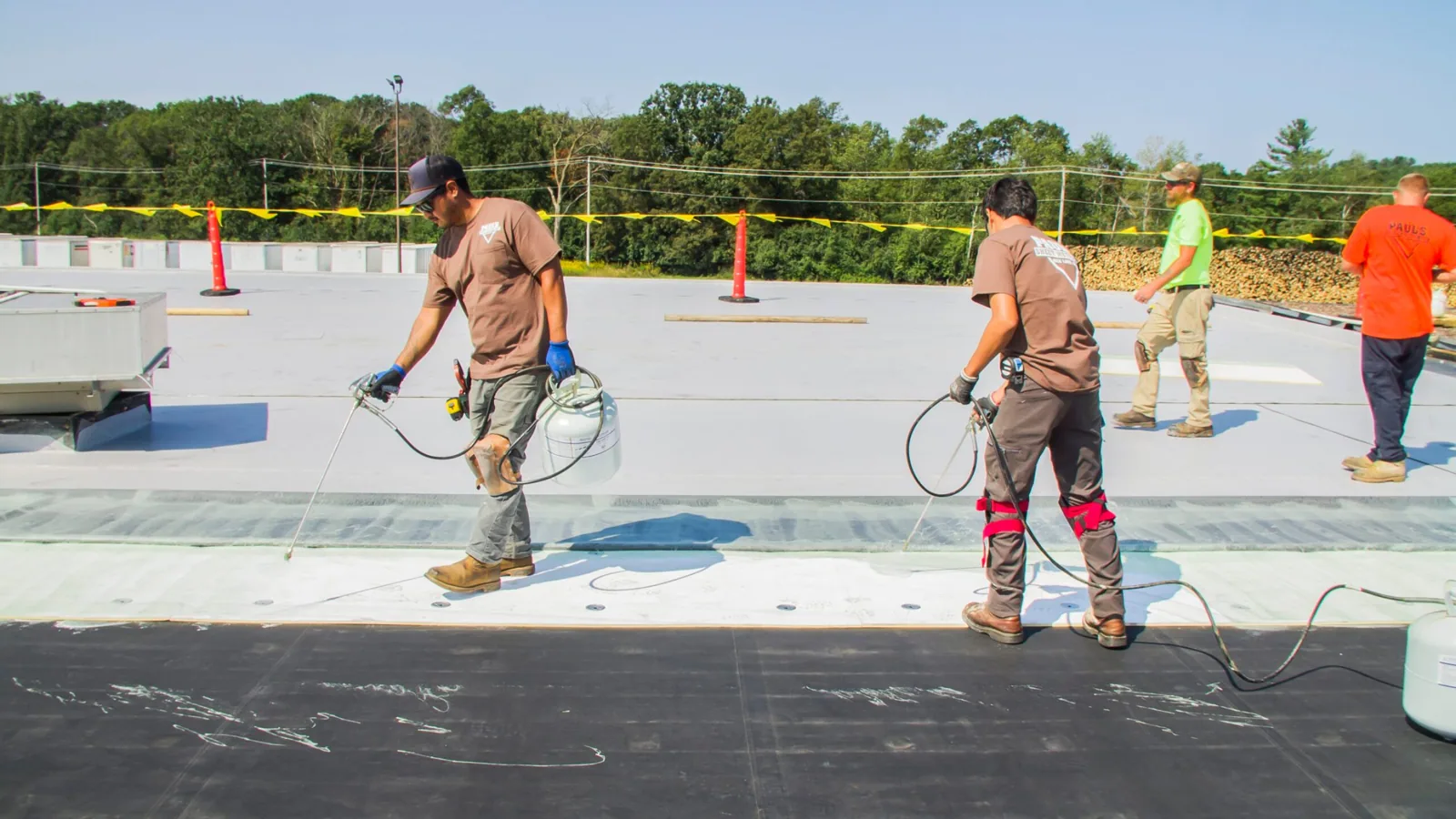
Hot asphalt belongs on a roof only with a plan for fire watch, a clear zone around the kettle and a closed-out day. After the Tubbs and Glass fires, nobody in this county should be careless with heat on a roof. If open flame is a concern, a torch-free system such as the self-adhering sheets from GAF makes more sense.
It is also not worth coating a multi-ply roof that has wet insulation. The coating will hold water in. Spend the money on a survey and the right fix instead.
Review the proposed product family against the existing assembly before treating a manufacturer name as a specification. Confirm deck, insulation, cover board, attachment, vapor control, and the conditions that qualify the warranty. For built-up or modified-bitumen work, the surfacing and installation method affect both fire controls and future repair access. Keep the product data, approved details, installation records, and closeout photos in the roof file. That evidence helps the owner distinguish a compatible repair from a change that requires a broader design review.
Ask for the exact system assembly and the current written warranty terms before accepting a product name as the scope. Confirm whether the proposal includes compatible insulation, vapor control, cover board, attachment, perimeter details, and required closeout documents. If the repair will meet an older roof, document the transition and the material used there. The file should let the next reviewer identify the installed product and understand which maintenance or notice requirements apply.
Commercial Roofing Questions
Is a built-up roof still a smart pick for a college building?
For the right building, it is. Multi-ply roofs resist punctures, tolerate foot traffic and give a second line of defense if the top layer is cut. They are heavier and slower to install, and hot work needs a plan. For a building with heavy rooftop equipment and regular maintenance visits, the redundancy can be worth it.
What does the county's self-certification reroof inspection policy mean for my project?
The guidelines include a self-certification policy for reroof inspections. Whether it applies depends on your scope and your jurisdiction. We check with the building department that covers your address before we promise a schedule, because permits and inspections drive the calendar more than the roof does.
How would you tell if the insulation under my roof is wet?
We use an infrared scan after a sunny day, when wet insulation holds heat differently and shows up as a pattern. Then we confirm with core samples at the suspect spots. A visual walk can miss it, since a roof can look fine on top while the board beneath is soaked.
Can a library or lab keep running during a reroof?
Usually, with planning. We schedule the noisy work around classes and exams, keep fumes away from intake vents and set up protection inside where the work is above sensitive spaces. A building like the Doyle Library holds books and equipment that do not tolerate a drip, so we plan the interior protection first.
Should a campus replace all its old roofs at once?
Almost never. Rank them by condition, by what sits under each one and by how costly a leak would be, then replace in order across several budget cycles. That spreads cost, prevents a crash replacement and lets you learn from the first roof before the second one starts.
Let us look at the whole campus.
Call Commercial Roofing Santa Rosa. We will rank your roofs, test the insulation and tell you which ones need work now, later or not at all.