Solar-Ready Roofing in Santa Rosa, CA
Commercial Roofing Services
Putting solar on a tired roof is the costliest way to learn the roof was tired. Panels are built to outlast most membranes, so a roof with a few seasons left becomes a puzzle: rip the array off to reroof, or leave a failing roof under a major investment. Neither is a good afternoon.
In Santa Rosa, CA the case for panels is easy to see: the 2019 Kincade Fire triggered PG&E power shutoffs to about 940,000 customers, and generation on the roof is one answer to that. The roof under it needs a plan first, and the plan starts with the roof, not the panels.
Serving Santa Rosa • Rohnert Park • Petaluma • Windsor • Healdsburg • Sebastopol • Napa
Do the roof math first
Before anyone sketches an array layout, we want to know how many years the roof has left and whether it is dry underneath. Panels might stay up for decades. A membrane that needs replacement in eight years will have to be torn off around or under that array, which means detaching, storing and resetting every module and rail. That detach-and-reset bill is the number most solar proposals leave out.
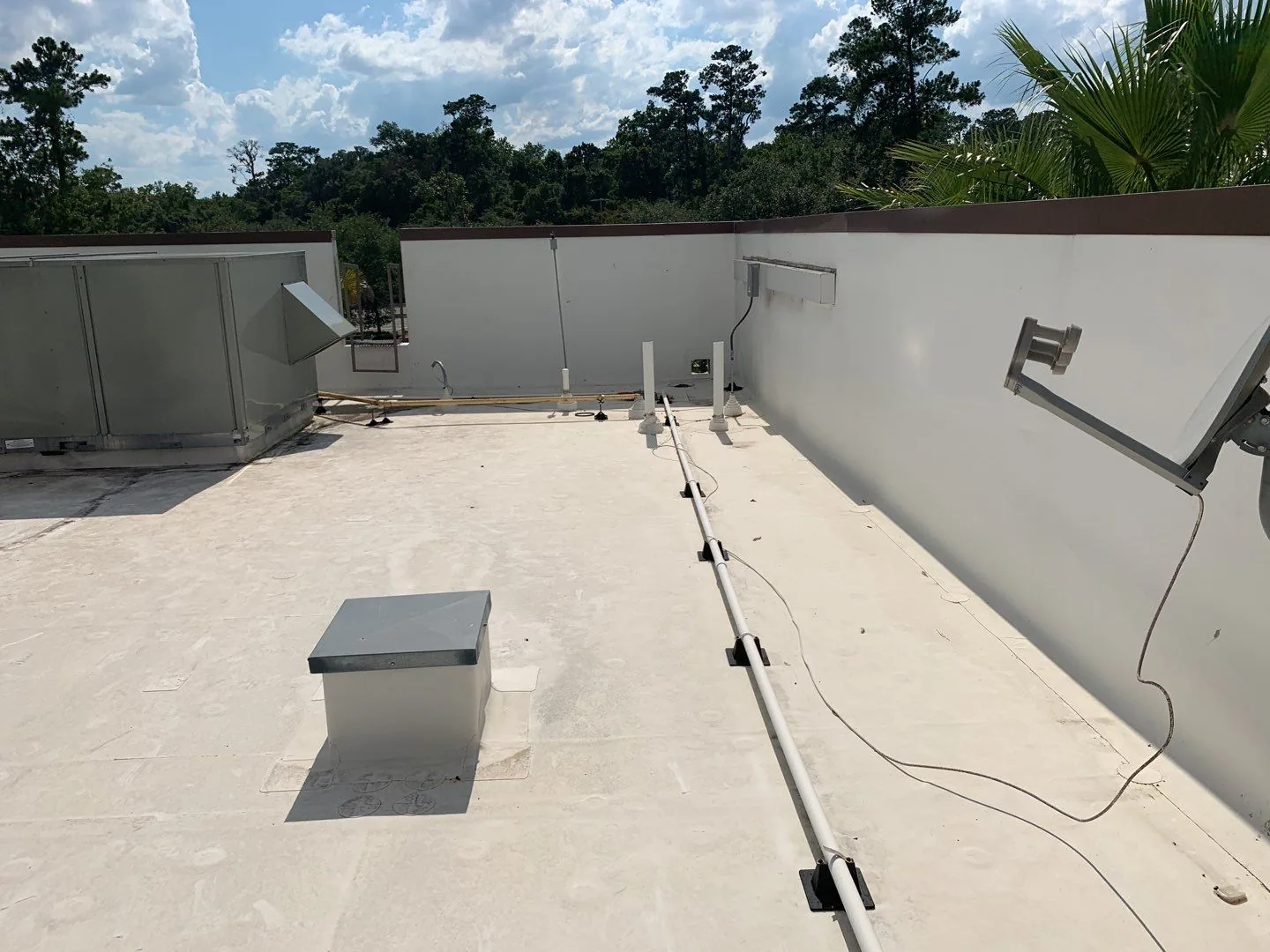
If the roof is close to the end, replace it first, or in the same project. It is easier to lay a new replacement roof with solar in mind than to work around racking later. If the roof has real service life and tests dry, leave it and design the array around it. Our roof capital planning work puts those timelines side by side.
Racking picks where the risk lives
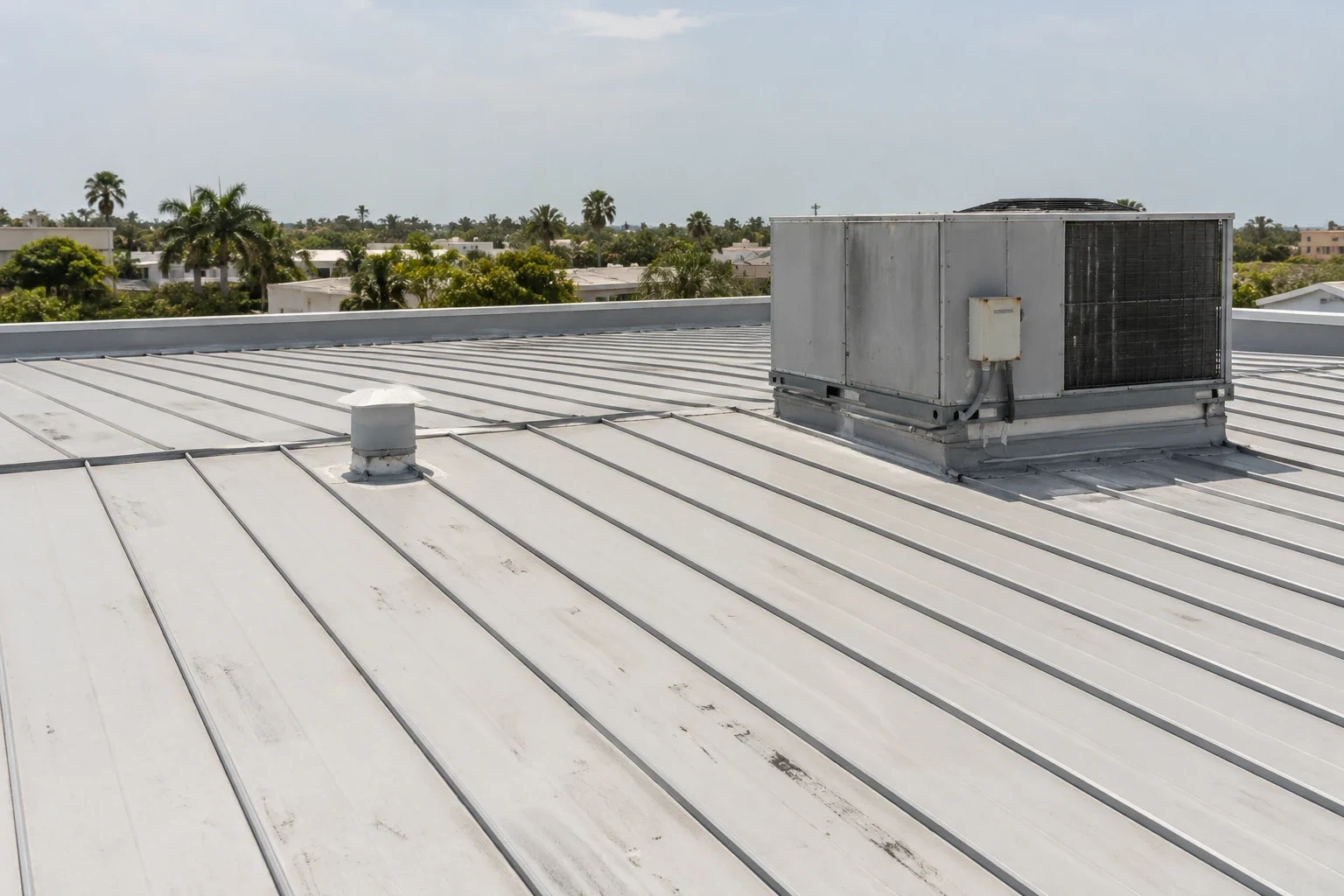
Every mounting method trades one risk for another. Ballasted racking avoids holes but adds weight, and the deck and framing have to carry it. Attached racking spreads load more lightly but punches through the roof, so every foot becomes a flashing detail that has to be done right and checked later. On a standing seam roof, clamps grip the seam without any penetration at all, which is a big reason metal is popular for panels.
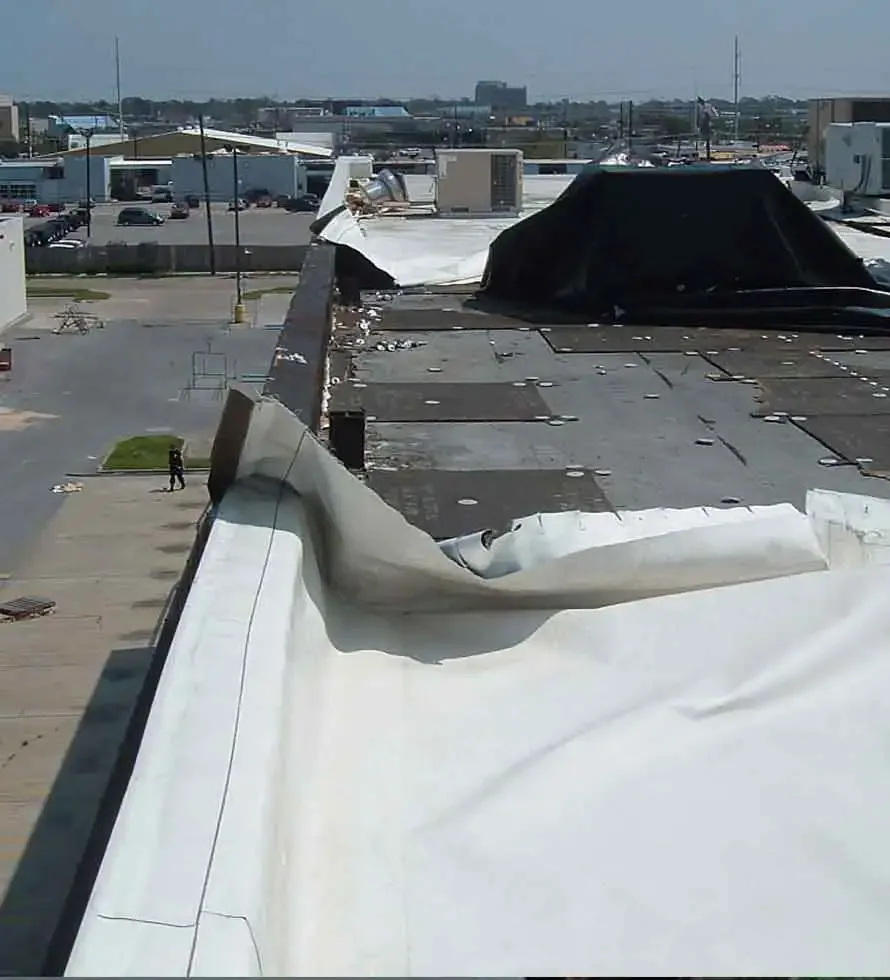
Wind matters here. Diablo winds gusted up to 70 mph during the October 2017 fire siege, and an array turns a flat roof into a sail. Fountaingrove, where the Tubbs Fire destroyed homes, the Fountaingrove Inn and the historic Round Barn, is a reminder of what those winds do, so an array on a roof there deserves a hard look at uplift. Racking needs to resist uplift, and the membrane under it must hold. A tilted array on a weak edge detail is how a good solar job turns into a roofing claim. We look at edge metal and the standing seam condition before anything is fastened.
Leave room for water and for people
Ash, embers and a hot summer
Panels shade the membrane, which helps it in September heat of 115 degrees like the record day in 2022. They also create low pockets where road grime, ash and leaves collect after Tubbs, Kincade or Glass Fire smoke, and where embers can lodge. Debris held against a membrane stays wet through the rainy season, and that is where slow leaks start.
A storm like the November 2024 atmospheric river, with close to 15 inches in about three days, will test the clearances harder than any design review. After smoke or storms, someone needs to walk the array, clear the rows and check the drains. We write that into a maintenance plan so it does not rely on memory.
Sort the warranty before the crew arrives
Most commercial membrane warranties spell out who may work on the roof and how. A solar crew with ladders and drills is the kind of traffic those terms care about. Get the manufacturer's written position, put it in the solar contract, and make the installer responsible for any membrane damage. We photograph the roof before and after, and we flash the penetrations ourselves when the terms require it. Our warranty management work keeps that paperwork tidy.
Do not tear off a good roof for panels
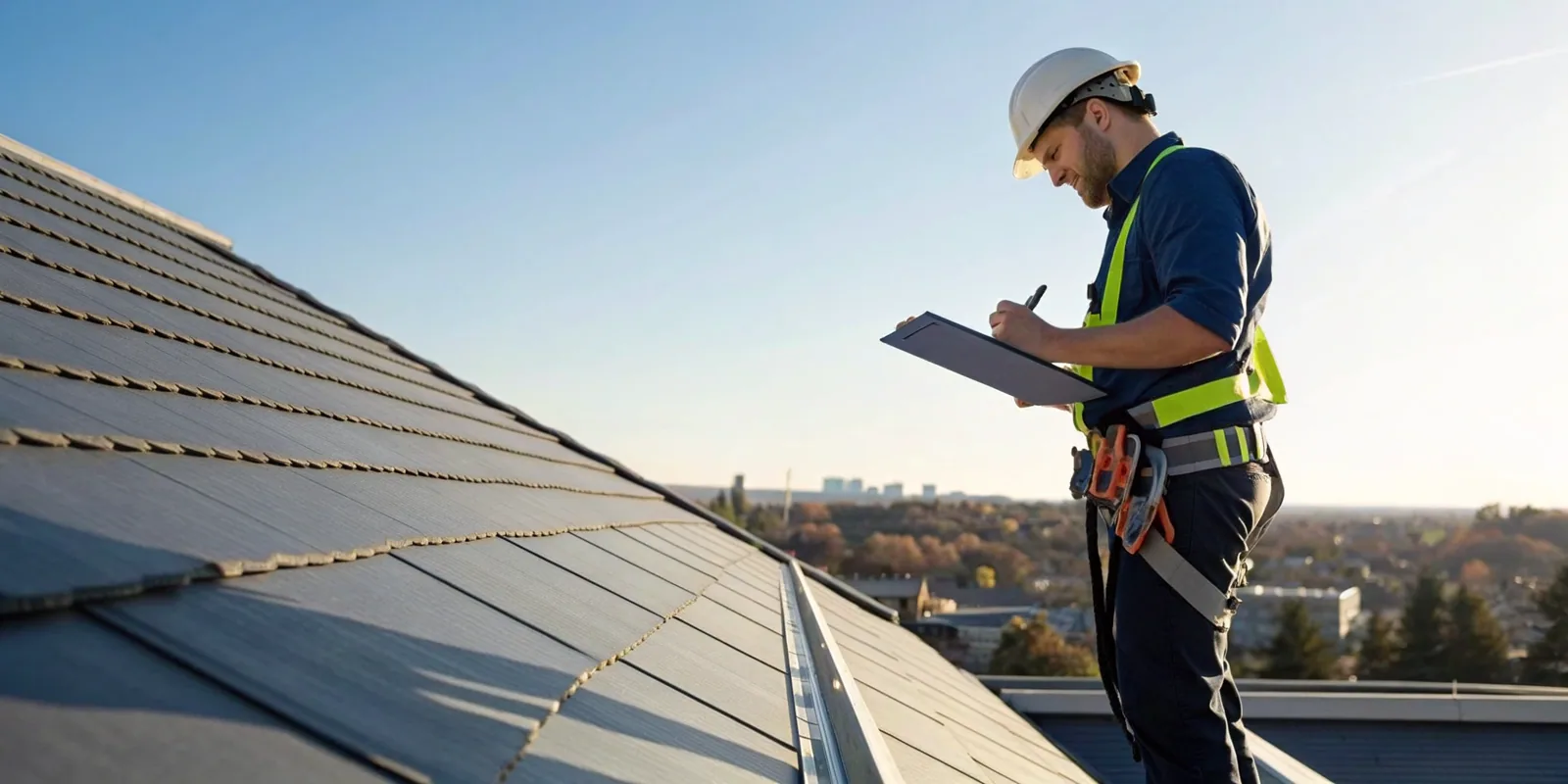
The panels are not a reason to replace a roof that works. If an infrared moisture survey shows dry insulation and the seams are tight, a ballasted or clamped array can go on as is. Skipping an unnecessary tear-off is the single best saving in most solar jobs.
Not worth it, either: a thick coat of anything over a failing roof to "prepare" it. If the base is wet or soft, the answer is repair or replacement, not another layer. We will say which way your roof leans after we look.
Commercial Roofing Questions
How old can the roof be before we put solar on it?
Count the years left, not the years served. A well-kept roof with a long service life ahead of it is a better host than a younger roof that has been neglected. Ask for a moisture survey and a seam and flashing review, then compare the remaining life against the length of the solar contract. If the roof will not outlast the array, replace it first and let the new roof go in with the racking layout in mind.
Is ballasted racking safer for the roof than attached racking?
Ballast avoids holes, but it adds weight and can block drainage, so the answer is conditional. Attached racking leaves roofing-grade flashing at every foot, which is fine when done well and a leak path when done badly. On a newer low-slope membrane with sound framing, ballast is often the gentler choice. On a roof with soft spots, neither is a good idea until the soft spots are fixed.
Who pays for a leak that shows up after the solar installer leaves?
Put that in the contract before work begins, because it will not sort itself out later. The installer owns the damage their work caused, but only if the roof was documented beforehand and the manufacturer agreed to the plan. Without photographs, a signed warranty position and a named person responsible for each penetration, the argument goes in circles while the ceiling tile stays wet.
Do we have to remove the panels when the roof is replaced later?
Yes, and that is the bill people forget. Modules and rails have to come off, get stored safely and go back on after the new membrane is in, with the electrical work redone and tested. It adds cost and schedule, which is why the cleanest approach is to put the new roof under the array before it is installed. If a reroof is coming within the life of the contract, discuss it now.
What should we do to a building that will get panels in a few years?
Build the roof so it can take them. That means a membrane and insulation system with the strength for the loads, drains placed with room around them, edge details that resist uplift and an up-to-date written roof record. Leave a pathway for conduit. Then add the array when the budget is ready, without reopening the roof. Put the insulation and cover board choices on the same table.
Tell us where the panels are going.
Call Commercial Roofing Santa Rosa. We will look at the roof under the array, say plainly whether it can carry panels now, and if it cannot, what has to happen first.