Government Building Roofing in Santa Rosa, CA
Property Types We Roof
The lowest bid is often the most expensive roof a public agency will ever buy. A thin scope, a vague insulation spec and a membrane chosen only for its price produce a roof that leaks in year four, and the same agency ends up buying it again with a new bid, a new board report and a new apology. The fix is not a better contractor list. It is a better written scope.
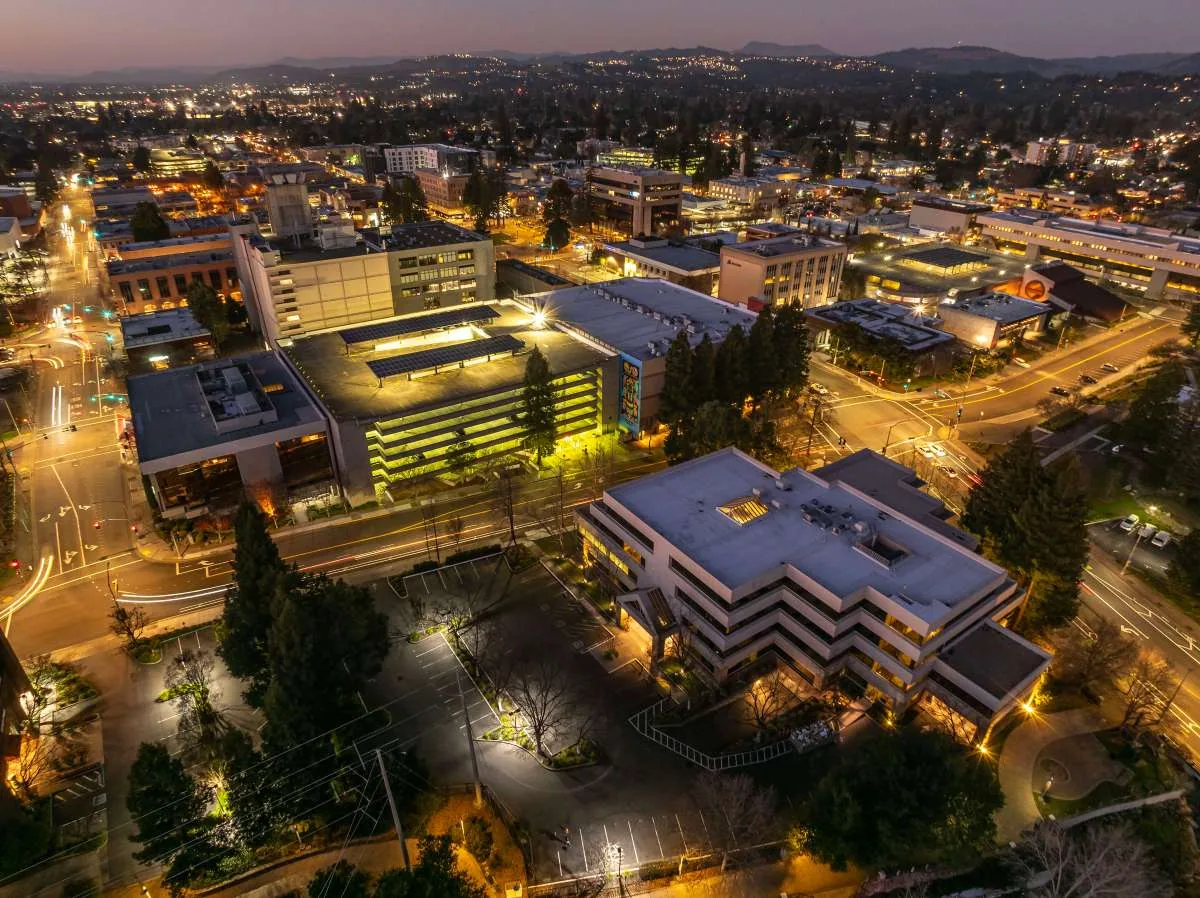
The County of Sonoma tops Santa Rosa, CA's employer list at 4,284 workers. Add city departments, City Hall downtown and the state buildings in the region, and a public facility manager is answering for a lot of roof. Our job is to hand that manager a written, photographed assessment that holds up in a budget meeting and a bid package.
Serving Santa Rosa • Rohnert Park • Petaluma • Windsor • Healdsburg • Sebastopol • Napa
Public roofs get bought twice
A public roof is purchased once through a design and bid process, and again every year through the maintenance budget that decides whether it lasts. Agencies that treat those as the same line item tend to get both wrong. The first purchase needs a clear specification. The second needs a person with a ladder and a calendar.
Government buildings are also a mixed bag. Administrative offices have quiet, mechanical-heavy roofs, much like a private office building roof. Fire stations, dispatch centers and corporation yards are different, since they run around the clock and cannot close for a week. Libraries and community halls tend to have large public rooms under long spans. Each type needs its own sequence, so one blanket reroof spec for the whole portfolio rarely makes sense.
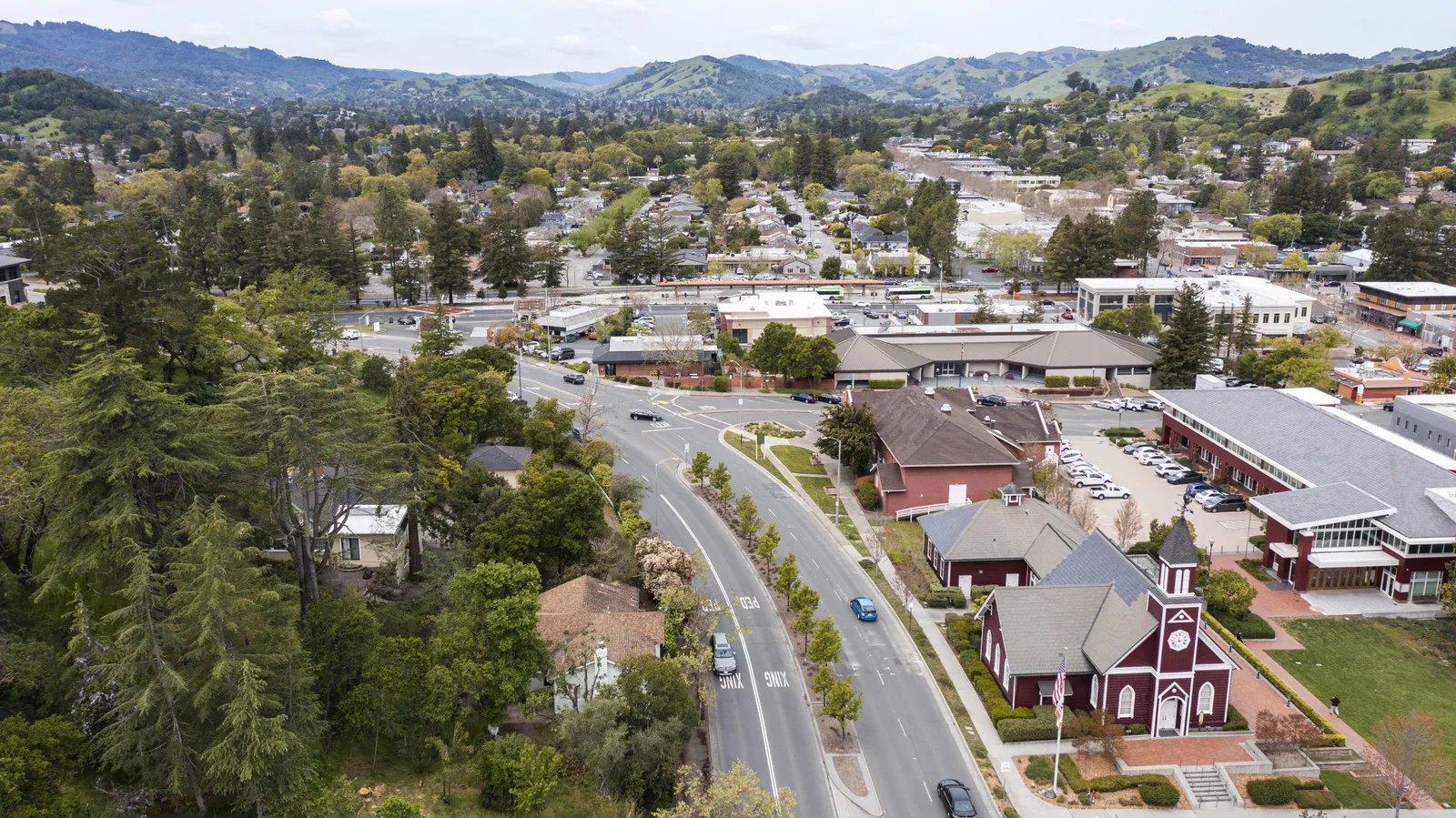
Downtown, Santa Rosa Creek runs in a flood-control channel and passes through a culvert under City Hall, so water is already a design problem in the downtown Santa Rosa core, and a roof that drains badly adds to it. Verdict: write the scope around how the building is used, not around the product catalog.
Deferred maintenance is the real leak
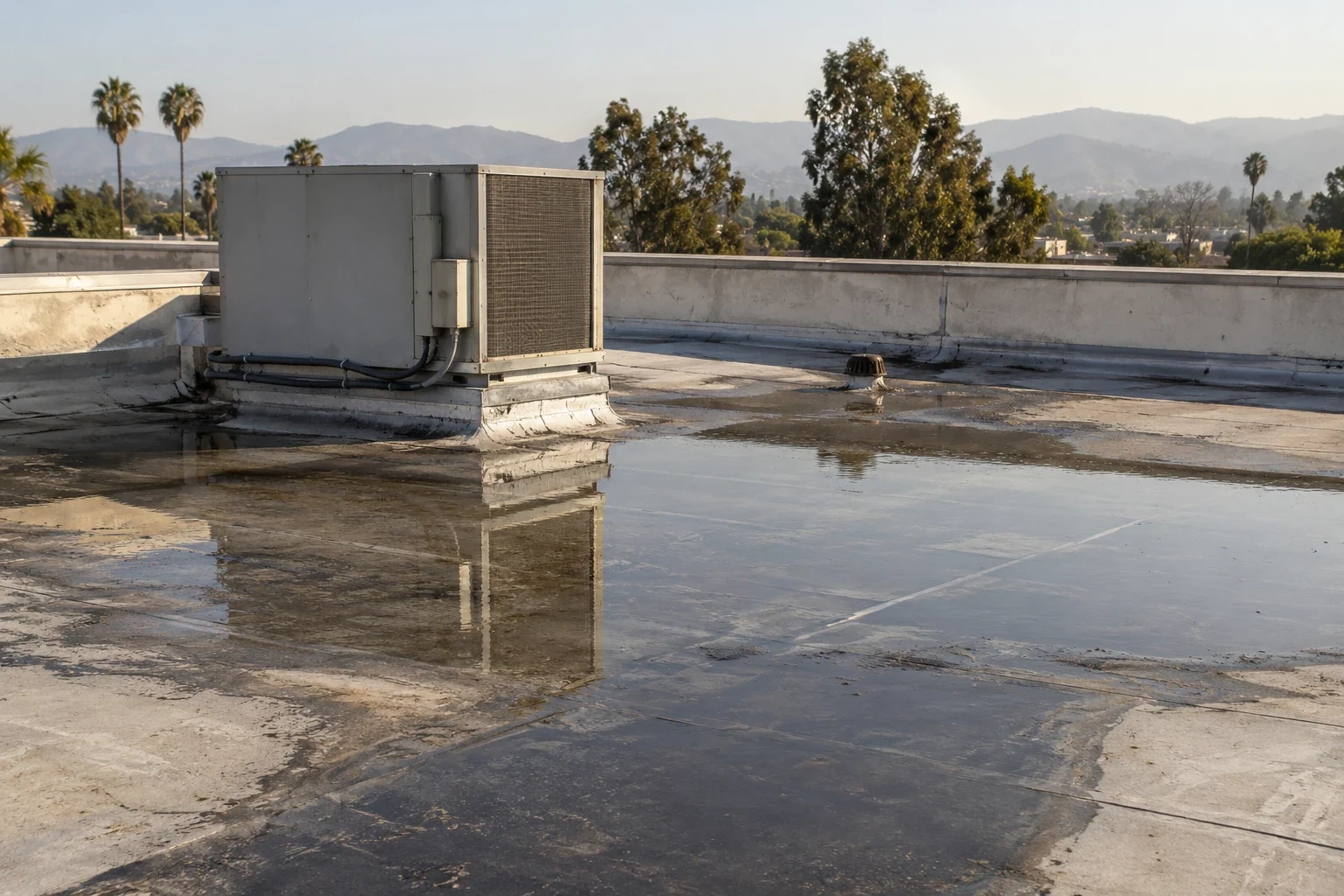
The real problem in public facilities is not age, it is deferral. A drain stays clogged for two budget cycles because nobody has authority to spend forty minutes of labor on it. Then a stormy week arrives, the scuppers are buried, and the building has a ceiling collapse that now qualifies as an emergency. The emergency costs far more than the maintenance ever would have.
Overflow protection is the cheap safeguard. When the November 2024 atmospheric river flooded streets and pushed creeks to their limits, any roof relying on a storm system already running full needed its roof drains and scuppers to work as designed, with secondary overflow ready as a backup. A twice-yearly cleaning visit is one of the best values in public roofing.
For the board, a roof capital plan converts those hidden risks into dated line items. It shows which buildings can wait, which need repair now, and which will need replacing in the next funding window, so surprises show up on paper instead of in the lobby.
Write the scope before the bid
Outages, evacuations and essential buildings
Public facilities carry duties that private ones do not. When the Kincade Fire burned in October 2019, nearly 190,000 people evacuated and PG&E cut power to about 940,000 customers. Buildings that keep operating through outages depend on rooftop equipment, generator exhaust and antenna mounts, and each of those penetrations has to stay watertight. For emergency roof repair at an essential building, document the affected room and coordinate safe access and temporary water control with the agency contact; protect dispatch equipment from interior water first.
Heat adds a second test. The 115 degree record logged on September 6, 2022 is the kind of day when the rooftop units that cool server rooms and public counters run flat out. Their curbs, supports and the membrane around them deserve a spring check. Some public buildings answer to a military unit as well as a facilities office. The 579th Engineer Battalion lists the Santa Rosa Armory as its duty location, and a National Guard armory roof is planned around the people and vehicles inside.
Skip the warranty a building will outlive
Not every public roof needs the longest warranty available. A building scheduled for demolition, relocation or a major renovation in five years does not need a system built to last thirty, and paying for one is not worth it. Likewise, a roof with a sound membrane and clean drainage does not need replacing because it has an age number on a spreadsheet. A public agency should match the roof to the building's remaining life and spend the difference on drainage, flashing and maintenance, where the money pays back.
Commercial Roofing Questions
Can a public agency hire a roofer directly after a storm, or does everything have to be bid?
Emergency repairs generally follow a faster path than capital projects, but the rules belong to your purchasing office and governing board, so confirm what your policy allows before the next storm. We can document the damage with photos, mark off the failed area and stabilize it with temporary protection, which gives you the record you need for either route. Permanent replacement usually goes through the formal process.
What should a roofing spec include so a low bidder cannot cut corners?
Name the system, insulation type and thickness, cover board, flashing details and drainage corrections, and state how each will be checked during installation. Require a pre-installation meeting and photographic records at tear-off, at insulation and at completion. A spec that says only replace the roof invites a bid built on the cheapest assumptions, and the agency pays for them later.
How do we justify roof funding to a board that sees no visible problem?
Show the cost of waiting. A moisture survey and condition report put photographs and numbers in front of the board: where insulation is wet, what remaining life each roof section has, and what an emergency would cost compared with scheduled work. A dry, tidy building makes roof spending look optional. Wet insulation shown on a thermal image makes it look like what it is, which is an overdue repair.
Does the 2026 code change affect a reroof we are planning this year?
Likely, if the permit is filed in 2026. Those applications follow the 2025 California Building Standards Code with its Energy Code, which Santa Rosa carried into city law by Ordinance 2026-001 and Healdsburg took up on the same January 1 start. Reroof scopes should be checked against those editions before drawings are finalized, so insulation and reflectance details do not change mid-bid.
Can critical buildings stay in service during a reroof?
Yes, with a phased plan. We divide the roof into sections, close in each section before the crew leaves each night, and coordinate shutdowns of anything that touches the roof, such as exhaust fans, air intakes and rooftop units. Fire stations and dispatch rooms need extra planning for noise, access and emergency vehicle routes, and the plan should name a contact who can pause work the moment an alarm sounds.
Start with a written roof assessment
Call Commercial Roofing Santa Rosa. We will survey the building, then tell you plainly whether it needs work now, later or not at all, in a form your board and bid package can use.