Commercial Roofing in Bodega Bay, CA
Service Areas
Cool weather does not make a roof easy. Bodega Bay, CA, a harbor town of 912 residents on State Route 1, has summers of cool, windy afternoons and fog, and owners sometimes read that as a gentle climate for a roof. It is the opposite. Heat damages a roof loudly and all at once. Salt, wind and constant moisture damage one on a slower clock, which is why the problems tend to be found late.
We repair, coat, recover and replace commercial roofs on harbor-side, institutional and visitor-serving buildings. The University of California's Bodega Marine Laboratory operates here, and tourism tied to the filming locations of The Birds (1963) is part of the local economy. Those are very different buildings with the same weather overhead, and the same weather decides which materials last and which do not.
Serving Santa Rosa • Rohnert Park • Petaluma • Windsor • Healdsburg • Sebastopol • Napa
Salt is the quiet problem
Any building near a harbor and the open coast sits in air that carries salt, and salt corrodes metal from the outside in. Fasteners, edge metal, rooftop equipment supports, screws through panels and the metal skins of curbs are the first to show it. A white crust, orange stains at screw heads, flaking paint on a drip edge and fastener heads that spin freely are all early signs. By the time a panel leaks, corrosion has usually been under way for years.
The remedy is material choice and routine. Fasteners and edge metal with a coating or alloy suited to salt air last longer than plain galvanized parts, and a membrane such as PVC resists many of the chemicals and airborne contaminants that attack other surfaces. Rinse and inspect regularly, and replace any part that has started to flake. Worth it: stainless or coated fasteners at the perimeter. Not worth it: a cheap fastener that must be changed again in five years.
Summer afternoon wind is a steady load
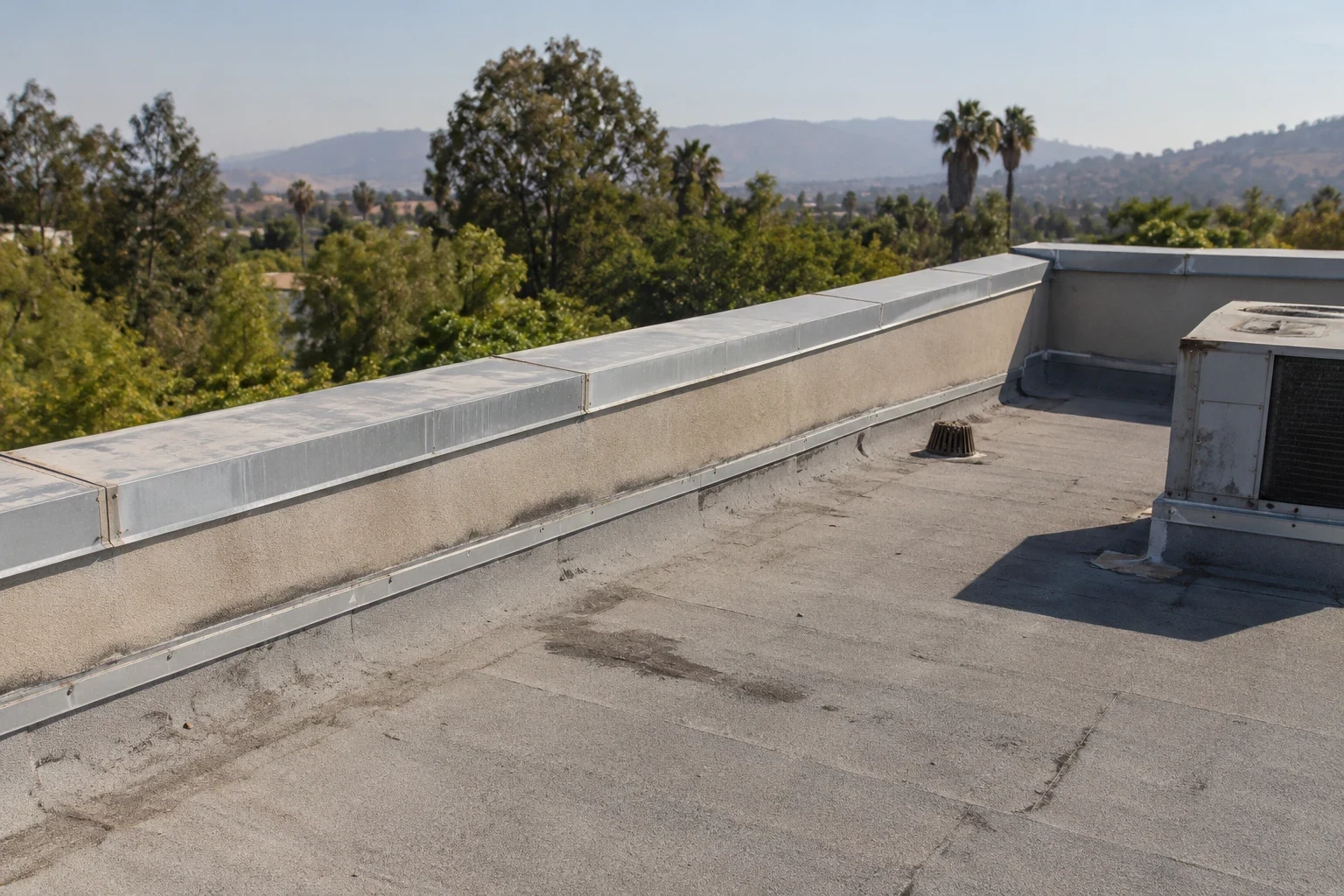
Those cool, windy summer afternoons are a steady load, not an occasional storm. A roof that sees steady gusts flexes at its edges thousands of times a season, and the metal at those edges, the coping, drip edge and gutter, works loose by degrees. A loose edge lets wind get under the membrane at the perimeter, which is where roofs peel back in a storm. We check the attachment of every edge piece, the sealant along laps and the fasteners that hold the membrane at the perimeter.
For a building that has seen a decade of this, the repair is often new edge metal installed to a stronger standard, with closer fastener spacing at the corners where uplift is highest. It costs a fraction of a reroof. Wind also drives rain sideways under flashings that would stay dry in still air, so we raise or add counterflashing where walls and equipment curbs meet the roof.
Fog is water, and it stays
Labs and visitor buildings
A marine laboratory is the kind of building where a leak can ruin more than ceiling tile. Research spaces tend to hold instruments, samples and wet systems, and a university owner tends to have rules about access, hot work and shutdowns. If you run a university or research building, plan the roof work with the people who use the space: protect equipment, schedule loud or smelly work for off hours and keep one person who can reach the roof and the lab at once.
Visitor-serving businesses have the opposite problem, a calendar. Weekends and summer afternoons bring crowds, and a shop or restaurant that closes for a day loses real money. We schedule the noisy and disruptive parts for weekdays and shoulder months and keep walkways clear. Whichever you own, the first step is a written roof record. It tells you what is up there and what each section will need over the next five years.
Plan for the road in
State Route 1 is the way in for materials and equipment, so deliveries, lifts and dumpster swaps are timed for light traffic. Staging space can be tight on a harbor lot, so we lay out the roof, the delivery truck and the debris chute before the first day. That planning is a real cost driver here, along with the extent of wet insulation, the number of penetrations and how much corrosion we find.
Our recommendation for most coastal commercial roofs is simple: maintenance twice a year, edge and fastener upgrades where they have worn, and a coating or recover when the membrane is sound. A reroof permit filed on or after January 1, 2026 falls under California's 2025 Title 24 cycle, and we check the building department's requirements before work starts. The same sequence carries to inland buildings in Petaluma and Sebastopol, where salt matters less.
Commercial Roofing Questions
How do we know salt air is eating the fasteners on our roof?
Look for rust stains running down from screw heads, white crust on metal edges, and fasteners that turn or lift when touched. A magnet and a screwdriver will tell you quickly whether the head has lost its grip. If you find more than a few, schedule a full fastener review before the next storm, since each one that is lost lets water in and lets the panel move.
Do windy summer afternoons really justify upgrading the edge metal?
Yes, if the edges are loose or the sealant has failed. Steady wind flexes the metal until it works free, and a loose edge is where a storm lifts a roof. Upgrading to heavier gauge metal with tighter fastener spacing costs far less than a membrane replacement. Check first; if the edge metal is firm and sealed, leave it alone and watch it each season.
What should the lab or research building manager ask before a roof repair?
Ask what happens to equipment and samples if water gets in, and then ask for a written plan to prevent it: coverings, staged work areas, quiet hours, odor limits and who has authority to stop the job. Insist on knowing which sections will be open at the end of each day. A good plan lets the lab keep working and protects the interior if weather changes.
Can a coating be applied in a foggy climate?
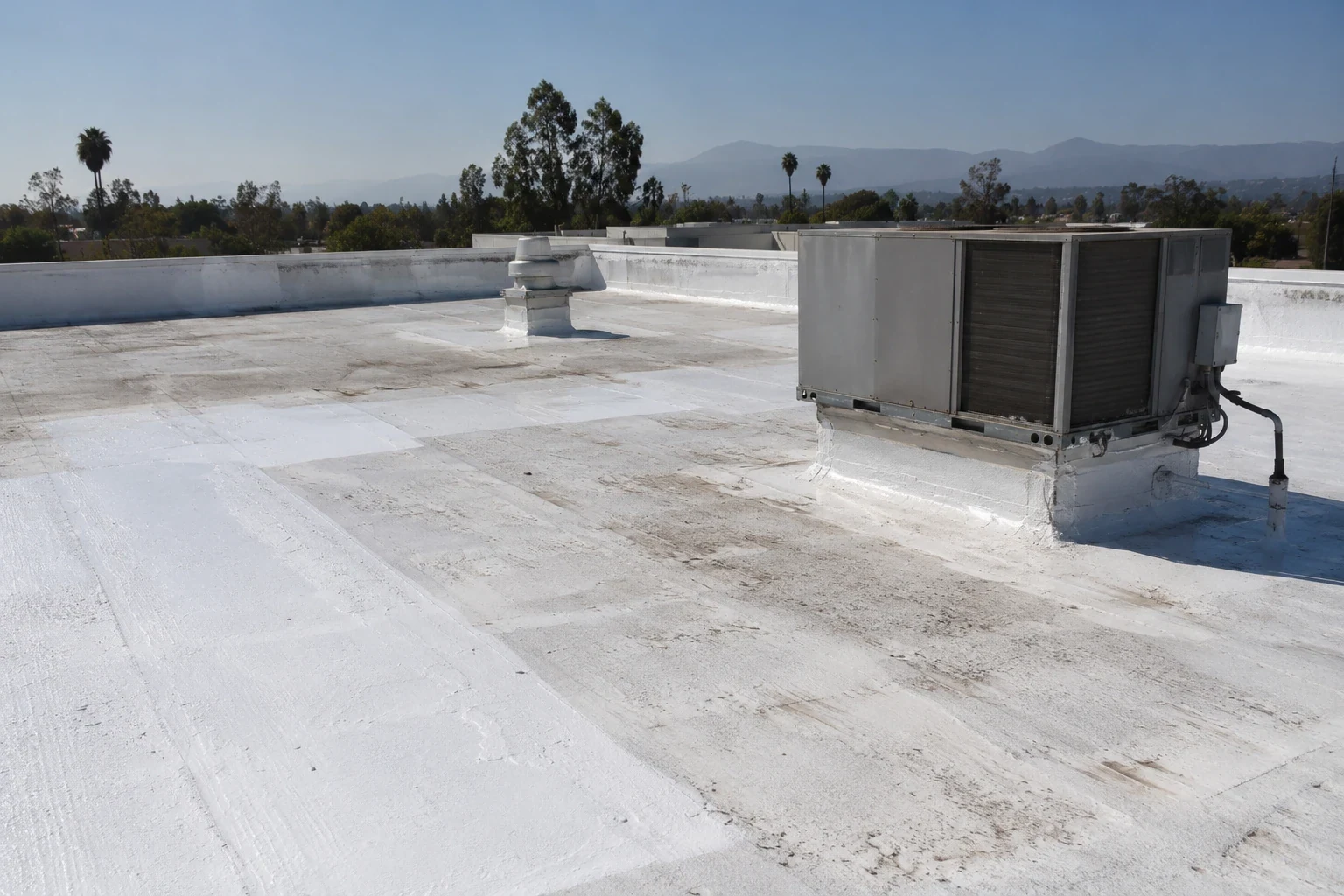
It can, but only on the right mornings. Surfaces must be dry, and cure time matters because dew or fog on a fresh coat can ruin it. We watch forecasts, test the surface, start after the fog lifts and stop early. A coating job on the coast often takes a few more days than the same job inland. That delay is cheaper than redoing a coat that failed to bond.
How often should a harbor-town roof be checked?
Twice a year, with one visit after the dry season and one before heavy winter rain, plus a check after any major storm. Salt, wind and moisture work steadily, so the roof changes between visits in ways that are easy to miss. A short, dated report after each visit shows how fast corrosion and wear are advancing and lets you budget before a failure forces the decision.
Let the roof tell us what the coast has done to it
Give us the building and what you have noticed. We will walk the roof, test the fasteners and edges, and say plainly whether it needs work now, later or not at all. If a storm opens the roof, describe where water is entering and any access or safety limits so we can discuss next steps.